

Existing law makes it a crime for a law enforcement officer to wear a facial covering in the performance of their duties, except as specified. Existing law defines law enforcement officer for these purposes as anyone designated by California law as a peace officer who is employed by a city, county, or other local agency, and any officer or agent of a federal law enforcement agency, agency or law enforcement agency of another state, or any person acting on behalf of a federal law enforcement agency. This bill would add peace officers employed by a state agency to the definition of law enforcement officers, thereby making those law enforcement officers subject to those criminal penalties. The bill would specify that facial coverings does not include certain items, including, among other things, sunglasses. The bill would, for all of the items excluded from the definition of facial coverings, limit that exclusion if the items are combined or otherwise used in a manner intended to conceal or obscure an officer's identity. By expanding the scope of a crime, this bill would impose a state-mandated local program. Existing law prohibits any person who is found to have committed an assault, battery, false imprisonment, false arrest, abuse of process, or malicious prosecution, while wearing a facial covering in a knowing and willful violation of these provisions, from asserting any privilege or immunity for their tortious conduct against a claim of civil liability, and makes that person liable for the greater of actual damages or statutory damages of not less than $10,000, whichever is greater. This bill would instead make a person who is found liable for false imprisonment or false arrest liable for those damages if the trier of fact finds that the person knowingly and willfully concealed their identity through the use of a facial covering at the time of the conduct giving rise to liability. Existing law requires a law enforcement agency operating in California to, by July 1, 2026, maintain and publicly post a written policy limiting the use of facial coverings, as specified. Existing law defines a law enforcement agency for these purposes as any entity of a city, county, or other local agency, that employs anyone designated by California law as a peace officer, any federal law enforcement agency, or any law enforcement agency of another state. This bill would add to the definition of law enforcement agency, a state entity that employs a peace officer and would change the date any law enforcement agency has to comply with that requirement to January 1, 2027. The bill would also require those policies to exempt certain surveillance operations related to enforcement of the Fish and Game Code, or similar federal law. The California Constitution requires the state to reimburse local agencies and school districts for certain costs mandated by the state. Statutory provisions establish procedures for making that reimbursement. This bill would provide that no reimbursement is required by this act for a specified reason.
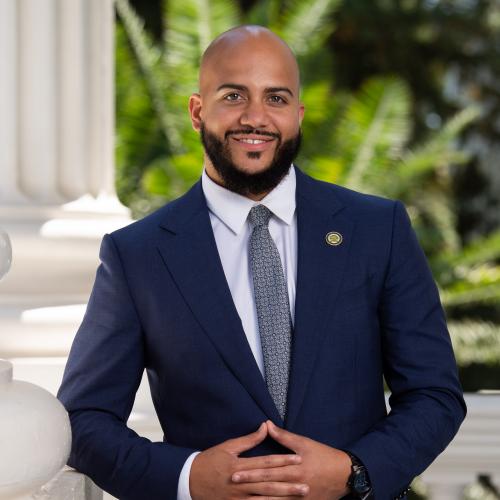
Rep. Isaac Bryan
Sponsored bills
Existing law establishes, until July 1, 2027, the Displaced Oil and Gas Worker Pilot Program, to be administered by the Employment Development Department (department) , for the purpose of addressing employment dislocations associated with oil, gas, and related industries. That program requires the department, using funds to be appropriated by the Legislature for purposes of the program, to award grants on a competitive basis to qualified applicants, as specified, for specified eligible activities. This bill would extend the program indefinitely by removing the July 1, 2027, repeal date. The bill would require the department to implement and administer the program only to the extent that funding is appropriated by the Legislature, as specified.
(1) Existing law makes it a misdemeanor to willfully fail to appear in court, as specified. Existing law, when a person has failed to appear and has not posted bail, requires the magistrate to issue a warrant for the person's arrest within 20 days of the failure to appear. This bill would make those sections only apply when the underlying charge is not an infraction. (2) Existing law authorizes the issuance of a bench warrant of arrest when a person fails to appear in court as promised in specified criminal proceedings. This bill would prohibit the issuance of a bench warrant of arrest when the underlying crime is an infraction issued pursuant to the Vehicle Code. The bill would require bench warrants for other infractions to be limited to only authorizing arrest and booking at the scene followed by immediate release, as specified. (3) Existing law makes it a misdemeanor to willfully fail to appear in court for a violation of the Vehicle Code, and requires the court to report a conviction of this offense to the Department of Motor Vehicles. This bill would make that misdemeanor only apply when the underlying charge is not an infraction. The bill would also remove the requirement for the court to report a conviction of this offense to the department. (4) Existing law authorizes the imposition of a civil assessment or the issuance of an arrest warrant when a person fails to make an installment payment on bail imposed by the court for an infraction violation of the Vehicle Code. Existing law also makes it a misdemeanor to fail to pay bail in installments or to fail to pay a fine imposed for the violation of a state or local traffic law. This bill would remove the misdemeanor for failure to pay a bail installment or fine if the original charge was an infraction. The bill would remove the authorization to issue an arrest warrant for failure to pay a bail installment. (5) Existing law, if a defendant does not appear at the time the case is called for a violation of the Vehicle Code, authorizes the court to declare the bail forfeited and order that no further proceedings be had in the case, or to issue a warrant for the arrest of the defendant. However, if a defendant is charged with specified crimes, including disposing of a flaming or glowing substance on or near a road and littering a highway, has previously been convicted of the same crime, and fails to appear at the time the case is called to trial, existing law authorizes the court to declare the bail forfeited and requires the court to issue a bench warrant for the arrest of the person charged, unless the magistrate finds that undue hardship will be imposed by requiring the defendant to appear. This bill would remove the requirement that the magistrate issue a bench warrant when the person has committed one of the crimes specified above.
This measure would proclaim the month of October 2026 as California Firefighter Appreciation Month and October 3, 2026, as California Firefighters Memorial Day.
Existing law generally regulates the business of renting passenger vehicles to the public. The law prohibits a rental company from taking various actions, including requiring the purchase of a damage waiver, optional insurance, or another optional good or service, and using electronic surveillance technology to track a renter in order to impose fines or surcharges relating to the renter's use of a rental vehicle. This bill would require any privately owned vehicle rented by, or furnished to, any federal, state, or local law enforcement agency for the use of detaining, arresting, or transporting persons who have violated, or are suspected of having violated, any law, to display a temporary decal displaying the agency name and logo, as specified. The bill would authorize certain attorneys, including the Attorney General, to pursue a civil action against the entity renting the vehicle from the private owner for failure to comply with these provisions. The bill would require the rental car contract to include a term that compliance with state law is mandatory. The bill would exempt privately owned vehicles rented or otherwise furnished or loaned to a law enforcement agency for specified purposes and rental car contracts entered into prior to January 1, 2027, from these provisions. The bill would make related findings and declarations.
Existing law allows for an eligible person to be excused from jury service only for undue hardship upon themselves or the public, as defined by the Judicial Council. Existing rules of court allow a person with a disability or their representative to seek a permanent medical excuse from jury service and require the individual to submit a written request accompanied by a supporting letter, memo, or note from a treating health care provider, as specified. This bill would, commencing January 1, 2028, authorize a person 80 years of age or older to seek a permanent excuse from jury service due to a medical impairment without providing a supporting letter, memorandum, or note from a treating health care provider. The bill would require the court to permanently excuse a person who seeks the above-described permanent excuse from jury service upon the jury commissioner's receipt of a written attestation stating that the person has an impairment, as specified. The bill would authorize the Judicial Council to adopt or amend a rule of court and publish related judicial forms as necessary to implement these provisions.
Existing law establishes the California Privacy Protection Agency (CPPA) to enforce various laws protecting the privacy of individuals. If a business knowingly collects and sells to third parties the personal information of a consumer with whom the business does not have a direct relationship, existing law requires the business to register with the CPPA as a data broker, except as specified. Existing law requires the CPPA to establish an accessible deletion mechanism that allows a consumer to request that every data broker delete any personal information related to that consumer held by the data broker or associated service provider or contractor, as prescribed. Existing law requires, beginning August 1, 2026, a data broker to access that deletion mechanism at least once every 45 days and, among other things, process all deletion requests and delete all personal information related to the consumers making the requests, as specified. This bill would change the above-described 45-day period to a 30-day period and make conforming changes. This bill would require the Secretary of State, certain local government officials, the Judicial Council, and the State Bar of California to notify any state elected official, local elected official, or judge, as applicable, that the person may submit a request to delete that person's personal information through the above-described accessible deletion mechanism, as prescribed. By imposing additional duties on local government officials, this bill would impose a state-mandated local program. This bill would authorize the Attorney General, a county counsel, or a city attorney to bring a civil action, on behalf of an elected official or judge, against a data broker who violates certain personal information deletion requirements, as prescribed. This bill would make its provisions relating to the notice and enforcement of requests for deletion of personal information of elected officials and judges operative on July 1, 2027. The California Constitution requires the state to reimburse local agencies and school districts for certain costs mandated by the state. Statutory provisions establish procedures for making that reimbursement. This bill would provide that, if the Commission on State Mandates determines that the bill contains costs mandated by the state, reimbursement for those costs shall be made pursuant to the statutory provisions noted above.
(1) Existing law tolls the periods of limitation to bring specific civil actions for up to 2 years, if during that time that the claimant is imprisoned on a criminal charge, as specified. However, under existing law these tolling provisions do not apply to an action brought against a public entity or public employee, as specified. This bill would, notwithstanding any other law, provide that the period for bringing an action for sexual assault against a public entity or public employee that is alleged to have occurred while the claimant was imprisoned on a criminal charge, or in execution under the sentence of a criminal court, is tolled during the entire period of the claimant's imprisonment or sentence. Under the bill, any claim for sexual assault against a public entity or public employee subject to that provision is exempt from all state and local government claim presentation requirements. (2) Existing law establishes the Office of the Sexual Abuse in Detention Elimination Ombudsperson with the authority to inspect all of the Department of Corrections and Rehabilitation institutions and to interview all inmates and wards. Under existing law, if an investigation confirms that any employee of the department has sexually abused an inmate or ward, that employee is required to be terminated. Existing law prohibits retaliation against an inmate or ward for making an allegation of sexual abuse. Existing law requires the department to keep statistics on the sexual abuse of inmates and wards and make that data available to the Office of the Sexual Abuse in Detention Elimination Ombudsperson. This bill would prohibit an employee who has been terminated after an investigation confirms that the employee has sexually abused an incarcerated person or ward from future employment with the department. This bill would require the department to monitor for 90 days an incarcerated person who reports sexual assault, and the incarcerated person reported to have suffered the sexual assault, by a staff member for possible retaliation. The bill would require the department to make specific notifications and reporting after an incarcerated person is reported to have suffered a sexual assault. The bill would require the department, on or before January 1, 2028, to develop and implement procedures for notifications of an incarcerated person's contact person, as defined. The bill would require the department to minimize the transfer of an incarcerated person who is reported to have suffered a sexual assault by a staff member for 90 days following the report, unless there is an operational need to do so or there are safety, security, or health concerns. The bill would define terms for its purposes and declare these provisions are severable.
Under existing law, the Tom Bane Civil Rights Act (act) , if a person or persons, whether or not acting under color of law, interferes or attempts to interfere, by threats, intimidation, or coercion, with the exercise or enjoyment by any individual or individuals of rights secured by the Constitution or laws of the United States, or of the rights secured by the Constitution or laws of this state, the Attorney General, or any district attorney or city attorney, is authorized to bring a civil action for injunctive and other appropriate equitable relief in the name of the people of the State of California, in order to protect the exercise or enjoyment of the right or rights secured. Under that act, an individual may also institute and prosecute in their own name and on their own behalf a civil action for damages, as described, for any resulting interference or attempt at interference of the individual's exercise or enjoyment of rights secured by the Constitution or laws of the United States or this state. The act authorizes the court to award the petitioner or plaintiff reasonable attorney's fees in addition to any damages, injunction, or other equitable relief awarded in these civil actions (attorney's fees authorization) . Existing federal law provides that every person who, under color of any statute, ordinance, regulation, custom, or usage, of any state, territory, or the District of Columbia, subjects or causes to be subjected any United States citizen or other person within the jurisdiction to the deprivation of any rights, privileges, or immunities secured by the Constitution and laws, is liable to the party injured in an action at law, suit in equity, or other proper proceeding for redress, except as provided. This bill would also provide that every natural person, as defined, who, under color of any law, statute, ordinance, regulation, custom, or usage, as defined, subjects or causes to be subjected any citizen of this state or any person within the jurisdiction thereof to the deprivation of any rights, privileges, or immunities secured by the United States Constitution, shall be liable to the party injured in an action at law, suit in equity, or other proper proceeding for redress, except as specified. The bill would apply the aforementioned attorney's fees authorization, except as specified, to any action brought under these provisions. The bill would authorize a court, in its discretion, to also award costs, except as specified, to the prevailing plaintiff in any action brought under these provisions. This bill would authorize a defendant in an action brought under these provisions to assert and receive the benefit of a defense of absolute or qualified immunity only to the same extent as a person sued under certain federal provisions under like circumstances, as specified, and would specify that nothing in these provisions is to be construed to waive or abrogate any defense of sovereign immunity otherwise available to a party, as specified. The bill would prohibit any civil action brought under these provisions from being commenced later than 2 years after the date that the cause of action accrues. The bill would make its provisions severable. The bill would specify that these provisions apply retroactively to March 1, 2025, as provided. This bill would declare the intent of the Legislature in enacting these provisions. This bill would declare that it is to take effect immediately as an urgency statute.
The Planning and Zoning Law requires each planning agency to prepare and the legislative body of each county and city to adopt a comprehensive, long-term general plan for the physical development of the county or city, and specified land outside its boundaries, that contains specified mandatory elements, including an environmental justice element, or related goals, policies, and objectives integrated in other elements, that identifies disadvantaged communities, as defined, within the area covered by the general plan of the city, county, or city and county, if the city, county, or city and county has a disadvantaged community, as specified. The law requires a city, county, or city and county subject to these provisions to adopt or review the environmental justice element, or the environmental justice goals, policies, and objectives in other elements, upon the adoption of the next revision of two or more elements concurrently on or after January 1, 2018. This bill would require a city, county, or city and county to meaningfully involve disadvantaged communities in the development, adoption, and implementation of the environmental justice element, or the related goals, policies, and objectives integrated in other elements, using methods that are designed to effectively involve disadvantaged communities based on local conditions and circumstances, as specified. The bill would require a city, county, or city and county subject to these provisions to adopt or review the environmental justice element, or the environmental justice goals, policies, and objectives in other elements, upon the earliest of the adoption or next revision of two or more elements concurrently on or after January 1, 2018, or June 30, 2031, except as specified. By increasing the duties on local governments, this bill would impose a state-mandated local program. The California Constitution requires the state to reimburse local agencies and school districts for certain costs mandated by the state. Statutory provisions establish procedures for making that reimbursement. This bill would provide that no reimbursement is required by this act for a specified reason.