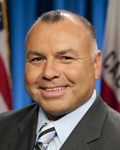
Photo of Freddie Rodriguez
D California Assembly · District 53

Asm. Freddie Rodriguez

Contact Email
Compare
Total votes
23,465
all sessions
Attendance
95%
988 missed
Near the chamber average
With party
99%
of cast votes
Near the chamber average
Bipartisan score
0%
crosses aisle rarely
Near the chamber average
Sponsored
2,071
bills & resolutions
Near the chamber average
Committees
0
assignments
2,071 bills and resolutions

Sponsored bills

Total
2,071
Primary
239
Co-sponsor
1,832
This page
2,071
matching current filters
Co-sponsor ACR 9
Signed into law · California Assembly · Co-sponsor
Relative to Pet Care Education Month.

This measure would declare the month of January 2016 as Pet Care Education Month and would request Californians to observe the month by ensuring that their companion animals receive the proper preventative care by establishing a financial plan for pet health emergencies and by contributing to charitable organizations that provide low-cost spay and neuter services and vaccinations or funds to help low-income individuals pay for veterinary care.

Signed into law Feb 10, 2016 1 co-sponsor
Co-sponsor SB 243
In committee · California Senate · Co-sponsor
Medi-Cal: reimbursement: provider rates.

(1) Existing law establishes the Medi-Cal program, administered by the State Department of Health Care Services, under which health care services are provided to qualified, low-income persons. The Medi-Cal program is, in part, governed and funded by federal Medicaid provisions. Existing law requires the department to develop and implement a Medi-Cal inpatient hospital reimbursement payment methodology based on diagnosis-related groups, subject to federal approval, that reflects the costs and staffing levels associated with quality of care for patients in all general acute care hospitals, as specified. Existing law generally requires the diagnosis-related group-based payments to apply to all claims. This bill would require claims for payments pursuant to the inpatient hospital reimbursement methodology described above to be increased by 16% for the 2015–16 fiscal year, and would require, commencing July 1, 2016, and annually thereafter, the department to increase each diagnosis-related group payment claim amount based, at a minimum, on increases in the medical component of the California Consumer Price Index. Commencing with the 2015–16 fiscal year, and annually thereafter, the bill would require managed care rates for Medi-Cal managed care health plans to be increased by a proportionately equal amount for increased payments for hospital services. (2) Existing law requires, except as otherwise provided, Medi-Cal provider payments to be reduced by 1% or 5%, and provider payments for specified non-Medi-Cal programs to be reduced by 1%, for dates of service on and after March 1, 2009, and until June 1, 2011. Existing law requires, except as otherwise provided, Medi-Cal provider payments and payments for specified non-Medi-Cal programs to be reduced by 10% for dates of service on and after June 1, 2011. This bill would, instead, prohibit the application of those reductions for payments to providers for dates of service on or after June 1, 2011. The bill would also require payments for managed care health plans for dates of service following the effective date of the bill to be determined without application of some of those reductions. The bill would require the Director of Health Care Services to implement this provision to the maximum extent permitted by federal law and for the maximum time period for which the director obtains federal approval for federal financial participation for those payments. (3) Prior law required, beginning January 1, 2013, through and including December 31, 2014, that payments for primary care services provided by specified physicians be no less than 100% of the payment rate that applies to those services and physicians as established by the Medicare program, for both fee-for-service and managed care plans. This bill, commencing January 1, 2016, would require payments for specified medical care services to not be less than 100% of the payment rate that applies to those services as established by the Medicare program for services rendered by fee-for-service providers, and would require rates paid to Medi-Cal managed care plans to be actuarially equivalent to payment rates established by the Medicare program. The bill, commencing January 1, 2016, would require rates paid to Denti-Cal providers for dental services provided to adults and children to be increased by the equivalent percentage as the percentage increase required for other fee-for-service Medi-Cal providers. The bill would require those provisions to be implemented only to the extent permitted by federal law and that federal financial participation is available. The bill would authorize the department to implement those provisions through provider bulletins without taking regulatory action until regulations are adopted, and would require the department to adopt those regulations by July 1, 2018. The bill would require, commencing July 1, 2016, the department to provide a status report to the Legislature on a semiannual basis until regulations have been adopted. (4) This bill would declare that it is to take effect immediately as an urgency statute.


In committee Feb 1, 2016 1 co-sponsor
Co-sponsor SB 164
In committee · California Senate · Co-sponsor
Serial sexual predators.

Existing law, as amended by Proposition 83, the Sexual Predator Punishment and Control Act (Jessica's Law) , approved by the voters at the November 7, 2006, statewide general election, provides that a defendant shall be punished by imprisonment in the state prison for 25 years to life if convicted of certain crimes, including rape, sexual penetration, sodomy, oral copulation, continuous sexual abuse of a child, or rape, spousal rape, or sexual penetration in concert, if certain circumstances were present, including, among other things, if the defendant has been previously convicted of a specified offense. Proposition 83 provides that the Legislature may amend the provisions of the act to expand the scope of their application or increase the punishment or penalties by a statute passed by a majority vote of each house. This bill would specify that the prison term of 25 years to life applies if the defendant has been convicted of more than one specified offense on charges brought and tried separately, irrespective of the order in which the offenses were committed or the convictions obtained.

In committee Feb 1, 2016 1 co-sponsor
Co-sponsor SCR 91
Signed into law · California Senate · Co-sponsor
Relative to India Republic Day.

This measure would proclaim January 26, 2016, as India Republic Day, and would urge all Californians to join in celebrating India Republic Day.

Signed into law Feb 1, 2016 1 co-sponsor
Co-sponsor AB 927
Failed · California Assembly · Co-sponsor
Health facilities: nursing homes.

Existing law provides for the licensure and regulation of health facilities, as defined. A violation of those provisions is a crime. Existing law requires any person or government entity desiring a license for a health facility, approval for a special service, or approval to manage a health facility currently licensed as a general acute care hospital, acute psychiatric hospital, skilled nursing facility, intermediate care facility, or special hospital, that has not filed an application for a license to operate that facility, to file with the department a verified application containing specific information. This bill would require the denial of an application under those provisions if the applicant fails to provide the requisite information or provide it in the form requested. Existing law requires each applicant for a license to operate a skilled nursing facility or intermediate care facility to make certain disclosures regarding corporate governance and ownership to the State Department of Public Health. Existing law prohibits certain persons, as defined, from governing or owning a beneficial interest of 5% or more of a skilled nursing facility or intermediate care facility, as specified, without approval of the department. This bill would expand those disclosure requirements and the provisions that prohibit certain persons from governing or owning a beneficial interest in a skilled nursing facility or intermediate care facility, as specified. The bill would establish provisions for the denial of an application under circumstances in which a person named in an application has governed or owned a facility that has violated the law during a certain timeframe, as specified, and would require the department to investigate whether an applicant has been subject to professional discipline. Existing law requires the department to implement a consumer information service system regarding long-term care facilities. This bill would revise the information the system is required to contain and would require it to be available on the Internet by March 1, 2017. Because this bill would require additional disclosures, of which a failure to disclose or a false disclosure would be a crime, the bill would impose a state-mandated local program. The California Constitution requires the state to reimburse local agencies and school districts for certain costs mandated by the state. Statutory provisions establish procedures for making that reimbursement. This bill would provide that no reimbursement is required by this act for a specified reason.

Failed Feb 1, 2016 1 co-sponsor
Primary AB 151
Failed · California Assembly · Lead sponsor
Income taxes: credits: apprenticeships.

The Personal Income Tax Law and the Corporation Tax Law allow various credits against the taxes imposed by those laws. Existing law provides for the establishment of apprenticeship programs in various trades, to be approved by the Chief of the Division of Apprenticeship Standards in any trade in the state or in a city or trade area whenever the apprentice training needs justify the establishment. This bill, for taxable years beginning on or after January 1, 2016, and before January 1, 2020, would allow a credit against the taxes imposed under those tax laws in an amount equal to $1 for each hour a registered apprentice worked in the taxable year, up to $2,000 each for up to 10 registered apprentices, as defined, trained by the taxpayer in the taxable year. This bill would provide that the credit would have an aggregate cap of $10,000,000 for each calendar year. This bill would require the Division of Apprenticeship Standards in the Department of Industrial Relations, among other things, to establish a procedure for taxpayers, in the form and manner jointly prescribed by the Division of Apprenticeship Standards and the Franchise Tax Board, to apply and receive a certificate for purposes of the credit. This bill would also require the Division of Apprenticeship Standards to prepare reports for each of the 5 calendar years beginning on January 1, 2017, and before January 1, 2022, containing specified information relating to the credits, to be submitted to the Assembly and Senate Appropriations Committees, the Assembly Revenue and Taxation Committee, and the Senate Governance and Finance Committee on or before March 1 of the following calendar year, commencing March 1, 2018. This bill would take effect immediately as a tax levy.

Failed Feb 1, 2016 0 co-sponsors
Primary AB 102
Failed · California Assembly · Lead sponsor
Railroad and surface transportation safety and emergency planning and response: hazardous materials.

Existing law establishes the Railroad Accident Prevention and Immediate Deployment Force in the California Environmental Protection Agency and designates the force as being responsible for providing immediate onsite response capability in the event of a large-scale release of toxic materials resulting from a surface transportation accident. Existing law requires the agency to develop a state railroad accident prevention and immediate deployment plan, in consultation with specified state entities, other potentially affected state, local, or federal agencies, and affected businesses, and designates the force as being responsible for implementing the plan, acting cooperatively and in concert with existing local emergency response units. Existing law establishes the Office of Emergency Services within the office of the Governor and under the supervision of the Director of Emergency Services and makes the office responsible for the state's emergency and disaster response services for natural, technological, or manmade disasters and emergencies. Existing law requires the office to serve as the central point of state government for the emergency reporting of spills, unauthorized releases, or other accidental releases of hazardous materials and to coordinate the notification of the appropriate state and local administering agencies that may be required to respond to those spills, unauthorized releases, or other accidental releases. This bill would create the Regional Railroad and Surface Transportation Accident Preparedness and Immediate Response Force in the Office of Emergency Services, consisting of specified representatives, and would designate this force as being responsible for providing regional and onsite response capabilities in the event of a release of hazardous materials from a rail car or a railroad accident involving a rail car or a hazardous materials release from a truck accident. This bill would require the office to develop a state regional railroad and surface transportation accident preparedness and immediate response plan, in consultation with specified entities, and would require that plan to become an annex to the state emergency plan. This bill would require the force and the Office of Spill Prevention and Response to coordinate in their respective authorities and responsibilities to avoid any duplication of effort, ensure cooperation, and promote the sharing of information regarding the risk of discharge of petroleum by rail into state waters. The bill would require the Office of Emergency Services to biennially review the training of all emergency response personnel with responsibilities along rail lines and other surface transportation routes to ascertain the level of readiness to respond to an accident and to identify all equipment and response assets available to respond to a spill or discharge of a hazardous material. This bill would require the director to establish a schedule of fees to determine the amount of a fee to be paid by a person owning hazardous materials that are transported by rail or surface transportation in California. The bill would require that the fees be fair, as required by the federal Hazardous Materials Transportation Act, and state the intent of the Legislature that the schedule of fees reflect the proportionate risks to both the public safety and the environment resulting from a release of hazardous materials and the expense of preparing to respond to those risks. The bill would authorize the director to exempt from the fee a shipment of hazardous materials that meets certain criteria and would prohibit the collection of fees in excess of the reasonable regulatory costs to the state. The bill would also require every person who operates a railroad that transports hazardous materials by rail car to register with the board and to remit the fees to the board pursuant to the Fee Collection Procedures Law. The bill would create the Regional Railroad and Surface Transportation Accident Preparedness and Immediate Response Fund in the State Treasury and would require that all revenues, interest, penalties, and other amounts collected pursuant to the bill's requirements be deposited into the fund, less refunds and reimbursement to the board for expenses incurred in the administration and collection of the fee. The bill would require that moneys in the fund, upon appropriation by the Legislature, be used by the director for specified purposes. This bill would limit the amount available for appropriation from the fund to $10,000,000 in any calendar year. For any fee imposed upon persons and corporations owning crude oil or petroleum products that are transported by rail, the bill would provide for an offset of the amount of the fee against the amount of the fee imposed pursuant to the Lempert-Keene-Seastrand Oil Spill Prevention and Response Act. The Fee Collection Procedures Law makes a violation of any provision of the law, or of certain requirements imposed by the board pursuant to the law, a crime. By expanding the application of the Fee Collection Procedures Law, the violation of which is a crime, this bill would impose a state-mandated local program. The California Constitution requires the state to reimburse local agencies and school districts for certain costs mandated by the state. Statutory provisions establish procedures for making that reimbursement. This bill would provide that no reimbursement is required by this act for a specified reason.

Failed Feb 1, 2016 0 co-sponsors
Co-sponsor AB 544
Failed · California Assembly · Co-sponsor
Income taxes: credits: research activities.

The Personal Income Tax Law and the Corporation Tax Law allow various credits against the taxes imposed by those laws, including a credit for a percentage of specified research expenses. These laws, in modified conformity, apply the provisions of the Internal Revenue Code, relating to the election of alternative incremental credit. These laws provide that the provisions of the Internal Revenue Code relating to election of alternative simplified credit shall not apply. This bill, for taxable years beginning on or after January 1, 2016, would not apply the provisions of the Internal Revenue Code relating to the election of alternative incremental credit. This bill, for taxable years beginning on or after January 1, 2016, and before January 1, 2021, would apply the provisions of the Internal Revenue Code relating to election of alternative simplified credit in modified conformity, and for taxable years beginning on or after January 1, 2016, would apply the provisions of the Internal Revenue Code, relating to the inclusion of qualified research expenses and gross receipts of an acquired person and aggregation of expenditures. This bill would include a change in state statute that would result in a taxpayer paying a higher tax within the meaning of Section 3 of Article XIIIA of the California Constitution, and thus would require for passage the approval of 23 of the membership of each house of the Legislature. This bill would take effect immediately as a tax levy.

Failed Feb 1, 2016 1 co-sponsor
Co-sponsor AB 66
Failed · California Assembly · Co-sponsor
Peace officers: body-worn cameras.

Existing law makes it a crime to intentionally record a confidential communication without the consent of all parties to the communication. Existing law exempts specified peace officers from that provision if they are acting within the scope of their authority. This bill would impose specified requirements on a law enforcement agency that requires a peace officer employed by the agency to use a body-worn camera, including, among other things, a requirement that the agency conspicuously post its policies and procedures regarding body-worn cameras on its Internet Web site. The bill would prohibit a peace officer employed by a law enforcement agency that requires a body-worn camera to be used by its peace officers from, among other things, making copies of any body-worn camera files for his or her personal use, or using a recording device such as a telephone camera or secondary video camera to record a body-worn camera file or image. Except as provided, the bill would authorize a peace officer subject to its provisions to review his or her body-worn camera video before making his or her initial statement and report. This bill would specifically authorize a law enforcement agency that requires a body-worn camera to be used by a peace officer that the agency employs to consider specified model policies when adopting a body-worn camera policy, including, among others, a policy regarding where a peace officer is authorized to position the body-worn camera to facilitate optimum recording field of view. Existing law, the California Public Records Act, requires state and local agencies to make their records available for public inspection, unless an exemption from disclosure applies. This bill would exempt specified body-worn camera files created by a peace officer of a state or local law enforcement agency from disclosure pursuant to the act, including, among others, files that depict any victim of rape, incest, domestic violence, or child abuse, if the footage relates to any of those incidents. Existing constitutional provisions require that a statute that limits the right of access to the meetings of public bodies or the writings of public officials and agencies be adopted with findings demonstrating the interest protected by the limitation and the need for protecting that interest. This bill would make legislative findings to that effect. The California Constitution requires local agencies, for the purpose of ensuring public access to the meetings of public bodies and the writings of public officials and agencies, to comply with a statutory enactment that amends or enacts laws relating to public records or open meetings and contains findings demonstrating that the enactment furthers the constitutional requirements relating to this purpose. This bill would make legislative findings to that effect. The California Constitution requires the state to reimburse local agencies and school districts for certain costs mandated by the state. Statutory provisions establish procedures for making that reimbursement. This bill would provide that no reimbursement is required by this act for a specified reason.

Failed Feb 1, 2016 1 co-sponsor
Co-sponsor SB 167
In committee · California Senate · Co-sponsor
Fires: interference: unmanned aircraft.

Existing law makes it a misdemeanor to engage in disorderly conduct that delays or prevents a fire from being timely extinguished or to resist or interfere with the lawful efforts of a firefighter in the discharge of an official duty. Existing law makes it a misdemeanor to impede police officers, firefighters, emergency personnel, or military personnel, in the performance of their duties in coping with an emergency. This bill would make it unlawful to knowingly, intentionally, or recklessly operate an unmanned aircraft or unmanned aircraft system, as defined, in a manner that prevents or delays the extinguishment of a fire, or in any way interferes with the efforts of firefighters to control, contain, or extinguish a fire. The bill would make a violation of this prohibition punishable by imprisonment in a county jail not to exceed 6 months, by a fine not to exceed $5,000, or by both that fine and imprisonment. By creating a new crime, this bill would impose a state-mandated local program. The California Constitution requires the state to reimburse local agencies and school districts for certain costs mandated by the state. Statutory provisions establish procedures for making that reimbursement. This bill would provide that no reimbursement is required by this act for a specified reason. This bill would declare that it is to take effect immediately as an urgency statute.
In committee Feb 1, 2016 1 co-sponsor
Showing 1,781 to 1,790 of 2,071 bills