

Medi-Cal: reimbursement: provider rates.
Summary
(1) Existing law establishes the Medi-Cal program, administered by the State Department of Health Care Services, under which health care services are provided to qualified, low-income persons. The Medi-Cal program is, in part, governed and funded by federal Medicaid provisions. Existing law requires the department to develop and implement a Medi-Cal inpatient hospital reimbursement payment methodology based on diagnosis-related groups, subject to federal approval, that reflects the costs and staffing levels associated with quality of care for patients in all general acute care hospitals, as specified. Existing law generally requires the diagnosis-related group-based payments to apply to all claims. This bill would require claims for payments pursuant to the inpatient hospital reimbursement methodology described above to be increased by 16% for the 2015–16 fiscal year, and would require, commencing July 1, 2016, and annually thereafter, the department to increase each diagnosis-related group payment claim amount based, at a minimum, on increases in the medical component of the California Consumer Price Index. Commencing with the 2015–16 fiscal year, and annually thereafter, the bill would require managed care rates for Medi-Cal managed care health plans to be increased by a proportionately equal amount for increased payments for hospital services. (2) Existing law requires, except as otherwise provided, Medi-Cal provider payments to be reduced by 1% or 5%, and provider payments for specified non-Medi-Cal programs to be reduced by 1%, for dates of service on and after March 1, 2009, and until June 1, 2011. Existing law requires, except as otherwise provided, Medi-Cal provider payments and payments for specified non-Medi-Cal programs to be reduced by 10% for dates of service on and after June 1, 2011. This bill would, instead, prohibit the application of those reductions for payments to providers for dates of service on or after June 1, 2011. The bill would also require payments for managed care health plans for dates of service following the effective date of the bill to be determined without application of some of those reductions. The bill would require the Director of Health Care Services to implement this provision to the maximum extent permitted by federal law and for the maximum time period for which the director obtains federal approval for federal financial participation for those payments. (3) Prior law required, beginning January 1, 2013, through and including December 31, 2014, that payments for primary care services provided by specified physicians be no less than 100% of the payment rate that applies to those services and physicians as established by the Medicare program, for both fee-for-service and managed care plans. This bill, commencing January 1, 2016, would require payments for specified medical care services to not be less than 100% of the payment rate that applies to those services as established by the Medicare program for services rendered by fee-for-service providers, and would require rates paid to Medi-Cal managed care plans to be actuarially equivalent to payment rates established by the Medicare program. The bill, commencing January 1, 2016, would require rates paid to Denti-Cal providers for dental services provided to adults and children to be increased by the equivalent percentage as the percentage increase required for other fee-for-service Medi-Cal providers. The bill would require those provisions to be implemented only to the extent permitted by federal law and that federal financial participation is available. The bill would authorize the department to implement those provisions through provider bulletins without taking regulatory action until regulations are adopted, and would require the department to adopt those regulations by July 1, 2018. The bill would require, commencing July 1, 2016, the department to provide a status report to the Legislature on a semiannual basis until regulations have been adopted. (4) This bill would declare that it is to take effect immediately as an urgency statute.
Bill status
in committee
1 of 4 stages cleared
Introduction
Feb 2015
Committee Review
Floor Vote
Governor
Introduced Feb 17, 2015
Last action Feb 1, 2016
Floor votes
How they voted
No floor votes recorded yet.
Full legislative history
Actions timeline
Total actions
14
Key actions
2
Committee
6
May 28, 2015
Upper · Passed
May 28 hearing: Held in committee and under submission.
upper
May 12, 2015
Committee
From committee with author's amendments. Read second time and amended. Re-referred to Com. on APPR.
upper
May 4, 2015
Upper · Passed
May 11 hearing postponed by committee.
upper
Apr 23, 2015
Committee
From committee: Do pass and re-refer to Com. on APPR. (Ayes 8. Noes 0. Page 757.) (April 22). Re-referred to Com. on APPR.
upper
Apr 13, 2015
Committee
From committee with author's amendments. Read second time and amended. Re-referred to Com. on HEALTH.
upper
Feb 26, 2015
Committee
Referred to Com. on HEALTH.
upper
Feb 17, 2015
Introduced
Introduced. Read first time. To Com. on RLS. for assignment. To print.
upper
1 primary · 45 co-sponsors
Sponsors
Role
Legislator
Party
State
District
P
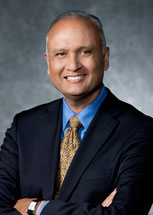
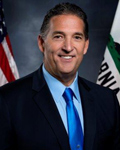
Ed Hernandez
DDemocratic
Co
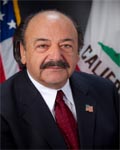
Adrin Nazarian
DDemocratic
Co

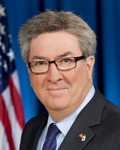
Anthony Cannella
RRepublican
Co
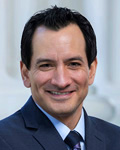
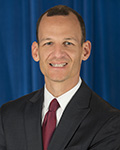
Anthony Rendon
DDemocratic
Co

Autumn R. Burke
DDemocratic
Co
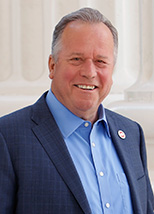
Bill Dodd
DDemocratic
Co

Bill Quirk
DDemocratic
Co

Bob Wieckowski
DDemocratic
Co
BM
Brian Maienschein
DDemocratic
Co

Cathleen Galgiani
DDemocratic
Co
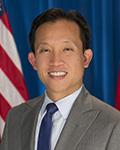
David Chiu
DDemocratic















Ask Maddy
·
AI policy assistant
Ask Maddy about SB 243
Scope: CA
Hi! I can help you understand SB 243. What would you like to know?
Try one of these
i
Maddy answers using official bill text and legislative records. Always verify before sharing.
Sources cited inline