

The Donahoe Higher Education Act establishes the California Community Colleges under the administration of the Board of Governors of the California Community Colleges, the California State University under the administration of the Trustees of the California State University, and the University of California under the administration of the Regents of the University of California as the 3 segments of public postsecondary education in the state. A provision of the act requires each of the 3 segments of public postsecondary education to have as a fundamental policy the maintenance of a healthy and expanded student transfer system. The act applies to the University of California only to the extent that the regents, by appropriate resolution, make it applicable. This bill would require the Trustees of the California State University and the governing boards of community college districts that offer a baccalaureate degree, and would request the Regents of the University of California, to develop and implement transfer agreement and articulation programs to support and enhance the transfer of students attending California tribal colleges to campuses of these public postsecondary segments, as provided. The bill would require the transfer agreement and articulation programs to include specified components, including, among other things, early outreach activities. The bill would also require the California State University and the California Community Colleges, and request the University of California, to assess tools, systems, or curricula designed to facilitate student transfer for students attending California tribal colleges, as provided.
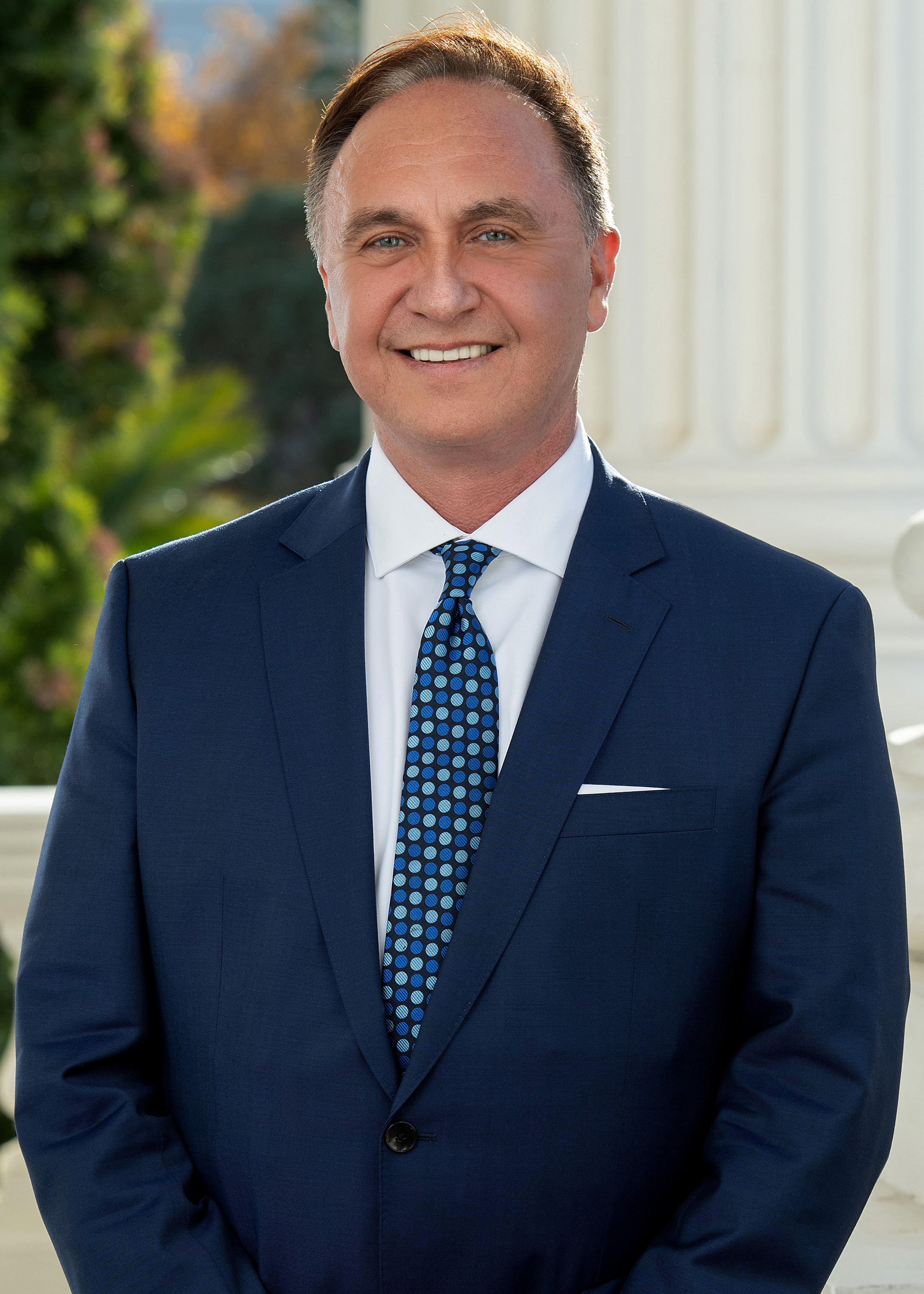
Rep. Rick Zbur
Sponsored bills
Existing law establishes procedures for a judge to disqualify themselves from a case. Under existing law, if a judge who should disqualify themselves refuses or fails to do so, a party may file with the clerk a written verified statement objecting to the hearing or trial before the judge and setting forth the facts constituting grounds for disqualification of the judge. Existing law requires copies of the statement to be served on each party and personally served on the judge alleged to be disqualified or on their clerk, provided that the judge is present in the courthouse or in chambers. This bill would require the statement to be served during regular business hours on the judge alleged to be disqualified at the courthouse in which the judge is sitting. The bill would, in addition to the clerk, permit service of the statement on the designee of the clerk of the court, provided that the judge is present in the courthouse or in chambers.
Existing law governs the determination of child custody and visitation in contested proceedings and requires the court, for purposes of deciding custody, to determine the best interests of the child based on certain factors, including, among other things, the health, safety, and welfare of the child and a history of abuse by a parent or another person seeking custody against specified individuals, including the other parent. As a prerequisite to considering an allegation of abuse, existing law authorizes the court to consider written reports from specified entities, including law enforcement and child protective services. Existing law prohibits the court from considering a person's sex, gender identity, gender expression, or sexual orientation when determining the best interests of the child. The bill would also require the court to consider abuse that resulted in the conception of the child when determining the best interests of the child. Existing law prohibits a person from being granted physical or legal custody of, or visitation with, a child if the person has been convicted of rape and the child was conceived as a result of that violation. This bill, instead, would prohibit a person from being granted custody of, or visitation with, a child if the person has been convicted of an act of sexual assault, as defined, and either the child was conceived as a result of the act or born within 300 days after the act, and the act was one that could result in the conception of a child. Upon a finding by the court, by clear and convincing evidence, that a party seeking custody of a child perpetrated an act of sexual assault that resulted in the conception of the child, as defined, the bill would create a rebuttable presumption that an award of sole or joint physical or legal custody of the child is detrimental to the best interests of the child, which may only be rebutted by clear and convincing evidence to the contrary. Existing law, the Uniform Parentage Act, prescribes various circumstances under which an action may be brought for the purpose of determining the existence or nonexistence of a parent and child relationship and specifies when and by whom the action may be brought. This bill would authorize an action to be brought to declare the nonexistence of the parent and child relationship at any time if the child was conceived as a result of a sexual assault and the father was convicted of that violation. The Uniform Parentage Act defines the "parent and child relationship" as the legal relationship existing between a child and the child's parents, including determining who is a presumed parent. Under existing law, a person is presumed to be the natural parent of a child if they satisfy certain criteria, including, among other things, that the presumed parent and the child's natural mother are, or have been, married to each other and the child is born during the marriage or within 300 days after the marriage is terminated. Existing law creates exceptions to those presumptions, including if the child was conceived as a result of rape or unlawful intercourse, as specified. This bill would instead make that presumption inapplicable if the father was convicted of, or is found by clear and convincing evidence to have committed, an act of sexual assault against the child's mother and either the child was conceived as a result of the act or born within 300 days after the act and the act was one that could result in the conception of a child, unless, after the date of the sexual assault, the child's natural mother and the father voluntarily share the rights and responsibilities of rearing the child. Existing law permits a proceeding to be brought for the purpose of having a child under 18 years of age declared free from the custody and control of either or both parents if the child's parent or parents have been convicted of a felony of a nature that proves the unfitness of the parent or parents to have future custody and control of the child. Existing law authorizes the court to consider a parent's criminal record prior to the felony conviction for these purposes. Existing law authorizes the mother of a child to bring a proceeding for these purposes against the father of the child if the child was conceived as a result of rape and the father was convicted of that violation. Existing law creates a conclusive presumption that the father is unfit to have custody or control of the child if the father is convicted of rape and the child was conceived as a result of that rape. This bill would also authorize the mother of a child to bring a proceeding for these purposes against the father of the child if the child was conceived as a result of an act of sexual assault, as specified. The bill would create a conclusive presumption that the father of the child is unfit to have custody or control of the child if the father is found, by clear and convincing evidence, to have committed an act of sexual assault against the mother and either the child was conceived as a result of the act or born within 300 days after the act and the act was one that could result in the conception of a child, except as specified.
Existing law declares that it is the policy of the state to afford all persons in public schools, regardless of specified characteristics, including race or ethnicity, equal rights and opportunities in the educational institutions of the state, and states that the purpose of related existing law is to prohibit acts that are contrary to that policy and to provide remedies. Existing law defines "race or ethnicity" to include ancestry, color, ethnic group identification, and ethnic background. This bill would define ethnicity to include Jewish identity. Existing law specifies certain requirements relative to state agencies, boards, and commissions that directly or by contract collect demographic data as to the ancestry or ethnic origin of Californians, including the requirement to use separate collection categories and tabulations for each major Asian group and each major Pacific Islander group, as specified. Existing law requires these state agencies to include the demographic data in every demographic report on ancestry or ethnic origins of Californians by the state agency published or released on or after July 1, 2012. Existing law further requires these state agencies to make the collected data available to the public pursuant to state and federal law, except for personal identifying information, which existing law deems confidential. This bill would require a state agency that directly or by contract collects demographic data as to the ancestry or ethnic origin of Californians to use a separate collection category and tabulation for Jewish ancestry or ethnicity, as specified and subject to a certain exception. The bill would require these state agencies to include the demographic data in every demographic report on ancestry or ethnic origins of Californians by the state agency published on or after January 1, 2030. The bill would further require these state agencies to make the collected data available to the public pursuant to state and federal law. The bill would prohibit state agencies from disclosing personal identifying information about any person whose demographic data is collected, and would require those agencies to apply deidentification and privacy protection methods to that data. The bill would limit the purposes for which state agencies can use the demographic data collected under these provisions. The bill would exempt any state agency administering a multiyear grant program with an established end date that began collecting demographic data prior to January 1, 2029, from being required to include or use the demographic category described above for interim or final reports. Existing law requires the Department of Corrections and Rehabilitation to collect voluntary self-identification information pertaining to race or ethnic origin of people admitted, in custody, and released and paroled, including, but not limited to, specified races and ethnic origins. Existing law requires the Department of Corrections and Rehabilitation, based on that voluntary self-identification information, to prepare and publish monthly demographic data pertaining to the race or ethnic origin of people admitted, in custody, and released and paroled, disaggregated by the same race and ethnicity categories used by the department for the purpose of voluntary self-identification information. Existing law requires the data, except for personally identifying information, which existing law deems confidential, to be publicly available on the Department of Corrections and Rehabilitation's internet website via the Offender Data Points dashboard. This bill would include Jewish among those specified races and ethnic origins for self-identification. Existing law requires the Employment Development Department, in the administration of existing law relating to disability compensation, to collect demographic data for individuals who claim disability benefits or family temporary disability insurance benefits, including race and ethnicity data and sexual orientation and gender identity data, as prescribed. Existing law requires the Employment Development Department to develop and make available online a public-facing dashboard that publishes disaggregated demographic data pertaining to program participation by individuals and is updated on at least a quarterly basis. Existing law requires the Employment Development Department to implement these requirements by July 1, 2026. This bill would require the Employment Development Department to collect data on Jewish ancestry or ethnicity for these purposes in accordance with specified demographic data collection requirements for state agencies added by the bill. This bill would become operative on January 1, 2029. Existing constitutional provisions require that a statute that limits the right of access to the meetings of public bodies or the writings of public officials and agencies be adopted with findings demonstrating the interest protected by the limitation and the need for protecting that interest. This bill would make legislative findings to that effect.
The California Constitution provides that people have the right of access to information concerning the conduct of the people's business. Various provisions of existing law, including the California Public Records Act, the Legislative Open Records Act, the Bagley-Keene Open Meeting Act, and the Ralph M. Brown Act, provide, with some exceptions, for public access to government records and meetings of government bodies. Among those acts, the California Public Records Act defines "person" to include any natural person, corporation, partnership, limited liability company, firm, or association. Existing law, the Administrative Procedure Act, governs, among other things, the procedures for the adoption, amendment, or repeal of regulations by state agencies and for the review of those regulatory actions by the Office of Administrative Law. Existing law, the California Environmental Quality Act (CEQA) , requires a lead agency, as defined, to prepare, or cause to be prepared, and certify the completion of an environmental impact report on a project that it proposes to carry out or approve that may have a significant effect on the environment or to adopt a negative declaration if it finds that the project will not have that effect. CEQA defines "person" to include any person, firm, association, organization, partnership, business, trust, corporation, limited liability company, company, district, county, city and county, city, town, and, among other things, the state. Existing law, the California Coastal Act of 1976, establishes the California Coastal Commission and prescribes procedures for the preparation, approval, and certification of local coastal programs that regulate development in the coastal zone, as defined, in jurisdictions that have a certified local coastal program. This bill would specify that, for purposes of the California Public Records Act, the Bagley-Keene Open Meeting Act, the Ralph M. Brown Act, the Legislative Open Records Act, the Administrative Procedure Act, the California Coastal Act of 1976, and CEQA, "person," "interested person," "participant," "member of the public," as applicable, and any other similar terms under each act referring to those who may engage with governmental agencies, do not include artificial intelligence, as defined, systems, autonomous agents, or robots, whether physical or digital. The bill would authorize governmental agencies to use a disclosure verification tool to determine if artificial intelligence is present. The bill would make findings and declarations related to these provisions. The bill would prohibit a person from knowingly using artificial intelligence to falsely represent that a natural person appeared before, submitted information to, or otherwise engaged with a governmental agency. The California Constitution requires local agencies, for the purpose of ensuring public access to the meetings of public bodies and the writings of public officials and agencies, to comply with a statutory enactment that amends or enacts laws relating to public records or open meetings and contains findings demonstrating that the enactment furthers the constitutional requirements relating to this purpose. This bill would make legislative findings to that effect.
Existing law prohibits a person from being subject to civil arrest in a courthouse while attending a court proceeding or having legal business in a courthouse, except pursuant to a valid judicial warrant. Existing law confers specified powers to judicial officers, including to preserve and enforce order in the officer's immediate presence and in proceedings before the officer, to compel obedience to the officer's lawful orders, and to prohibit activities that threaten access to courthouses and court proceedings, including protecting the privilege from civil arrest at courthouses and court proceedings. This bill would prohibit a person from being subject to civil arrest while traveling to, while present at, or while traveling from a courthouse for any lawful activity, as defined. The bill would authorize a court to issue appropriate judicial orders to protect the privilege from civil arrest. Under the bill, a civil arrest in violation of these provisions or the common law privilege against civil arrest would constitute false imprisonment or false arrest if the person was going to, remaining at, or returning from court for any lawful activity, and each person in violation of these provisions or who assists in the violation of these provisions would be liable for civil damages for the tort of false imprisonment or false arrest, including actual damages and statutory damages of $10,000. The bill would authorize a party in a successful action to recover court costs and reasonable attorney's fees. The bill would exempt a court, judicial officer, or court personnel acting lawfully pursuant to their duty to maintain safety and order in the courts from any action or proceeding pursuant to these provisions. This bill would require, when court security personnel are aware that any representative of a law enforcement agency, while acting in an official capacity, enters a courthouse, that court security personnel request the law enforcement representative or representatives identify themselves and state their specific law enforcement purposes and intended enforcement action to be taken, and request from the law enforcement representative or representatives a copy of a valid judicial warrant concerning the intended enforcement action to be taken. The bill would require, if court security personnel are aware there is an attorney representing a person named in the judicial warrant in any capacity, that court security personnel request the law enforcement representative to afford the attorney the right to review the warrant. This bill would require the Judicial Council to annually prepare a report compiling statistics, aggregated by county, of information related to civil arrests, as specified. The bill would require the Judicial Council to publicly post the report on its public internet website. This bill would also make related findings and declarations and specify that the provisions of this act are severable.
The Planning and Zoning Law requires each county and city to adopt a comprehensive, long-term general plan for the physical development of the county or city, and of any land outside its boundaries that bears relation to its planning. Existing law authorizes the legislative body of a county or city to adopt ordinances that, among other things, regulate the use of buildings, structures, and land as between industry, business, residences, open space, and other purposes, as provided. For these purposes, existing law authorizes the legislative body to divide a county or city into zones, but requires that regulations adopted be uniform for each class or kind of building or use of land throughout each zone. The California Environmental Quality Act (CEQA) requires a lead agency, as defined, to prepare an environmental impact report on a project that it proposes to carry out or approve that may have a significant effect on the environment or to adopt a negative declaration if it finds that the project will not have that effect. This bill, the Public Lands Protection Act, would, upon transfer to any private or nonfederal entity of a parcel of land located within the state that is owned by the United States government on or after January 1, 2025, and that has been designated in an adopted general plan or zoning ordinance as open space, public land, resource conservation, or an equivalent conservation-oriented designation, immediately subject that parcel to the zoning designation and associated state and local restrictions. The bill would also, upon transfer of a parcel of land located within the state that is owned by the United States government on or after January 1, 2025, and that has not been designated in an adopted general plan or zoning ordinance at the time of transfer to any private or nonfederal entity, automatically subject that parcel to the most restrictive conservation-oriented zoning designation currently applied in the jurisdiction, by operation of law. The bill would prohibit a parcel of land governed by these provisions from being rezoned, subdivided, or granted any development entitlement that is inconsistent with a conservation-oriented zoning designation, unless certain requirements are satisfied, including that a full environmental impact report is completed in accordance with CEQA. Notwithstanding these provisions, the bill would require electric infrastructure and clean energy facilities necessary to achieve California's climate and decarbonization goals to be deemed permitted uses in a conservation-oriented zoning designation if certain conditions are met. The bill would also exempt certain other parcels from these provisions. This bill would include findings that changes proposed by this bill address a matter of statewide concern rather than a municipal affair and, therefore, apply to all cities, including charter cities. This bill would make these provisions severable. This bill would declare that it is to take effect immediately as an urgency statute.
Existing law imposes taxes upon income and real property, and taxes upon certain transactions and excise taxes. The Fee Collection Procedures Law provides procedures for the collection of certain fees and surcharges and is administered by the California Department of Tax and Fee Administration (CDTFA) . Under existing law, a violation of the Fee Collection Procedures Law is a crime. This bill would, beginning July 1, 2028, establish the Private Detention Facility Tax Law, which would impose an annual tax on each private detention facility operator, as defined, equal to 25% of the operator's gross income, as defined, for the prior fiscal year, as defined. The bill would establish the Due Process for All Fund in the State Treasury, except as provided, and would require all revenues collected, less refunds and reimbursement to the CDTFA, be deposited into the fund. In the event that Assembly Bill 2465 is enacted, the bill would instead require all revenues be deposited into the Due Process for All Fund as established by that bill. The bill would direct moneys in the fund, upon appropriation by the Legislature, be used for immigration-related services. The bill would require the CDTFA to administer and collect the tax pursuant to the Fee Collection Procedures Law. By expanding the application of the crimes associated with the Fee Collection Procedures Law, the bill would impose a state-mandated local program. This bill would include a change in state statute that would result in a taxpayer paying a higher tax within the meaning of Section 3 of Article XIIIA of the California Constitution, and thus would require for passage the approval of 23 of the membership of each house of the Legislature. The California Constitution requires the state to reimburse local agencies and school districts for certain costs mandated by the state. Statutory provisions establish procedures for making that reimbursement. This bill would provide that no reimbursement is required by this act for a specified reason. This bill would take effect immediately as a tax levy.
The Donahoe Higher Education Act sets forth the missions and functions of the public institutions of higher education, including the University of California, administered by the Regents of the University of California, the California State University, administered by the Trustees of the California State University, and the California Community Colleges, administered by the Board of Governors of the California Community Colleges. The provisions of the Donahoe Higher Education Act apply to the University of California only to the extent that the Regents of the University of California, by appropriate resolution, make them applicable. This bill would prohibit the University of California, California State University, or California Community Colleges from disqualifying a student from being hired for an employment position due to the student's failure to provide proof of federal work authorization, except where that proof is required by federal law or where that proof is required as a condition of a grant that funds the particular employment position for which the student has applied. This bill would require the University of California, the California State University, and the California Community Colleges to treat a specified prohibition in federal law on hiring undocumented noncitizens as inapplicable because that provision does not apply to any branch of state government. The bill would further provide that, to the extent student employment is considered a "benefit" for purposes of federal law, the bill constitutes authorization to provide that benefit for purposes of specified federal law. This bill would require the University of California, the California State University, and the California Community Colleges to implement the bill by January 6, 2027. The bill's provisions would apply to the University of California, unless it is found inapplicable to the University of California and then only to the extent that the Regents of the University of California, by appropriate resolution, make them applicable. By imposing new duties on community college districts, the bill would impose a state-mandated local program. The California Constitution requires the state to reimburse local agencies and school districts for certain costs mandated by the state. Statutory provisions establish procedures for making that reimbursement. This bill would provide that, if the Commission on State Mandates determines that the bill contains costs mandated by the state, reimbursement for those costs shall be made pursuant to the statutory provisions noted above.
Maddy summaryThis bill designates September 2026 as Childhood Cancer Awareness Month. It directly affects state agencies and organizations by encouraging them to recognize this specific month for awareness activities. The measure does not change laws or allocate funding but serves as a formal commemorative resolution.