

Existing law, the Uniform TOD Security Registration Act, provides for the transfer of ownership or proceeds of a security, as defined, by a registering entity to the designated beneficiary or beneficiaries upon the death of the owner without probate or estate administration. Existing law authorizes a security to be registered in beneficiary form if the form is authorized by statute, as specified. Existing law specifies that, upon the death of the sole owner or the last to die of multiple owners, ownership of a security registered in beneficiary form passes to the beneficiary or beneficiaries who survive all owners. This bill would require a registering entity that receives information establishing knowledge of the death of all owners of a security designated for nonprobate transfer held by that registering entity to initiate its beneficiary notification process, as specified. The bill would require the registering entity to make a reasonable and good faith effort, as defined, to notify each named beneficiary. The bill would require a beneficiary to receive their designated share within 60 days of providing all required documentation to the registering entity, as specified. This bill would specify the necessary information for a nonprofit corporation, charitable trust, or entity that is exempt from federal taxation to establish its legal identity for these purposes. The bill would prohibit a registering entity from requesting additional information, including, among other things, a social security number and driver's license number, from an individual employed by, or serving on the board of, those types of beneficiaries, except as specified. The bill would require a registering entity to permit those types of beneficiaries to demonstrate their entitlement to a security by providing specific documentation. The bill would make its provisions applicable to those types of beneficiaries commencing January 1, 2027. The bill would make its provisions applicable to all other beneficiaries commencing January 1, 2028, if the death of the final owner occurs on or after that date. This bill would make its provisions inapplicable if the death of all owners of a security occurred before January 1, 2027.
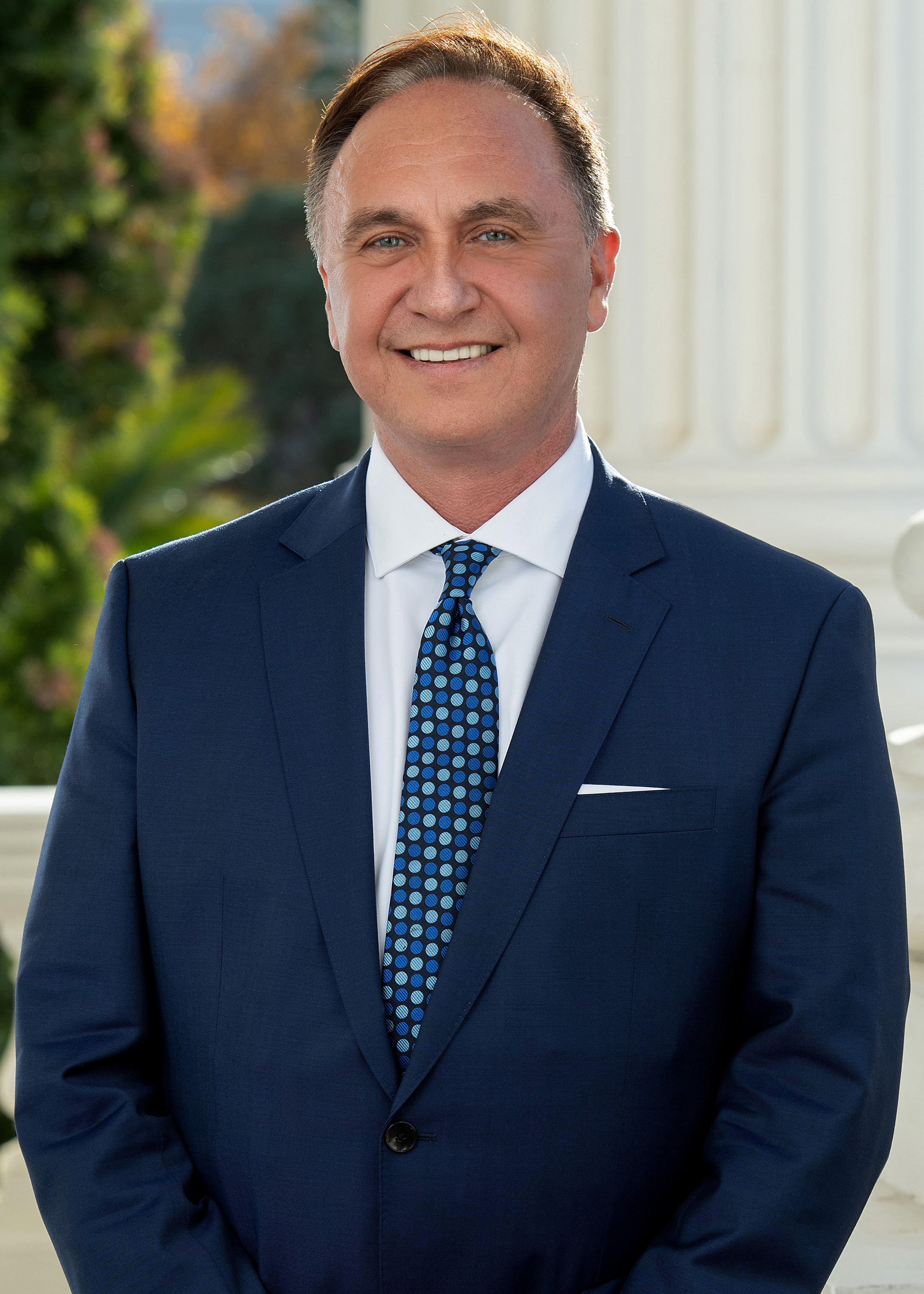
Rep. Rick Zbur
Sponsored bills
Existing law requires, until July 1, 2027, the Attorney General, or their designee, to engage in reviews of county, local, or private locked detention facilities in which noncitizens are being housed or detained for purposes of civil immigration proceedings in California, and, on or before March 1, 2019, to conduct a review of these facilities, as specified, including a review of the circumstances of apprehension and transfer. Existing law also requires the Department of Justice to provide, during the budget process, updates and information to the Legislature and the Governor, concerning the reviews, as provided and pursuant to a specified date. Existing law requires the comprehensive report to be completed by March 1, 2019, and to be posted on the Attorney General's internet website and made available to the public, as provided. Existing law makes these provisions inoperative on July 1, 2027, and repeals those provisions January 1, 2028. This bill would delete all dates specified above, including inoperative and repeal provisions, thereby indefinitely extending those provisions, and would delete the requirement for the review to include an individual's circumstances of apprehension and transfer. The bill would also make nonsubstantive changes.
Existing law makes it a crime to, by force, threat of force, or physical obstruction that is a crime of violence, intentionally injure, intimidate, interfere with, or attempt to injure, intimidate, or interfere with any person lawfully exercising or seeking to exercise the First Amendment right of religious freedom at a place of religious worship. This bill would make it unlawful for a person to, within a radius of 100 feet from an entrance or exit of a place of religious worship, as defined, intentionally approach another person seeking to enter or exit a place of religious worship within 8 feet of that person to either pass a leaflet or handbill to, display a sign to, or engage in oral protest or education or to harass, obstruct, threaten, or intimidate the person or occupant. The bill would, for the purposes of determining that distance, measure from the body of the person seeking to enter or exit, or the exterior of a motor vehicle they occupy, to the body of, or any sign or object held by, the other person. The bill would prescribe specified fines, imprisonment, or fine and imprisonment for a violation of these provisions. By creating a new crime, the bill would impose a state-mandated local program. The California Constitution requires the state to reimburse local agencies and school districts for certain costs mandated by the state. Statutory provisions establish procedures for making that reimbursement. This bill would provide that no reimbursement is required by this act for a specified reason.
Existing law establishes various protections for California Native American tribes, including prohibiting a public agency or private party using or occupying public property or operating on public property from interfering with the free expression or exercise of Native American religion as provided in the United States Constitution and the California Constitution. Existing law also requires a local government to provide formal notification to each California Native American tribe that is traditionally and culturally affiliated with the project site as an invitation to consult on the proposed project, as provided. Existing law requires the local government, during the consultation, to give deference to the tribal information, tribal knowledge and customs, and the significance of the resource to the California Native American tribe. Existing law prohibits any information, as described, that is submitted by a California Native American tribe during the environmental review process from being included in the environmental document or otherwise disclosed by the lead agency or any other public agency to the public, as specified, without the prior consent of the tribe that provided the information. Existing law, the California Public Records Act, requires each state and local agency, as defined, to make its records open to public inspection at all times during office hours, except as specifically exempted from disclosure by law. The act specifically exempts from disclosure records that are exempted or prohibited from disclosure by federal or state law and lists records subject to that exemption, specifying that the listed exemptions are not inclusive of all exemptions under the act. This bill, the California Indian Freedom Act of 2026, would, commencing January 1, 2028, prohibit a governmental agency from substantially burdening a California Indian or California Native American tribe's exercise of religious beliefs or spiritual practices on state lands, except as necessary to protect public safety and security, including their access to and use of sacred sites and objects, and their ability to perform religious ceremonies and rites, even if the burden results from a rule of general applicability, unless the governmental agency demonstrates that application of the burden is in furtherance of a compelling governmental interest and is in the least restrictive means of furthering that interest. The bill would provide that a California Native American tribe has exclusive standing to assert a violation of these provisions and would authorize a California Native American tribe to assert a violation of these provisions as a claim or defense in any judicial or administrative proceeding, as specified. The bill would require a governmental agency to allow California Indians access to sacred sites on state lands, as specified. The bill would require a governmental agency to seek and document free, prior, and informed consent from affected tribes before undertaking any physical change to a state land, as described, which the agency has actual knowledge is a sacred site where the action may pose a risk to sacred sites, as specified. The bill would require the affirmation of consent from the governing body of the affected tribe to be in writing, as described. This bill would require the Department of General Services, in coordination with the Capitol Protective Section and the Joint Rules Committee, to the greatest extent possible, to uphold the religious freedom, ceremonial practices, sacred sites, cultural patrimony, and cultural landscapes of tribes when accessing the State Capitol grounds. The bill would require the Joint Rules Committee, in coordination with the Capitol Protective Section and the State Senate Capitol Security Program, to the greatest extent possible, to uphold the religious freedom, ceremonial practices, sacred sites, cultural patrimony, and cultural landscapes of tribes when accessing the State Capitol Building, as specified. This bill would provide that the application of the act is strictly limited to a governmental agency's management actions that involve only state lands, as specified. The bill would declare that specified provisions of the bill do not apply to the authority of the State Water Resources Control Board to authorize, curtail, or otherwise regulate the diversion and use of water, or to the Porter-Cologne Water Quality Control Act. This bill would require information identifying sacred sites, cultural landscapes, or religious practices obtained by a governmental agency for the purposes of the California Indian Freedom Act of 2026 to be confidential and would exempt this information from public record laws, including the California Public Records Act. The bill would revise the list of exempted records under the California Public Records Act to add the above-described exemption. The bill would prohibit the provisions of the act from being construed to limit or restrict the authority of the state or any state agency to enter into an agreement, memorandum of understanding, or other arrangement with any tribe to allow access to any state lands for the purpose of conducting religious, cultural, or ceremonial practices. The bill would define various terms for these purposes and would make related legislative findings. Existing constitutional provisions require that a statute that limits the right of access to the meetings of public bodies or the writings of public officials and agencies be adopted with findings demonstrating the interest protected by the limitation and the need for protecting that interest. This bill would make legislative findings to that effect.
Existing federal law, the National Suicide Hotline Designation Act of 2020, designates the 3-digit telephone number "988" as the universal number within the United States for the purpose of the national suicide prevention and mental health crisis hotline system operating through the 988 Suicide and Crisis Lifeline. Existing law, the Miles Hall Lifeline and Suicide Prevention Act, requires, among other things, the Office of Emergency Services (OES) to verify that technology that allows for transfers between 988 centers, as well as between 988 centers and 911 public safety answering points, is available to 988 centers and 911 public safety answering points throughout the state, to appoint a 988 system director, and to verify interoperability between and across 911 and 988. Existing law establishes the 988 State Suicide and Behavioral Health Crisis Services Fund and provides that 988 surcharge revenue in the fund is available, upon appropriation by the Legislature, for purposes of the act. This bill would require the California Health and Human Services Agency (agency) to annually determine whether an adequate specialized LGBTQ+ suicide prevention hotline is activated by the federal government under 988. When making this determination, the bill would require the agency to consider specified factors, including, among other things, any factor the agency considers relevant to evaluating the adequacy of press 3 operations. The bill would authorize the agency to, no later than 6 months after its determination, request the federal Substance Abuse and Mental Health Services Administration (SAMHSA) to allow the state to implement the press 3 function at the state level for calls originating in the State of California, which would allow callers to dial "988" and press "3" to be automatically routed to a specialized 988 center. The bill would require OES and the agency to, no later than 12 months following the approval by SAMHSA, ensure that press 3 function technologies are available. This bill would require, no later than 12 months following approval by SAMHSA, the agency to identify and contract with a qualified entity or entities that specialize in LGBTQ+ suicide prevention services. The bill would require the agency to determine the eligibility criteria, establish an application process, and administer funds to the qualified entity, as specified. The bill would require a qualified entity to comply with various requirements, including having a primary objective of reducing suicide rates or addressing mental health crises. The bill would make its implementation subject to an appropriation by the Legislature, as specified. This bill would declare that it is to take effect immediately as an urgency statute.
Existing law describes the California Interscholastic Federation (CIF) as a voluntary organization that consists of school and school-related personnel with responsibility for administering interscholastic athletic activities in secondary schools, and sets forth the Legislature's intent regarding the CIF's implementation of certain policies. Existing law requires the CIF, on or before January 1, 2023, and on or before January 1 every 7 years thereafter, to report to the appropriate policy committees of the Legislature and the Governor on its evaluation and accountability activities undertaken pursuant to specified provisions. Existing law requires the report to include the goals and objectives of the CIF with regard to, and the status of, among other things, the quality of coaching and officiating, as provided. Existing law requires all noncertificated candidates, prior to assuming a paid or volunteer position to work with pupils in a pupil activity program sponsored by a school district, including an interscholastic program, to obtain an Activity Supervisor Clearance Certificate from the Commission on Teacher Credentialing. Existing law requires the commission, upon verification of a candidate's personal identification and verification that the candidate meets specified requirements, to initially issue an Activity Supervisor Clearance Certificate to the candidate for a 5-year period and authorizes the certificate to be renewed, as provided. This bill would require the CIF to verify the eligibility of its officials to officiate CIF contests by requiring those officials to annually register through a platform, as provided. The bill would require the platform to consist of (1) , until July 1, 2028, a statewide and standardized background screening, (2) , commencing July 1, 2028, a record of a valid Activity Supervisor Clearance Certificate issued by the commission, including the applicable expiration date, (3) a record of rules tests, online training modules, sport-specific annual certification, and continuing education requirements, and (4) a record of liability insurance coverage. The bill would require the CIF to verify, as specified, that all components of the platform are complete before an official is deemed and marked as eligible to receive an assignment to officiate. The bill would require the CIF to ensure that its participating member schools, school districts, county offices of education, and charter schools can access the platform to verify the eligibility of an official, as specified. The bill, commencing July 1, 2028, would require the commission to regularly publish a list on its internet website of Activity Supervisor Clearance Certificate holders who have their certificate suspended or revoked by the commission and would require the CIF to ensure that the platform selected by the CIF regularly reviews the list published by the commission in order to update the eligibility of the officials whose Activity Supervisor Clearance Certificate has been suspended or revoked.
Existing law prohibits a person from using a bot, as defined, to mislead another person about the bot's artificial identity to incentivize the purchase or sale of goods or services, among other things. Existing law requires an operator of a companion chatbot, as defined, to provide a disclosure regarding the companion chatbot's artificial identity if a reasonable person interacting with the companion chatbot would be misled to believe that the person is interacting with a human. This bill would prohibit a large private business, as defined, from representing that a customer service chatbot is a human. The bill would also require the large private business to provide certain disclosures if a reasonable person interacting with the chatbot would be misled to believe they are interacting with a human. This bill would require a large private business to provide a customer service feature allowing customers to contact a customer service agent during its regular business hours, as defined. This bill would require, except as specified, large private businesses to make a good faith effort to connect a customer to an agent within 15 minutes after a request for human customer service is made, or schedule an appointment with the customer, as specified. For online chatbot customer service platforms and telephonic customer service platforms, the bill would require a large private business to make a good faith effort to limit initial and cumulative telephonic hold times, and would require certain large private businesses to post prescribed contact information on their internet website. The bill would authorize a public prosecutor to enforce these provisions, and would make a large private business that violates these provisions liable for a penalty of up to $5,000 for an initial violation, and $10,000 for each subsequent violation. The bill would waive its requirements due to unforeseen circumstances beyond the reasonable control of a large private business or extraordinary or emergency situations, and would exempt a large private business that provides services subject to, and is in compliance with, specified public utilities law. The bill would further exempt exclusive business lines and communications by a hospital, as specified, and a consumer reporting agency, as prescribed. The bill would define terms for these purposes.
Existing law provides comprehensive regulation of ticket sellers, defined as a person who, for compensation, commission, or otherwise, sells admission tickets to a sporting, musical, theater, or any other entertainment event. In this regard, existing law, among other things, prohibits specified ticket selling practices and imposes certain recordkeeping and disclosure requirements. If an event is canceled, existing law requires that the ticket price be fully refunded to the consumer whether by an original seller, event presenter, ticket reseller, or ticket resale marketplace, as specified. If an event is postponed, rescheduled, or replaced with another event at the same date and time, existing law requires the ticket seller to fully refund the purchaser upon request, as provided. Existing law makes a violation of those provisions a misdemeanor, and imposes civil penalties for certain violations. Existing unfair competition laws make various unfair competition practices unlawful, including any unlawful, unfair, or fraudulent business act or practice and unfair, deceptive, untrue, or misleading advertising. Existing law makes it unlawful for any person doing business in California and advertising to consumers in California to make any false or misleading advertising claim. Existing law makes a person who violates specified false advertising provisions liable for a civil penalty, as specified, and provides that a person who violates those false advertising provisions is guilty of a misdemeanor. This bill would generally revise and recast the provisions regulating the sale of event tickets to impose similar requirements, as applicable, to original sellers, event presenters, ticket resellers, and ticket resale marketplaces, as defined. This bill would prohibit a ticket seller from engaging in a speculative ticket sale, as defined. The bill would require that a ticket resale marketplace implement reasonable measures designed to prevent speculative ticket sales on its platform. The bill would make an original seller, ticket reseller, or ticket retail marketplace that violates particular law and fails to supply a ticket, as specified, civilly liable to the ticket purchaser for 2 times the contracted price of the ticket, in addition to any sum expended by the purchaser in nonrefundable expenses for attending or attempting to attend the event, and other fees and costs. This bill would make certain acts unlawful, including purchasing tickets in excess of posted limits for an online event ticket sale and circumventing or evading a ticket distribution control, as specified. The bill would also prohibit a person from using an internet website or address that is substantially similar to the internet website of an event presenter, venue operator, rights holder, original seller, or an authorized agent with intent to confuse or deceive consumers, as specified. The bill would make a violation of these provisions false or misleading advertising. By expanding the scope of a crime, this bill would impose a state-mandated local program. By expanding the scope of certain requirements related to selling those tickets, the violation of which is a crime, this bill would impose a state-mandated local program. The California Constitution requires the state to reimburse local agencies and school districts for certain costs mandated by the state. Statutory provisions establish procedures for making that reimbursement. This bill would provide that no reimbursement is required by this act for a specified reason.
Existing law sets forth provisions, under the California Constitution, regarding the fundamental right to choose to have an abortion. Existing law, the Reproductive Privacy Act, prohibits the state from denying or interfering with a pregnant person's right to choose or obtain an abortion prior to viability of the fetus, or when the abortion is necessary to protect the life or health of the pregnant person. This bill, the Access to Safe Abortion Care Act, would make legislative findings about medication abortion, with a focus on use of the drugs mifepristone and misoprostol. Under the bill, the Legislature would reaffirm that it has been, and would continue to be, lawful to cause the delivery of, or mail, ship, take, receive, or otherwise transport, any drug, medicine, or instrument that can be designed or adapted to produce an abortion that is lawful in the State of California. The bill would set forth provisions regarding the lack of civil or criminal liability, or professional disciplinary action, for accessing or administering brand name or generic mifepristone or any drug used for medication abortion that is lawful under the laws of the state, on or after January 1, 2020, with this provision applied retroactively, as specified. The bill would make its provisions severable.
Existing law generally designates the State Air Resources Board as the state agency with the primary responsibility for the control of vehicular air pollution, and air pollution control districts and air quality management districts with the primary responsibility for the control of air pollution from all sources other than vehicular sources. Existing law requires the state board to inventory sources of air pollution within the air basins of the state, determine the kinds and quantity of air pollutants, and monitor air pollutants in cooperation with districts and other agencies. This bill would require the state board to expand its incident air monitoring program, subject to an appropriation by the Legislature for those purposes, to provide support for a regional network of air quality incident response centers, including at least one air quality incident response and evaluation center located at the South Coast Air Quality Management District, in order to facilitate emergency air monitoring response at the local and regional level. The bill would require each air quality incident response center to be operated by the state board or an air district and would require the state board and each district that operates an air quality incident response center to coordinate to provide emergency air monitoring response for disasters or other crises impacting air quality and public health in the state. The bill would provide that funding made available by the Legislature for purposes of these provisions may be used for various purposes, including program funding to plan, create, equip, and maintain air quality incident response centers. To the extent that the bill would expand the duties of an air district, the bill would impose a state-mandated local program. The California Constitution requires the state to reimburse local agencies and school districts for certain costs mandated by the state. Statutory provisions establish procedures for making that reimbursement. This bill would provide that, if the Commission on State Mandates determines that the bill contains costs mandated by the state, reimbursement for those costs shall be made pursuant to the statutory provisions noted above.