AB 1609 California Assembly · 2025-2026 Regular Session

Customer service chatbots.

Summary
Existing law prohibits a person from using a bot, as defined, to mislead another person about the bot's artificial identity to incentivize the purchase or sale of goods or services, among other things. Existing law requires an operator of a companion chatbot, as defined, to provide a disclosure regarding the companion chatbot's artificial identity if a reasonable person interacting with the companion chatbot would be misled to believe that the person is interacting with a human. This bill would prohibit a large private business, as defined, from representing that a customer service chatbot is a human. The bill would also require the large private business to provide certain disclosures if a reasonable person interacting with the chatbot would be misled to believe they are interacting with a human. This bill would require a large private business to provide a customer service feature allowing customers to contact a customer service agent during its regular business hours, as defined. This bill would require, except as specified, large private businesses to make a good faith effort to connect a customer to an agent within 15 minutes after a request for human customer service is made, or schedule an appointment with the customer, as specified. For online chatbot customer service platforms and telephonic customer service platforms, the bill would require a large private business to make a good faith effort to limit initial and cumulative telephonic hold times, and would require certain large private businesses to post prescribed contact information on their internet website. The bill would authorize a public prosecutor to enforce these provisions, and would make a large private business that violates these provisions liable for a penalty of up to $5,000 for an initial violation, and $10,000 for each subsequent violation. The bill would waive its requirements due to unforeseen circumstances beyond the reasonable control of a large private business or extraordinary or emergency situations, and would exempt a large private business that provides services subject to, and is in compliance with, specified public utilities law. The bill would further exempt exclusive business lines and communications by a hospital, as specified, and a consumer reporting agency, as prescribed. The bill would define terms for these purposes.
Bill status passed both 4 of 5 stages cleared
Introduction
Jan 2026
Committee Review
Aug 2026
Assembly Passage
May 2026
Senate Passage
Aug 2026
Governor
Introduced Jan 20, 2026 Last action Aug 30, 2026
Maddy AI version diff · 7 comparisons

What changed between versions

08/13/26 - Amended Senate 08/20/26 - Amended Senate · 6 edits · Aug 20, 2026
MODERATE
The August 20 Senate amendment to AB 1609 makes several substantive changes: it broadens the 'exclusive business lines' exemption to cover all B2B communications rather than only contract-related ones, adds a new alternative compliance path for businesses subject to Title 16 Section 1707.2 (returning calls within one business hour instead of connecting within 15 minutes), lowers the chatbot disclosure trigger from 'would be misled' to 'is likely to be misled,' and corrects several drafting errors including a duplicated date in the telephonic service exemption.
SCOPE

The definition of 'exclusive business lines' was significantly simplified and broadened. The old version limited the exemption to lines used for employee/employer issues or B2B matters pertaining to a contract. The new version exempts any communications channel not intended for general customer use that is used solely by employees or by other entities for business-to-business communications, removing the 'pertaining to a contract' limitation.

REQUIREMENT

A new provision (Section 22627(b)(2)) allows a large private business subject to Section 1707.2 of Title 16 of the California Code of Regulations to satisfy the 15-minute connection requirement by returning a phone call within one business hour instead.

The chatbot disclosure trigger in Section 22626(b) was changed from 'would be misled' to 'is likely to be misled,' lowering the threshold for when a business must disclose that a chatbot is not human.

TECHNICAL

Section 22628(e) corrected a drafting error where both 'January 1, 2026' and '2027' appeared. The date is now clearly stated as January 1, 2027 for the telephonic customer service exemption.

Section 22628(g)(1) cleaned up garbled language in the public utilities exemption, clarifying that compliance with a corrective action plan (if any) applies to all listed Public Utilities Commission orders (General Order 133 and General Order 103-A).

Section 22627(a) removed redundant 'clear and conspicuous' language from the customer service feature requirement, leaving only 'simple customer service feature.' The 'clear and conspicuous' standard remains in Section 22626(c) for chatbot disclosures.

Floor votes · Senate Aug 30, 2026 · Assembly May 27, 2026

How they voted

309
Passed · 1 other
Total votes 40
Aug 30, 2026
D Democratic30
30 Yea
100% Yea
R Republican10
9 Nay 1
90% Nay
Vote distribution
All Yea All Nay Mixed No data
Full legislative history

Actions timeline

Total actions
28
Key actions
11
Committee
13
Amendments
8
Aug 30, 2026
Introduced
In Assembly. Concurrence in Senate amendments pending.
lower
Aug 30, 2026
Upper · Passed
Read third time. Passed. Ordered to the Assembly. (Ayes 29. Noes 9.).
upper
Aug 20, 2026
Upper · Passed
Read third time and amended. Ordered to second reading.
upper
Aug 13, 2026
Upper · Passed
Read second time and amended. Ordered returned to second reading.
upper
Aug 13, 2026
Introduced
From committee: Amend, and do pass as amended. (Ayes 5. Noes 2.) (August 13).
upper
Aug 3, 2026
Committee
In committee: Referred to APPR. suspense file.
upper
Jul 1, 2026
Upper · Passed
From committee: Do pass and re-refer to Com. on APPR. (Ayes 11. Noes 1.) (June 30). Re-referred to Com. on APPR.
upper
Jun 25, 2026
Introduced
From committee chair, with author's amendments: Amend, and re-refer to committee. Read second time, amended, and re-referred to Com. on JUD.
upper
Jun 23, 2026
Upper · Passed
From committee: Do pass and re-refer to Com. on JUD. (Ayes 7. Noes 0.) (June 22). Re-referred to Com. on JUD.
upper
Jun 10, 2026
Introduced
From committee chair, with author's amendments: Amend, and re-refer to committee. Read second time, amended, and re-referred to Com. on P., D.T., & C.P.
upper
Jun 10, 2026
Committee
Referred to Coms. on P., D.T., & C.P. and JUD.
upper
May 27, 2026
Lower · Passed
Read third time. Passed. Ordered to the Senate. (Ayes 56. Noes 16.)
lower
May 14, 2026
Lower · Passed
From committee: Do pass. (Ayes 11. Noes 4.) (May 14).
lower
May 6, 2026
Committee
In committee: Set, first hearing. Referred to APPR. suspense file.
lower
Apr 22, 2026
Lower · Passed
From committee: Do pass and re-refer to Com. on APPR. (Ayes 9. Noes 3.) (April 21). Re-referred to Com. on APPR.
lower
Apr 16, 2026
Lower · Passed
From committee: Do pass and re-refer to Com. on JUD. (Ayes 9. Noes 4.) (April 16). Re-referred to Com. on JUD.
lower
Apr 15, 2026
Committee
Re-referred to Com. on P. & C.P.
lower
Apr 14, 2026
Introduced
From committee chair, with author's amendments: Amend, and re-refer to Com. on P. & C.P. Read second time and amended.
lower
Mar 31, 2026
Lower · Passed
In committee: Hearing postponed by committee.
lower
Mar 23, 2026
Committee
Re-referred to Com. on P. & C.P.
lower
Mar 19, 2026
Introduced
From committee chair, with author's amendments: Amend, and re-refer to Com. on P. & C.P. Read second time and amended.
lower
Mar 19, 2026
Committee
Referred to Coms. on P. & C.P. and JUD.
lower
Jan 21, 2026
Lower · Passed
From printer. May be heard in committee February 20.
lower
1 primary · 0 co-sponsors

Sponsors

Role
Legislator
Party
State
District
P
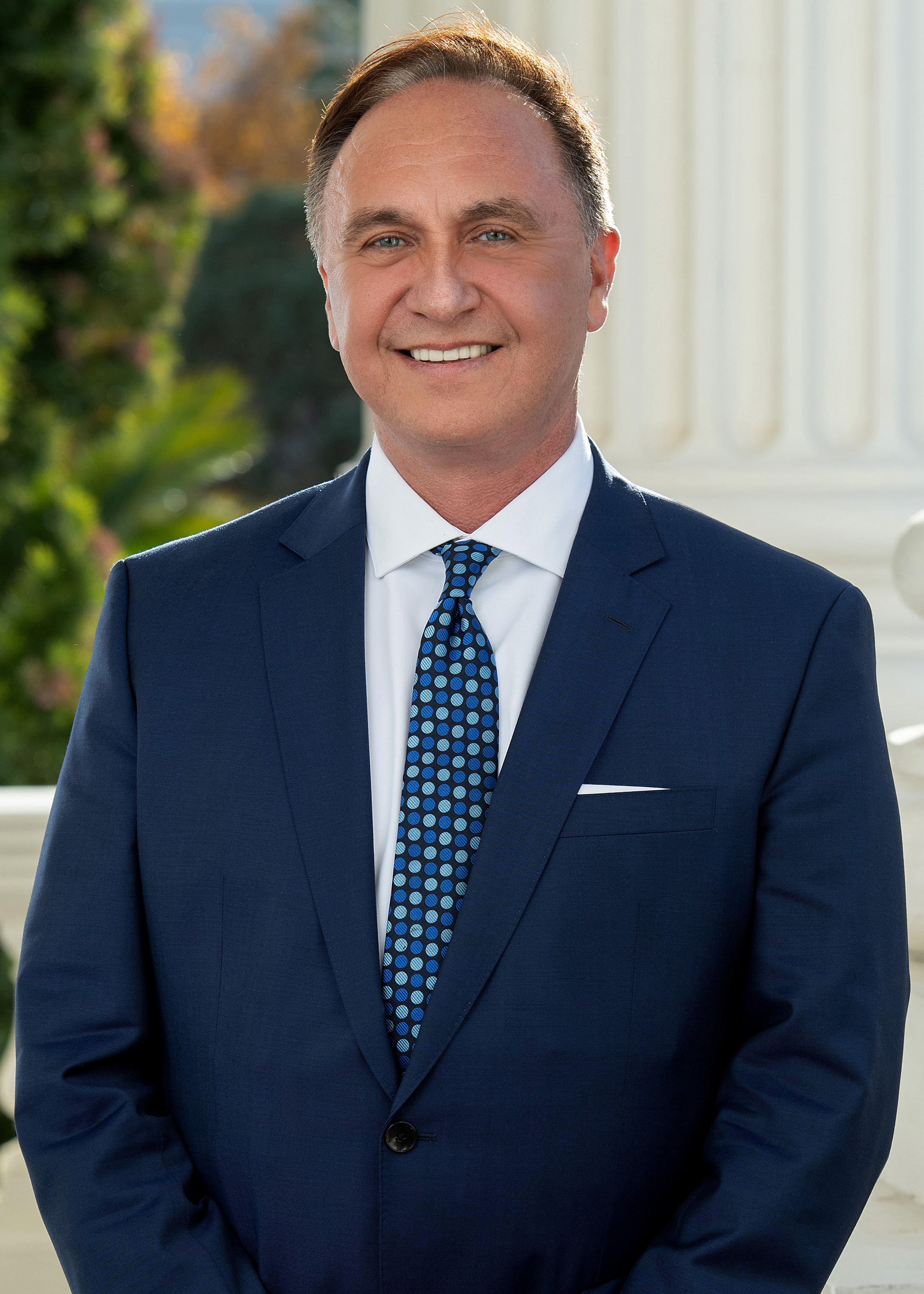
Photo of Rick Zbur
Rick Zbur
DDemocratic
CA
51