

Passed Jan 25, 2024
1 co-sponsor
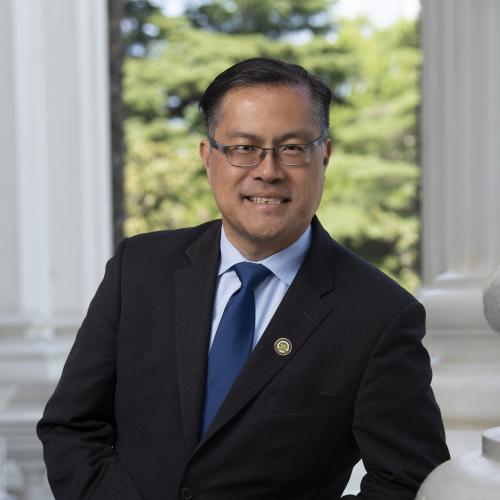
Asm. Mike Fong
Total votes
16,471
all sessions
Attendance
99%
141 missed
Near the chamber average
With party
99%
of cast votes
Near the chamber average
Bipartisan score
0%
crosses aisle rarely
Near the chamber average
Sponsored
851
bills & resolutions
Near the chamber average
Committees
13
assignments
851 bills and resolutions
Sponsored bills
Total
851
Primary
85
Co-sponsor
766
This page
851
matching current filters
Passed Jan 18, 2024
1 co-sponsor
Passed Jan 16, 2024
1 co-sponsor
Individuals with disabilities: The Dignity for All Act.
Existing law includes the terms "mentally retarded persons," "mentally retarded children," "retardation," and "handicap." This bill, The Dignity for All Act, would make nonsubstantive changes to those provisions to eliminate this obsolete terminology. The bill would repeal obsolete provisions of law.
Signed into law Oct 13, 2023
1 co-sponsor
University of California: California Native American Graves Protection and Repatriation Act of 2001.
The California Constitution provides that the University of California constitutes a public trust, and requires the university to be administered by the Regents of the University of California, a corporation in the form of a board, with full powers of organization and government, subject to legislative control only for specified purposes. The California Native American Graves Protection and Repatriation Act of 2001 requires all agencies and museums, which is defined to include higher education institutions, that receive state funding and have possession or control over collections of California Native American human remains and associated funerary objects to inventory those remains and objects for repatriation to the appropriate California Indian tribes, as specified. This bill would urge the University of California to, on or before June 30, 2024, and annually thereafter, report each University of California campus's progress towards completing repatriation pursuant to the California Native American Graves Protection and Repatriation Act of 2001. The bill would urge the office of the President of the University of California to provide available funding to sufficiently support those efforts. The bill would urge the University of California to prohibit use of any Native American human remains or cultural items for purposes of teaching or research at the University of California. Existing law requires the California State Auditor to conduct an audit commencing in the year 2019 and again in 2021 regarding the University of California's compliance with the federal and California acts and to report its findings to the Legislature and all other appropriate entities. This bill would require the California State Auditor to additionally conduct an audit again in 2024 and 2026, and to also report its findings to the Native American Heritage Commission.
Signed into law Oct 10, 2023
1 co-sponsor
Community colleges: Lunar New Year holiday.
Existing law establishes various holidays in this state, including Lunar New Year. Existing law requires community colleges to close on specified holidays, including February 12, known as "Lincoln Day," and the third Monday in February, known as "Washington Day." Existing law entitles certain community college employees to be given time off with pay for specified holidays, including for Lincoln Day and Washington Day. This bill would authorize the governing board of a community college district, pursuant to a memorandum of understanding, to replace closing on Lincoln Day or Washington Day with the date corresponding with the second new moon following the winter solstice, or the third new moon following the winter solstice should an intercalary month intervene, known as "Lunar New Year." The bill would require that certain community college employees, in lieu of a paid holiday for Lincoln Day or Washington Day, receive a paid holiday for the Lunar New Year if the governing board of the community college replaces closing on Lincoln Day or Washington Day with closing on Lunar New Year.
Signed into law Oct 8, 2023
1 co-sponsor
Local government: emergency response services: use of languages other than English.
Existing law requires every local public agency that serves a substantial number of non-English-speaking people to employ a sufficient number of qualified bilingual persons in public contact positions or as interpreters to ensure provision of information and services in the language of the non-English-speaking person. Existing law requires that any materials explaining services available to the public shall be translated into any non-English language spoken by a substantial number of the public served by the agency. This bill would require, commencing January 1, 2025, in the event of an emergency within the jurisdiction of a local agency, as defined, that provides emergency response services and that serves a population within which 5% or more of the people speak English less than "very well" according to American Community Survey data and jointly speak a language other than English, that the local agency provide information related to the emergency in English and in all languages spoken jointly by the 5% or more of the population that speaks English less than "very well." The bill would require local agencies to use data by January 1, 2025, as specified, to determine which languages are spoken jointly by 5% or more of the population in its jurisdiction and to reassess that data every 5 years. The bill would impose various requirements on the manner in which information is provided in languages other than English. The bill would also require the Office of Planning and Research to survey a sample of local agencies every 3 years to determine compliance with these requirements and to report its findings to the Legislature. Because the bill would require local agencies to provide a higher level of service, the bill would impose a state-mandated local program. The California Constitution requires the state to reimburse local agencies and school districts for certain costs mandated by the state. Statutory provisions establish procedures for making that reimbursement. This bill would provide that, if the Commission on State Mandates determines that the bill contains costs mandated by the state, reimbursement for those costs shall be made pursuant to the statutory provisions noted above.
Signed into law Oct 8, 2023
0 co-sponsors
Educational instruction: language of instruction.
Existing law requires English to be the basic language of instruction in all schools and authorizes the governing board of a school district or community college district, and any private school to determine when and under what circumstances instruction may be given bilingually. Existing law declares that it is the policy of the state to ensure the mastery of English by all pupils in schools, as provided. This bill would authorize a community college to offer courses taught in languages other than English without requiring students who enroll in those courses to concurrently enroll in an English as a Second Language (ESL) course.
Signed into law Oct 8, 2023
0 co-sponsors
Public employment: retirement: benefits.
(1) Existing law, the Public Employees' Medical and Hospital Care Act (PEMHCA) , which is administered by the Board of Administration of the Public Employees' Retirement System, authorizes the board to contract for health benefit plans for employees and annuitants, as defined, which may include employees and annuitants of contracting agencies. Under existing law, the employee's or annuitant's contribution is the total cost per month of coverage less the portion contributed by the employer. Existing law prescribes a minimum level for the employer's contribution toward the employee's or annuitant's health benefits coverage. This bill would authorize the City of San Gabriel to enter into an agreement applicable to specified employees hired, and elected officials who first served, on or after January 1, 2023, to provide employer contributions for postretirement health care coverage to employees with at least 5 years of credited service with the City of San Gabriel. The bill would provide that its provisions for postretirement health benefits apply to employees who retire on or after the date that a memorandum of understanding that authorizes this benefit becomes effective. The bill would require the City of San Gabriel to provide notice, as prescribed, of the agreement and any additional information necessary to implement these benefits. (2) Existing law establishes the Judges' Retirement System II, which provides retirement and other benefits to its members and is administered by the Board of Administration of the Public Employees' Retirement System. Under the Judges' Retirement System II, a judge is eligible to retire upon attaining both 65 years of age and 20 or more years of service, or upon attaining 70 years of age with a minimum of 5 years of service. Existing law, on and after January 1, 2024, and applicable only to judges who retire before January 1, 2029, additionally authorizes a judge who is 60 years of age and has 15 years or more of service or 65 years of age and has 10 years or more of service who is not eligible to retire pursuant to those provisions in lieu of receiving monetary credits, as specified, to elect to retire and defer receipt of a monthly allowance, subject to specified formulations. Existing law requires the retirement allowance to be increased for the cost of living in January of each year after a judge has been retired under those provisions for more than 6 months, as specified. This bill would instead require the retirement allowance to be increased for the cost of living in January of each year after the judge receives a retirement allowance under those provisions for more than 6 months, as specified. (3) This bill would make legislative findings and declarations as to the necessity of a special statute for the City of San Gabriel.
Signed into law Oct 8, 2023
0 co-sponsors
Postsecondary education: nonresident tuition: exemption.
Existing law exempts a student, except as specified, from paying nonresident tuition at the California State University and the California Community Colleges if, among other conditions, the student has a total of 3 or more years of full-time attendance in certain California schools or attainment of equivalent credits earned while in those schools, as specified, or the student completes 3 or more years of full-time high school coursework in California and a total of 3 or more years of attendance in California elementary schools or California secondary schools, and, in the case of a person without lawful immigration status, has filed an affidavit with the institution of higher education stating that the student has filed an application to legalize the student's immigration status, or will file an application as soon as the student is eligible to do so. This bill would require the California State University and California Community Colleges, and request the University of California and independent institutions of higher education, to accept an affidavit provided to the Student Aid Commission as part of the student's financial aid application for purposes of the affidavit requirement described above, as specified. By imposing new duties on community college districts, the bill would impose a state-mandated local program. The California Constitution requires the state to reimburse local agencies and school districts for certain costs mandated by the state. Statutory provisions establish procedures for making that reimbursement. This bill would provide that, if the Commission on State Mandates determines that the bill contains costs mandated by the state, reimbursement for those costs shall be made pursuant to the statutory provisions noted above.
Signed into law Oct 8, 2023
0 co-sponsors
Ask Maddy
·
AI policy assistant
Ask Maddy about Mike Fong
Scope: california
Hi! I can help you understand Mike Fong's legislative record. What would you like to know?
Try one of these
i
Maddy answers using official bill text and legislative records. Always verify before sharing.
Sources cited inline