

Existing law classifies controlled substances into 5 schedules and places the greatest restrictions and penalties on the use of those substances placed in Schedule I. Existing law classifies the drug fentanyl in Schedule II. Existing law prohibits a person from possessing for sale or purchasing for purposes of sale specified controlled substances, including fentanyl, and provides for imprisonment in a county jail for 2, 3, or 4 years for a violation of this provision. Existing law also imposes an additional term, and authorizes a trial court to impose a specified fine, upon a person who is convicted of a violation of, or of a conspiracy to violate, specified provisions of law with respect to a substance containing heroin, cocaine base, and cocaine, if the substance exceeds a specified weight. This bill would add fentanyl to the substances for which additional terms or fines can be imposed and would require a defendant who violates those laws with respect to a substance containing heroin, fentanyl, or cocaine, as specified, to know of the substance's nature or character as a controlled substance to be subjected to an additional term and authorized fine. By increasing the penalty for, and by changing the definition of, a crime, the bill would impose a state-mandated local program. The California Constitution requires the state to reimburse local agencies and school districts for certain costs mandated by the state. Statutory provisions establish procedures for making that reimbursement. This bill would provide that no reimbursement is required by this act for a specified reason.
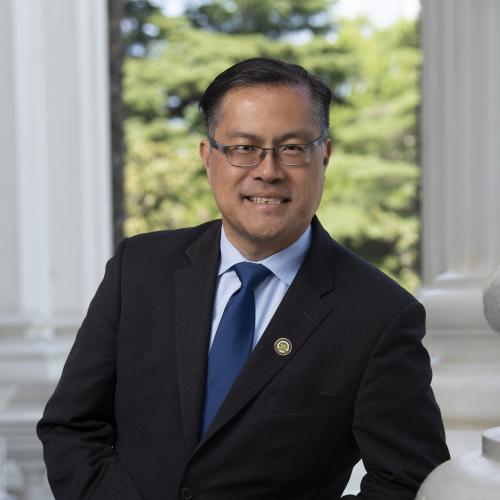
Asm. Mike Fong
Sponsored bills
Existing law, the Ralph C. Dills Act (Dills Act) , governs collective bargaining between the state and recognized state public employee organizations. Existing law excludes certain employees from coverage under the Dills Act, including, among others, managerial employees, supervisory employees, and confidential employees, as defined. Existing law creates the Public Employment Relations Board and authorizes it, among other things, to determine appropriate state employee bargaining units, as specified. This bill would enact the Legislature Employer-Employee Relations Act, to provide employees of the Legislature, except certain specified categories of excluded employees, the right to form, join, and participate in the activities of employee organizations of their own choosing for the purpose of representation on all matters of employer-employee relations. The bill would prescribe rights, duties, and prohibitions in this context that parallel those in the Dills Act. For the purposes of bargaining or meeting and conferring in good faith, the bill would define "employer" to mean the Assembly Committee on Rules or the Senate Committee on Rules. The bill would require the employer to meet and confer with representatives of recognized employee organizations regarding matters within the scope of representation. The bill would exclude certain matters from the scope of representation, as specified. The bill would grant exclusive jurisdiction to the Public Employment Relations Board to make an initial determination as to whether charges of unfair practices are justified, and, if so, the necessary remedy, as specified. However, the bill would prohibit the board from issuing a decision or order that intrudes upon or interferes with the Legislature's core function of efficient and effective lawmaking or the essential operation of the Legislature. The bill would require the board to determine appropriate bargaining units, and would prohibit the board from including employees in a bargaining unit that includes employees other than those of the employer. The bill would prohibit the board from including within a bargaining unit employees from both the Assembly and Senate. This bill would make it a misdemeanor for any person to willfully resist, prevent, impede, or interfere with any member of the board, or any of its agents, in the performance of duties pursuant to its provisions. By expanding the definition of a crime, this bill would impose a state-mandated local program. The bill would provide that the provisions of the Legislature Employer-Employee Relations Act are severable. The bill would become operative on July 1, 2026. The California Constitution requires the state to reimburse local agencies and school districts for certain costs mandated by the state. Statutory provisions establish procedures for making that reimbursement. This bill would provide that no reimbursement is required by this act for a specified reason. This bill would additionally exempt from public inspection records related to activities governed by the Legislature Employer-Employee Relations Act that reveal the employer's deliberative processes, impressions, evaluations, opinions, recommendations, meeting minutes, research, work product, theories, or strategy, or that provide instruction, advice, or training to employees who do not have full collective bargaining and representation rights under the Legislature Employer-Employee Relations Act. Existing constitutional provisions require that a statute that limits the right of access to the meetings of public bodies or the writings of public officials and agencies be adopted with findings demonstrating the interest protected by the limitation and the need for protecting that interest. This bill would make legislative findings to that effect.
Existing law authorizes a court to issue an ex parte gun violence restraining order prohibiting the subject of the petition from having custody or control of, owning, purchasing, possessing, or receiving, or attempting to purchase or receive a firearm or ammunition when it is shown that there is a substantial likelihood that the subject of the petition poses a significant danger of harm to themselves or to another person in the near future by having custody or control of, owning, purchasing, possessing, or receiving a firearm, and that the order is necessary to prevent personal injury to themselves or to another. Existing law requires the court, when determining whether grounds for a gun violence restraining order exists, to consider evidence of, among other things, a recent threat of violence by the subject of the petition, and also authorizes the court to consider evidence of, among other things, recent acquisition of firearms, ammunition, or other deadly weapons by the subject of the petition. This bill would additionally authorize the court to consider evidence of acquisition of body armor when determining whether grounds for a gun violence restraining order exist.
Existing law prohibits a person who has been convicted of a felony or of specified misdemeanors from owning, purchasing, receiving, or possessing a firearm for specified periods of time. Existing law, as enacted by the Safety for All Act of 2016, an initiative statute approved by voters as Proposition 63 at the November 8, 2016, statewide general election, requires any defendant subject to this prohibition to relinquish any firearm that they own or possess within 5 days of conviction if not in custody after a conviction, as specified, and provides a procedure for the verification and enforcement of this requirement. Existing law also requires that, if the defendant is in custody following a conviction, the defendant must relinquish any firearms within 14 days, as specified. Existing law also authorizes the court to shorten or enlarge the time period for relinquishment of a firearm with good cause. Proposition 63 allows its provisions to be amended by a vote of 55% of the Legislature so long as the amendments are consistent with, and further the intent of, the act. This bill would amend Proposition 63 by requiring a defendant not in custody to relinquish their firearms within 48 hours. Existing law requires a court to assign a probation officer when a defendant is convicted of a crime that would prohibit them from owning, purchasing, receiving, or possessing a firearm. Existing law requires the assigned probation officer to, prior to the final disposition or sentencing in the case, report to the court whether the defendant complied with the requirement to relinquish their firearms and file the proper paperwork providing proof of relinquishment. Existing law also requires that the court make findings on whether the probation officer's report indicates compliance by the defendant. If the court finds probable cause that the defendant failed to relinquish their firearms, existing law authorizes the court to order for the search and removal of any firearms at any location where the judge has probable cause to believe the firearms are located. This bill would require the probation officer to also provide their report on defendant compliance to the prosecuting attorney. The bill would also require the court, after a warrant request has been submitted, to order a search warrant for the search and removal of any firearms if the court finds probable cause that the defendant failed to relinquish their firearms, as specified, or to extend the time for providing proof of relinquishment to 14 days for good cause. The bill would further require the court to refer the matter to the prosecuting attorney and set a status review within 14 days if it finds that additional investigation is needed. By placing additional requirements on county probation officers, this bill would impose a state-mandated local program. Existing law requires a law enforcement agency to retain a firearm relinquished by a defendant after a conviction of an offense that would prohibit them from owning a firearm for 30 days. Once the 30-day period expires, existing law authorizes the agency to destroy, retain, sell, or transfer the firearm, except as specified. This bill would remove the authorization for the law enforcement agency to sell the relinquished firearm. Existing law requires the Attorney General to establish and maintain an online database known as the Prohibited Armed Persons File, also referred to as the Armed Prohibited Persons System (APPS) , to cross-reference persons who have ownership or possession of a firearm and who, subsequent to the date of that ownership or possession of a firearm, fall within a class of persons who are prohibited from owning or possessing a firearm. Existing law requires the Attorney General to keep and properly file a complete record of, among other things, copies of fingerprints, copies of licenses to carry firearms, as specified, and dealers' records of firearms sales. This bill would require the Department of Justice to provide local law enforcement agencies and the district attorney access through an electronic portal to information regarding individuals residing in their jurisdiction listed in the APPS who have not provided proof of relinquishment of firearms registered in their name. The bill would require each local agency to designate a person to access or receive the information and would require the agency to report to the department the steps taken to verify the individual is no longer in possession of the registered firearm. The bill would require the Attorney General to keep and properly file a complete record of reports or information provided to the department pursuant to that reporting requirement. By increasing duties on local law enforcement, this bill would impose a state-mandated local program. The California Constitution requires the state to reimburse local agencies and school districts for certain costs mandated by the state. Statutory provisions establish procedures for making that reimbursement. This bill would provide that, if the Commission on State Mandates determines that the bill contains costs mandated by the state, reimbursement for those costs shall be made pursuant to the statutory provisions noted above. This bill would incorporate additional changes to Section 11106 of the Penal Code proposed by SB 368 to be operative only if this bill and SB 368 are enacted and this bill is enacted last. This bill would also incorporate additional changes to Section 29810 of the Penal Code proposed by AB 733 to be operative only if this bill and AB 733 are enacted and this bill is enacted last.
Existing law establishes the California Violence Intervention and Prevention (CalVIP) Grant Program, administered by the Board of State and Community Corrections, to award competitive grants for the purpose of violence intervention and prevention. Existing law imposes various taxes, including taxes on the privilege of engaging in certain activities. The Fee Collection Procedures Law, the violation of which is a crime, provides procedures for the collection of certain fees and surcharges. This bill, the Gun Violence Prevention and School Safety Act, would, commencing July 1, 2024, impose an excise tax in the amount of 11% of the gross receipts from the retail sale in this state of a firearm, firearm precursor part, and ammunition, as specified. The tax would be collected by the state pursuant to the Fee Collection Procedures Law. The bill would require that the revenues collected be deposited in the Gun Violence Prevention and School Safety Fund, which the bill would establish in the State Treasury. The bill would require the moneys received in the fund to be used to fund various gun violence prevention, education, research, response, and investigation programs, as specified. The bill would require the Director of Finance to transfer, as a loan, $2,400,000 from the General Fund to the California Department of Tax and Fee Administration to implement these provisions, as specified. The bill would require each licensed firearms dealer, firearms manufacturer, and ammunition vendor to register with the department for a certificate, as specified. The bill would also provide procedures for the issuance, revocation, and reinstatement of a permit. This bill would include a change in state statute that would result in a taxpayer paying a higher tax within the meaning of Section 3 of Article XIIIA of the California Constitution, and thus would require for passage the approval of 23 of the membership of each house of the Legislature. Because this bill would expand the scope of the Fee Collection Procedures Law, the violation of which is a crime, this bill would impose a state-mandated local program. The California Constitution requires the state to reimburse local agencies and school districts for certain costs mandated by the state. Statutory provisions establish procedures for making that reimbursement. This bill would provide that no reimbursement is required by this act for a specified reason.
The measure would apply to the United States Congress to call a constitutional convention under Article V of the Constitution of the United States for the purpose of proposing a constitutional amendment relating to firearms, as specified.
This measure would denounce the actions of the Tennessee House of Representatives in expelling two African-American Democratic Representatives.
This measure would proclaim the month of September 2023 as Suicide Prevention Awareness Month.
This measure would proclaim September 2023 as California Emergency Preparedness Month.
This measure would commemorate June 2023 as the 80th Anniversary of the Zoot Suit Riots.