

The Personal Income Tax Law, in modified conformity with federal income tax law, generally defines "gross income" as income from whatever source derived, except as specifically excluded, including an exclusion for the amount of student loan indebtedness repaid or canceled pursuant to a specified federal law. This bill would exclude from an individual's gross income, for taxable years beginning on or after January 1, 2023, and before January 1, 2028, any amount of qualified student loan debt, as defined, that is discharged under the federal student loan debt relief plan, as specified. Existing law requires any bill authorizing a new tax expenditure to contain, among other things, specific goals, purposes, and objectives that the tax expenditure will achieve, detailed performance indicators, and data collection requirements. The bill would also include additional information required for any bill authorizing a new tax expenditure. This bill would take effect immediately as a tax levy.
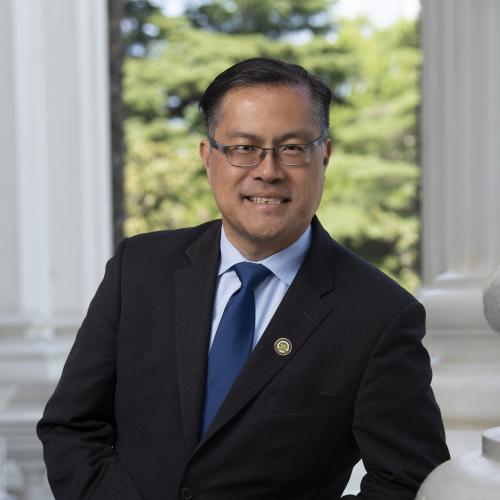
Asm. Mike Fong
Sponsored bills
Existing law makes possession of a firearm by certain classes of persons, including a convicted felon, a person convicted of specified misdemeanors, a person has been found mentally incompetent to stand trial, a person has been found not guilty of specified crimes by reason of insanity, or a person has been placed under conservatorship, a crime. Existing law additionally makes it a crime to sell or give possession of a firearm to these classes of persons prohibited from owning a firearm. Existing law requires the Department of Justice, upon submission of firearm purchaser information by a licensed firearm dealer, to examine its records to determine whether a potential firearm purchaser is prohibited by state of federal law from possessing, receiving, owning, or purchasing a firearm. Existing law requires the department to participate in the National Instant Criminal Background Check System. This bill would require the Department of Justice to develop and launch a secure Internet-based platform to allow a person who resides in California to voluntarily add their own name to the California Do Not Sell List. The bill would require the department to ensure that information on the list is uploaded and reflected in the National Instant Criminal Background Check System. The bill would make it a crime, punishable as a misdemeanor, to transfer a firearm to a person who is validly registered on the California Do Not Sell List. By creating a new crime, this bill would impose a state-mandated local program. This bill would allow a person, after a specified period of time, to request removal from the list. The bill would require the State Department of Public Health to create and distribute informational materials about the California Do Not Sell List to general acute care hospitals and acute psychiatric hospitals. The bill would specify that a person presenting in a general acute care hospital or acute psychiatric hospital who is at a substantially elevated risk of suicide should be presented with these informational materials. The bill would specify that any suicide hotline maintained or operated by an entity funded in whole or in part by the state should generally inform callers on how to access the California Do Not Sell List Internet-based platform. The bill would provide that its provisions are severable. The California Constitution requires the state to reimburse local agencies and school districts for certain costs mandated by the state. Statutory provisions establish procedures for making that reimbursement. This bill would provide that no reimbursement is required by this act for a specified reason.
Existing law prohibits a person from being subjected to discrimination on the basis of specified attributes, including, among others, sex, in a program or activity conducted by a postsecondary educational institution that receives, or benefits from, state financial assistance or enrolls students who receive state student financial aid. Existing law provides that sexual harassment of students is a form of sex discrimination prohibited under this prohibition. This bill instead would provide that sexual harassment of students is a form of sex-based harassment and sex-based discrimination prohibited under that prohibition.
(1) Existing law prohibits a person subject to a protective order, as defined, from owning, possessing, purchasing, or receiving a firearm or ammunition while that protective order is in effect. Existing law makes a violation of that prohibition with regard to purchasing or receiving a firearm or ammunition punishable by imprisonment in the county jail for up to one year, by imprisonment in the state prison for 16 months or 2 or 3 years, or by a fine not exceeding $1,000, or by both that imprisonment and fine. Existing law makes a violation of that prohibition with regard to owning or possessing a firearm or ammunition punishable by imprisonment in the county jail for up to one year, or by a fine not exceeding $1,000, or by both that imprisonment and fine. After notice and hearing, this bill would, for protective orders, as specified, issued on or after July 1, 2024, prohibit a person subject to the protective order from owning, possessing, purchasing, or receiving a firearm or ammunition within 3 years after the expiration of the order and make a violation of these provision a crime. The bill would require a court, if they find that the person willfully violated that prohibition within 3 years after the expiration of the order, to impose the maximum fine allowed under existing law. (2) Existing law allows a search warrant to be issued upon various grounds, including when the property or things to be seized include a firearm, if the prohibited firearm is possessed, owned, in the custody of, or controlled by a person against whom a specified protective order has been issued, and the person is served with the order and fails to relinquish the firearm as required by law. This bill would expand the grounds for the search warrant to include a person who is subject to any civil or criminal protective order that includes a prohibition on owning, possessing, or having custody or control of a firearm. (3) Existing law requires the Judicial Council to provide notice on all protective orders issued within the state and requires a restraining order requiring a person to relinquish a firearm or ammunition to state on its face that the respondent is prohibited from owning, possessing, purchasing, or receiving a firearm or ammunition while the protective order is in effect. This bill would require the Judicial Council to also include a statement in the notice that the firearm and ammunition prohibition extends for 3 years after the expiration of the protective order that is issued on or after July 1, 2024. The bill would require a restraining order to include a similar statement. By creating new crimes, this bill would create a state-mandated local program. The California Constitution requires the state to reimburse local agencies and school districts for certain costs mandated by the state. Statutory provisions establish procedures for making that reimbursement. This bill would provide that no reimbursement is required by this act for a specified reason.
Existing law establishes the Department of Forestry and Fire Protection within the Natural Resources Agency. Existing law vests the department with specified responsibilities, including providing fire protection, fire prevention, pest control, and forest and range protection and enhancement implements and apparatus as necessary. Existing law, the California Urban Forestry Act of 1978, has as a stated purpose the promotion of the use of urban forest resources for purposes of increasing integrated projects with multiple benefits in urban communities. This bill would establish the California Pocket Forest Initiative in the department and would authorize the department to coordinate implementation of the initiative in conjunction with the act. The bill would authorize the department to offer grants to cities, counties, districts, nonprofit organizations, the California Conservation Corps or certified community conservation corps, public universities, public community colleges, and public schools to establish pocket forests on public lands, as provided. The bill would require the department to prioritize disadvantaged communities and communities that lack publicly accessible green space for these grants. The bill would require the department to partner with one or more academic institutions to test, and submit a report on or before January 1, 2030, to the Legislature that evaluates, the applicability and effectiveness of the Miyawaki method, as defined, to restore degraded lands and reforest urban areas in multiple regions throughout California. The bill would repeal these provisions on January 1, 2031.
Existing law establishes the Office of Health Care Affordability within the Department of Health Care Access and Information to analyze the health care market for cost trends and drivers of spending, develop data-informed policies for lowering health care costs for consumers and purchasers, and create a state strategy for controlling the cost of health care. Existing law requires the office to collect data and other information it deems necessary from health care entities to carry out the functions of the office, and requires the office to require providers and physician organizations to submit audited financial reports or comprehensive financial statements, as specified. Existing law requires those reports and statements to be kept confidential, and specifies that they are not required to be disclosed under the California Public Records Act. Existing law requires the office to obtain information about health care service plans from the Department of Managed Health Care. Existing law requires a contract between a health care service plan and a risk-bearing organization to include provisions concerning the risk-bearing organization's administrative and financial capacity. Existing law requires the director of the Department of Managed Health Care to adopt regulations regarding, among other things, periodic reports from a health care service plan that include information concerning the risk-bearing organizations and the type and amount of financial risk they have assumed. Existing law establishes, within the office, the Health Care Affordability Board, composed of 8 members, appointed as prescribed. This bill, the Medical Group Financial Transparency Act, would authorize the disclosure of audited financial reports and comprehensive financial statements of providers and physician organizations collected by the Office of Health Care Affordability and financial and other records of risk-bearing organizations made available to the Department of Managed Health Care. This bill would authorize the board, members of the board, the office, the department, and the employees, contractors, and advisors of the office and the department to use confidential audited financial reports and comprehensive financial statements only as necessary to carry out functions of the office. The bill would also require certain physician organizations, as specified, to produce or disclose audited financial reports and comprehensive financial statements to the office, subject to these provisions. The bill would require the audited financial reports and comprehensive financial statements produced or disclosed to the office to be made available to the public, by the office, as specified. The bill would also make related findings and declarations.
Existing law requires the city council for a charter city that elects its city council using district-based elections to adopt new city council district boundaries following each federal decennial census. Existing law requires the city council to adopt the new boundaries using specified criteria, and by a specified deadline, unless the charter city has adopted different redistricting criteria or a different deadline by ordinance or in its city charter. This bill would require a charter city with a population of at least 2,500,000 people to establish an independent redistricting commission to adjust the district boundaries for the city council if the city's charter does not establish an independent redistricting commission that meets specified criteria. The bill would require the commission to adjust the boundaries of the city council districts in accordance with specified criteria and deadlines. By increasing the duties on local officials, the bill would impose a state-mandated local program. This bill would make legislative findings and declarations as to the necessity of a special statute for charter cities with a population of at least 2,500,000 people. The California Constitution requires the state to reimburse local agencies and school districts for certain costs mandated by the state. Statutory provisions establish procedures for making that reimbursement. This bill would provide that, if the Commission on State Mandates determines that the bill contains costs mandated by the state, reimbursement for those costs shall be made pursuant to the statutory provisions noted above.
Existing law creates the California Community Colleges, under the administration of the Board of Governors of the California Community Colleges, as one of the segments of public postsecondary education in this state. Existing law authorizes community college districts throughout the state to provide instruction at the campuses they operate. Existing law, the Seymour-Campbell Student Success Act of 2012, provides that the purpose of the act is to increase California community college student access and success by providing effective core matriculation services of orientation, assessment and placement, counseling, and other education planning services, and academic interventions. The act requires, among other things, a community college district or community college to maximize the probability that students will enter and complete transfer-level coursework in English and mathematics within a one-year timeframe of their initial attempt in the discipline, as provided. This bill would require the governing board of each community college district to establish policies for the repetition of credit courses offered by the community colleges in the district. The bill would require these policies to include, but not be limited to, authorization for a student to repeat, up to, but not exceeding, 2 times, a credit course in arts, humanities, kinesiology, foreign languages, and English as a second language, for which the student previously received a satisfactory grade and which the student is retaking for enrichment or skill-building purposes, and a requirement that the community college inform a student whether the decision to repeat those credit courses will impact the student's federal financial aid qualifications, as provided. The bill would also require the policies to provide priority registration for credit courses to students who require the course for their intended major and to students who have not taken the course. This bill would require the Board of Governors to adopt regulations regarding the policies for the repetition of credit courses that are consistent with the requirements described above. By imposing additional duties on community college districts, the bill would impose a state-mandated local program. The California Constitution requires the state to reimburse local agencies and school districts for certain costs mandated by the state. Statutory provisions establish procedures for making that reimbursement. This bill would provide that, if the Commission on State Mandates determines that the bill contains costs mandated by the state, reimbursement for those costs shall be made pursuant to the statutory provisions noted above.
Previous law authorized a law enforcement agency to dispose of seized, surrendered, abandoned, and unclaimed firearms by sale at a public auction or by destruction. Existing law requires these firearms to be disposed of by destruction. Existing law prohibits the sale of a firearm on any state property, as specified. This bill would, commencing on January 1, 2025, and except as specifically exempted, prohibit any state or local government agency or department, as specified, to sell any firearm, ammunition, or body armor. The bill would also make other conforming changes and technical corrections. The bill would include findings that changes proposed by this bill address a matter of statewide concern rather than a municipal affair and, therefore, apply to all cities, including charter cities. This bill would incorporate additional changes to Section 16520 of the Penal Code proposed by AB 725 to be operative only if this bill and AB 725 are enacted and this bill is enacted last. This bill would also incorporate additional changes to Section 29810 of the Penal Code proposed by AB 732 to be operative only if this bill and AB 732 are enacted and this bill is enacted last.
Existing law provides for the payment of unemployment compensation benefits and extended benefits to eligible individuals who meet specified requirements. Under existing law, unemployment benefits are paid from the Unemployment Fund, which is continuously appropriated for these purposes. Existing law makes an employee ineligible for benefits if the employee left work because of a trade dispute and specifies that the employee remains ineligible for the duration of the trade dispute. Existing case law holds that employees who left work due to a lockout by the employer, even if it was in anticipation of a trade dispute, are eligible for benefits. This bill would restore eligibility after the first 2 weeks for an employee who left work because of a trade dispute. The bill would codify specified case law that holds that employees who left work due to a lockout by the employer, even if it was in anticipation of a trade dispute, are eligible for benefits. The bill would specify that the bill's provisions do not diminish eligibility for benefits of individuals deprived of work due to an employer lockout or similar action, as specified. Because this bill would expand the categories of people eligible to receive benefits from a continuously appropriated fund, it would make an appropriation.