Maddy summaryCalifornia House Resolution 128 designates October 23, 2026, as Aromatic L-Amino Acid Decarboxylase (AADC) Deficiency Awareness Day. The resolution aims to increase public and medical community awareness of this ultrarare genetic condition, which prevents the body from producing dopamine and causes severe developmental delays. By highlighting the challenges faced by patients and their caregivers, the bill encourages Californians to learn more about the disease to support earlier diagnosis and continued research into treatments.
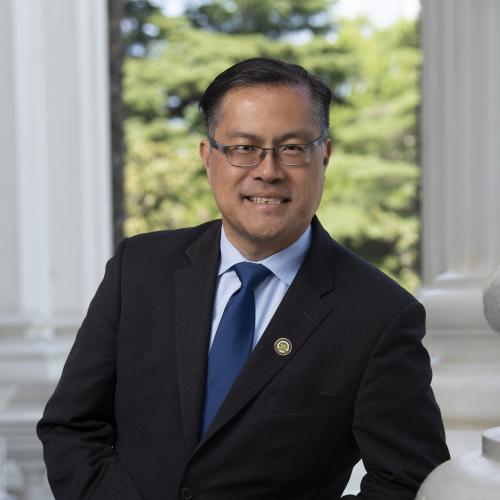
Asm. Mike Fong
Sponsored bills
Maddy summaryThis California House Resolution proclaims September 2026 as Young Women's Reproductive Health Awareness Month to highlight the importance of early diagnosis and education for adolescent girls. The resolution urges high schools, colleges, public health agencies, and medical providers to promote educational campaigns on topics such as menstrual health, HPV vaccination, and sexual health practices. It specifically aims to address disparities in care by encouraging outreach to communities that face systemic barriers or lack culturally appropriate resources.
Maddy summaryCalifornia Assembly Resolution 131 proclaims October 11 through 17, 2026, as Student Cancer Education, Detection, and Prevention Week. The resolution encourages middle schools, high schools, colleges, public health agencies, pediatricians, and community health providers to promote educational campaigns on cancer prevention and detection. These efforts aim to inform students about risk factors, warning signs, and the importance of timely screenings to support better health outcomes for young people in the state.
Maddy summaryThis House Resolution officially designates September as Black Music Month to honor the significant contributions of Black artists to American culture. The measure recognizes a wide range of musical genres, including jazz, blues, gospel, and hip-hop, by highlighting their historical origins and influential figures. While the text celebrates these artistic achievements, it does not impose any new legal requirements or funding mandates.
Existing law sets forth the missions and functions of California's public and independent segments of higher education, and details the ways in which their respective institutions are to be differentiated. Existing law specifies that the California State University shall offer undergraduate and graduate instruction through the master's degree in the liberal arts and sciences and professional education. This bill, upon appropriation by the Legislature, would require the Chancellor of the California State University to establish a pilot program to offer an associate degree in general studies or, if applicable, an associate degree with an area of emphasis that is consistent with the former student's completed coursework, that is jointly conferred by a California State University campus and a community college or independent institution of higher education that awards associate degrees to former California State University students who are no longer enrolled at a California State University campus but have successfully completed coursework equivalent to the requirements for an associate degree and not previously earned an associate degree. The bill would require the associate degree to be awarded at no cost to the former student. The bill would require California State University, Long Beach, to participate in the pilot program and would authorize the chancellor to include up to 4 additional California State University campuses in the pilot program. The bill would require the chancellor, on or before January 1, 2032, to submit a report to the Legislature evaluating the effectiveness of the pilot program, as provided. The bill would make these provisions inoperative on June 30, 2032, and would repeal them as of January 1, 2033.
Existing law establishes the California Community Colleges, under the administration of the Board of Governors of the California Community Colleges, the California State University, under the administration of the Trustees of the California State University, and the University of California, under the administration of the Regents of the University of California, as the 3 segments of public postsecondary education in the state. Existing law requires the office of the Chancellor of the California State University, and requests the office of the President of the University of California, on or before July 1, 2022, to conduct a needs assessment to determine the projected student housing needs, by campus, for the 2022–23 fiscal year to the 2026–27 fiscal year, inclusive, and create a student housing plan, with a focus on affordable student housing, that outlines how they will meet the projected student housing needs, by campus, as provided. Existing law also requires the chancellor's office, and requests the president's office, to, every 3 years after July 1, 2022, review and update the student housing plan, and include the specific actions to be taken in the next 5 fiscal years. This bill would require the office of the Chancellor of the California State University, on or before July 1, 2027, to convene a working group to develop recommendations, identify opportunities, and support the sharing of best practices related to student housing, including intersegmental student housing, as provided. The bill would require the working group to include representatives designated by the office of the Chancellor of the California State University, the office of the Chancellor of the California Community Colleges, and the statewide student organizations for the California State University and the California Community Colleges. The bill would request the office of the President of the University of California to participate in the working group and designate representatives and, upon such participation, would require the statewide student organization for the University of California to designate representatives to serve on the working group. This bill would require the working group to consult with representatives from campuses that have pursued intersegmental student housing projects and representatives from campus and system-level offices responsible for, among other things, housing operations and facilities development. The bill would require the working group to submit a report to the Legislature and the Governor on or before July 1, 2028, that includes, among other things, recommendations related to assessing and determining unmet student housing need and recommended best practices and implementation supports for campuses interested in pursuing intersegmental student housing development. This bill would repeal its provisions on January 1, 2029.

Existing law establishes the Division of Apprenticeship Standards within the Department of Industrial Relations and requires the division, among other things, to evaluate apprenticeship and preapprenticeship programs to ensure that the program evaluated is complying with its standards, as specified. Existing law requires the Chief of the Division of Apprenticeship Standards to perform various functions with respect to apprenticeship programs and the welfare of apprentices. This bill would establish the Career Apprenticeship Bridge Program to be administered by the division and would authorize the division to work with the State Department of Education and the Office of the Chancellor of the California Community Colleges in order to, among other things, identify resources to support youth apprenticeships. The bill would require a program applicant for a Career Apprenticeship Bridge Program to submit documentation to the chief, as specified. The bill would require the chief, before approving a Career Apprenticeship Bridge Program, to present the application, as described, to the State Department of Education to review whether specified requirements are met. The bill would authorize the chief, among other things, to issue rules and regulations that govern Career Apprenticeship Bridge Programs, as specified.
This measure would encourage the President of the University of California, the Chancellor of the California State University, and the Chancellor of the California Community Colleges to create a workgroup of faculty, staff, and administrators to (1) review the use of artificial intelligence in higher education, (2) create a public report on the strategies and best practices for artificial intelligence usage agreed upon by the workgroup within one year following formation of the workgroup, and (3) submit the report to the Legislature and the relevant policy committees of the Legislature with jurisdiction over higher education and privacy and consumer protection.
Existing law establishes the California Community Colleges, under the administration of the Board of Governors of the California Community Colleges, as one of the 3 segments of public postsecondary education in this state. Existing law establishes community college districts throughout the state, and authorizes them to provide instruction to students at community college campuses. One of these districts is the Los Angeles Community College District. Existing law appropriates $5,000,000 to the Los Angeles Community College District for the development and initial operations of the California Center for Climate Change Education at the West Los Angeles College with the mission to promote climate change education at the California Community Colleges and establish opportunities for students to engage in hands-on internships and other learning opportunities. This bill would codify the establishment of the center. This bill would make legislative findings and declarations as to the necessity of a special statute for the Los Angeles Community College District.
Maddy summaryThis bill serves as a commemorative resolution to mark the 50th anniversary of the Surface Mining and Reclamation Act of 1975. It does not create new laws or alter existing regulations but instead formally acknowledges the milestone achievement of the original legislation. The measure is intended to honor the history of mining and land reclamation efforts established by the 1975 act.