

(1) Existing law, the Local Agency Public Construction Act, authorizes job order contracting, as defined, for school districts until January 1, 2027. Existing law requires job order contractors to submit a questionnaire to the school district containing specified information verified under oath, under penalty of perjury. This bill would extend the termination date for these provisions until January 1, 2037. Existing law authorizes a school district to utilize job order contracting only if the school district has entered into a project labor agreement or agreements that will apply to all public works awarded through job order contracting and to all other public works of the school district that exceed a monetary threshold set by the school district until January 1, 2027, regardless of what contracting procedure is used to award that work. This bill would extend the termination date for these provisions until January 1, 2037. The bill would also prohibit job order contracting by a school district if the district finds, based on criteria and methodology established by the school district, that it will increase the total cost of the project without sufficient documented justification. Existing law requires a school district to prepare an execution plan for all modernization projects that may be eligible for job order contracting. Existing law requires the school district to select from that plan a sufficient number of projects to be initiated as job order contracts during each calendar year and to determine for each selected project that job order contracting will reduce the total cost of that project, as specified. This bill would delete the above provisions. Existing law requires school districts adopting job order contracting to, among other things, prepare an independent estimate for each individual job order developed under a job order contract. The estimate must be prepared prior to the receipt of the contractor's offer to perform work and must be compared to the contractor's proposed price to determine the reasonableness of that price before the issuance of any job order. This bill, instead, would require that the school district's estimate be prepared prior to the receipt of the contractor's proposal. The bill would delete the requirement for the school district to compare its estimate to the contractor's proposed price, as described. Existing law also authorizes job order contracting for community college districts until January 1, 2027. Existing law requires job order contractors to submit a questionnaire to the community college district containing specified information verified under oath, under penalty of perjury. This bill would extend the termination date for these provisions until January 1, 2037. Existing law authorizes a community college district to utilize job order contracting only if the community college district has entered into a project labor agreement or agreements that will apply to all public works awarded through job order contracting and to all other public works of the district that exceed a monetary threshold set by the district until January 1, 2027, regardless of what contracting procedure is used to award that work. This bill would extend the termination date for these provisions until January 1, 2037. By extending the operation of those provisions that expand the crime of perjury, this bill would impose a state-mandated local program. (2) Existing law authorizes continuing contracts for a school district to be made with an accepted vendor for work or services, or for apparatus or equipment, not to exceed 5 years, or for materials or supplies, not to exceed 3 years. This bill would prohibit the duration of any task order procurement contract or job order contract issued pursuant to specified Public Contract Code provisions from exceeding 5 years. The bill would additionally provide that any individual task order or job order issued pursuant to those contracts shall remain valid and enforceable despite the expiration of the term of the task order procurement contract or job order contract pursuant to which the individual task order or job order was validly issued. The California Constitution requires the state to reimburse local agencies and school districts for certain costs mandated by the state. Statutory provisions establish procedures for making that reimbursement. This bill would provide that no reimbursement is required by this act for a specified reason.
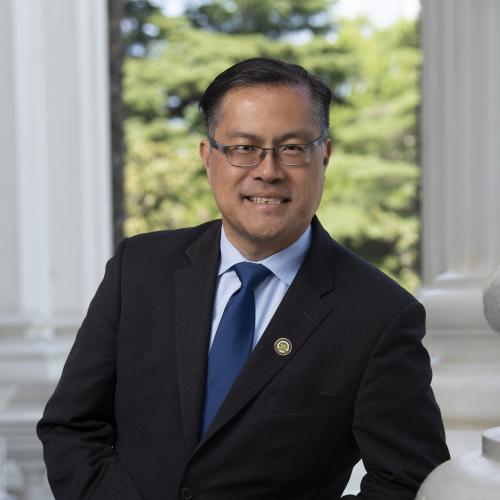
Asm. Mike Fong
Sponsored bills
(1) The Equity in Higher Education Act states the policy of the state to afford all persons, regardless of their disability, gender, gender identity, gender expression, nationality, race or ethnicity, religion, sexual orientation, or any other specified characteristic, equal rights and opportunities in postsecondary educational institutions of the state. For purposes of the act, existing law defines "gender" as sex, including a person's gender identity and gender-related appearance and behavior, whether or not stereotypically associated with the person's assigned sex at birth. This bill would explicitly add ancestry, national origin, medical condition, marital status, familial status, citizenship, and primary language to the list of specified characteristics for purposes of that policy. The bill would also expand the definition of "gender" for purposes of the act to include pregnancy or pregnancy-related conditions. (2) The Equity in Higher Education Act prohibits a postsecondary educational institution from requiring a graduate student to take a leave of absence, withdraw from the graduate program, or limit their graduate studies solely due to pregnancy or pregnancy-related issues. The act requires a postsecondary educational institution to reasonably accommodate pregnant graduate students, as specified, so that they may complete their graduate courses of study and research, including by allowing graduate students to take a leave of absence, as specified. This bill would, commencing September 1, 2027, prohibit a postsecondary educational institution from discriminating against a student or applicant based on the actual or potential familial status or marital status of the student or applicant, or based on the student's or applicant's pregnancy or pregnancy-related conditions, including by prohibiting the institution from requiring a student to take a leave of absence or withdraw from an educational or extracurricular program or activity, and prohibiting the institution from limiting the student's undergraduate or graduate program. The bill would require a postsecondary educational institution to provide reasonable accommodations to an institutional program for a student, including an undergraduate student, experiencing pregnancy or a pregnancy-related condition to ensure the student's equal access to the institution's educational programs and activities, as provided. This bill would, commencing September 1, 2027, require a postsecondary educational institution to designate at least one employee to coordinate its efforts to comply with and carry out its responsibilities under these provisions, as specified, and require certain employees, upon being directly informed by a student of the student's pregnancy or pregnancy-related condition, to inform the student of their right to receive reasonable accommodations to maintain access to the educational program and provide the student with the contact information for the designated employee or employees. (3) The Equity in Higher Education Act allows a graduate student who is pregnant or has recently given birth to take a leave of absence for a period consistent with the policies of the postsecondary educational institution, or a period of 12 months, whichever is longer, and have an extension of at least 12 months toward normative time to degree while in candidacy for a graduate degree, unless a longer extension is medically necessary, as specified. The act also allows a graduate student who is not the birth parent to take a leave of absence for a period consistent with the policies of the postsecondary educational institution, or a period of one month, whichever is longer, and have an extension of at least one month toward normative time to degree while in candidacy for a graduate degree, unless a longer extension is medically necessary to care for the student's partner or child, as specified. This bill would, commencing September 1, 2027, also allow any undergraduate student who is pregnant or has recently given birth or who is not the birth parent to take the above-described leave of absence and have an extension toward normative time to degree or certificate, as specified. (4) The Equity in Higher Education Act requires a postsecondary educational institution to have a written policy for graduate students on pregnancy discrimination and procedures for addressing pregnancy discrimination complaints, as specified. Existing law requires a copy of the policy to be made available to all graduate students attending orientation sessions at a postsecondary educational institution. Existing law requires a public postsecondary institution to post on the institution's internet website, and to provide through on-campus medical centers, notice of protections provided under Title IX, as specified. This bill would, commencing September 1, 2027, require a postsecondary educational institution to revise that policy to include undergraduate students, and require a copy of the revised policy to be made available to all students attending orientation sessions. The bill would also require a postsecondary educational institution to post on the institution's internet website, and provide through on-campus medical centers, notice of the protections provided by these provisions. This bill would require the Board of Governors of the California Community Colleges, on or before July 1, 2027, to adopt regulations for a systemwide policy that include the requirements of these provisions and best practices for implementing those requirements. The bill would require the governing board of each community college district, on or before September 1, 2027, to adopt those regulations, as provided. (5) By imposing additional duties on community college districts, this bill would impose a state-mandated local program. The California Constitution requires the state to reimburse local agencies and school districts for certain costs mandated by the state. Statutory provisions establish procedures for making that reimbursement. This bill would provide that, if the Commission on State Mandates determines that the bill contains costs mandated by the state, reimbursement for those costs shall be made pursuant to the statutory provisions noted above.
Existing federal law, known as Title IX, prohibits a person, on the basis of sex, from being excluded from participation in, being denied the benefits of, or being subject to discrimination, which includes sexual harassment, under any education program or activity receiving federal financial assistance. Existing law requires, no later than January 1, 2022, except as specified, the governing board or body of a postsecondary educational institution that receives state financial assistance to provide students with procedural protections relating to complaints of sexual harassment, including the requirement to adopt and publish on its internet website grievance procedures providing for the prompt and equitable resolution of sexual harassment complaints filed by a student against an employee or another student. Existing law requires that the grievance procedures afford both student parties the opportunity to each have a support person or adviser accompany the student party during any stage of the process. This bill would instead require that the grievance procedures afford each student party the opportunity to have a support person and an advisor of their choice accompany the student party during any stage of the process, as specified. The bill would also require the governing board or body of a postsecondary educational institution that receives state financial assistance and state student financial aid to allow each complainant or respondent of a sexual harassment complaint to have a support person, in addition to an advisor, accompany the parties of a sexual harassment complaint during the grievance procedures that provide for the prompt and equitable resolution of sexual harassment complaints pursuant to the above-described procedural protections for students or Title IX, as specified. By imposing new duties on community college districts, the bill would impose a state-mandated local program. The California Constitution requires the state to reimburse local agencies and school districts for certain costs mandated by the state. Statutory provisions establish procedures for making that reimbursement. This bill would provide that, if the Commission on State Mandates determines that the bill contains costs mandated by the state, reimbursement for those costs shall be made pursuant to the statutory provisions noted above.
This measure would recognize and affirm the important role of artists, arts organizations, creative arts therapists, and arts for health initiatives in supporting behavioral health, promoting recovery, strengthening community resilience, and contributing to public safety. The measure would encourage and recognize exploration, support, and integration of arts and behavioral health within California's health care, behavioral health, and community-based systems.
Existing law establishes the California Community Colleges, under the administration of the Board of Governors of the California Community Colleges, as one of the segments of public postsecondary education in this state. Existing law establishes the Strong Workforce Program to provide funding to career technical education regional consortia made up of community college districts and local educational agencies, as specified. Existing law authorizes a community college district to use the funds apportioned directly to the community college district to provide direct support to students, employers, or both, for paid work-based learning to increase employability and employment, as provided. Existing law requires the chancellor's office to revise, no later than June 30, 2026, policies, regulations, and guidance necessary to provide students, employers, or both, with paid work-based learning opportunities, as provided. This bill would extend the deadline for the chancellor's office to revise the policies, regulations, and guidance described above by one year. The bill would additionally authorize funds apportioned directly to regional consortia to be used to provide direct support to students, employers, or both, for paid work-based learning to increase employability and employment, as specified, and would make conforming changes.
Existing law defines those persons who are peace officers in the state, grants certain authority to those individuals and their employing entities, and places certain requirements on those individuals and their employing entities. Under existing law, federal criminal investigators and law enforcement officers are not California peace officers but are granted specified limited arrest authority in limited circumstances including when violations of state and local laws occur in their presence, when there is an immediate danger to persons or property, when detaining a person for evaluation or treatment who, due to a mental illness, is a danger to themselves or others, and when requested by a California law enforcement agency to be involved in a joint task force or criminal investigation. Existing law additionally grants peace officer status to federal employees who comply with certain training requirements, while they are engaged in enforcing state or local law on and adjacent to property owned or possessed by the United States Government, with the written consent of local law enforcement officials, as specified. This bill would remove certain arrest authority or peace officer status for federal criminal investigators, law enforcement officers, and federal employees, including for the purposes of executing a warrant for the arrest of a person. The bill would authorize deputized tribal law enforcement officers of the federal Bureau of Indian Affairs to exercise the powers of arrest, as specified, if, among other things, they are engaged in the enforcement of federal criminal law and they are exercising arrest powers that are incidental to the performance of those federal duties. The bill would also authorize certain federal employees of, among other agencies, the National Park Service and the Bureau of Land Management, if they are enforcing specified provisions of state law on property owned by the United States government, to exercise peace officer status with the written consent of the sheriff or the chief of police from the respective jurisdiction. The bill would also prohibit a California law enforcement agency, as defined, from entering into an interagency agreement, unless, among other things, the agreement is in writing and expressly provides that the agency shall not engage in racial or identity profiling, as specified. The bill would deem any interagency agreement in existence on January 1, 2027, valid, and would authorize that agreement to remain in effect until July 1, 2027. The bill would require, by no later than July 1, 2027, that the agreement be amended to include the provisions described above, including a prohibition on engaging in certain conduct, including racial or identity profiling. By increasing the duties on local law enforcement, this bill would impose a state-mandated local program. This bill would make these provisions severable. The California Constitution requires the state to reimburse local agencies and school districts for certain costs mandated by the state. Statutory provisions establish procedures for making that reimbursement. This bill would provide that, if the Commission on State Mandates determines that the bill contains costs mandated by the state, reimbursement for those costs shall be made pursuant to the statutory provisions noted above. This bill would make related findings and declarations.
The Donahoe Higher Education Act establishes the California Community Colleges, under the administration of the Board of Governors of the California Community Colleges, the California State University, under the administration of the Trustees of the California State University, and the University of California, under the administration of the Regents of the University of California, as the 3 segments of public postsecondary education in the state. Existing law establishes uniform residency requirements for purposes of ascertaining the amount of tuition and fees to be paid by students of public postsecondary education institutions. Existing law, until July 1, 2032, entitles a Team USA student athlete, as defined, who trains in the state in an elite level program approved by the United States Olympic and Paralympic Committee to resident classification for the purpose of determining tuition and fees. After July 1, 2032, existing law entitles an amateur student athlete in training at the United States Olympic Training Center in the City of Chula Vista to resident classification for that same purpose. These provisions apply to the University of California only to the extent that the regents, by appropriate resolution, make them applicable. This bill would remove the July 1, 2032, sunset provision, and make conforming changes, thereby extending the provisions that entitle a Team USA student athlete who trains in the state in an elite level program approved by the United States Olympic and Paralympic Committee to resident classification indefinitely. To the extent the bill would require community college districts to exempt more students from nonresident tuition, the bill would impose a state-mandated local program. The California Constitution requires the state to reimburse local agencies and school districts for certain costs mandated by the state. Statutory provisions establish procedures for making that reimbursement. This bill would provide that, if the Commission on State Mandates determines that the bill contains costs mandated by the state, reimbursement for those costs shall be made pursuant to the statutory provisions noted above.
Existing law requires the Commission on Teacher Credentialing to establish standards for the issuance and renewal of credentials, certificates, and permits. Existing law prescribes specific minimum requirements a candidate must satisfy to be issued a teaching credential, certificate, or permit, including, among other requirements, possession of a baccalaureate degree from a regionally accredited institution of higher education, except as provided. Existing law authorizes the commission to approve a regionally accredited institution of higher education to recommend to the commission the issuance of credentials to persons who have successfully completed a teacher education program of the institution if the program meets the standards approved by the commission. Existing law defines a regionally accredited institution of higher education for these purposes to include, among other institutions, a community or junior college that confers baccalaureate degrees and is regionally accredited by specified accrediting entities, as provided. This bill would delete a community or junior college that confers baccalaureate degrees and is regionally accredited by specified accrediting entities from the definition of "regionally accredited." The bill would instead require a baccalaureate degree from an accredited community or junior college to include specific coursework in basic reading, writing, and mathematics skills in the English language, as provided, in order for that baccalaureate degree to satisfy the baccalaureate degree requirement for a teaching credential, certificate, or permit. The bill would prohibit a California community college and a California community college district from offering an integrated program of professional preparation that would enable a candidate for a teaching credential to engage in professional preparation concurrently with subject matter preparation, while completing a baccalaureate degree. This bill would incorporate additional changes to Sections 44252, 44259, and 44325 of the Education Code proposed by SB 1443 to be operative only if this bill and SB 1443 are enacted and this bill is enacted last.
This measure would proclaim the month of October 2026 as California Firefighter Appreciation Month and October 3, 2026, as California Firefighters Memorial Day.
(1) Existing law establishes various grant and loan programs for research, including, among others, the California Institute for Regenerative Medicine, California Firefighter Cancer Prevention and Research Program, and the Public Interest Research, Development, and Demonstration Program. This bill would establish the California Foundation for Science and Health Research within the Government Operations Agency. The bill would require the Secretary of Government Operations to oversee the process of appointing the director of the foundation, and would authorize the Secretary of Government Operations to delegate the task of hiring and determining the salaries, bonuses, and benefits of additional personnel to the director, as specified. The bill would require the director and personnel of the foundation to be responsible for implementing the strategic objectives of the California Foundation for Science and Health Research Council, as described below, administering grants, loans, and contracts awarded by the council, and all other duties as deemed necessary for the operation of the foundation. This bill would create the California Foundation for Science and Health Research and Innovation Acceleration Fund and require the moneys in the fund to be used by the foundation to award grants and make loans to, and enter into contracts with, public or private research companies, universities, academic medical centers, institutes, and organizations for scientific research and development and for certain economic sectors, as specified, in specific areas of research, including, but not limited to, biomedical, behavioral health, and climate research. The bill would also create the California Foundation for Science and Health Research and Innovation Acceleration Benefit Fund, to consist solely of private donations. The bill would make the moneys in the benefit fund available for the same purposes as the California Foundation for Science and Health Research and Innovation Acceleration Fund. This bill would require that, prior to the first grant from the foundation and no later than one year from the date the bill takes effect, the council develop various provisions and requirements to facilitate the foundation's goals of affordability and equitable access. The foundation shall impose various requirements on the grantees, loan recipients, and contractors, as specified, including, among other things, developing strategies to promote equitable access to the subject invention in various specified communities and making the data resulting from the bond-funded research available to the broader scientific community, except in cases involving national security interests. The council shall also establish standards requiring that all grants, awards, and contracts be subject to intellectual property agreements that balance the opportunity for the State of California to benefit from the inventions, technologies, patents, royalties, and licenses that result from research funded by certain public and private grants, as specified. This bill would create the California Foundation for Science and Health Research Council, as specified, which shall be vested with full power, authority, and jurisdiction over the foundation. The bill would require the council to, among other things, develop the strategic objectives and priorities of the foundation and provide the opportunity for public comment on the foundation's priorities, as specified, determine the research projects that will be funded by the California Foundation for Science and Health Research and Innovation Acceleration Fund, develop objectives and opportunities that offer support to early career researchers, and adopt certain regulations and standards, as specified. The bill would also require the council to consider how the foundation's research priorities relate to or support various economic and industry considerations, as specified. The bill would provide that a majority of the members of the council constitutes a quorum for the transaction of any business, for the performance of any duty, or for the exercise of any power of the council, except as otherwise provided. The bill would authorize the council to establish one or more scientific peer review panels consisting of experts in specified fields of research for the purposes of reviewing and prioritizing proposals on the basis of the scientific merit of the proposal, the potential benefit to the health and well-being of the population, natural resources, and environment of the state, and the demonstrated background, training, and expertise of the researchers and investigators to conduct the proposed work. This bill would require all research and development funded by the California Foundation for Science and Health Research and Innovation Acceleration Fund to be conducted under established standards of open scientific exchange, peer review, and public oversight. The bill would require the funds and contracts to be awarded on the basis of the research priorities established for the foundation by the council and the scientific merit of the proposed research, as determined by an open, competitive, scientific peer review process that ensures objectivity, consistency, and high quality. This bill would enact the California Science and Health Research Bond Act, which, if approved by the voters, would authorize the issuance of bonds in the amount of $7,500,000,000, pursuant to the State General Obligation Bond Law, to finance grants and loans to fund research and operate and maintain facilities for research. The bill would provide for the submission of the bond act to the voters at the March 7, 2028, statewide primary election. (2) Existing law establishes prohibitions and penalties with respect to ethical obligations and conflicts of interest for public officials, including a prohibition on engaging in activities that are incompatible with their official duties and a prohibition on being financially interested in a contract made by them in their official capacity or the board of which they are a part. This bill would authorize a council member to participate in a decision to approve or award a grant, loan, or contract for the purpose of research into a disease in which the member or their immediate family member has a personal interest, as specified. The bill would provide that service with specified educational institutions and organizations is not incompatible with a council member's duties. The bill would provide that the prohibition on being financially interested in a contract, as specified, does not apply if the council member recuses themself from a decision to award or approve a grant, loan, or contract that would otherwise be subject to the prohibition. The bill would provide that council members are subject to certain disclosure requirements relating to personal investments and potential conflicts of interest, as specified. (3) Existing law, the Bagley-Keene Open Meeting Act, requires that all meetings of a state body be open and public and all persons be permitted to attend any meeting of a state body, with specified exceptions for authorized closed sessions. This bill would require the Bagley-Keene Open Meeting Act to apply to all meetings of the council and scientific peer review panels, except as specified for when the council or scientific peer review panels meet to consider or discuss specified matters in closed sessions, including matters involving information relating to patients or medical or scientific research subjects, the disclosure of which would constitute an unwarranted invasion of personal privacy. Existing constitutional provisions require that a statute that limits the right of access to the meetings of public bodies or the writings of public officials and agencies be adopted with findings demonstrating the interest protected by the limitation and the need for protecting that interest. This bill would make legislative findings to that effect. (4) This bill would declare that it is to take effect immediately as an urgency statute.