

(1) Existing law prescribes the duties of the State Registrar of Vital Statistics (State Registrar) and local registrars of births and deaths with respect to the registration of certificates of live birth, fetal death, or death, and marriage licenses. Existing law requires the State Registrar to prescribe and furnish all record forms for use in carrying out the provisions governing vital records and prohibits the use of any record form or format other than those prescribed by the State Registrar. Existing law requires every live birth, fetal death, death, and marriage that occurs in the state to be registered with the local registrar. Existing law requires certificates of live birth, fetal death, or death, and a marriage license to include specified information, such as the full name of the child on a certificate of live birth and the full names of the parties to be married on a marriage license. Existing law also requires the county clerk to issue a confidential marriage license, as specified, on a form prescribed by the State Registrar. This bill would require, commencing no earlier than 2 years after an appropriation of funds by the Legislature, the State Registrar to require the use of a diacritical mark on an English letter within a name field to be properly recorded, when applicable, on a certificate of live birth, fetal death, death, marriage license and certificate, or confidential marriage license and certificate, and would require the use of a diacritical mark to be deemed an acceptable entry by the State Registrar. The bill would provide that the absence or presence of a diacritical mark on a certificate of live birth, fetal death, or death, or a marriage license and certificate or confidential marriage license and certificate does not render the document invalid nor affect any constructive notice imparted by proper recordation of the document. The bill would authorize the State Registrar to develop a list of acceptable diacritical marks for use on a certificate of live birth, fetal death, or death, or a marriage license and certificate or confidential marriage license and certificate through all-county letters or similar instructions from the State Registrar without taking further regulatory actions. The bill would authorize the State Registrar to remove any diacritical marks on the birth, fetal death, death, and marriage license and certificate data before furnishing the vital statistics to a federal, state, or local government agency. The bill would authorize, beginning July 1, 2026, if a name is not accurately recorded because of the absence of a diacritical mark on an English letter in any certificate of live birth, fetal death, death, or marriage already registered, the person asserting the omission, or the person's conservator, or if a minor, the person's parent or guardian, to make an affidavit under oath, as specified, stating the changes necessary to make the record correct. The bill would require the affidavit to be supported by the affidavit of one other person having knowledge of the facts and be filed with the State Registrar. The bill would require the State Registrar to, review the request and, if the request is accompanied with the payment of a specified fee, to issue an amendment to any certificate of live birth, fetal death, death, or marriage with the accurate name identified in the request. The bill would also authorize, if a name field of either of the parties married or their parents is not accurately recorded because of the absence of a diacritical mark on an English letter on any confidential license and certificate of marriage already registered, the party asserting the omission to make an affidavit, under oath, stating the changes necessary to make the record correct and file it with the county clerk. The bill would authorize the county clerk to charge a fee, not to exceed the amount of the fee for any other amended confidential marriage license and certificate issued by the county clerk and not to exceed the reasonable cost to provide the amended marriage license and certificate. The bill would require the county clerk to review the amendment for acceptance for filing, and if accepted, file the amendment and note the fact of the amendment, with its date, on the otherwise unaltered original confidential license and certificate of marriage. By requiring the affidavit to be under oath, the bill would expand the crime of perjury, thereby imposing a state-mandated local program. By increasing duties on county clerks, the bill would impose a state-mandated local program. (2) Existing law requires the collection of specified fees for certified copies of a fetal death record, death record, a birth certificate, marriage record, or marriage dissolution record. Existing law requires all applicants for certified copies of the above-described records to pay an additional fee of $3 to be collected by the State Registrar, the local registrar, county recorder, or county clerk, as appropriate. This bill would increase the additional fee charged for certified copies of the above-described records to $5. (3) The California Constitution requires the state to reimburse local agencies and school districts for certain costs mandated by the state. Statutory provisions establish procedures for making that reimbursement. This bill would provide that with regard to certain mandates no reimbursement is required by this act for a specified reason. With regard to any other mandates, this bill would provide that, if the Commission on State Mandates determines that the bill contains costs so mandated by the state, reimbursement for those costs shall be made pursuant to the statutory provisions noted above.
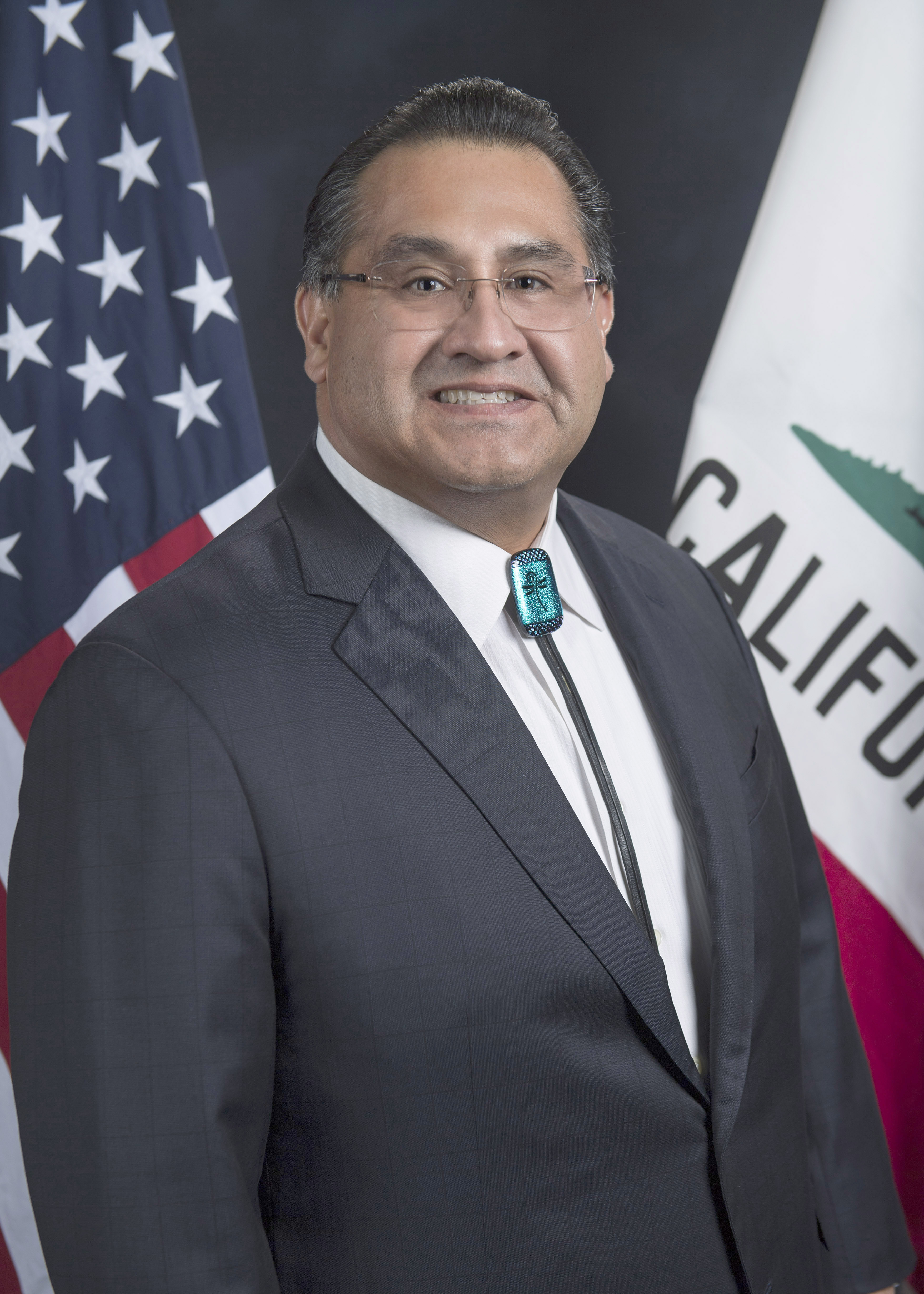
Asm. James Ramos
Sponsored bills
Existing law authorizes the State Fire Marshal to make changes as may be necessary to standardize all existing fire protective equipment throughout the state. This bill would require, until January 1, 2031, the State Fire Marshal, in consultation with the Division of Occupational Safety and Health, to develop a working group with specified membership to make recommendations regarding personal protective equipment used in responding to lithium-ion battery fires. The bill would require, at a minimum, the working group to review, and for the purpose of making the recommendations to consider, the latest personal protective equipment to limit exposure to lithium and other heavy metals, technology to clean personal protective equipment, whether different types of personal protective equipment should be used for different types of lithium-ion battery fires, and current decontamination practices at the fire scene, as specified. The bill would require the recommendations to be submitted to the Legislature on or before September 1, 2026.
The Political Reform Act of 1974 permits the Fair Political Practices Commission, upon mutual agreement between the commission and the governing body of a local government agency, to assume primary responsibility for the administration, implementation, and enforcement of a local campaign finance or government ethics law passed by the local government agency. The act authorizes the commission with respect to the local campaign finance or government ethics law to, among other things, provide advice, investigate possible violations, and bring civil actions. If such an agreement is executed, the act further requires the commission to report to the Legislature on or before January 1, 2025 with specified information, including legislative recommendations, regarding the performance of the agreement. Existing law repeals these provisions on January 1, 2026. The act authorizes the commission to enter into a similar agreement with the Board of Supervisors of the County of San Bernardino. This bill would additionally authorize the commission to conduct audits with respect to the local campaign finance or government ethics law. The bill would delete the requirement for the commission to report to the Legislature and remove the January 1, 2026 repeal date, thereby indefinitely extending the operation of the provisions described above. The bill would repeal the provisions pertaining to the County of San Bernardino. The Political Reform Act of 1974, an initiative measure, provides that the Legislature may amend the act to further the act's purposes upon a 23 vote of each house of the Legislature and compliance with specified procedural requirements. This bill would declare that it furthers the purposes of the act.
The Roberti-Z'berg-Harris Urban Open-Space and Recreation Program Act provides grants to cities, counties, and certain districts for recreational purposes, open-space purposes, or both, on the basis of population and need. The act requires property acquired or developed with the grant money to be used by the grant recipient only for the purpose for which the grant moneys were requested and prohibits any other use of the area except by a specific act of the Legislature. This bill would authorize the County of San Bernardino to dispose of up to 4.2 acres of property at Glen Helen Regional Park, including property acquired or improved with grant moneys from the above act, subject to the acquisition of replacement park property of equal or greater recreational value approved by the Department of Parks and Recreation, to be used for park purposes and at no cost to the state or the county, as provided. To exercise the authorization to dispose of the above-described property, the bill would require the county to, among other things, submit to the department an independent appraisal of the fair market value of the Glen Helen Regional Park property and the proposed replacement property, provide the department with preliminary title reports of the Glen Helen Regional Park property and the proposed replacement property, and, before the county disposes of the Glen Helen Regional Park property, enter into a final written agreement with the department to transfer all of the county's responsibilities and obligations to any grant contract applicable to the Glen Helen Regional Park property to the proposed replacement park property in perpetuity, as provided. The bill would require that these provisions become inoperative on January 1, 2029, if the County of San Bernardino has not acquired replacement park property on or before January 1, 2029.
Existing law requires the Department of Transportation to install screening on state freeway overpasses to prevent objects from being dropped or thrown upon vehicles passing underneath, as provided. This bill would require, on or before July 1, 2028, the department to identify best practices for the implementation of suicide countermeasures designed to deter suicide attempts on bridges and overpasses, as provided.
Existing law, the California Public Records Act, requires state and local agencies to make their records available for public inspection, unless an exemption from disclosure applies. That law exempts from disclosure specified information relating to elected or appointed officials, and makes specified disclosures of information relating to elected or appointed officials a crime. The law defines "elected or appointed official" for that purpose to include, among other things, a judge or court commissioner, a federal judge or federal defender, and a judge of a federally recognized Indian tribe. This bill would additionally include in the definition of the term "elected or appointed official," a retired judge or court commissioner, an active or retired judge of the State Bar Court, a retired federal judge or federal defender, a retired judge of a federally recognized Indian tribe, and an appointee of a court to serve as children's counsel in a family or dependency proceeding. By expanding a crime related to the unauthorized disclosure of information about elected or appointed officials, this bill would impose a state-mandated local program. Existing constitutional provisions require that a statute that limits the right of access to the meetings of public bodies or the writings of public officials and agencies be adopted with findings demonstrating the interest protected by the limitation and the need for protecting that interest. This bill would make legislative findings to that effect. The California Constitution requires the state to reimburse local agencies and school districts for certain costs mandated by the state. Statutory provisions establish procedures for making that reimbursement. This bill would provide that no reimbursement is required by this act for a specified reason.
Existing law declares the public policy of the state regarding labor organization, including, among other things, that it is necessary for a worker to have full freedom of association, self-organization, and designation of representatives of their own choosing, to negotiate the terms and conditions of their employment, and to be free from the interference, restraint, or coercion of employers of labor, or their agents, in the designation of such representatives or in self-organization or in other concerted activities for the purpose of collective bargaining or other mutual aid or protection. Existing law establishes the Public Employment Relations Board (PERB) in state government as a means of resolving disputes and enforcing the statutory duties and rights of specified public employers and employees under various acts regulating collective bargaining. Under existing law, PERB has the power and duty to investigate an unfair practice charge and to determine whether the charge is justified and the appropriate remedy for the unfair practice. Existing law, the federal National Labor Relations Act (NLRA) , establishes a comprehensive statutory scheme regulating unfair labor practices on the part of employers and labor organizations in industries affecting interstate commerce, and vests in the National Labor Relations Board (NLRB) the power to conduct elections to determine employee representatives and to prevent unfair labor practices affecting commerce. Existing law, the California Public Records Act, requires that public records, as defined, be available to the public for inspection and made promptly available to any person. This bill would expand PERB's jurisdiction by authorizing a worker, to petition PERB to protect and enforce prescribed rights under specified circumstances, including if the worker is employed in a position subject to the NLRA but the NLRB has expressly or impliedly ceded jurisdiction. The bill would authorize PERB to, among other things, decide unfair labor practice cases pursuant to a specified timeline and order all appropriate relief for a violation, including civil penalties, as prescribed. In order to pursue relief from PERB, the bill would require a covered worker or their representative to file an unfair practice charge or petition that includes specified information, including, where applicable, the original charge or petition filed with the NLRB. The bill would require PERB to hold the supporting documentation and evidence confidential and maintain it as part of its investigatory file and would exempt this documentation and evidence from the California Public Records Act. If PERB determines, among other things, it has insufficient resources to process certain cases or doing so would prevent it from meeting specified statutory deadlines, the bill would require PERB to process and prioritize charges, as specified. The bill would also establish the Public Employment Relations Board Enforcement Fund (fund) in the State Treasury, would require the above-described civil penalties to be deposited into the fund, and would make moneys in the fund available upon appropriation by the Legislature to PERB for the purpose of administering the above-specified provisions. The bill would authorize PERB to rely on its own decisions and precedent under the NLRA and would authorize review of its decisions by a state appellate court, as specified. Existing law, the Alatorre-Zenovich-Dunlap-Berman Agricultural Labor Relations Act of 1975, grants agricultural employees the right to form and join labor organizations and engage in collective bargaining, as specified, and prohibits agricultural employers and labor organizations from engaging in unfair labor practices. Those provisions establish the Agricultural Labor Relations Board (ALRB) and empower the ALRB to prevent any person from engaging in those practices. Existing law establishes various definitions for these purposes. Existing law requires the ALRB to follow applicable precedents of the NLRA. This bill would specify that the ALRB has exclusive jurisdiction in all phases of the administration of the act, and to determine whether any person or entity meets one or more of those definitions. The bill would instead authorize the board to follow applicable precedents of the NLRA, but would not obligate the board to follow precedents where the ALRB deems it inappropriate to do so. This bill would make related findings and declarations and would make its provisions severable. Existing constitutional provisions require that a statute that limits the right of access to the meetings of public bodies or the writings of public officials and agencies be adopted with findings demonstrating the interest protected by the limitation and the need for protecting that interest. This bill would make legislative findings to that effect.
Existing law establishes the California State University, under the administration of the Trustees of the California State University, as one of the segments of public postsecondary education in this state. The California State University comprises 23 institutions of higher education located throughout the state. The California Native American Graves Protection and Repatriation Act of 2001 requires all agencies and museums, which is defined to include higher education institutions, that receive state funding and have possession or control over collections of California Native American human remains and associated funerary objects to inventory those remains and objects for repatriation to the appropriate California Indian tribes, as specified. Existing law requires the California State University to comply with additional requirements regarding the handling, maintenance, and repatriation of Native American human remains and cultural items under the California Native American Graves Protection and Repatriation Act of 2001, including adopting and implementing policies and procedures on the systemwide requirements for submitting, processing, and implementing claims for the repatriation of human remains and cultural items, as specified. This bill would require the California State University to develop a policy for the reburial of Native American human remains that have been repatriated on land owned by the California State University, as provided. The bill would require the policy to require the California State University to consult with California Indian tribes, including on specified topics. The bill would also require the policy to require that any proposed location for the reburial of repatriated Native American human remains be mutually agreed upon by the California State University and the California Indian tribes that are culturally affiliated with the potential reburial land.
Existing law authorizes a pupil to wear traditional tribal regalia or recognized objects of religious or cultural significance as an adornment at school graduation ceremonies. Existing law prohibits that authorization from limiting a local educational agency's discretion and authority to prohibit an item that is likely to cause a substantial disruption of, or material interference with, the ceremony. Existing law defines "adornment" for these purposes as something attached to or worn with, but not replacing, the cap and gown customarily worn at school graduation ceremonies. This bill would extend a pupil's authorization to wear an adornment to school events that are related to graduation. The bill would clarify that what constitutes traditional regalia or recognized objects of religious or cultural significance is to be determined by the pupil and the pupil's family. The bill would prohibit a local educational agency from requiring (1) a preapproval process for a pupil to exercise their rights to wear an adornment and (2) a pupil to wear a cap if the cap is incompatible with the adornment. The bill would revise the definition of "adornment" as it relates to a cap customarily worn at school graduation ceremonies to instead mean something attached to, worn with, or worn in place of, the cap.
Existing law establishes the Tribal Nation Grant Fund, administered by the California Gambling Control Commission, for the receipt and deposit of moneys received by the state from Indian tribes pursuant to the terms of tribal-state gaming compacts. Under existing law, moneys in the Tribal Nation Grant Fund are available, upon appropriation by the Legislature, for the discretionary distribution of funds to nongaming and limited-gaming tribes, as specified. Existing law establishes the Tribal Nation Grant Fund Program and authorizes Tribal Nation Grant Fund Panel to award grants from available moneys within the fund and make other distributions from the fund to eligible tribes, as specified. Existing law requires an eligible tribe requesting a grant to submit an application on a form approved by the panel and provided by the commission. Existing law authorizes the panel to distribute of the available moneys in the fund to all eligible tribes that submitted a completed grant application, as specified. Existing law authorizes the panel, in its discretion and based upon the purpose or project set forth in the application, to require an eligible tribe to encumber or expend any or all of a grant within a specified period of time, as described. Existing law requires each eligible tribe and each individual applying on behalf of each eligible tribe to agree to return to the fund any amount of a grant not encumbered or expended, as specified. This bill would additionally establish the fund for the receipt and deposit of moneys received by the state from Indian tribes pursuant to the terms of class III gaming secretarial procedures. The bill would revise the grant distribution provisions described above to authorize the panel to award grants as specific distribution grants to fund a specifically described purpose or project, or as equal shares grants for distribution to eligible tribes in equal amounts, as specified. The bill would require the panel to develop application forms for the specific distribution grants and the equal shares grants, as described, and would require the equal shares grants application form to include, among other things, a certification from the eligible tribe that the funds will be used for specified purposes. The bill would require the panel to distribute as equal shares grants $600,000 per eligible tribe, or at least 85% of the available moneys in the fund, whichever is greater, as specified. The bill would authorize the panel to distribute as specific distribution grants the remaining available moneys in the fund, as specified. The bill would no longer authorize the panel to require an eligible tribe to encumber or expend any or all of a grant within a specified period of time and would make a related conforming change. The bill would no longer require each eligible tribe and each individual applying on behalf of each eligible tribe to return to the fund any amount of a grant not encumbered or expended, as specified. The bill would make a related statement of legislative intent.