

Maddy summaryThis House Resolution formally recognizes the importance of affordable homeownership for California families, particularly those with lower incomes, and highlights how nonprofit-led programs help build generational wealth and reduce economic disparities. The document emphasizes that existing state programs like CalHome support the construction and preservation of affordable homes through competitive funding to cities, counties, indigenous communities, and nonprofit builders such as Habitat for Humanity. While the resolution does not create new laws or funding, it serves as an official acknowledgment of homeownership's role in improving educational outcomes, health, civic participation, and neighborhood stability. The text also notes California's significant housing deficit and racial wealth gaps as context for why expanding affordable ownership opportunities is a priority for state policy.
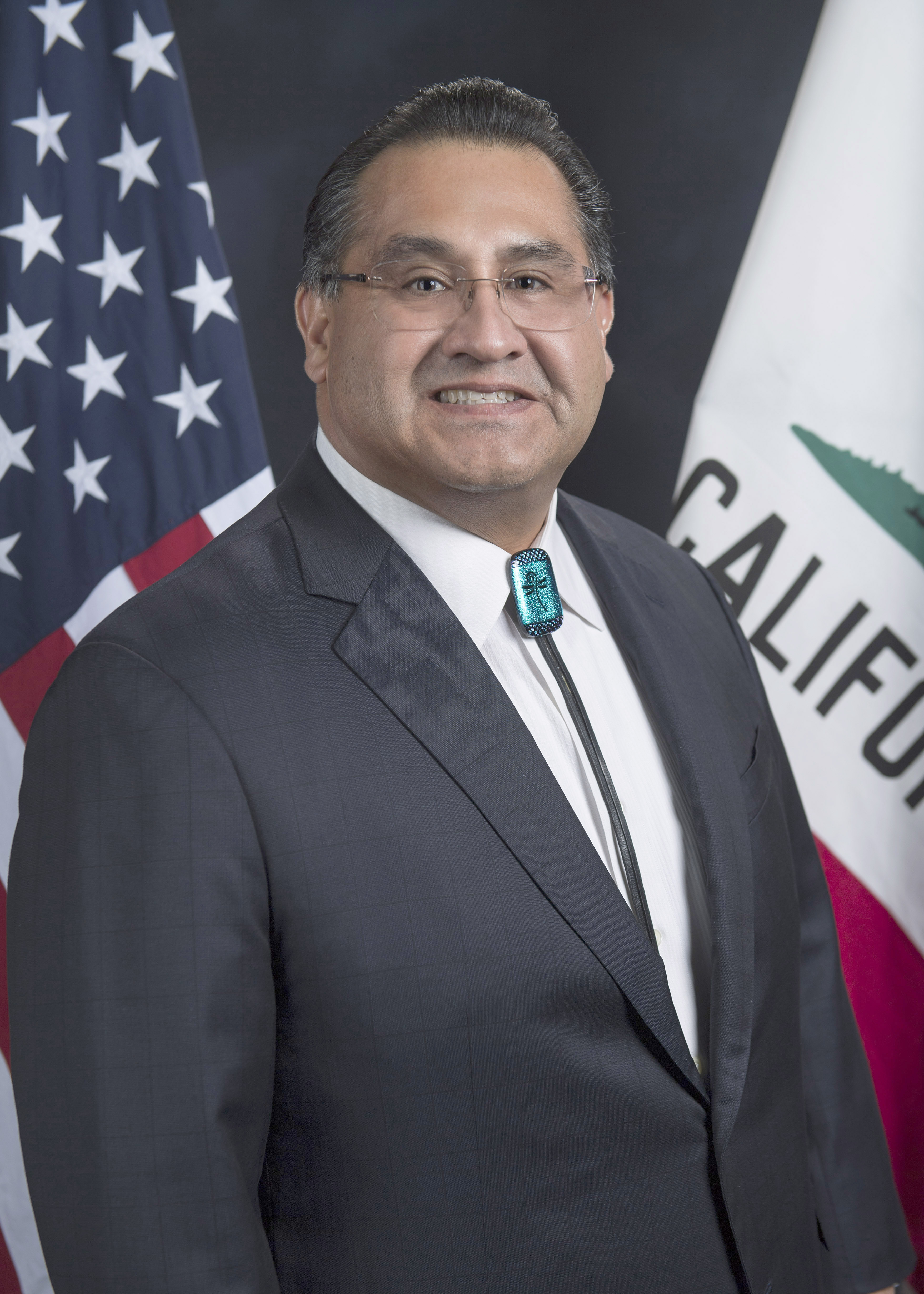
Asm. James Ramos
Sponsored bills
Existing law requires the Governor to create the Homeless Coordinating and Financing Council, renamed the California Interagency Council on Homelessness, to, among other things, identify mainstream resources, benefits, and services that can be accessed to prevent and end homelessness in California and to serve as a statewide facilitator, coordinator, and policy development resource on ending homelessness in California. Existing law establishes the Homeless Housing, Assistance, and Prevention program, administered by the Interagency Council on Homelessness, with respect to rounds 1 through 5, inclusive, of the program, and Department of Housing and Community Development (department) , with respect to round 6 of the program, for the purpose of providing jurisdictions, as defined, with one-time grant funds to support regional coordination and expand or develop local capacity to address their immediate homelessness challenges, as specified. Existing law requires the department, upon appropriation, to distribute certain amounts, as specified, for purposes of round 6 of the program. Existing law requires an applicant to submit an application containing specified information in order to apply for a program allocation. Existing law requires an applicant to use at least 10% of specified funds allocated for services for homeless youth populations. This bill would require a continuum of care, upon appropriation and beginning with the 2026–27 fiscal year, to annually certify that they create or maintain a youth-specific process with their respective coordinated entry system, as specified, implement a youth-specific assessment tool, create a body or identify an existing body composed of youth with lived experience of homelessness that the continuum of care and other Homeless Housing, Assistance, and Prevention program grantees must consult with regularly, and identify an array of youth-specific housing inventory. The bill would require the continuum of care to document in their application how the housing assessment is youth-specific and their prioritization policy if the continuum of care states they already maintain a youth-specific coordinated entry system. The bill would also make findings and declarations related to youth-specific programs and the Homeless Housing, Assistance, and Prevention program.
Existing law authorizes the court to issue a protective order restraining a defendant from any contact with the victim if the defendant has been charged with a crime involving domestic violence or a sex offense. This bill would require the court, if that defendant is convicted of that crime and is sentenced to incarceration in the state prison, to, at the time of sentencing, order that upon the defendant's release from prison, the defendant be served with a temporary criminal protective order protecting the same identified victim or victims from the original protective order. The bill would require this order to last for no more than 180 days. By authorizing the issuance of protective orders in certain circumstances and the extension of certain protective orders, a violation of which is punishable as a crime, this bill would impose a state-mandated local program. The California Constitution requires the state to reimburse local agencies and school districts for certain costs mandated by the state. Statutory provisions establish procedures for making that reimbursement. This bill would provide that no reimbursement is required by this act for a specified reason.
Existing law makes it a crime for a person to assault, among other people, a judge of any local, state, or federal court of record in retaliation for or to prevent the performance of their official duties, as specified. Existing law requires a county elections official to, upon application by a public safety officer, make confidential that officer's residence address, telephone number, and email address appearing on the affidavit of voter registration, as specified. Existing law requires, upon request of specified persons, including an active or retired judge, that the person's home address that appears in a record of the Department of Motor Vehicles be made confidential. This bill would additionally make it a crime for a person to assault a judge or former judge of a tribal court in retaliation for or to prevent the performance of their official duties, as specified. The bill would clarify that a tribal judge of a federally recognized California Indian tribe can request to make their records confidential pursuant to the above-described provisions. By expanding the scope of an existing crime, this bill would impose a state-mandated local program. Existing constitutional provisions require that a statute that limits the right of access to the meetings of public bodies or the writings of public officials and agencies be adopted with findings demonstrating the interest protected by the limitation and the need for protecting that interest. This bill would make legislative findings to that effect. The California Constitution requires the state to reimburse local agencies and school districts for certain costs mandated by the state. Statutory provisions establish procedures for making that reimbursement. This bill would provide that no reimbursement is required by this act for a specified reason.
Existing law includes the 4th Friday in September, known as "Native American Day," as a state holiday. This bill would provide that the 4th Friday in September, known as "Native American Day," is a paid holiday for state employees, as specified.
Existing law prohibits a person from carrying a concealed firearm or carrying a loaded firearm in public. Existing law requires a licensing authority to issue or renew a license for a person to carry a concealed firearm if specified conditions are met, including, among others, that the applicant is not a disqualified person for the license, as specified, and the applicant is the recorded owner of the firearm with the Department of Justice. Existing law deems an applicant to be a disqualified person and cannot receive or renew a license if, among other reasons, the applicant is reasonably likely to be a danger to self, others, or the community at large, or, in the 10 years prior to the licensing authority receiving the completed application, the applicant has been charged with any certain offense that was dismissed pursuant to a plea or dismissed with a waiver, as specified. Under existing law, any person who files an application knowing that any statement in the application is false is guilty of a misdemeanor. This bill would also treat the spouse of the recorded owner of the firearm as the recorded owner for licensing purposes. The bill would include additional specified acts that would deem an applicant as a disqualified person, including providing any information that the applicant knew or should have known was inaccurate or incomplete information in connection with the application or, in the 10 years prior to the licensing authority receiving the completed application for a new license or a license renewal, the applicant has been convicted of certain offenses, including knowingly and willingly threatening the life of any elected public official and other specified persons. By expanding the application of an existing crime and expanding the scope of the crime of perjury, this bill would create a state-mandated local program. The bill would make other conforming changes. The bill would make these provisions severable. The California Constitution requires the state to reimburse local agencies and school districts for certain costs mandated by the state. Statutory provisions establish procedures for making that reimbursement. This bill would provide that no reimbursement is required by this act for a specified reason.
(1) The Porter-Cologne Water Quality Control Act establishes a statewide program for the control of the quality of all the waters in the state and makes certain legislative findings and declarations. Existing law defines the term "beneficial uses" for the purposes of water quality as certain waters of the state that may be protected against quality degradation, to include, among others, domestic, municipal, agricultural, and industrial supplies. This bill would add findings and declarations related to California tribal communities, as defined, and the importance of protecting tribal water use. The bill would add tribal water uses as waters of the state that may be protected against quality degradation for purposes of the defined term "beneficial uses." The bill would require any project or regulatory program subject to approval by the State Water Quality Control Board or a regional water quality control board, within a specified environmental review, and in any findings and declarations presented for state board or a regional board approval, to describe, with both quantitative and qualitative information, how the project or regulatory program will impact tribal water uses, and would require, on or before December 1, 2026, and every 2 years thereafter, the state board to publish a report on implementation of this provision on its internet website. (2) Existing law requires the state board to consult with and carefully evaluate the recommendations of concerned federal, state, and local agencies during the process of formulating or revising state policy for water quality control. This bill would additionally require the state board to consult and carefully evaluate the recommendations of concerned California tribal communities. (3) Existing law requires the state board to formulate and adopt state policy for water quality control. Existing law requires each regional board to formulate and adopt water quality control plans for all areas within the region and prohibits a water quality control plan, or a revision of the plan, adopted by a regional board from becoming effective unless it is approved by the state board. Existing law authorizes the state board to adopt certain water quality control plans. Existing law requires a regional board to establish water quality objectives in water quality control plans that in its judgment will ensure reasonable protection of beneficial uses and the prevention of nuisance and requires each regional board to consider specified factors in establishing water quality objectives. This bill would require, on or before January 1, 2027, the state board to propose, and solicit tribal consultation and public comment on, water quality standards to achieve reasonable protection of tribal water uses into the water quality control plan for the San Francisco Bay and Sacramento-San Joaquin Delta watershed. This bill would add consultations with California tribal communities and environmental justice considerations as factors for a regional board to consider in establishing water quality control objectives. The bill would exempt adoption of tribal water uses within water quality control plans from the California Environmental Quality Act, and would require, upon the next triennial review of a water quality control plan after January 1, 2026, each regional board to define tribal beneficial uses in its water quality control plan and, where applicable, adopt water quality standards to achieve reasonable protection of tribal water uses into water quality control plans. (4) Existing law requires the California Environmental Protection Agency and the Natural Resources Agency, on or before December 1, 2007, to enter into a memorandum of understanding for the purposes of establishing the California Water Quality Monitoring Council, which the state board is required to administer. Existing law requires the monitoring council to review existing water quality monitoring, assessment, and reporting efforts and to recommend specific actions and funding needs necessary to coordinate and enhance those efforts. Existing law requires the memorandum of understanding to describe the means by which the monitoring council shall formulate recommendations to reduce redundancies, inefficiencies, and inadequacies in existing water quality monitoring and data management programs and to ensure that water quality improvement projects financed by the state provide specific information necessary to track project effectiveness with regard to achieving clean water and healthy ecosystems. This bill would require, on or before December 1, 2026, the California Environmental Protection Agency and the Natural Resources Agency to amend the memorandum of understanding to incorporate participation from California tribal communities in the actions of the monitoring council, and would describe these potential methods of participation. The bill would require the memorandum of understating to include recommendations on how to achieve and maintain tribal water uses through state board and regional board regulatory actions and other programs, as specified. (5) Existing constitutional provisions require that a statute that limits the right of access to the meetings of public bodies or the writings of public officials and agencies be adopted with findings demonstrating the interest protected by the limitation and the need for protecting that interest. This bill would make legislative findings to that effect.
Existing law requires, upon an Indian tribe's request, the State Department of Social Services to enter into an agreement with a tribe, consortium of tribes, or tribal organization regarding the care and custody of Indian children and jurisdiction over Indian child custody proceedings, and requires the department to negotiate in good faith with the Indian tribe, organization, or consortium in the state that requests development of an agreement with the state to administer all or part of the programs under Title IV-E of the Social Security Act on behalf of the Indian children who are under the authority of the tribe, organization, or consortium. Existing law makes an Indian tribe, tribal organization, or tribal consortium that is a party to an agreement eligible to receive allocations of child welfare services funds, in accordance with the agreement. Existing federal law, the Family First Prevention Services Act of 2018, among other things, provides states with an option to use federal funds under Title IV of the federal Social Security Act to provide mental health and substance abuse prevention and treatment services and in-home parent skill-based programs to a child who is a candidate for foster care or a child in foster care who is a pregnant or parenting foster youth, as specified. Existing law establishes the Family First Prevention Services program, and requires the department to have oversight of the program. Existing law authorizes a county or Indian tribe, consortium of tribes, or tribal organization that has entered into the above-described agreement with the state that elects to provide prevention services to provide those services for certain individuals for a certain period. This bill would provide that agreements between the department and a tribe, consortium of tribes, or tribal organization regarding the care and custody of Indian children and jurisdiction over Indian child custody proceedings include agreements that prevent entry into foster care, and would authorize such an agreement to be made for the sole purpose of the administration of prevention programs under the Family First Prevention Services program. The bill would also, subject to an appropriation for these purposes, require the department to provide funding to tribes, tribal organizations, or tribal consortiums to support the cost of independent legal representation provided by an attorney for a child and the child's parent, guardian, and Indian custodian pursuant to an agreement under the above-described provisions. The bill would require the department, by March 31, 2026, and in consultation with Indian tribes, to develop a cost allocation plan to allow specified funds to support the costs of independent legal representation.
Existing law establishes the Commission on Peace Officer Standards and Training within the Department of Justice and requires the commission to, among other things, develop and disseminate guidelines for all peace officers in California. This bill would require, on or before July 1, 2028, the commission to study and issue recommendations to the Legislature on the use of canines by law enforcement. The bill would require the commission to consider in its recommendations, among other things, instances of appropriate patrol use with a canine, as specified, and instances of appropriate use with a canine for detection, as specified. The bill would repeal these provisions on July 1, 2031.
Maddy summaryThis bill establishes January as National Human Trafficking Awareness Month in California to raise public awareness about human trafficking. The resolution recognizes the severity of human trafficking as a felony crime and highlights statistics showing its prevalence across the country and specific challenges with identifying male victims and labor trafficking cases. It aims to educate the public and encourage reporting and support for victims during this designated month.