

Existing law creates the Department of Insurance, headed by the Insurance Commissioner, and generally regulates classes of insurance, including residential property insurance. Existing law requires an insurer to deliver to the named insured an offer of renewal, as specified, at least 45 days before the policy expiration and to deliver a notice of nonrenewal at least 75 days before the policy expiration. If the insurer fails to do so, existing law requires the existing policy, with no change in its terms and conditions, to remain in effect for 75 days from the date that the notice of nonrenewal is delivered or mailed to the named insured. Existing law requires nonrenewal notices to contain specified information. This bill would, beginning January 1, 2028, require an insurer to deliver to the named policyholder a notice of nonrenewal of the policy at least 90 days before the policy expiration, except as provided. The bill would require the notice to contain specified information, including all information related to the basis for the nonrenewal, as specified. If the insurer fails to deliver a notice of nonrenewal to the named policyholder, the bill would require the existing policy to remain in effect for 90 days from the date the notice of nonrenewal is delivered. If an insurer finds that a policy does not meet its underwriting guidelines due to a condition that can be remedied by the policyholder, the bill would require the insurer to deliver or mail to the named policyholder a notice at least 120 days before the policy expiration that includes an explanation of any remediation, additional information, or other change to the property that would qualify the policyholder to obtain renewal of the policy. This bill would, beginning January 1, 2028, require an insurer that refuses to renew a policy to provide the policyholder with a detailed, plain language explanation of the grounds for the nonrenewal and all nonaerial imagery relied upon as a basis for the decision. The bill would require, upon request and within 15 days of that request, an insurer to provide any property inspection findings or property inspection reports relied upon as a basis for the decision. If an insurer finds that a policy does not meet its underwriting guidelines due to a condition that can be remedied by the policyholder, the bill would require the insurer to provide the policyholder with a period of not less than 90 days to perform the necessary remediation or other change to the property or to provide additional information. The bill would prohibit an insurer from refusing to renew a residential property insurance policy solely on the basis of certain claims, on the basis of the policyholder's previous inquiry, or on the basis of the age of the roof under certain circumstances. On or before April 1, 2029, and annually thereafter by that date, this bill would require an insurer to submit to the commissioner a report for the previous calendar year containing specified information. On or before September 1, 2029, and annually thereafter by that date, the bill would require the commissioner to prepare and publish on the department's internet website an aggregated report for the previous calendar year of the information reported by insurers.
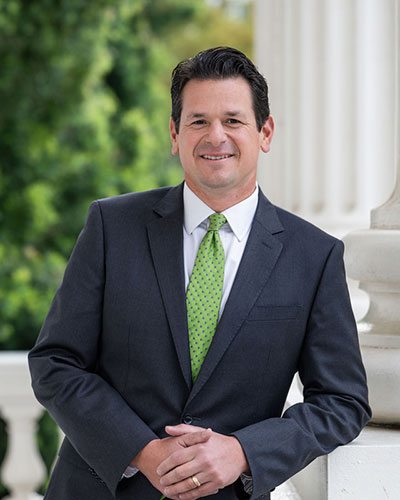
Asm. John Harabedian
Sponsored bills
Maddy summaryCalifornia House Resolution 128 designates October 23, 2026, as Aromatic L-Amino Acid Decarboxylase (AADC) Deficiency Awareness Day. The resolution aims to increase public and medical community awareness of this ultrarare genetic condition, which prevents the body from producing dopamine and causes severe developmental delays. By highlighting the challenges faced by patients and their caregivers, the bill encourages Californians to learn more about the disease to support earlier diagnosis and continued research into treatments.
Maddy summaryThis California House Resolution proclaims September 2026 as Young Women's Reproductive Health Awareness Month to highlight the importance of early diagnosis and education for adolescent girls. The resolution urges high schools, colleges, public health agencies, and medical providers to promote educational campaigns on topics such as menstrual health, HPV vaccination, and sexual health practices. It specifically aims to address disparities in care by encouraging outreach to communities that face systemic barriers or lack culturally appropriate resources.
Maddy summaryCalifornia Assembly Resolution 131 proclaims October 11 through 17, 2026, as Student Cancer Education, Detection, and Prevention Week. The resolution encourages middle schools, high schools, colleges, public health agencies, pediatricians, and community health providers to promote educational campaigns on cancer prevention and detection. These efforts aim to inform students about risk factors, warning signs, and the importance of timely screenings to support better health outcomes for young people in the state.
The California Constitution provides that the University of California constitutes a public trust, and requires the university to be administered by the Regents of the University of California, a corporation in the form of a board, with full powers of organization and government, subject to legislative control only for specified purposes. The California Constitution requires the board to consist of 7 ex officio members and 18 appointive members appointed by the Governor and approved by the Senate. The California Constitution authorizes the members of the board to appoint either a member of the faculty at a campus of the university or of another institution of higher education, or a person enrolled as a student at a campus of the university, or both, as members of the board serving for no less than one year with all rights of participation. Beginning on July 1, 2027, this measure would require, instead of authorize, the members of the board to appoint to the board for 2-year terms, 2 undergraduate students and 2 graduate students enrolled at a campus of the university for each regular academic term during their service as members of the board, as provided. The measure would require each student board member to serve as a nonvoting student regent-designate in the first year of their 2-year term, and would authorize a student member who graduates from the university on or after January 1 of the 2nd year of the student member's 2-year term to serve the remainder of their term.
Existing law, the Knox-Keene Health Care Service Plan Act of 1975, provides for the licensure and regulation of health care service plans by the Department of Managed Health Care and makes a willful violation of the act a crime. Existing law also provides for the regulation of health insurers by the Department of Insurance. Existing law authorizes health care service plans and health insurers that cover prescription drugs to utilize reasonable medical management practices, including prior authorization and step therapy, consistent with applicable law. This bill would prohibit a health care service plan contract or a health insurance policy that is issued, amended, or renewed on or after January 1, 2027, from imposing step therapy as a prerequisite to authorizing coverage of any prescription drug used for the treatment of a serious mental illness or substance use disorder, as those terms are defined, except as specified. The bill would specify that the prohibition on step therapy does not apply when the United States Food and Drug Administration-labeled indications and usage of a drug indicate that some prior medication must be taken. Because a willful violation of this provision by a health care service plan would be a crime, the bill would impose a state-mandated local program. The California Constitution requires the state to reimburse local agencies and school districts for certain costs mandated by the state. Statutory provisions establish procedures for making that reimbursement. This bill would provide that no reimbursement is required by this act for a specified reason.
Maddy summaryThis House Resolution officially designates September as Black Music Month to honor the significant contributions of Black artists to American culture. The measure recognizes a wide range of musical genres, including jazz, blues, gospel, and hip-hop, by highlighting their historical origins and influential figures. While the text celebrates these artistic achievements, it does not impose any new legal requirements or funding mandates.
Existing law establishes the State Department of Public Health, headed by the State Public Health Officer, and sets forth its powers and duties, including the administration of provisions relating to the prevention and control of communicable diseases. Existing law authorizes the department to take necessary measures to ascertain the nature and prevent the spread of communicable diseases. Existing law prohibits the governing authority of a school or other institution from unconditionally admitting or advancing to the 7th grade level any person as a pupil of any public or private elementary or secondary school, childcare center, day nursery, nursery school, family daycare home, or development center, unless, prior to their admission or advancement to that institution, they have been fully immunized against various communicable diseases, as provided, subject to any specific age criteria. Existing law requires the governing authority of a school or other institution, on at least an annual basis, to file a written report on the immunization status of new entrants to the school or institution under their jurisdiction with the department and the local health department at times and on forms prescribed by the department. This bill, the Informed Parents, Healthy Schools Act, would require the department to establish, and update as needed, levels of immunization rates needed to prevent the spread of specified communicable diseases. The bill would require the department to establish notification procedures designed to annually inform designated parties, including schools, daycare centers, and county departments of public health, when an immunization rate is determined to fall below the rate established by the department, among other things. The bill would require that the notification be translated into any language, in addition to English, that is spoken by 15% or more of enrolled children. The bill would require the department to apply existing data de-identification standards and methodologies to protect individual privacy, consistent with applicable state and federal law, in implementing these provisions. The bill would require a school or institution, as defined, to distribute the above-described notification to parents or guardians of enrolled children within 10 business days of receiving the notification from the department. The bill would authorize the school or institution to determine the manner of distribution for the notification, consistent with specified requirements. The bill would require the governing authority of the school or institution to cooperate with the department in carrying out these provisions. By requiring school districts to comply with these requirements, this bill would impose a state-mandated local program. The California Constitution requires the state to reimburse local agencies and school districts for certain costs mandated by the state. Statutory provisions establish procedures for making that reimbursement. This bill would provide that, if the Commission on State Mandates determines that the bill contains costs mandated by the state, reimbursement for those costs shall be made pursuant to the statutory provisions noted above.
The Personal Income Tax Law and the Corporation Tax Law allow various credits against the taxes imposed by those laws, including numerous motion picture credits. This bill, for taxable years beginning on or after January 1, 2027, and before January 1, 2032, would allow a credit against the taxes imposed by those laws to a qualified taxpayer that produces qualified commercials, as defined, in the state in an amount equal to 20% or 30% of the qualified production costs in excess of $500,000 that are attributable to the production of a qualified commercial, as specified. The bill would exclude any commercial that is created entirely by generative artificial intelligence, as specified, or that utilizes generative artificial intelligence or autonomous vehicles in a manner that replaces the job functions customarily performed by a human worker in the production. The bill would require the qualified commercial to adhere to specified labor standards. The bill would require the California Film Commission to establish an application process and allocate the credits on or after July 1 each year, in accordance with certain requirements. The bill would limit the aggregate amount of credits that may be allocated for a fiscal year under these provisions to $15,000,000. The bill would require specified certifications under penalty of perjury. By expanding the scope of a crime, this bill would impose a state-mandated local program. Existing law requires any bill authorizing a new tax expenditure to contain, among other things, specific goals, purposes, and objectives that the tax expenditure will achieve, detailed performance indicators, and data collection requirements. This bill would include additional information required for any bill authorizing a new tax expenditure. The California Constitution requires the state to reimburse local agencies and school districts for certain costs mandated by the state. Statutory provisions establish procedures for making that reimbursement. This bill would provide that no reimbursement is required by this act for a specified reason. This bill would take effect immediately as a tax levy.
Existing law declares the established policy of the state that every human being has the right to access sufficient affordable and healthy food. Existing law defines food insecurity as the occasional or constant lack of access to the food one needs to live a healthy life and the uncertainty of being able to acquire enough food to meet the needs of an individual or household due to insufficient money or other resources. Existing law establishes the University of California, under the administration of the Regents of the University of California, as one of the segments of public postsecondary education within this state. The University of California comprises 10 institutions of higher education located at various campuses, including in the City of Los Angeles. This bill, the Count Hunger Act, would encourage the University of California, Los Angeles, in administering the California Health Interview Survey, to expand the portion of the survey relating to food insecurity to include households with incomes at or below 400% of the federal poverty level. The bill would further encourage the University of California, Los Angeles, to make available statewide, regional, and county-level data regarding food insecurity among households with incomes at or below 400% of the federal poverty level through the AskCHIS reporting tool or a successor public reporting platform, as specified. The bill would encourage these provisions to be undertaken only to the extent that the University of California, Los Angeles, determines sufficient resources are available.