

Existing law establishes priorities and procedures that any state agency disposing of surplus property is required to follow. Existing law sets forth an order of priority for the disposal of surplus nonresidential property. In this regard, existing law requires a tenant in good standing of a nonresidential property who is a city or a nonprofit organization to be given priority to purchase the property at the lesser of fair market value or value in use, as specified. Existing law prohibits the Department of Transportation from selling a nonresidential property to a tenant as described above at a value below the minimum sales price, as defined. Existing law requires an offer to sell surplus nonresidential property as described above at less than fair market value to be subject to appropriate terms, conditions, and restrictions, as specified. This bill would create an exception from that prohibition for a tenant who is a nonprofit organization that operates multiple residential structures primarily for the purposes of familial habitation during medical treatment and related administrative activities. Specifically, the bill would prohibit the tenant from being required to pay to the Department of Transportation any amounts in excess of the lesser of fair market value or value in use, as specified, regardless of any contractual obligation to pay those amounts. The bill would require the tenant to be required to repay any amounts not paid pursuant to the above provision if the tenant sells the property or no longer qualifies as a nonprofit organization. The bill would require the Department of Transportation to include that requirement in the terms, conditions, and restrictions of the offer to the tenant. The bill would make its provisions retroactive and applicable to any contracts entered into between the Department of Transportation and a qualified tenant. This bill would make legislative findings and declarations as to the necessity of a special statute for certain nonresidential tenants carrying long-term debt obligations to the Department of Transportation. This bill would make legislative findings and declarations related to a gift of public funds.
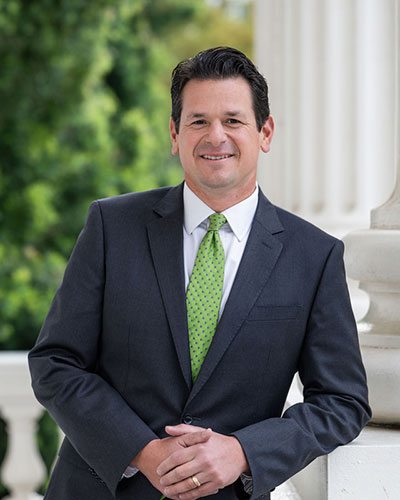
Asm. John Harabedian
Sponsored bills
Existing law, the Planning and Zoning Law, provides for the adoption and administration of zoning laws, ordinances, rules and regulations by counties and cities and the implementation of those general plans as may be in effect in those counties or cities. In that regard, existing law requires each local agency, by January 1, 2025, to develop a program for the preapproval of accessory dwelling unit plans. This bill would require each local agency, as defined, to develop a program for the preapproval of single-family and multifamily residential housing plans, whereby the local agency accepts single-family and multifamily plan submissions for preapproval and approves or denies the preapproval applications, as specified. The bill would require a large jurisdiction, as defined, to develop this program by July 1, 2027, and a small jurisdiction, as defined, to develop a program by January 1, 2029. The bill would require the local agency to post preapproved single-family or multifamily residential housing plans and the contact information of the applicant on the local agency's internet website. This bill would require a local agency to either approve or deny ministerially an application for a single-family or multifamily residential housing unit within 30 days if the lot meets certain conditions and the application utilizes specified plans that have been preapproved by the local agency or that are identical to a plan used in an application approved by the local agency. The bill would prohibit the preapproval program from applying to single-family or multifamily residential housing plans intended for use in certain communities and developments, as specified. Existing law requires each county and each city to adopt a comprehensive, long-term general plan for the physical development of the county or city, and specified land outside its boundaries, that includes, among other specified mandatory elements, a housing element. That law requires the planning agency of a city or county to provide by April 1 of each year an annual report to, among other entities, the Office of Land Use and Climate Innovation. Existing law requires the annual report to include, among other things, the city's or county's progress in meeting its share of regional housing needs, as specified. Existing law, the California Environmental Quality Act (CEQA) , requires a lead agency, as defined, to prepare, or cause to be prepared, and certify the completion of, an environmental impact report on a project that it proposes to carry out or approve that may have a significant effect on the environment. CEQA does not apply to the approval of ministerial projects. To the extent that the ministerial review process established by the bill would apply to final, discretionary approval of an application for a single-family or multifamily housing unit, the bill would exempt those projects from CEQA. This bill, beginning on April 1, 2028, for large jurisdictions and beginning on April 1, 2030, for small jurisdictions, would require the local agency to include in its annual report the number of units of residential housing that are approved using a preapproved housing plan pursuant to this act. By imposing new duties on local agencies with regard to developing a preapproval program and its annual report, the bill would create a state-mandated local program. The bill would include findings that changes proposed by this bill address a matter of statewide concern rather than a municipal affair and, therefore, apply to all cities, including charter cities. The California Constitution requires the state to reimburse local agencies and school districts for certain costs mandated by the state. Statutory provisions establish procedures for making that reimbursement. This bill would provide that no reimbursement is required by this act for a specified reason.
Existing law, the Governor's Reorganization Plan No. 1 of 2025, beginning July 1, 2026, eliminates the Business, Consumer Services, and Housing Agency and instead establishes the Business and Consumer Services Agency and the California Housing and Homelessness Agency (agency) . Existing law requires the agency to coordinate with the California Health and Human Services Agency and the California Consumer Protection Agency on various state policies, including housing. This bill would require the agency to create a study on issues impacting pregnant people experiencing homelessness and report the results of the study, as well as recommendations to establish a PINK Alert, to the Legislature by July 1, 2028. The bill would require the recommendations to include how the PINK Alert can meet specified conditions, including that it be a system that nonprofits can opt in to in order to get notifications if there is a pregnant person in need of emergency housing or prenatal services.
Maddy summaryThis bill serves as a commemorative resolution to mark the 50th anniversary of the Surface Mining and Reclamation Act of 1975. It does not create new laws or alter existing regulations but instead formally acknowledges the milestone achievement of the original legislation. The measure is intended to honor the history of mining and land reclamation efforts established by the 1975 act.
This measure would acknowledge and celebrate 50 years of coastal protection and affirm the state's longstanding commitment to protecting its coastal waters, as specified.
Maddy summaryThis bill designates June 2026 as Men's Mental Health Month to raise awareness about mental health issues affecting men. The measure is a formal proclamation that does not change laws or allocate funding, but rather encourages public recognition of the topic. Once passed, it serves as an official declaration without imposing new requirements on individuals or organizations.
This measure would declare the month of June 2026 as Alzheimer's Disease and Brain Awareness Month, and would urge all Californians to commemorate the month of June 2026 as Alzheimer's Disease and Brain Awareness Month.
Maddy summaryThis bill designates June 23, 2026, as Social Media Harms Victim Remembrance Day in California. The measure requires the state to officially proclaim this date, creating a specific day for remembrance. It does not change laws or impose new requirements on individuals or organizations. The primary effect is to establish a formal date for commemoration within the state.
This measure would recognize June 19, 2026, as Juneteenth and would urge the people of California to join in celebrating Juneteenth as a day to honor and reflect on the significant role that African Americans have played in the history of the United States and how they have enriched society through their steadfast commitment to promoting unity and equality.
Maddy summaryThis House Resolution in the California Legislature formally recognizes October 11, 2026, as International Referees' Day to honor sports officials at all levels. The bill aims to acknowledge the dedication, integrity, and essential role referees play in ensuring fair and safe athletic competitions. It encourages athletes, coaches, families, and communities to express appreciation for officials and foster a culture of respect and sportsmanship during events.