

Passed Jan 18, 2024
1 co-sponsor
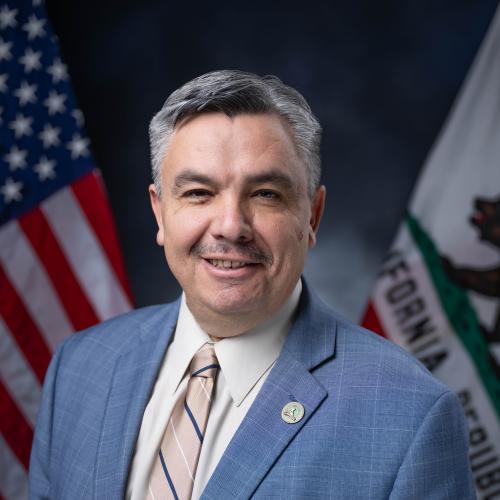
Asm. Juan Carrillo
Total votes
10,001
all sessions
Attendance
96%
345 missed
Near the chamber average
With party
99%
of cast votes
Near the chamber average
Bipartisan score
0%
crosses aisle rarely
Near the chamber average
Sponsored
862
bills & resolutions
Near the chamber average
Committees
13
assignments
862 bills and resolutions
Sponsored bills
Total
862
Primary
84
Co-sponsor
778
This page
862
matching current filters
Passed Jan 16, 2024
1 co-sponsor
Beverage containers: recycling.
(1) The California Beverage Container Recycling and Litter Reduction Act, of which a violation is a crime, requires a distributor to pay a redemption payment for every beverage container sold or offered for sale in the state. The act defines the term "beverage container" to mean the individual, separate bottle, can, jar, carton, or other receptacle, however denominated, in which a beverage is sold, and which is constructed of metal, glass, or plastic, or other material, or any combination of these materials, but does not include cups or other similar open or loosely sealed receptacles. The act defines "beverage" to include certain types of products in liquid, ready-to-drink form, including carbonated fruit drinks and noncarbonated fruit drinks that contain any percentage of fruit juice, but not 100% fruit juice in 46-ounce containers or larger or vegetable juice containers with more than 16 ounces. This bill would expand the application of the act to any size container of 100% fruit juice and any size container of vegetable juice, beginning January 1, 2024. Since the additional payments for the beverage containers that this bill would make subject to the act would be deposited in a continuously appropriated fund, the bill would make an appropriation. The bill would impose a state-mandated local program by creating new crimes under the act relating to the regulation of beverage containers. (2) The act defines a "beverage manufacturer" as a person who bottles, cans, or otherwise fills beverage containers, or imports filled beverage containers, for sale to distributors, dealers, or consumers. This bill would amend the definition of "beverage manufacturer" to mean the same as above, except that for a beverage container containing beer, wine, or distilled spirits, the "beverage manufacturer" would be the person who holds the license from the Department of Alcoholic Beverage Control authorizing the manufacture of the beer, wine, or distilled spirits, regardless of whether that person contracts with a third party to bottle, can, or otherwise fill the beverage container, so long as the beverage container is provided for sale to a distributor, dealer, or consumer by the holder of the license. (3) The act requires plastic beverage containers sold by a beverage manufacturer, as specified, to contain a specified average percentage of postconsumer recycled plastic. The act provides for periodic increases in the required percentage, but authorizes the Director of Resources Recycling and Recovery to lower the required percentage, based on specified criteria. The act imposes an administrative penalty on a beverage manufacturer that fails to include the required percentage of postconsumer recycled plastic in its plastic beverage containers. This bill would exempt beverage containers of 46 ounces or more of 100% fruit juice and beverage containers with more than 16 ounces of vegetable juice from consideration in calculating the required percentage of postconsumer recycled plastic for a beverage manufacturer until January 1, 2026. (4) The act requires a beverage manufacturer to label a beverage container sold or offered for sale by that beverage manufacturer in the state with one of several specified redemption value messages. The act prohibits a person from offering to sell, or selling, to a consumer a beverage container that has not been labeled as required by the act. The act exempts a beverage container included within the scope of the act beginning on January 1, 2024, from the act's labeling requirements until July 1, 2025. This bill would additionally exempt from the act's labeling requirements a beverage container included within the scope of the act beginning on January 1, 2024, that was filled and labeled before January 1, 2024, and a beverage container with 46 ounces or more of 100% fruit juice or more than 16 ounces of vegetable juice that was filled and labeled before July 1, 2024. (5) Existing law requires a dealer, as defined, to separately identify the amount of any redemption payment imposed on a beverage container on the shelf labels of the dealer's establishment, as specified. This bill would exempt from this shelf labeling requirement until January 15, 2024, a beverage container included within the scope of the act beginning on January 1, 2024. (6) The act requires a beverage manufacturer to pay to the Department of Resources Recycling and Recovery a processing fee for each beverage container sold or transferred and requires the department to distribute those fees, with other moneys, as processing payments to processors and recycling centers. The act requires the department to calculate the processing payment annually and authorizes quarterly adjustments, both based on the prior 12-month scrap value. This bill would authorize the department to adjust the processing payment quarterly, based on the lower of either the applicable preceding 12-month or 3-month average scrap value instead of only the prior 12-month scrap value. The bill would require a processing payment equal to the processing payment applied to HDPE beverage containers to be applied to a beverage container that is a box, bladder, pouch, or similar container, containing wine or distilled spirits. This bill would require the department to pay to a recycling center in a rural area, as specified, in addition to a processing payment, a transportation, operations, and logistics payment for glass beverage containers, as specified, until January 1, 2030. The bill would continuously appropriate moneys in the California Beverage Container Recycling Fund to the department for this purpose, thereby making an appropriation. (7) The act requires a beverage distributor to pay to the department a redemption payment for a beverage container sold or offered for sale in the state by the distributor, as specified. The act exempts any lodging, eating, or drinking establishment, licensed wine or distilled spirits tasting room, or soft drink vending machine operator from the definition of dealer, as specified. This bill, commencing January 1, 2024, would exempt a beverage distributor from being required to pay a redemption payment for a beverage container that is used solely to pour wine, beer, or distilled spirits at a licensed wine, beer, or distilled spirits tasting room. The bill would additionally exempt a licensed beer tasting room from the definition of dealer. (8) The act requires the department, not less than once every 6 months, to post on its internet website an updated condition statement for the California Beverage Container Recycling Fund, and other specified information, for the current fiscal year and budget year and to provide a written copy of that information to specified committees of the Legislature. This bill would instead require the department to notify certain committees of the Legislature of the posting of the above-described information. (9) Existing law provides that the Division of Recycling in the department succeeds to and is vested with specified authority, duties, powers, purposes, responsibilities, and jurisdiction that once belonged to the Department of Conservation regarding the act. This bill would provide that the department, instead of the division within the department, succeeds to and is vested with the specified authority, duties, powers, purposes, responsibilities, and jurisdiction that once belonged to the Department of Conservation regarding the act. (10) The California Constitution requires the state to reimburse local agencies and school districts for certain costs mandated by the state. Statutory provisions establish procedures for making that reimbursement. This bill would provide that no reimbursement is required by this act for a specified reason. (11) This bill would declare that it is to take effect immediately as an urgency statute.
Signed into law Oct 13, 2023
1 co-sponsor
Vehicles.
Existing law prohibits a local authority from enacting or enforcing an ordinance on matters covered by the Vehicle Code unless expressly authorized by the Vehicle Code. Existing law authorizes local authorities to adopt rules and regulations by ordinance or resolution regarding specified matters, including, among others, crossing guards, the operation of bicycles, the removal of illegally parked vehicles, and cruising, as defined. This bill would remove the authorization for a local authority to adopt rules and regulations by ordinance or regulation regarding cruising. Existing law makes it unlawful to operate a passenger vehicle, or commercial vehicle under 6,000 pounds, that has been modified from its original design so that any portion of the vehicle, other than the wheels, has less clearance from the surface of a level roadway than the clearance between the roadway and the lowermost portion of any rim of any wheel in contact with the roadway. This bill would repeal that prohibition. This bill would incorporate additional changes to Section 21100 of the Vehicle Code proposed by AB 825 and SB 50 to be operative only if this bill and AB 825, this bill and SB 50, or this bill, AB 825, and SB 50 are enacted and this bill is enacted last.
Signed into law Oct 13, 2023
1 co-sponsor
Teachers: professional development: Bilingual Teacher Professional Development Program: eligibility.
(1) Existing law establishes the Bilingual Teacher Professional Development Program, administered by the State Department of Education, in consultation with the Commission on Teacher Credentialing, for teachers seeking to provide instruction in bilingual and multilingual settings. Existing law, for the 2023–24 fiscal year, appropriates $20,000,000 from the General Fund to the Superintendent of Public Instruction for purposes of the program, to be available for grants totaling $4,000,000 each fiscal year, from the 2023–24 fiscal year to the 2027–28 fiscal year, inclusive, as provided. Existing law requires the department to allocate grant funding to eligible local educational agencies, including county offices of education, school districts, charter schools, or a consortia of local educational agencies for purposes of providing professional development services to teachers or paraprofessionals who satisfy specified requirements, but exempts participants who are currently enrolled in, or have completed, the Asian Language Bilingual Teacher Education Program from those requirements that apply to teachers. This bill would also exempt participants who are currently enrolled in, or have completed, programs to support bilingual teacher education in languages in the classroom, such as Arabic, Cantonese, Mandarin, Spanish, Tagalog, and Vietnamese, and other languages, as represented in an instructional program, from those specified requirements that apply to teachers. By expanding the scope of eligibility for purposes of an appropriation, the bill would make an appropriation. (2) Existing requires Bilingual Teacher Professional Development Program grant recipients to provide to the department, by July 1, 2026, a preliminary report, and, by January 1, 2029, a final report, on the number of participants who were issued bilingual authorizations, the number of previously authorized teachers who have participated in the program and subsequently returned to bilingual teaching assignments, and the number of teachers who are still working at least 50% of the time in a bilingual setting. This bill would extend the deadline for the final report by one year to January 1, 2030. (3) Funds appropriated by this bill would be applied toward the minimum funding requirements for school districts and community college districts imposed by Section 8 of Article XVI of the California Constitution.
Signed into law Oct 13, 2023
1 co-sponsor
Pupil placement: special education: foster children: nonpublic, nonsectarian schools or agencies: school of origin.
Existing law requires a local educational agency serving a foster child to allow the foster child to remain at the child's school of origin upon the initial detention or placement, any subsequent change in placement, the termination of the court's jurisdiction, or pending resolution of a dispute regarding school of origin placement, as provided. Existing law defines "school of origin" as the school that the foster child attended when permanently housed or the school in which the foster child was last enrolled, except as specified. Existing law sets forth a method for providing special education and related services to pupils who are individuals with exceptional needs, as defined. Existing law permits, under certain circumstances, contracts to be entered into for the provision of those services by nonpublic, nonsectarian schools or agencies, as defined. Existing law authorizes a master contract for special education and related services provided by a nonpublic, nonsectarian school or agency only if the school or agency has been certified as meeting specified standards. Existing law sets forth the certification process and procedures for the nonpublic, nonsectarian schools or agencies that seek certification from the Superintendent of Public Instruction. This bill would, for a foster child who is an individual with exceptional needs, define "school of origin" as also including a placement in a certified nonpublic, nonsectarian school, as provided. The bill would require, commencing with the 2024–25 school year, a nonpublic, nonsectarian school or agency seeking certification or already certified to agree in writing, for any foster child it serves, to be designated as the school of origin of the foster child and to allow the foster child to continue their education in the school, as specified. This bill would incorporate additional changes to Section 48853.5 of the Education Code proposed by AB 373 to be operative only if this bill and AB 373 are enacted and this bill is enacted last.
Signed into law Oct 13, 2023
1 co-sponsor
Veteran and California National Guard Supplemental Orientation Act of 2023.
Existing law establishes the University of California, under the administration of the Regents of the University of California, the California State University, under the administration of the Trustees of the California State University, and the California Community Colleges, under the administration of the Board of Governors of the California Community Colleges, as the 3 segments of public postsecondary education in the state. This bill, commencing no later than the 2025–26 academic year, would require each campus of the California State University and the California Community Colleges, and would request each campus of the University of California, to include within first-year student and transfer student orientations the location and contact information of the campus point of contact for students who are veterans of the Armed Forces of the United States and members of the California State Guard and the California National Guard, and their dependents, make available in hard copy form at the location of the campus point of contact a document that includes information on polices, resources, and services for these students and their dependents, as specified, and post the document, along with other information available to these students and their dependents, on the campus's internet website. By imposing new duties on community college districts, this bill would impose a state-mandated local program. The California Constitution requires the state to reimburse local agencies and school districts for certain costs mandated by the state. Statutory provisions establish procedures for making that reimbursement. This bill would provide that, if the Commission on State Mandates determines that the bill contains costs mandated by the state, reimbursement for those costs shall be made pursuant to the statutory provisions noted above.
Signed into law Oct 13, 2023
1 co-sponsor
Affordable Housing Finance Workgroup: affordable housing: consolidated application and coordinated review process.
Existing law establishes the Department of Housing and Community Development and sets forth its powers and duties, including promoting the development of affordable housing in the state. Existing law creates the California Housing Finance Agency within the Business, Consumer Services, and Housing Agency and authorizes the agency to make loans to finance affordable housing. Existing law establishes the California Tax Credit Allocation Committee to allocate specified federal low-income housing tax credits. Existing law also establishes the California Debt Limit Allocation Committee for the purpose of implementing the volume limit for the state on private activity bonds established pursuant to federal law. Under existing law, the committee's duties include annually determining a state ceiling on the aggregate amount of private activity bonds that may be issued, and allocating that amount among state and local agencies. This bill would require specified reviewing entities, as defined as the above-described entities, to jointly convene an Affordable Housing Finance Workgroup to develop recommendations for state-administered programs to utilize a consolidated application for multifamily affordable rental housing developers to use to obtain grants, soft loans, low-income housing tax credits, tax exempt bonds, federal funds, as applicable, and other types of subsidies for building affordable housing, and develop a coordinated review process for the application, as described. The bill would require the workgroup to include representatives of the reviewing entities, nonprofit and for-profit affordable housing developers, and local and tribal governments. The bill would require the workgroup to identify specified information, including any state-administered program that may utilize the consolidated application and coordinated review process, and a timeline for developing a single consolidated application and coordinated review process. On or before, July 1, 2026, the bill would require the workgroup to report recommendations on implementing a single consolidated application and coordinated review process to the reviewing entities, the Legislature, and certain committees of the Legislature. The bill would require the reviewing entities to develop and report to the Legislature a plan to update state-administered programs that may utilize the consolidated application and coordinated review process based on the recommendations of the workgroup on or before January 1, 2027, as specified.
Signed into law Oct 11, 2023
1 co-sponsor
Accessory dwelling units: preapproved plans.
Existing law, the Planning and Zoning Law, authorizes a local agency, by ordinance or ministerial approval, to provide for the creation of accessory dwelling units in areas zoned for residential use, as specified. Existing law authorizes a local agency to impose standards on accessory dwelling units that include, but are not limited to, parking, height, setback, landscape, architectural review, and maximum size of a unit. This bill would require each local agency, by January 1, 2025, to develop a program for the preapproval of accessory dwelling unit plans, whereby the local agency accepts accessory dwelling unit plan submissions for preapproval and approves or denies the preapproval applications, as specified. The bill would authorize a local agency to charge a fee to an applicant for the preapproval of an accessory dwelling unit plan, as specified. The bill would require the local agency to post preapproved accessory dwelling unit plans and the contact information of the applicant on the local agency's internet website. The bill would require a local agency to either approve or deny an application for a detached accessory dwelling unit within 30 days that utilizes either an accessory dwelling unit plan preapproved by the local agency within the current triennial California Building Standards Code rulemaking cycle or a plan that is identical to a plan used in an application for a detached accessory dwelling unit approved by the local agency within the current triennial California Building Standards Code rulemaking cycle. By imposing new duties on local agencies, the bill would create a state-mandated local program. The bill would include findings that changes proposed by this bill address a matter of statewide concern rather than a municipal affair and, therefore, apply to all cities, including charter cities. The California Constitution requires the state to reimburse local agencies and school districts for certain costs mandated by the state. Statutory provisions establish procedures for making that reimbursement. This bill would provide that no reimbursement is required by this act for a specified reason.
Signed into law Oct 11, 2023
0 co-sponsors
Crime: witnesses and informants.
Existing state law requires, upon request by specified persons, that a certifying official from a certifying entity, as defined, certify "victim helpfulness" or "victim cooperation" on specified federal supplemental forms relating to immigration when the person was a victim of a qualifying criminal activity or human trafficking, and has, is, or is likely to be helpful or cooperative regarding the investigation or prosecution of that qualifying criminal activity, as specified. This bill would specify that a person submitting those forms does not have to be present in the United States at the time of filing, and would require the certifying entity to forward the form to the victim or other specified individuals without requiring the victim to provide government-issued identification. The bill would require a certifying entity that does not certify the form regarding "victim helpfulness" to provide a written explanation for the denial of the certification. The bill would require a certifying entity to certify that form for direct victims, indirect victims, and bystander or witness victims, as specified. The bill would prohibit a certifying entity from refusing to complete either of those forms for specified reasons, including, among others, the informant's criminal history information or immigration history. The bill would require the certifying entities to process those forms within 7 days if the victim asserts a qualifying family member of the victim will lose eligibility for specified immigration statuses within 60 days. By imposing additional duties on local law enforcement, this bill would impose a state-mandated local program. Existing federal law provides a petition form to request temporary immigration benefits for a person who is a witness or informant, as specified. This bill would authorize a certifying official from a certifying entity, as defined, to certify that a person is a witness or informant on that federal petition form when the person is an informant with reliable information about an important aspect of a crime or pending commission of a crime, the person is willing to share that information with law enforcement officials or become a witness in court, and the person's presence in the United States is important and leads to the successful investigation or prosecution of that crime. The California Constitution requires the state to reimburse local agencies and school districts for certain costs mandated by the state. Statutory provisions establish procedures for making that reimbursement. This bill would provide that, if the Commission on State Mandates determines that the bill contains costs mandated by the state, reimbursement for those costs shall be made pursuant to the statutory provisions noted above.
Signed into law Oct 10, 2023
1 co-sponsor
Ask Maddy
·
AI policy assistant
Ask Maddy about Juan Carrillo
Scope: california
Hi! I can help you understand Juan Carrillo's legislative record. What would you like to know?
Try one of these
i
Maddy answers using official bill text and legislative records. Always verify before sharing.
Sources cited inline