Existing law provides various sources of funding for capital and operating expenses of public transit systems and intercity rail in the state. This bill would state the intent of the Legislature to enact subsequent legislation that would appropriate funds for the development and operation of a privately run public transit system connecting the Victor Valley and the Antelope Valley in southern California.
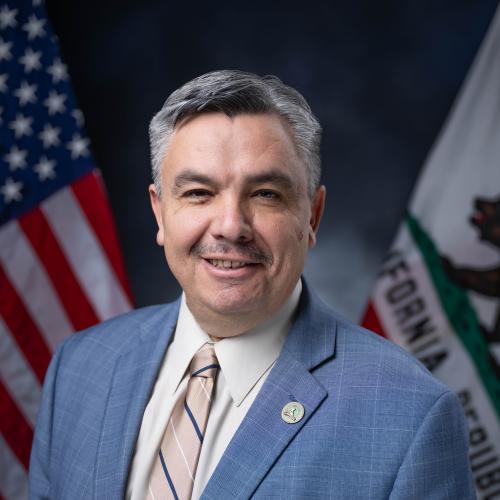
Asm. Juan Carrillo
Sponsored bills
Existing law, the Uniform Anatomical Gift Act, authorizes the creation of a not-for-profit entity to be designated as the California Organ and Tissue Donor Registrar and requires that entity to establish and maintain the Donate Life California Organ and Tissue Donor Registry for persons who have identified themselves as organ and tissue donors upon their death. Existing law provides for the Medi-Cal program, administered by the State Department of Health Care Services and under which qualified low-income individuals receive health care services. The Medi-Cal program is, in part, governed and funded by federal Medicaid program provisions. Existing law requires the department, in consultation with the board governing the California Health Benefit Exchange, to develop a single paper, electronic, and telephone application for insurance affordability programs, including Medi-Cal. This bill would require the department to modify the electronic application for insurance affordability programs to add an option for individuals to enroll in the Donate Life California Organ and Tissue Donor Registry. The bill would require the option to include specified check boxes for an applicant to indicate whether to add the applicant's name to the registry. The bill would require the option to be voluntary to complete and to not be a required part of the application. The bill would also require a specified disclosure related to organ and tissue donations to be included with the check boxes described above. The bill would require the department to electronically transmit specified information related to enrollment in the registry on a weekly basis to the Donate Life California nonprofit organization.
Existing law declares that the protection of the public interest in the development of the water resources of the state is of vital concern to the people of the state and that the state shall determine in what way the water of the state, both surface and underground, should be developed for the greatest public benefit. Existing law establishes within the Natural Resources Agency the State Water Resources Control Board and the California regional water quality control boards. Existing law requires the work of the state board to be divided into at least 2 divisions, known as the Division of Water Rights and the Division of Water Quality. This bill would establish a statewide goal to increase above- and below-ground water storage capacity by a total of 3,700,000 acre-feet by the year 2030 and a total of 4,000,000 acre-feet by the year 2040. The bill would require the Department of Water Resources, in consultation with the state board, to take reasonable actions to promote or assist efforts to achieve the statewide goal, as provided. The bill would require the department, beginning July 1, 2027, and on or before July 1 every 2 years thereafter until January 1, 2043, in consultation with the state board, to prepare and submit a report to the Legislature on the progress made to achieve the statewide goal.
(1) Existing law establishes the Youth Reinvestment Grant Program within the Board of State and Community Corrections to grant funds, upon appropriation, to local jurisdictions and Indian tribes for the purpose of implementing trauma-informed diversion programs for minors, as specified. This bill would repeal these provisions. The bill would reestablish the Youth Reinvestment Grant Program, to be administered by the Office of Youth and Community Restoration, for the purpose of implementing a mixed-delivery system of trauma-informed health and development diversion programs for youth, as specified. The bill would create the Youth Reinvestment Fund to be used, upon appropriation by the Legislature, by the office for the purposes of the program. The bill would require applicants for the program to be nongovernmental agencies or tribal governments, as specified. The bill would provide that an applicant under this program be awarded no less than $50,000, and no more than $2,000,000, and would specify the requirements of diversion programs to qualify for funding under these provisions. (2) Existing law establishes, until January 1, 2025, the California Violence Intervention and Prevention Grant Program, administered by the Board of State and Community Corrections, to award competitive grants for the purpose of violence intervention and prevention. This bill would establish, upon appropriation by the Legislature, the Department of Justice Violence Reduction Grant Program to be administered by the department for the purpose of supporting evidence-based, focus-deterrence collaborative programs that conduct outreach to targeted gangs and offer supportive services to preemptively reduce and eliminate violence and gang involvement. The bill would require the department to award grants on a competitive basis, with preference given to cities and local jurisdictions that are disproportionately impacted by violence and gang involvement. The bill would require the department to form a grant selection advisory committee, as specified. The bill would require grantees to report to the department, in a form and at intervals prescribed by the department, regarding the progress in achieving the grant objectives, and would require the department to report to the Legislature on the impact of violence prevention initiatives supported by the grant program. (3) Existing law requires the governing board of a school district to give diligent care to the health and physical development of pupils and authorizes the governing board of a school district to employ properly certified persons for the work. Existing law requires a school of a school district or county office of education and a charter school to notify pupils and parents or guardians of pupils no less than twice during the school year on how to initiate access to available pupil mental health services on campus or in the community, or both, as provided. This bill would also establish, upon appropriation by the Legislature, within the California Health and Human Services Agency a program to evaluate applications and award grants, in 5-year cycles, to schools to implement the Trauma Intervention Program to implement evidence-based interventions for pupils impacted by trauma. The bill would give the priority to the Counties of Alameda, Fresno, Merced, Tulare, Kern, and Los Angeles, as specified. The bill would require the agency to open eligibility for grants every 5 years, with priority to the top 6 counties that have the highest rate of violent crime and homicide, as reported by the Department of Justice's annual crime data report. The bill would also require grants to be awarded to a research organization to conduct a study on the effects of the treatment, including any effect on subsequent criminality. This bill would make legislative findings and declarations as to the necessity of a special statute for the Counties of Alameda, Fresno, Merced, Tulare, Kern, and Los Angeles. (4) Existing law requires the State Department of Public Health, in cooperation with the State Department of Education, to establish a Public School Health Center Support Program, upon appropriation by the Legislature, to assist school health centers, which are defined as centers or programs, located at or near local educational agencies, that provide age-appropriate health care services at the program site or through referrals, as specified. This bill would rename the program as the School-Based Health Center Support Program and would redefine a school-based health center to mean a student-focused health center or clinic that is located at or near a school or schools, is organized through school, community, and health provider relationships, and provides age-appropriate, clinical health care services onsite by qualified health professionals. The bill would authorize a school-based health center to provide primary medical care, behavioral health services, or dental care services onsite or through mobile health or telehealth. The bill would authorize the State Department of Public Health to contract with other entities for the purpose of providing assistance in specified areas to school-based health centers that receive grant moneys. Existing law requires the department, subject to an appropriation, to establish a grant program within the Public School Health Center Support Program to provide technical assistance and funding for the expansion, renovation, and retrofitting of existing school health centers and the development of new school health centers. Existing law requires a health center receiving grant funds to meet or have a plan to meet specified requirements relating to the provision of certain services. This bill would make changes to certain service requirements relating to, among other things, primary medical care, substance use disorder services, population health, and integrated and individualized support. Existing law requires, subject to an appropriation, that planning grants under the program be available in amounts between $25,000 and $50,000 for a 6- to 12-month period for specified uses. This bill would instead require that planning grants be available in amounts between $50,000 and $100,000, inclusive, for up to a 24-month period. Existing law requires, subject to an appropriation, that facilities and startup grants be available in amounts between $20,000 and $250,000 per year for a 3-year period for the purpose of establishing a school health center, with the potential addition of $100,000 in the first year for facilities construction, purchase, or renovation. This bill would instead require that facilities and startup grants be available in amounts between $300,000 and $850,000, inclusive, for a 3-year period. The bill would make certain changes to preference-related criteria. Existing law requires, subject to an appropriation, that sustainability grants be available in amounts between $25,000 and $125,000 per year for a 3-year period for the purpose of operating a school health center, or enhancing programming at a fully operational school health center, and sets forth certain criteria for those grants. This bill would delete those provisions and would instead require that expansion grants be available in amounts between $150,000 and $300,000, inclusive, for up to a 3-year period for the purpose of renovating and improving an existing school-based health center or enhancing and expanding programming at a fully operational school-based health center, as specified. The bill would require that sustainability grants be available in amounts between $150,000 and $300,000, inclusive, per year for the purpose of operating a school health center. The bill would set forth certain eligibility-related criteria for these grants. This bill would require the department, subject to an appropriation, to administer grants pursuant to this program beginning on or before January 1, 2025. Existing law requires the program, in collaboration with the State Department of Education, to act as a liaison for school-based health centers. This bill would delete that provision. Existing law requires the State Department of Education to establish an Office of School-Based Health Programs for the purpose of assisting local educational agencies regarding the current health-related programs under the purview of the department, as specified. This bill would require the office to work with the State Department of Public Health in supporting the School-Based Health Center Support Program. (5) Existing law requires the Director of Parks and Recreation to establish the Outdoor Equity Grants Program to increase the ability of underserved and at-risk populations to participate in outdoor environmental educational experiences at state parks and other public lands where outdoor environmental education programs take place. This bill would create a grant program, subject to an appropriation, under the Department of Parks and Recreation to award grants to tribal and local governments and community-based organizations for the purpose of supporting existing and creating new parks and recreation opportunities and supporting existing and creating new summer programs for youth in order to create and enhance recreation- and health-based interventions for youth during peak times of violence. The bill would require the department to develop criteria, procedures, and accountability measures to implement the grant program and to administer the grant program to ensure priority is given to underserved populations, as specified. The bill would require the department to give priority for funding to outdoor recreation- and health-based intervention programs during peak times of violence that primarily provide outreach to and serve youth who are impacted by violence and gang involvement in their communities. The bill would also require the department to annually report to the appropriate policy, budget, and fiscal committee of the Legislature regarding the effectiveness of the programs awarded funding in achieving the overall objectives of the grant program. (6) Existing law establishes the California Gang, Crime, and Violence Prevention Partnership Program for the purposes of reducing gang, criminal activity, and youth violence in specified communities. Existing law requires the Department of Justice to disburse all available funds to community-based organizations and nonprofit agencies that meet specified program requirements. This bill would repeal those provisions.

Existing law prescribes the duties of the State Registrar of Vital Statistics (State Registrar) and local registrars of births and deaths with respect to the registration of certificates of live birth, fetal death, or death, and marriage licenses. Existing law requires the State Registrar to prescribe and furnish all record forms for use in carrying out the provisions governing vital records and prohibits the use of any record form or format other than those prescribed by the State Registrar. Existing law requires every live birth, fetal death, death, and marriage that occurs in the state to be registered with the local registrar. Existing law requires certificates of live birth, fetal death, or death, and a marriage license to include specified information, such as the full name of the child on a certificate of live birth and the full names of the parties to be married on a marriage license. Existing law also requires the county clerk to issue a confidential marriage license, as specified, on a form prescribed by the State Registrar. This bill would require the State Registrar to require the use of a diacritical mark on an English letter to be properly recorded, when applicable, on a certificate of live birth, fetal death, death, marriage license and certificate, or confidential marriage license and certificate, and would require the use of a diacritical mark to be deemed an acceptable entry by the State Registrar. The bill would provide that the absence of a diacritical mark on a certificate of live birth, fetal death, or death, or a marriage license does not render the document invalid nor affect any constructive notice imparted by proper recordation of the document. The bill would authorize, if a name is not accurately recorded because of the absence of a diacritical mark on an English letter in any certificate of live birth, fetal death, death, or marriage already registered, the person asserting the omission, or the person's conservator, or if a minor, the person's parent or guardian, to submit a written request to the State Registrar for the issuance of a new certificate of birth, fetal death, death, or marriage stating the changes necessary to make the name correct. The bill would require the State Registrar to review the request and, if the request is accompanied with the payment of a specified fee, to issue a new certificate of live birth, fetal death, death, or marriage with the accurate name identified in the request. The bill would also authorize, if a name is not accurately recorded because of the absence of a diacritical mark on an English letter on any confidential license and certificate of marriage already registered, the party asserting the omission to make an affidavit, under oath, stating the changes necessary to make the record correct and file it with the county clerk. The bill would require the county clerk to review the amendment for acceptance for filing, and if accepted, file the amendment and note the fact of the amendment, with its date, on the otherwise unaltered original confidential license and certificate of marriage. By requiring the affidavit to be under oath, the bill would expand the crime of perjury, thereby imposing a state-mandated local program. By increasing duties on county clerks, the bill would impose a state-mandated local program. The California Constitution requires the state to reimburse local agencies and school districts for certain costs mandated by the state. Statutory provisions establish procedures for making that reimbursement. This bill would provide that with regard to certain mandates no reimbursement is required by this act for a specified reason. With regard to any other mandates, this bill would provide that, if the Commission on State Mandates determines that the bill contains costs so mandated by the state, reimbursement for those costs shall be made pursuant to the statutory provisions noted above.
Existing law provides for the establishment of a statewide electronic benefits transfer (EBT) system, administered by the State Department of Social Services, for the purpose of providing financial and food assistance benefits. Existing law requires the department to establish a protocol for recipients to report electronic theft of cash benefits that, among other things, ensures the prompt replacement of benefits. Existing law provides that a recipient shall not incur any loss of cash benefits that are taken by an unauthorized withdrawal, removal, or use of benefits that does not occur by the use of a physical EBT card issued to the recipient or authorized third party, as specified, and requires the prompt replacement of those cash benefits. Existing regulations also require food benefits that are stolen in this manner to be replaced. This bill would instead prohibit a recipient from incurring any loss of electronic benefits stolen in that manner, thereby codifying the existing regulation described above. The bill would require the protocol described above to be integrated and unified to ensure uniform consistent procedures and outcomes across the state and benefit programs to reduce program complexity and administrative delay for counties and recipients. The bill would prohibit a referral for a suspected fraud investigation from delaying the prompt replacement of benefits. By imposing new duties on counties relating to the administration of benefits, this bill would impose a state-mandated local program. The California Constitution requires the state to reimburse local agencies and school districts for certain costs mandated by the state. Statutory provisions establish procedures for making that reimbursement. This bill would provide that, if the Commission on State Mandates determines that the bill contains costs mandated by the state, reimbursement for those costs shall be made pursuant to the statutory provisions noted above.
Existing law imposes a reduced base fee for the issuance of original or replacement identification cards for persons who meet certain income requirements, as specified, and for eligible inmates upon release from a state correctional facility, as specified. Existing law imposes a reduced base fee for the issuance of a replacement identification card for eligible inmates upon release from a federal correctional facility or a county jail facility, and for eligible patients treated in a facility of the State Department of State Hospitals, as specified. Existing law requires the Department of Motor Vehicles to adjust the base fee for the issuance or replacement of an identification card by increasing each fee in an amount equal to the increase in the California Consumer Price Index for the current year, as calculated by the Department of Finance. This bill would require, commencing on January 1, 2027, the fees for the above-mentioned provisions to be reduced by $2.
Existing law requires the State Department of Social Services to establish and supervise a county- or county consortia-administered program to provide cash assistance for aged, blind, or disabled legal immigrants who are not citizens who, due to their immigration status, are not eligible for the Supplemental Security Income/State Supplementary Program for the Aged, Blind, and Disabled, also known as SSI/SSP benefits. Under existing law, an individual is eligible for this program if their immigration status meets SSI/SSP eligibility criteria but they are not eligible for those benefits solely due to their immigration status, as specified. Existing law also requires any person who is found to be eligible by the department for federally funded SSI to apply for SSI benefits. This bill would expand eligibility for that program to aged, blind, and disabled individuals regardless of immigration status if the individual meets the eligibility criteria for the program and is not eligible solely due to their immigration status. This bill would exempt individuals who are not qualified immigrants, as specified, from having to apply for SSI in order to receive benefits. The bill would also delete several inoperative provisions. The bill would make the implementation of these substantive changes contingent upon an appropriation for its express purposes. By expanding county duties under the program, this bill would impose a state-mandated local program. The California Constitution requires the state to reimburse local agencies and school districts for certain costs mandated by the state. Statutory provisions establish procedures for making that reimbursement. This bill would provide that, if the Commission on State Mandates determines that the bill contains costs mandated by the state, reimbursement for those costs shall be made pursuant to the statutory provisions noted above.
(1) Existing law requires a county social worker to investigate the circumstances of each child taken into temporary custody by a peace officer under specified circumstances. Existing law requires the social worker to conduct an investigation, within 30 days of the child's removal, to identify and locate adult relatives of the child, as specified, and to provide them with a notification that the child has been removed from the custody of the child's parents, guardians, or Indian custodian, and an explanation of the various options to participate in the care and placement of the child. This bill would require the social worker to conduct the investigation to identify and locate adult relatives, immediately, and no later than 30 days, after the child has been taken into temporary custody. (2) Existing law establishes procedures for an initial petition hearing by the juvenile court if a child is being taken into temporary custody. Existing law requires a social worker to report to the court the reasons the child was removed from the parent's, guardian's, or Indian custodian's physical custody and the need, if any, for continued detention, available services, and if there are any relatives who are willing and able to take temporary physical custody of the child. This bill would additionally require the social worker to report to the court what efforts, and in the case of an Indian child, the active efforts, as defined, and findings the social worker has made to locate any relatives or kin who could provide family support or possible placement of the child or nonminor dependent and the names of those relatives or kin. (3) Existing law provides that a child may be adjudged to be a dependent of the juvenile court because of abuse or neglect, and that after this determination, the court is required to hear evidence on the question of the proper disposition to be made of the child. Existing law requires that before determining the appropriate disposition, the court receive in evidence, among other things, the social study of the child made by the social worker and evaluation made by a child advocate appointed by the court. Existing law further prescribes the information that is required to be included in that social study or evaluation, including the appropriateness of any relative placement. Existing law requires the court to review the status of every dependent child in foster care no less frequently than once every 6 months and requires a supplemental report to be filed as part of that review. This bill would additionally require the social study, and any supplemental report, to include the efforts, and in the case of an Indian child, the active efforts, as defined, and findings that the social worker has made to locate any relatives or kin who could provide family support or possible placement of the child or nonminor dependent and the name of those relatives or kin. The bill would also require the court, in conducting the periodic status review, to additionally determine whether the social worker has continued efforts, and in the case of an Indian child, the active efforts, as defined, to locate any relatives or kin who could provide family support or possible placement of the child and the names of those relatives or kin. (4) Existing law requires a probation officer, upon delivery of a minor who has been taken into temporary custody, to immediately investigate the circumstances of the minor and the facts surrounding the minor being taken into custody and to immediately release the minor to the custody of their parent, legal guardian, or responsible relative, including a grandparent, adult sibling, or other relative, unless evidence before the court demonstrates that continuance in the home is contrary to the child's welfare, as specified. This bill would additionally require that the probation officer, if it is known or there is reason to know the child is an Indian child, to search additionally for an extended family member, as defined, to whom the child may be released. The bill would define for the purpose of these provisions "sibling" as a person related to the child by blood, adoption, or affinity through common legal or biological parent. The bill would require the probation officer to document their efforts, and in the case of an Indian child, the active efforts, as defined, to locate any relatives or kin who could provide family support or possible placement for the child or nonminor dependent and the names of those relatives or kin. (5) By imposing additional duties on county officials, the bill would impose a state-mandate local program. (6) This bill would incorporate additional changes to Section 319 of the Welfare and Institutions Code proposed by AB 81 and SB 578 to be operative only if this bill and AB 81, this bill and SB 578, or all 3 bills are enacted and this bill is enacted last. (7) The California Constitution requires the state to reimburse local agencies and school districts for certain costs mandated by the state. Statutory provisions establish procedures for making that reimbursement. This bill would provide that with regard to certain mandates no reimbursement is required by this act for a specified reason. With regard to any other mandates, this bill would provide that, if the Commission on State Mandates determines that the bill contains costs so mandated by the state, reimbursement for those costs shall be made pursuant to the statutory provisions noted above.