This measure would designate, in perpetuity, the 4th week of January as Data Privacy Week and the last Sunday of January as Data Privacy Day.
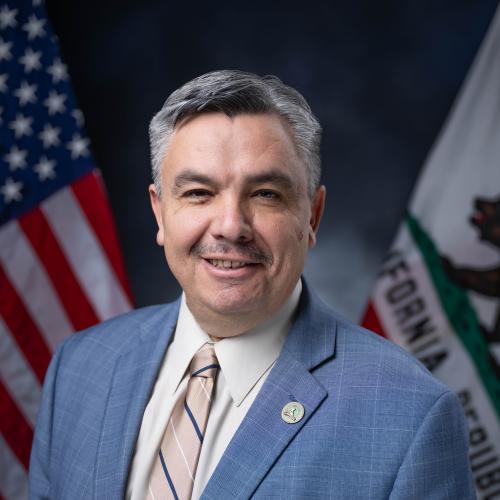
Asm. Juan Carrillo
Sponsored bills
Existing law requires the State Board of Education to adopt evaluation rubrics for specified purposes relating to school accountability and requires the state board, as part of the evaluation rubrics, to adopt state and local indicators to measure school district and individual schoolsite performance in regard to each of the state priorities and standards for local educational agency and individual schoolsite performance and expectations for improvement, as provided. Existing law requires the State Department of Education, in collaboration with, and subject to the approval of, the executive director of the state board, to develop and maintain the California School Dashboard, a web-based system for publicly reporting performance data on the state and local indicators included in the evaluation rubrics. This bill would require the state board to consider adopting regulations, by January 1, 2025, to include the completion of a culminating performance assessment, such as a graduate pupil profile, capstone project, senior exhibition, or portfolio, that demonstrates competency in skills beyond core academic areas, as an accepted measure for the college or career readiness indicator for the California School Dashboard, as provided. To the extent any regulations adopted by the state board for these purposes would impose additional duties on local educational agencies, the bill would impose a state-mandated local program. The California Constitution requires the state to reimburse local agencies and school districts for certain costs mandated by the state. Statutory provisions establish procedures for making that reimbursement. This bill would provide that, if the Commission on State Mandates determines that the bill contains costs mandated by the state, reimbursement for those costs shall be made pursuant to the statutory provisions noted above.

Existing law, the Los Angeles County Regional Housing Finance Act, establishes the Los Angeles County Affordable Housing Solutions Agency. Under existing law, the purpose of the Los Angeles County Affordable Housing Solutions Agency is to increase the supply of affordable housing in Los Angeles County by providing for significantly enhanced funding and technical assistance at a regional level for renter protections, affordable housing preservation, and new affordable housing production, as specified. Existing law makes legislative findings and declarations as to the necessity of a countywide agency to address the housing crisis in Los Angeles County. This bill would make nonsubstantive changes to the above-described legislative findings and declarations provisions.
The federal Infrastructure Investment and Jobs Act of 2021 establishes the federal National Electric Vehicle Infrastructure Formula Program to provide funding for each fiscal year until fiscal year 2026 to the states to strategically deploy electric vehicle charging stations and to establish an interconnected network to facilitate data collection, access, and reliability. Existing law establishes the Clean Transportation Program, which is administered by the State Energy Resources Conservation and Development Commission, to provide financial assistance to certain entities to develop and deploy innovative technologies to transform California's fuel and vehicle types to help attain the state's climate change goals. Existing law requires the commission to develop and adopt an investment plan to determine priorities and opportunities for the Clean Transportation Program and to submit to the Joint Legislative Budget Committee and all relevant policy and fiscal committees of the Legislature a draft update to the investment plan each January concurrent with the submittal of the Governor's Budget. This bill would require the commission and the Department of Transportation, on or before June 30, 2024, to jointly develop a California National Electric Vehicle Infrastructure Program Roadmap that is consistent with federal requirements and guidance provided by the federal National Electric Vehicle Infrastructure Formula Program and that only includes projects receiving funding under that federal program. The bill would require the commission and the department to update the roadmap each January thereafter. The bill would require the roadmap and the updates to be submitted to the Joint Legislative Budget Committee and all relevant policy and fiscal committees of the Legislature. The bill would authorize the commission and the department to submit the updates to the roadmap in conjunction with, or as a part of, the draft investment plan for the Clean Transportation Program. The bill would be inoperative on a specified date and would be repealed on January 1 of the year thereafter.
Existing law vests the Public Utilities Commission with regulatory authority over public utilities, including electrical corporations and gas corporations. Existing law requires the commission to require every residential unit in an apartment house or similar multiunit residential structure, condominium, or mobilehome park issued a building permit on or after July 1, 1982, with certain exceptions, to be individually metered for electrical and gas service. This bill would additionally except from that requirement an accessory dwelling unit, as defined, if the owner of the property on which the accessory dwelling unit is located elects to have the accessory dwelling unit's electrical and gas services metered through existing or upgraded utility meters located on that property. The bill would require an electrical corporation and gas corporation, if an owner of such a property elects to have the accessory dwelling unit's electrical and gas services metered through utility meters located on that property, to allow the property owner to do so. Under existing law, a violation of the Public Utilities Act or any order, decision, rule, direction, demand, or requirement of the commission is a crime. Because the above provisions would be part of the act and a violation of a commission action implementing this bill's requirements would be a crime, the bill would impose a state-mandated local program. The California Constitution requires the state to reimburse local agencies and school districts for certain costs mandated by the state. Statutory provisions establish procedures for making that reimbursement. This bill would provide that no reimbursement is required by this act for a specified reason.
Existing law prohibits an entity from substantially diverting or obstructing the natural flow of, or substantially changing or using any material from the bed, channel, or bank of, any river, stream, or lake, or from depositing or disposing of certain material where it may pass into any river, stream, or lake, without first notifying the Department of Fish and Wildlife of that activity, and entering into a lake or streambed alteration agreement if required by the department to protect fish and wildlife resources, except as specified. This bill would make nonsubstantive changes to these provisions.
Existing law, until January 1, 2024, requires the State Energy Resources Conservation and Development Commission to allocate $20,000,000 annually, not to exceed 20% of the moneys appropriated by the Legislature from the Alternative and Renewable Fuel and Vehicle Technology Fund, to fund the number of stations identified by the state board until at least 100 publicly available hydrogen-fueling stations are in operation in California. This bill would enact the Clean Energy Equity Act and would require the commission to equitably allocate moneys appropriated by the Legislature for hydrogen-fueling infrastructure to specifically prioritize rural communities and low-income communities. The bill would require the commission and the State Air Resources Board, except as provided, to jointly review and submit a report to the Legislature on the progress toward establishing hydrogen-fueling infrastructure that is equally accessible to all communities, especially rural communities and low-income communities.
Existing law, the Planning and Zoning Law, requires each city, county, and city and county to prepare and adopt a general plan that contains certain mandatory elements, including a housing element. Existing law requires the housing element to identify the existing and projected housing needs of all economic segments of the community. Existing federal law requires a continuum of care, a group organized under the federal McKinney-Vento Homeless Assistance Act, to develop a plan that includes planning for and conducting, at least biennially, a point-in-time count of homeless persons within the geographic area. Existing law requires that information from the point-in-time count be used to, among other things, allocate funding for the Homeless Emergency Aid program and Homeless Housing, Assistance, and Prevention program. This bill would require a city, county, and city and county, within 60 days after the local continuum of care releases the results of a point-in-time count for a city, county, or city and county's jurisdiction, to, among other things, agendize the point-in-time count results at a meeting of the city, county, or city and county and present the steps the city, county, or city and county is taking to prevent and end homelessness, including, but not limited to, consideration of specified actions. By imposing new duties on local agencies, this bill would impose a state-mandated local program. The bill would include findings that changes proposed by this bill address a matter of statewide concern rather than a municipal affair and, therefore, apply to all cities, including charter cities. The California Constitution requires the state to reimburse local agencies and school districts for certain costs mandated by the state. Statutory provisions establish procedures for making that reimbursement. This bill would provide that, if the Commission on State Mandates determines that the bill contains costs mandated by the state, reimbursement for those costs shall be made pursuant to the statutory provisions noted above.