

Existing law, the California Residential Care Facilities for the Elderly Act (act) , requires the State Department of Social Services to license, inspect, and regulate residential care facilities for the elderly, as defined, and imposes criminal penalties on a person who violates the act or who willfully or repeatedly violates any rule or regulation adopted under the act. Existing law authorizes the department to also impose civil penalties for violations of the act. Existing law gives residents of those facilities specified rights, including, but not limited to, the right to be free from neglect, financial exploitation, involuntary seclusion, and verbal, mental, or physical abuse. Beginning July 1, 2029, this bill would require the department, when a licensee is cited for a deficiency that constitutes abuse in violation of a resident's rights, to categorize the type of abuse. The bill would describe the categories of abuse, including physical abuse and abandonment, among others and would require that the category of abuse be listed on a public-facing database maintained by the department.
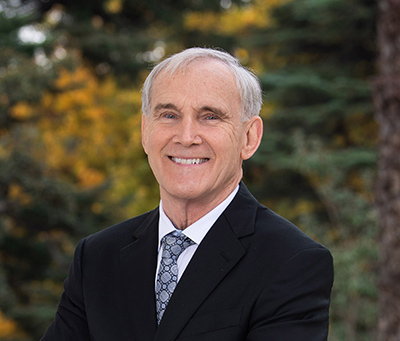
Rep. Steve Bennett
Sponsored bills
Existing law establishes the California Career Technical Education Incentive Grant Program, administered by the State Department of Education, with the purpose of encouraging, maintaining, and strengthening the delivery of high-quality career technical education programs. Existing law provides, for the 2021–22 fiscal year and each fiscal year thereafter, that $300,000,000 shall be available to the department, upon appropriation by the Legislature, for the program. Existing law requires an applicant to demonstrate a proportional dollar-for-dollar match and sets that amount for the 2021–22 fiscal year, and each fiscal year thereafter, at $2 for every $1 received from the program. Existing law prohibits an applicant from being awarded an amount higher than the amount that the allocation formula determines them to be eligible to receive under the program. Existing law requires the Superintendent of Public Instruction, in administering the program, to perform specified duties, including, among other duties, to (1) determine, in collaboration with the executive director of the State Board of Education, and make public on a preliminary basis at least 30 days before a regularly scheduled meeting of the state board, the allocation formula, (2) distribute funding on a multiyear schedule, (3) require grant recipients to submit program reports, (4) manage the grant process, and (5) promote the success of K–12 career technical education programs, as provided. This bill would require the department, instead of the Superintendent, to perform the above-described duties. The bill would, for purposes of allocations commencing no later than the 2027–28 fiscal year and pursuant to the above-described requirements, also require the department to determine, in consultation with the executive director of the state board, a revised allocation formula that ensures that all funds appropriated for the program in any given fiscal year are fully allocated to program applicants in that fiscal year, as provided.
The California Environmental Quality Act (CEQA) requires a lead agency, as defined, to prepare, or cause to be prepared, and certify the completion of, an environmental impact report (EIR) on a project that it proposes to carry out or approve that may have a significant effect on the environment or to adopt a negative declaration if it finds that the project will not have that effect. CEQA also requires a lead agency to prepare a mitigated negative declaration for a project that may have a significant effect on the environment if revisions in the project would avoid or mitigate that effect and there is no substantial evidence that the project, as revised, would have a significant effect on the environment. CEQA provides that when an EIR has been prepared for a project, no subsequent or supplemental EIR shall be required by a lead agency or responsible agency, unless specified events occur. This bill would require a lead agency, before issuing the initial discretionary approval for a large-volume bulk coal facility, defined as a facility with a design capacity exceeding 5,000,000 short tons per year of coal handling, storage, or export to prepare or cause to be prepared an EIR. The bill would prohibit a lead agency, air pollution control district, or air quality management district from relying on an existing EIR to issue a discretionary approval for, or to, a large-volume bulk coal facility, and would require a subsequent or new EIR to be prepared, if any of a list of specified conditions are met, including that there is an increase in design capacity of a project that did not previously meet the definition of a large-volume bulk coal facility, as provided; there is a change in the type of coal handled, stored, or exported, or the EIR did not explicitly address the type of coal handled, stored, or exported; or there is a significant increase in the quantity of coal handled, stored, or exported, or the EIR did not explicitly disclose the quantity of coal to be handled, stored, or exported. The bill would require an EIR or subsequent EIR prepared pursuant to these provisions to, among other things, evaluate the large-volume bulk coal facility's potential to generate PM2.5 and PM10 fugitive dust emissions during construction and operations, and to require mitigation measures, as provided. The bill would apply these provisions to a discretionary approval that is pending or made after June 4, 2026, as specified. Because the bill would create new duties for a lead agency, the bill would impose a state-mandated local program. The California Constitution requires the state to reimburse local agencies and school districts for certain costs mandated by the state. Statutory provisions establish procedures for making that reimbursement. This bill would provide that no reimbursement is required by this act for a specified reason.
Maddy summaryThis bill designates September 2026 as Childhood Cancer Awareness Month. It directly affects state agencies and organizations by encouraging them to recognize this specific month for awareness activities. The measure does not change laws or allocate funding but serves as a formal commemorative resolution.
Existing law establishes the California Community Colleges, under the administration of the Board of Governors of the California Community Colleges, the California State University, under the administration of the Trustees of the California State University, and the University of California, under the administration of the Regents of the University of California, as the 3 segments of public postsecondary education in the state. Existing law, the NextUp program, authorizes the office of the Chancellor of the California Community Colleges to enter into agreements with community college districts to provide, and allocate to selected community colleges within a community college district, funds for services in support of postsecondary education for foster youth. Existing law requires a student participant in the program to be a current or former foster youth whose dependency was established or continued by a court on or after the youth's 13th birthday and who is no older than 25 years of age at the commencement of the academic year in which the student first enrolls in the program. Existing law requires the California State University and each community college district, and requests the University of California, with respect to each campus in their respective jurisdictions that administers a priority enrollment system, to grant priority in that system to, among others, foster youth and former foster youth whose dependency was established or continued by a court on or after the youth's 13th birthday and who is no older than 25 years of age at the commencement of the academic year. This bill would extend the requirement and request for priority enrollment to current or former foster youth whose dependency was established or continued by a court on or after the youth's 13th birthday and who is older than 25 years of age so long as they are enrolled in the NextUp program. Existing law requests campuses of the California Community Colleges, requires campuses of the California State University, and, subject to the Regents of the University of California's agreement by resolution, requires University of California campuses, that maintain student housing facilities, to: (1) give priority for student housing to current and former foster youth and current and former homeless youth, and (2) as to campuses that maintain student housing facilities open for occupation during school breaks, or on a year-round basis, give first priority to current and former foster youth and current and former homeless youth for residence in housing facilities that are open for uninterrupted year-round occupation and next give priority to current and former foster youth and current and former homeless youth for housing that is open for occupation during the most days in the calendar year. This bill would require, instead of request, campuses of the California Community Colleges to give this priority for student housing to current and former foster youth and current and former homeless youth. The bill would require campuses of the California Community Colleges and campuses of the California State University, and, subject to the Regents of the University of California's agreement by resolution, require University of California campuses, that maintain student housing facilities, to, among other things: (1) include, in their student housing applications, questions designed to identify students who may be eligible for priority student housing as current and former foster youth and current and former homeless youth, (2) defer or waive the collection of housing-related costs, as defined, for those students granted this priority, and (3) post on its internet website information describing priority housing benefits and the eligibility criteria for those benefits, as specified. By adding to the duties of community colleges that maintain student housing facilities, this bill would impose a state-mandated local program. The California Constitution requires the state to reimburse local agencies and school districts for certain costs mandated by the state. Statutory provisions establish procedures for making that reimbursement. This bill would provide that, if the Commission on State Mandates determines that the bill contains costs mandated by the state, reimbursement for those costs shall be made pursuant to the statutory provisions noted above.
Existing law requires the State Fire Marshal to identify areas in the state as moderate, high, and very high fire hazard severity zones, as specified. Existing law also requires the State Fire Marshal to classify lands within state responsibility areas into fire hazard severity zones, and, by regulation, to designate fire hazard severity zones and assign to each zone a rating reflecting the degree of severity of fire hazard that is expected to prevail in the zone. Existing law requires the State Fire Marshal to periodically review very high fire hazard severity zones that are not state responsibility areas, and designated and rated zones that are state responsibility areas, as provided. This bill would require the Office of the State Fire Marshal, on or before January 1, 2028, to develop home hardening standards, as provided. The bill would require the State Fire Marshal to, on or before January 1, 2030, compile a report concerning homes in moderate, high, and very high fire hazard severity zones in state and local responsibility areas. The bill would require the State Fire Marshal, on or before July 1, 2030, to make the completed report available on its internet website and to submit copies to the Legislature, as provided. The bill would require the report to include, among other things, estimates of both the number of homes that meet those home hardening standards and the number of homes that require more home hardening to meet those standards in each responsibility area and county.
The Mills-Deddeh Transit Development Act establishes the San Diego Metropolitan Transit Development Board, also known as the San Diego Metropolitan Transit System (MTS) , governed by a 15-member board with specified powers and duties related to the operation of public transit services in the southern portion of the County of San Diego. The act authorizes MTS to impose a transactions and use tax of up to 0.5% for public transit purposes within its jurisdiction, or a portion of its jurisdiction, pursuant to the Transactions and Use Tax Law and subject to voter approval and various other requirements. This bill would also authorize those taxes to be imposed by a qualified voter initiative. To the extent that the bill would impose additional duties on a county elections official, the bill would impose a state-mandated local program. The Transactions and Use Tax Law limits the combined rate of all taxes that may be imposed in accordance with that law in any county to 2%. This bill would prohibit the tax rate of 0.5% described above that may be imposed by MTS or a qualified voter initiative from being considered for purposes of the combined rate limit under the Transactions and Use Tax Law. The California Constitution requires the state to reimburse local agencies and school districts for certain costs mandated by the state. Statutory provisions establish procedures for making that reimbursement. This bill would provide that, if the Commission on State Mandates determines that the bill contains costs mandated by the state, reimbursement for those costs shall be made pursuant to the statutory provisions noted above.
Existing law, the California Fostering Connections to Success Act, revises and expands the scope of various programs relating to the provision of cash assistance and other services to and for the benefit of certain foster and adopted children, and other children who have been placed in out-of-home care, including children who receive Aid to Families with Dependent Children-Foster Care (AFDC-FC) , Adoption Assistance Program (AAP) , California Work Opportunity and Responsibility to Kids (CalWORKs) , and Kinship Guardianship Assistance Payment (Kin-GAP) benefits. Among other provisions, the act extends to nonminor dependents up to 21 years of age the jurisdiction of the juvenile court over a dependent, and specified foster care benefits if specified education or employment requirements are met, including that the nonminor is completing secondary education or a program leading to an equivalent credential or employed for at least 80 hours per month. This bill would prohibit a nonminor dependent from being denied eligibility for, or have eligibility terminated from, the above-described extended foster care benefits for failure to meet education or employment participation requirements that exceed the previously described education or employment requirements. The bill would also make technical, conforming changes. This bill would incorporate additional changes to Sections 366.31, 11363, 11386, 16120, and 16501.1 of the Welfare and Institutions Code proposed by AB 2478 to be operative only if this bill and AB 2478 are enacted and this bill is enacted last. This bill would incorporate additional changes to Section 388.1 of the Welfare and Institutions Code proposed by AB 1967 to be operative only if this bill and AB 1967 are enacted and this bill is enacted last. This bill would incorporate additional changes to Section 391 of the Welfare and Institutions Code proposed by SB 534 to be operative only if this bill and SB 534 are enacted and this bill is enacted last.
This measure would proclaim the month of October 2026 as California Firefighter Appreciation Month and October 3, 2026, as California Firefighters Memorial Day.
Existing law requires a plaintiff who files an action to comprehensively determine rights to extract groundwater from a basin to provide the court a draft notice of commencement of groundwater basin adjudication and a draft form answer to adjudication complaint, as specified. Existing law also requires a plaintiff to file, within a specified timeframe, a motion for approval of the draft notice and draft form answer. Under existing law, once the court approves the draft notice, the plaintiff is required to serve the notice, as specified. Following a court order approving both the notice and draft form answer and authorizing service thereof, existing law requires the plaintiff to take additional steps to provide notice to defendants including, but not limited to, mailing, by registered mail or certified mail, return receipt requested, the notice, complaint, and form answer to all holders of fee title to real property in the basin. Under existing law, if a return receipt is not received for a parcel of real property, the plaintiff must post a copy of the notice, complaint, and form answer in a conspicuous place on the real property. After completing these notice procedures, existing law requires the plaintiff to file a notice of completion of the mailing with the court. Existing law permits a court to authorize any other procedures it finds appropriate and necessary to provide notice to persons who may hold groundwater rights in basin. This bill would impose additional requirements on a plaintiff when filing the notice of completion of mailing. The bill would require the plaintiff to include with the notice of completion an affidavit of the person who mailed the notice and the certified or registered mail delivery receipt for each parcel stating the date, time, and place of mailing. The bill would further require the notice to include as an attachment any certified or registered mail delivery receipts received as of the date of the filing. If a return receipt is not received for a parcel of real property, the bill would require the plaintiff to also include with the notice of completion an affidavit of the person who posted the notice specifying the date, time, and physical location of each parcel where the posting occurred, accompanied by a photograph depicting the posted notice. The bill would clarify that the court may authorize additional procedures necessary to provide notice to persons who may hold groundwater rights in basin, including, but not limited to, requiring the plaintiff to utilize restricted delivery of all mailed notices.