

(1) Existing law requires a pupil to complete designated coursework while in grades 9 to 12, inclusive, in order to receive a diploma of graduation from high school. These graduation requirements include, among others, the completion of 3 years of courses in English and 3 years of courses in social studies, including one-year courses in United States history and geography and world history, culture, and geography, a one-semester course in American government and civics, and a one-semester course in economics. Existing law requires the Instructional Quality Commission to develop, and the State Board of Education to adopt, modify, or revise, a model curriculum in ethnic studies. Existing law also encourages each school district and charter school that maintains any of grades 9 to 12, inclusive, and that does not otherwise offer a standards-based ethnic studies curriculum to offer, beginning in the school year following the adoption of the model curriculum, a course of study in ethnic studies based on the model curriculum. This bill would add the completion of a one-semester course in ethnic studies, meeting specified requirements, to the graduation requirements commencing with pupils graduating in the 2029–30 school year, including for pupils enrolled in a charter school. The bill would expressly authorize local educational agencies, including charter schools, to require a full-year course in ethnic studies at their discretion. The bill would require local educational agencies, including charter schools, to offer an ethnic studies course commencing with the 2025–26 school year, as specified. The bill would authorize, subject to the course offerings of a local educational agency, including a charter school, a pupil to satisfy the ethnic studies course requirement by completing either (A) a course based on the model curriculum in ethnic studies developed by the commission, (B) an existing ethnic studies course, (C) an ethnic studies course taught as part of a course that has been approved as meeting the A–G requirements of the University of California and the California State University, or (D) a locally developed ethnic studies course approved by the governing board of the school district or the governing body of the charter school. The bill would prohibit a course that does not use ethnic studies content as the primary content through which the subject is taught from being used to satisfy the ethnic studies course requirement. The bill would require a pupil who completes a course described above to also accrue credit for coursework in the subject that the course is offered, including, if applicable, credit towards satisfying a course required for a diploma of graduation from high school. These provisions would become operative only upon an appropriation of funds by the Legislature for these purposes in the annual Budget Act or another statute. Because the bill would add new duties to local educational agencies, it would constitute a state-mandated local program. (2) The California Constitution requires the state to reimburse local agencies and school districts for certain costs mandated by the state. Statutory provisions establish procedures for making that reimbursement. This bill would provide that, if the Commission on State Mandates determines that the bill contains costs mandated by the state, reimbursement for those costs shall be made pursuant to the statutory provisions noted above.
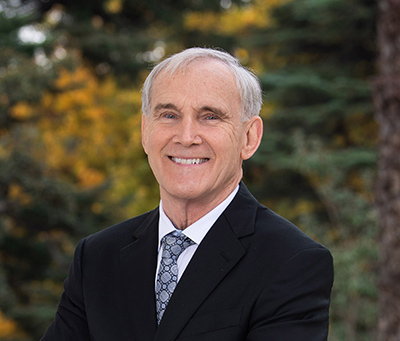
Asm. Steve Bennett
Sponsored bills
Existing law, the End of Life Option Act, until January 1, 2026, authorizes an adult who meets certain qualifications, and who has been determined by their attending physician to be suffering from a terminal disease, as defined, to make a request for an aid-in-dying drug for the purpose of ending their life. Existing law establishes the procedures for making these requests, including that 2 oral requests be made a minimum of 15 days apart, specified forms to request an aid-in-dying drug be submitted, under specified circumstances, and a final attestation be completed. Existing law requires specified information to be documented in the individual's medical record, including, among other things, all oral and written requests for an aid-in-dying drug. This bill would allow for an individual to qualify for aid-in-dying medication by making 2 oral requests a minimum of 48 hours apart. The bill would eliminate the requirement that an individual who is prescribed and ingests aid-in-dying medication make a final attestation. The bill would require that the date of all oral and written requests be documented in an individual's medical record and would require that upon a transfer of care, that record be provided to the qualified individual. The bill would extend the operation of the act until January 1, 2031, thereby imposing a state-mandated local program by extending the operation of crimes for specified violations of the act. Existing law makes participation in activities authorized pursuant to the act voluntary, and makes individual health care providers immune from liability for refusing to engage in activities authorized pursuant to its provisions, including providing information about the act or referring an individual to a provider who prescribes aid-in-dying medication. This bill would require a health care provider who is unable or unwilling to participate under the act to inform the individual seeking an aid-in-dying medication that they do not participate, document the date of the individual's request and the provider's notice of their objection, and transfer their relevant medical record upon request. Existing law authorizes a health care provider to prohibit its employees, independent contractors, or other persons or entities, including other health care providers, from participating under the act, including acting as a consulting physician, while on the premises owned or under the management or direct control of that prohibiting health care provider, or while acting within the course and scope of any employment by, or contract with, the prohibiting health care provider. This bill would instead authorize a health care entity to prohibit employees and contractors, as specified, from participating under the act while on the entity's premises or in the course of their employment. The bill would prohibit a health care provider or health care entity from engaging in false, misleading, or deceptive practices relating to their willingness to qualify an individual or provide a prescription for an aid-in-dying medication to a qualified individual. The bill would require a health care entity to post its current policy regarding medical aid in dying on its internet website. The California Constitution requires the state to reimburse local agencies and school districts for certain costs mandated by the state. Statutory provisions establish procedures for making that reimbursement. This bill would provide that no reimbursement is required by this act for a specified reason.
Existing law provides for the payment of unemployment compensation benefits to eligible persons who are unemployed through no fault of their own through a federal-state unemployment insurance program administered by the Employment Development Department, subject to oversight by the Director of Employment Development. Existing law requires the Department of Justice to maintain state summary criminal history information, including the identification and criminal history of a person, including name, date of birth, social security number, physical description, fingerprints, photographs, dates of arrests, arresting agencies and booking numbers, charges, dispositions, sentencing information, and similar data about the person. Existing law requires the Attorney General to furnish this information to specified persons, agencies, or organizations, including the Department of Corrections and Rehabilitation, if needed in the course of their duties. Existing law makes it a crime for any person authorized by law to receive state summary criminal history information to knowingly furnish the information to a person who is not authorized by law to receive it. This bill would require the Department of Corrections and Rehabilitation to provide the name, known aliases, birth date, social security number, and booking date and expected release date, if known, of a current inmate to the Employment Development Department for the purposes of preventing payments on fraudulent claims for unemployment compensation benefits. The bill would require this information to be provided to the Employment Development Department on the first of every month and upon the Employment Development Department's request. Because this bill would expand the scope of an existing crime, the bill imposes a state-mandated local program. This bill would require, for purposes of preventing payments on fraudulent claims for unemployment compensation benefits, the Director of Employment Development to verify with the information provided by the Department of Corrections and Rehabilitation that the claimant is not an inmate currently incarcerated in the state prisons. The bill would require the Employment Development Department to complete necessary system programming or automation upgrades to allow electronic monitoring of Department of Corrections and Rehabilitation inmate data to prevent payment on fraudulent claims for unemployment compensation benefits at the earliest possible date, but not later than September 1, 2023. The California Constitution requires the state to reimburse local agencies and school districts for certain costs mandated by the state. Statutory provisions establish procedures for making that reimbursement. This bill would provide that no reimbursement is required by this act for a specified reason. This bill would declare that it is to take effect immediately as an urgency statute.
Existing law establishes the jurisdiction of the juvenile court, which is permitted to adjudge children who have suffered abuse or neglect to be dependents of the court under certain circumstances, and prescribes various hearings and other procedures for these purposes. Existing law requires the county welfare department to submit reports at the first regularly scheduled review hearing after a dependent child has attained 16 years of age and at the last regularly scheduled review hearing before a dependent child attains 18 years of age, and at every regularly scheduled review hearing thereafter, verifying that the county has provided certain information, documents, and services to the child or nonminor. This bill would also require the county welfare department to document in the report submitted at the last regularly scheduled review hearing before a dependent child attains 18 years of age that the minor or nonminor has been provided written information notifying the minor or nonminor that they may be eligible to receive CalFresh benefits and where they can apply for CalFresh benefits. By increasing the duties of county welfare departments, this bill would impose a state-mandated local program. This bill would incorporate additional changes to Section 391 of the Welfare and Institutions Code proposed by AB 546 to be operative only if this bill and AB 546 are enacted and this bill is enacted last. The California Constitution requires the state to reimburse local agencies and school districts for certain costs mandated by the state. Statutory provisions establish procedures for making that reimbursement. This bill would provide that no reimbursement is required by this act for a specified reason.
The California Constitution vests the judicial power of the state in the Supreme Court, courts of appeal, and superior courts. Existing law requires the sittings of every court to be public, except as authorized. This bill would prohibit a court from excluding the public from physical access to the court because remote access is available, unless it is necessary to restrict or limit physical access to protect the health or safety of the public or court personnel. The bill would require the court to provide, at a minimum, a public audio stream or telephonic means by which to listen to the proceedings when the courthouse is physically closed, except when the law authorizes or requires the proceedings to be closed.
Existing law regulates automatic renewal offers and continuous service offers that businesses make to California consumers. Existing law makes it unlawful for a business that makes an automatic renewal offer or continuous service offer to a consumer in this state, among other things, to fail to present the automatic renewal or continuous service offer terms in a clear and conspicuous manner, to charge the consumer for an automatic renewal or continuous service without first obtaining the consumer's affirmative consent, and to fail to provide an acknowledgment that includes the automatic renewal or continuous service offer terms, cancellation policy, and information regarding how to cancel in a manner that is capable of being retained by the consumer, as specified. This bill would, beginning July 1, 2022, revise and recast these provisions to also make it unlawful for the business to fail to provide a consumer with a notice containing specified information if the consumer accepted a free gift or trial, lasting 31 or more days that was included in an automatic renewal offer or continuous service offer or accepted an automatic renewal offer or continuous service offer at a promotional or discounted price, and the applicability of that price was more than 31 days. In these circumstances, the bill would require the notice to be provided at least 3 days before and at most 21 days before the expiration of the period of time for which the free gift or trial, or promotional or discounted price, applies. This bill would also require the notice, as specified, if the consumer accepted an automatic renewal offer or continuous service offer with an initial term of one year or longer that automatically renews for a subsequent term that is longer than one month, unless the consumer cancels the contract. In these circumstances, the bill would require the notice to be provided at least 15 days and not more than 45 days before the automatic renewal offer or continuous service offer renews. The bill would provide that if both types of notice are warranted, only the notice provisions requiring notice at least 15 days and not more than 45 days before the automatic renewal offer or continuous service offer renews apply. If sent electronically, the bill would require the notice to include a link that directs the consumer to the cancellation process, or another reasonably accessible electronic method that directs the consumer to the cancellation process if no link exists. Under existing law, if a consumer accepts an automatic renewal or continuous service offer online, then the business is required to allow the consumer to terminate the offer exclusively online, which may include a termination email formatted and provided by the business. This bill would additionally require the business to allow a consumer to terminate the automatic renewal or continuous service offer at will, and without engaging any further steps that obstruct or delay the consumer's ability to terminate immediately. The bill would require the business to provide a method of termination that is either online in the form of a prominently located direct link or button to cancel or by a termination email, as provided. This bill would also authorize a business to require a consumer to enter account information or otherwise authenticate online before termination of the automatic renewal or continuous service online, provided that a consumer who is unwilling or unable to enter account information or otherwise authenticate online before termination is not precluded from authenticating or terminating offline using another method, as specified. The bill would authorize these requirements to be fulfilled after completion of an initial order.
The Political Reform Act of 1974 provides for the comprehensive regulation of campaign financing, including requiring elected officials, candidates for elective office, committees formed primarily to support or oppose a candidate for public office or a ballot measure, and other entities to file periodic campaign statements and reports concerning campaign finances. This bill would require a limited liability company that qualifies as a committee or a sponsor of a committee under the act, as specified, to file a statement of members with the Secretary of State. The bill would require the statement of members to include certain information about the limited liability company, including a list of all persons who have a membership interest in the limited liability company of at least 10% or who made a cumulative capital contribution of at least $10,000 to the limited liability company after it qualified as a committee or sponsor of a committee, or within the 12 months before it qualified. Existing law makes a knowing or willful violation of the Political Reform Act of 1974 a misdemeanor. By expanding the scope of an existing crime, this bill would impose a state-mandated local program. The California Constitution requires the state to reimburse local agencies and school districts for certain costs mandated by the state. Statutory provisions establish procedures for making that reimbursement. This bill would provide that no reimbursement is required by this act for a specified reason. The Political Reform Act of 1974, an initiative measure, provides that the Legislature may amend the act to further the act's purposes upon a 23 vote of each house of the Legislature and compliance with specified procedural requirements. This bill would declare that it furthers the purposes of the act.
Existing law requires county elections officials to mail a ballot to every registered voter for all elections proclaimed or conducted prior to January 1, 2022. Existing law requires county elections officials to use a specified Secretary of State vote by mail tracking system or a system that meets the same specifications. This bill would extend the requirements to mail a ballot to every registered voter to all elections and apply them to all local elections officials. This bill would require a vote by mail tracking system to be accessible to voters with disabilities. The bill would also make various conforming and technical changes. Existing law requires county elections officials to permit voters with a disability, and military or overseas voters, to cast a ballot using a certified remote accessible vote by mail system, and required county elections officials to permit any voter to cast a ballot using a certified remote accessible vote by mail system for the November 3, 2020, statewide general election. This bill would require county elections officials to permit any voter to cast a ballot using a certified remote accessible vote by mail system for any election. Under existing law, a vote by mail ballot is timely cast if it is voted on or before election day and, if returned by mail, received by the voter's elections official via the United States Postal Service, or a bona fide private mail delivery company, no later than 3 days after election day. This bill would provide instead that a vote by mail ballot is timely cast if it is voted on or before election day and, if returned by mail, received no later than 7 days after election day. This bill would authorize an elections official to consider any information from the United States Postal Service or a bona fide private mail delivery company that indicates the date on which the ballot was mailed, in order to determine whether a vote by mail ballot was timely cast. Existing law authorizes a jurisdiction in which vote by mail ballots are cast to begin processing vote by mail ballot return envelopes 29 days before the election. Existing law authorizes a jurisdiction having the necessary computer capability to start processing vote by mail ballots on the 15th business day before the election, except, for the statewide general election held on November 3, 2020, these jurisdictions were authorized to start processing the ballots on the 29th day before the election. Existing law authorizes all other jurisdictions to start processing vote by mail ballots at 5 p.m. on the day before the election. Existing law authorizes a county elections official to establish vote by mail ballot drop-off locations, as defined. Existing law authorizes a county to conduct any election as an all-mailed ballot election under certain specified conditions. This bill would require any county that does not conduct an all-mailed ballot election to provide at least two vote by mail ballot drop-off locations within the jurisdiction where the election is held, or at least one vote by mail ballot drop-off location for every 30,000 registered voters within the jurisdiction where the election is held, whichever results in more vote by mail ballot drop-off locations. In a jurisdiction with fewer than 30,000 registered voters, the bill would require at least one vote by mail ballot drop-off location, and would require the elections official to make a reasonable effort to provide a ballot drop-off location in the jurisdiction where the election is held. This bill would require the operation of vote by mail ballot drop-off locations to meet certain specified criteria. This bill would authorize a jurisdiction having the necessary computer capability to start processing vote by mail ballots the 29th day before any election. By requiring local elections officials to mail a ballot to every registered voter, and to take other actions, this bill would impose a state-mandated local program. The California Constitution requires the state to reimburse local agencies and school districts for certain costs mandated by the state. Statutory provisions establish procedures for making that reimbursement. This bill would provide that, if the Commission on State Mandates determines that the bill contains costs mandated by the state, reimbursement for those costs shall be made pursuant to the statutory provisions noted above.
(1) Existing law establishes a public school financing system that requires state funding for school districts, county superintendents of schools, and charter schools to be calculated pursuant to a local control funding formula, as specified. Existing law requires funding pursuant to the local control funding formula to include, in addition to a base grant, supplemental and concentration grant add-ons that are based on the percentage of pupils who are unduplicated pupils, which is defined to include English learners, foster youth, or pupils eligible for free or reduced-price meals, as specified, served by the local educational agency. Existing law defines a foster youth for these purposes to include a dependent child of the court of an Indian tribe, consortium of tribes, or tribal organization who is the subject of a petition filed in the tribal court pursuant to the tribal court's jurisdiction in accordance with the tribe's law, if the child would also meet specified state law standards describing when a child may be adjudged a dependent child of a juvenile court. This bill would delete the requirement that a dependent tribal child also meet specified state law standards for purposes of the definition of foster youth for purposes of the local control funding formula. The bill would add children who are subjects of voluntary placement agreements to the definition of foster youth for purposes of the local control funding formula. (2) Existing law provides specified rights and supports for pupils in foster care, including access to the same academic resources, services, and extracurricular and enrichment activities that are available to all pupils, the right to immediate enrollment and education in the least restrictive environment, the right to remain in the school of origin during specified proceedings, prompt academic record transfers, protections against grade reductions due to changes in residential placement or court-ordered activities, recognition of partial credit, the right to remain in school for a fifth year to complete the local educational agency's graduation requirements, fee waivers for certain exams, and procedural protections for disciplinary hearings. This bill would extend those educational rights and supports to dependent children in accordance with tribal law, as specified, and children who are the subject of voluntary placement agreements. (3) Existing law requires the State Department of Education and the State Department of Social Services to enter into a memorandum of understanding on or before February 1, 2014, that requires the State Department of Social Services, at least once per week, to share disaggregated information related to foster youth with the State Department of Education. Existing law exempts the State Department of Social Services from collecting or sharing specified information relating to a dependent child of a court of an Indian tribe, consortium of tribes, or tribal organization. This bill would prohibit local educational agencies from requiring an Indian tribe or tribal court representative to certify that a pupil is a dependent of an Indian tribe, consortium of tribes, or tribal organization, and would authorize tribal authorities to notify local educational agencies about a tribal pupil's status as a dependent child under the court of an Indian tribe, consortium of tribes, or tribal organization. (4) By imposing additional duties on local educational agencies related to certain foster youth, the bill would impose a state-mandated local program. (5) This bill would incorporate additional changes to Section 42238.01 of the Education Code proposed by SB 167 and AB 167 to be operative only if this bill and one or both of those bills are enacted and this bill is enacted last. (6) The California Constitution requires the state to reimburse local agencies and school districts for certain costs mandated by the state. Statutory provisions establish procedures for making that reimbursement. This bill would provide that, if the Commission on State Mandates determines that the bill contains costs mandated by the state, reimbursement for those costs shall be made pursuant to the statutory provisions noted above.
(1) Existing law, the Alcoholic Beverage Control Act, which is administered by the Department of Alcoholic Beverage Control, regulates the application, issuance, and suspension of alcoholic beverage licenses. Existing law defines a licensed branch office with reference to certain winegrower and brandy manufacturer facilities for which a duplicate license has been issued. Existing law prohibits a winegrower or brandy manufacturer from selling wine or brandy to consumers, or engaging in winetasting activities, at more than one licensed branch premise. Existing law limits the effect of this prohibition in connection with other premises, as specified. Existing law generally provides that a violation of the Alcoholic Beverage Control Act is a misdemeanor. This bill would revise the prohibition described above to allow a winegrower or brandy manufacturer to sell wine or brandy to consumers, or to engage in winetasting activities, at up to 2 licensed branch premises. By broadening the definition of a crime, this bill would impose a state-mandated local program. The bill would also make technical, clarifying changes. The Alcoholic Beverage Control Act also provides for application fees for a new license, not including a duplicate license, and for various annual renewal fees, depending on the type of license, including an annual fee for the renewal of a duplicate winegrower's license. The bill would provide for an application fee of $440 for a duplicate winegrower's license application. (2) The California Constitution requires the state to reimburse local agencies and school districts for certain costs mandated by the state. Statutory provisions establish procedures for making that reimbursement. This bill would provide that no reimbursement is required by this act for a specified reason.