

Under existing law, the Public Utilities Commission (PUC) has regulatory authority over public utilities, including electrical corporations. Existing law requires the PUC, in consultation with the Independent System Operator (ISO) , to establish resource adequacy requirements for all load-serving entities, defined to include electrical corporations, community choice aggregators, and electric service providers. Existing law requires that the resource adequacy program achieve specified objectives, including to establish new or maintain existing demand response products and tariffs that facilitate the economic dispatch and use of demand response that can either meet or reduce an electrical corporation's resource adequacy requirements, as determined by the PUC. This bill would require the PUC, by July 1, 2022, to establish a capacity valuation methodology for customer-sited energy storage resources and customer-sited hybrid resources, as defined, in consultation with the ISO and the State Energy Resources Conservation and Development Commission, for the 2023 resource adequacy year.
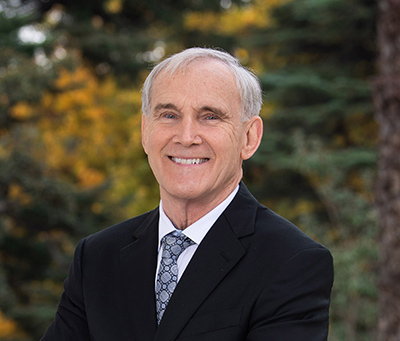
Asm. Steve Bennett
Sponsored bills
Existing law requires a person who drives a vehicle upon a highway to have a valid driver's license. Existing law prescribes specified fees that shall be collected by the Department of Motor Vehicles for the issuance and renewal of a driver's license. This bill would waive the driver's license renewal fee for a homeless person, as specified.
Existing law, the California Community Corrections Performance Incentives Act of 2009, authorizes each county to establish a Community Corrections Performance Incentives Fund, and authorizes the state to annually allocate moneys into the State Community Corrections Performance Incentives Fund to be used for specified purposes relating to improving local probation supervision practices and capacities. Existing law establishes a local Community Corrections Partnership (CCP) in each county and requires the CCP to recommend a local plan to the county board of supervisors for the implementation of the 2011 public safety realignment. This bill would require each local CCP to recommend a local plan to the county board of supervisors for the implementation of discharge plans for individuals with mental illness, as specified. Existing law authorizes a county sheriff to discharge a person from a county jail at any time on the last day that the person may be confined that the sheriff considers to be in the best interests of that person. Existing law additionally authorizes a sheriff to offer a voluntary program to a person, upon completion of a sentence served or a release ordered by the court to be effected the same day, that would allow the person to stay in jail for up to 16 additional hours or until normal business hours, whichever is shorter, in order to offer the person the ability to be discharged to a treatment center or during daytime hours, as specified. Existing law authorizes the person to revoke consent and be discharged as soon as possible and practicable. Existing law requires a sheriff offering this program to, whenever possible, allow the person to make a telephone call to arrange for transportation or to notify a bail agent, as specified. This bill would require a sheriff to make the release standards, release processes, and release schedules of a county jail available to incarcerated persons, as specified. The bill would additionally grant a person incarcerated in, or recently released from, a county jail up to 3 free telephone calls from a telephone in the county jail to plan for a safe and successful release. Because this bill would impose new duties on local governments it would impose a state-mandated local program. The California Constitution requires the state to reimburse local agencies and school districts for certain costs mandated by the state. Statutory provisions establish procedures for making that reimbursement. This bill would provide that, if the Commission on State Mandates determines that the bill contains costs mandated by the state, reimbursement for those costs shall be made pursuant to the statutory provisions noted above.
The Political Reform Act of 1974 provides for the comprehensive regulation of campaign financing, including requiring elected officials, candidates for elective office, committees formed primarily to support or oppose a candidate for public office or a ballot measure, and other entities to file periodic campaign statements and reports concerning campaign finances. This bill would require a limited liability company that qualifies as a committee or a sponsor of a committee under the act, as specified, to file a statement of members with the Secretary of State. The bill would require the statement of members to include certain information about the limited liability company, including a list of all persons who have a membership interest in the limited liability company of at least 10% or who made a cumulative capital contribution of at least $10,000 to the limited liability company after it qualified as a committee or sponsor of a committee, or within the 2 calendar quarters before it qualified. Existing law makes a knowing or willful violation of the Political Reform Act of 1974 a misdemeanor. By expanding the scope of an existing crime, this bill would impose a state-mandated local program. The California Constitution requires the state to reimburse local agencies and school districts for certain costs mandated by the state. Statutory provisions establish procedures for making that reimbursement. This bill would provide that no reimbursement is required by this act for a specified reason. The Political Reform Act of 1974, an initiative measure, provides that the Legislature may amend the act to further the act's purposes upon a 23 vote of each house of the Legislature and compliance with specified procedural requirements. This bill would declare that it furthers the purposes of the act.
The California Drought, Water, Parks, Climate, Coastal Protection, and Outdoor Access For All Act of 2018, approved by the voters as Proposition 68 at the June 5, 2018, statewide primary direct election, authorizes the issuance of bonds in the amount of $4,100,000,000 pursuant to the State General Obligation Bond Law to finance a drought, water, parks, climate, coastal protection, and outdoor access for all program. Article XVI of the California Constitution requires measures authorizing general obligation bonds to specify the single object or work to be funded by the bonds and further requires a bond act to be approved by a 23 vote of each house of the Legislature and a majority of the voters. This bill would enact the Safe Drinking Water, Wildfire Prevention, Drought Preparation, Flood Protection, Extreme Heat Mitigation, and Workforce Development Bond Act of 2022, which, if approved by the voters, would authorize the issuance of bonds in the amount of $7,080,000,000 pursuant to the State General Obligation Bond Law to finance projects for safe drinking water, wildfire prevention, drought preparation, flood protection, extreme heat mitigation, and workforce development programs. This bill would provide for the submission of these provisions to the voters at the June 7, 2022, statewide primary election. This bill would declare that it is to take effect immediately as an urgency statute.
(1) Existing law establishes a system of public elementary and secondary education in this state under which local educational agencies, such as school districts, county offices of education, and charter schools provide instruction to pupils in kindergarten and grades 1 to 12, inclusive. Existing law establishes governing bodies for these local educational agencies. Existing law authorizes school district governing boards to appoint one or more high school pupils as members in response to a petition from high school pupils of the school district requesting the governing board to appoint one or more pupil members. This bill would authorize county boards of education and charter schools to also appoint one or more high school pupils as members of their governing bodies in response to petitions from high school pupils enrolled in their county, as specified, or in their charter school, as appropriate. The bill would require policies and procedures for the selection of pupils to serve on a county board of education to ensure and protect the privacy of each pupil, and of the parents or guardians of each pupil, involved in proceedings before the county board of education acting in its capacity as an appellate body. Because the bill would add to the duties of county boards of education and governing bodies of charter schools to respond to petitions from high school pupils, it would constitute a state-mandated local program. The bill would authorize the terms of pupil members of the governing boards of school districts, county boards of education, and governing bodies of charter schools to be adjusted only in cases where a vacancy occurs or to provide more pupils with an opportunity to serve on that governing board or body. The bill would add provisions so that specified requirements relating to the selection and service of pupil members of these governing boards or bodies would conform to one another. (2) The California Constitution requires the state to reimburse local agencies and school districts for certain costs mandated by the state. Statutory provisions establish procedures for making that reimbursement. This bill would provide that, if the Commission on State Mandates determines that the bill contains costs mandated by the state, reimbursement for those costs shall be made pursuant to the statutory provisions noted above.
Under existing law, classified employees of school districts and community college districts subject to layoff as a result of the expiration of a specially funded program at the end of a school year are required to be given written notice on or before April 29 informing them of certain rights. Existing law also requires that notice be given not less than 60 days before the effective layoff date if the termination date of a specially funded program is other than June 30, or if classified employees are subject to layoff as a result of a bona fide reduction or elimination of a service performed by a department. This bill instead would revise and recast provisions relating to the layoff of classified employees of school districts and community college districts to require certain notices and opportunities for a hearing when a permanent classified employee's services will not be required for the ensuing year due to lack of work or lack of funds. The bill would, for the purposes of specified notice and hearing rights, define "permanent classified employee" to include both an employee who was permanent at the time the notice or right to a hearing was required and an employee who became permanent after the date of the required notice. The bill would express the intent of the Legislature in enacting the bill to provide permanent classified school employees and those who become permanent classified school employees with the same rights to notice and hearing with respect to layoffs as are provided to certificated employees of school districts, including teachers and administrators, and academic employees of community college districts. If classified positions must be eliminated as a result of the expiration of a specially funded program, the bill would require written notice of the layoff date and certain rights be given to the classified employees not less than 60 days before the effective layoff date. If, after January 1, 2021, the Legislature provides certificated or academic employees with any additional rights to notice or hearing as to layoffs, the bill would require the respective permanent classified employees, as described, to be afforded the same rights by the school district or community college district, as applicable. To the extent school districts and community college districts are required to perform additional duties, the bill would impose a state-mandated local program. The California Constitution requires the state to reimburse local agencies and school districts for certain costs mandated by the state. Statutory provisions establish procedures for making that reimbursement. This bill would provide that, if the Commission on State Mandates determines that the bill contains costs mandated by the state, reimbursement for those costs shall be made pursuant to the statutory provisions noted above.
Existing law establishes the Geologic Energy Management Division in the Department of Conservation, under the direction of the State Oil and Gas Supervisor, who is required to supervise the drilling, operation, maintenance, and abandonment of wells and the operation, maintenance, and removal or abandonment of tanks and facilities related to oil and gas production within an oil and gas field, so as to prevent damage to life, health, property, and natural resources. Existing law requires the supervisor to order those tests or remedial work that in the judgment of the supervisor are necessary to prevent damage to life, health, property, and natural resources, to protect oil and gas deposits from damage by underground water, to prevent the escape of water into underground formations, or to prevent the infiltration of detrimental substances into underground or surface water suitable for irrigation or domestic purposes, to the best interests of the neighboring property owners and the public. Existing law authorizes the supervisor or district deputy to order the plugging and abandonment of a well or the decommissioning of a production facility that has been deserted whether or not any damage is occurring or threatened by reason of that deserted well or production facility. Existing law requires the owner or operator to commence, in good faith, the work ordered and continue it until completion and, if the work has not been commenced and continued to completion, authorizes the supervisor to appoint necessary agents to enter the premises and perform the work and provides that any amounts expended are a perfected and enforceable state tax lien against real or personal property of the operator. This bill would authorize the division, before performing the work ordered by the supervisor or district deputy, to impose a lien against the real or personal property of the operator in an amount equal to an estimate of the cost of the work based on a bid from a contractor or previous costs to perform comparable work. The bill would require the division's accounting of actual or estimated costs to perform work ordered to be served upon the operator by personal service or certified mail. The bill would require the supervisor, on or before July 1, 2022, to establish a collections unit within the division to be responsible for identifying persons responsible for specified charges, locating assets belonging to those persons, and fully implementing all of the division's authorities for collecting the amounts owed. Until January 1, 2027, to the extent feasible, the bill would require the division to use existing resources and personnel in establishing the collections unit. Existing law requires the operator of any idle well to either (1) no later than May 1 of each year, for each idle well that was an idle well at any time in the last calendar year, file with the supervisor an annual fee, or (2) file a plan with the supervisor to provide for the management and elimination of all long-term idle wells. This bill would require the division, by April 1 of each year, to send a notice to the operator of an idle well identifying the amount of the annual fee due no later than May 1 of that year and stating that if the fee amount in the notice is in error, the operator may apply to the division before May 1 of that year to have the fee amount corrected. Existing law requires the supervisor, on or before July 1, 2019, and annually thereafter until July 1, 2026, to prepare and transmit to the Legislature a comprehensive report on the status of idle and long-term idle wells for the preceding calendar year that includes specified information. For the report due on or before July 1, 2021, and for each report thereafter, existing law requires the division to conduct inspections of production facilities attendant to long-term idle wells and requires that information summarizing violations and pertinent findings in these inspections be included in each report. For the report due on or before July 1, 2023, and each report thereafter, this bill would require the division to provide a description of activities undertaken by the division's collections unit, as specified. This bill would incorporate additional changes to Section 3206.3 of the Public Resources Code proposed by SB 84 to be operative only if this bill and SB 84 are enacted and this bill is enacted last.
Existing law, the Mobilehome Residency Law, regulates mobilehome parks and subjects the owner of the park and any person employed by the park to all park rules and regulations to the same extent as residents and their guests. Existing law exempts from those provisions any rules and regulations governing the age of residents or guests, and actions that are taken to fulfill a park owner's maintenance, management, and business operation responsibilities. This bill would require management, as defined, to comply with a rule or regulation prohibiting the renting or subleasing of the homeowner's mobilehome or mobilehome space and would prohibit management from renting a mobilehome owned by management except that the bill would authorize management to directly rent up to 2 mobilehomes within the park for the purpose of housing onsite employees, as defined, and would authorize management to directly rent one additional mobilehome for every 200 mobilehomes in the park for that same purpose. The bill would, notwithstanding this limit, also authorize management to continue to directly rent a mobilehome to a tenant if the tenancy was initially established by a rental agreement executed before January 1, 2022, and a tenant listed in the agreement continues to occupy the mobilehome. The bill would exempt specified mobilehomes or mobilehome sites from these provisions, as provided.