

Existing law authorizes the State Oil and Gas Supervisor to order certain operations to be carried out on any property in the vicinity of which, or on which, is located any well or facility that the supervisor determines to be a hazardous well, an idle-deserted well, a hazardous facility, or a deserted facility, as specified. Existing law prohibits the Geologic Energy Management Division from expending more than $3,000,000 in any one fiscal year, for the 2018–19 fiscal year to the 2021–22 fiscal year, inclusive, and, commencing with the 2022–23 fiscal year, no more than $1,000,000 in any one fiscal year for those purposes related to hazardous wells, idle-deserted wells, hazardous facilities, and deserted facilities. Existing law provides that these moneys be used exclusively for plugging and abandoning hazardous or idle-deserted wells and decommissioning hazardous or deserted facilities. Existing law requires the Department of Conservation, on April 1, 2021, to report information to the Legislature on hazardous wells, idle-deserted wells, deserted facilities, and hazardous facilities, as provided, and to provide an update on the report to the Legislature on October 1, 2023. This bill, commencing with the 2022–23 fiscal year, and continuing thereafter, would provide that the spending cap applies to expenditures from the Oil, Gas, and Geothermal Administrative Fund and would raise the cap on spending for these purposes from $1,000,000 to $5,000,000 in any one fiscal year. The bill would authorize the moneys to additionally be used for remediating well sites of hazardous or idle-deserted wells. The bill would also require the department to provide an update on the report to the Legislature annually. Existing law requires the supervisor to order those tests or remedial work that in the judgment of the supervisor are necessary to prevent damage to life, health, property, and natural resources; to protect oil and gas deposits from damage by underground water; or to prevent the escape of water into underground formations, or to prevent the infiltration of detrimental substances into underground or surface water suitable for irrigation or domestic purposes, to the best interests of the neighboring property owners and the public. Existing law authorizes the supervisor or district deputy to order the plugging and abandonment of a well or the decommissioning of a production facility that has been deserted whether or not any damage is occurring or threatened by reason of that deserted well or production facility. Existing law requires the owner or operator to commence, in good faith, the work ordered and continue it until completion and, if the work has not been commenced and continued to completion, authorizes the supervisor to appoint necessary agents to enter the premises and perform the work and provides that any amounts expended are a perfected and enforceable state tax lien against real or personal property of the operator. This bill would make the above-described $5,000,000 spending cap applicable to the supervisor's authority to appoint necessary agents to enter the premises and perform the work, unless the division obtains a lien against real or personal property of the operator. If the division obtains a lien against real or personal property of greater value than the amount of the expenditure, the bill would provide that the amount of the expenditure does not count against the expenditure limit. If the division obtains a lien against real or personal property of lesser value than the amount of the expenditure, the bill would provide that only the difference between the amount of the expenditure and the value of the property counts against the expenditure limit. This bill would incorporate additional changes to Section 3258 of the Public Resources Code proposed by SB 84 to be operative only if this bill and SB 84 are enacted and this bill is enacted last.
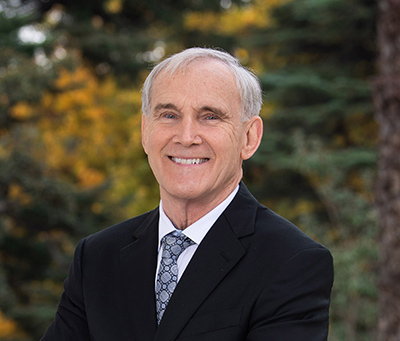
Asm. Steve Bennett
Sponsored bills
The 100 Percent Clean Energy Act of 2018 established as a policy of the state that eligible renewable energy resources and zero-carbon resources supply 100% of retail sales of electricity to California end-use customers and 100% of electricity procured to serve all state agencies by December 31, 2045. The act requires the Public Utilities Commission (PUC) , State Energy Resources Conservation and Development Commission (Energy Commission) , and State Air Resources Board to, as part of a public process, issue a joint report to the Legislature by January 1, 2021, and every 4 years thereafter, that includes specified information relating to the implementation of the policy. Existing law requires the PUC and the Energy Commission to undertake various actions in furtherance of meeting the state's clean energy and pollution reduction objectives. This bill would require the Energy Commission, on or before June 1, 2022, to evaluate and quantify the maximum feasible capacity of offshore wind to achieve reliability, ratepayer, employment, and decarbonization benefits and to establish offshore wind planning goals for 2030 and 2045, as specified. The bill would require the Energy Commission, in coordination with specified agencies, to develop a strategic plan for offshore wind energy developments installed off the California coast in federal waters, as specified. The bill would require the Energy Commission to submit the strategic plan to the Natural Resources Agency and the Legislature on or before June 30, 2023. The bill would require the Energy Commission, in coordination with specified agencies, to work with stakeholders, state, local, and federal agencies, and the offshore wind energy industry to identify suitable sea space for wind energy areas in federal waters sufficient to accommodate the offshore wind planning goals for 2030 and 2045. The bill would require the Energy Commission, in coordination with relevant state and local agencies, to develop a plan to improve waterfront facilities that could support a range of floating offshore wind energy development activities. The bill would require the Energy Commission, in consultation with the PUC and Independent System Operator, to assess the transmission investments and upgrades necessary to support the offshore wind planning goals for 2030 and 2045, as specified. The bill would require the Energy Commission to develop and produce a permitting roadmap that describes timeframes and milestones for a permitting process for offshore wind energy facilities and associated electricity and transmission infrastructure off the coast of California. The bill would require the information described in this paragraph and potential impacts on coastal resources, fisheries, Native American and Indigenous peoples, and national defense, and strategies for addressing those potential impacts, to be included in the strategic plan, as specified. The bill would require the Energy Commission, on or before December 31, 2022, to submit to the Natural Resources Agency and the relevant fiscal and policy committees of the Legislature a preliminary assessment of the economic benefits of offshore wind as they relate to seaport investments and workforce development needs and standards. The bill would repeal all of these provisions on January 1, 2027.
Existing law, the Alcoholic Beverage Control Act, which is administered by the Department of Alcoholic Beverage Control, regulates the application, issuance, and suspension of alcoholic beverage licenses. Existing law authorizes licensed winegrowers and brandy manufacturers to exercise their license privileges away from their licensed premises at, or from, branch offices or warehouses or United States bonded wine cellars located away from the place of production or manufacture, subject to specified exceptions. One of the exceptions to this authorization is the sale or delivery of wine to consumers in containers supplied, furnished, or sold by the consumer. This bill would delete the exception to the authorization applicable to winemakers, as described above, and would thus allow them to sell and deliver wine to consumers in containers supplied, furnished, or sold by the consumer away from their licensed premises.
Existing law establishes the Department of Community Services and Development within the California Health and Human Services Agency to supplement and coordinate public and private sector efforts to assist low-income participants, including homeless individuals and families, migrants, and the elderly poor, to secure and retain meaningful employment, attain an adequate education, make better use of available income, and obtain and maintain adequate housing and a suitable living environment. Existing law, the California Community Services Block Grant Program, requires the department to administer the federal Community Services Block Grant funds to provide financial assistance for activities designed to have a measurable and potentially major impact on causes of poverty in a community or areas of a community where poverty is a particularly acute problem. Existing law authorizes this funding to assist programs that, among other things, meet the needs of migrant and seasonal farmworkers and their families, such as daycare for children and elderly persons, education, health services, improved housing and sanitation, legal advice and representation, and consumer training and counseling, and assistance in processing applications for legalization and citizenship. This bill, upon appropriation by the Legislature, would require the department to establish a grant program for counties to establish farmworker resource centers that provide farmworkers and their families information and access to services related to, among other things, labor and employment rights, education, housing, immigration, and health and human services. The bill would make a county's eligibility for funding under the grant program contingent upon the county working with local or statewide community-based organizations to develop the center, providing 25% of the center's funding under the program, and requiring the center to provide services in at least English and Spanish, to provide an assessment of the population the center would serve, and to maintain a cost-effective database to track the number and type of calls received, referrals made, and claims filed, and to monitor local trends. The bill would require the department to convene and facilitate a workgroup to help inform the establishment and administration of the grant program, as specified.
This measure would proclaim November 3, 2021, as One Health Day, to celebrate and bring attention to the need for a One Health approach to address shared health threats at the human-animal-environmental interface.
This measure would designate the month of September 2021 as Leukemia, Lymphoma, and Myeloma Awareness Month and Blood Cancer Awareness Month and the first week of September 2021 as Blood Donation Week.
This measure would declare August 2021 as Valley Fever Awareness Month.
This measure would designate a specified portion of Westside Parkway on State Route 58 in the County of Kern as the Harvey L. Hall Memorial Highway. The measure would request that the Department of Transportation determine the costs of appropriate signs showing this special designation and, upon receiving donations from nonstate sources covering those costs, erect those signs.
This measure would request that the Congress of the United States and the United States Environmental Protection Agency take all measures necessary to prevent further damage to California's citizens, wildlife, and natural resources by the dichloro-diphenyl-trichloroethane waste dumped in the waters near Santa Catalina Island.
This measure would proclaim May 2021 as Sea Level Rise Awareness Month in California in order to recognize the devastating effects of climate change and encourage local governments to take action.