

Existing law provides that libel is a false and unprivileged written publication that injures the reputation and that slander is a false and unprivileged publication, orally uttered, that injures the reputation, as specified. Existing law makes certain publications and communications privileged and therefore protected from civil action, including complaints of sexual harassment by an employee, without malice, to an employer based on credible evidence and communications between the employer and interested persons regarding a complaint of sexual harassment. This bill would include among those privileged communications a communication made by an individual, without malice, regarding an incident of sexual assault, harassment, or discrimination, as defined, and would specify the attorney's fees and damages available to a prevailing defendant in any defamation action brought against that defendant for making that communication.
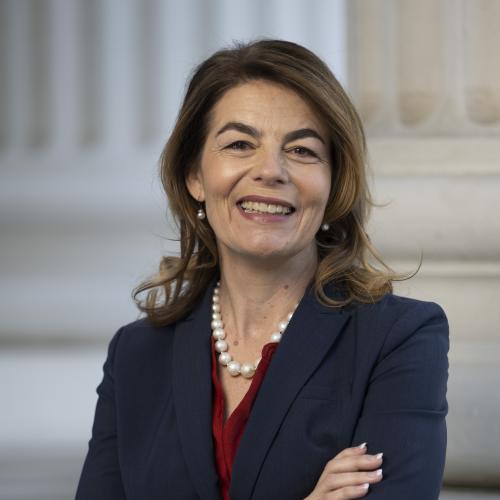
Asm. Dawn Addis
Sponsored bills
Existing law states the intent of the Legislature that public higher education in California strive to provide educationally equitable environments that give each Californian, regardless of age, economic circumstance, or certain specified characteristics, including mental disability, a reasonable opportunity to develop fully their potential. This bill, subject to an appropriation for its purposes, would expressly authorize the California State University, and request the University of California, to establish and maintain inclusive college programs for students with intellectual and developmental disabilities at 4-year public postsecondary educational institutions, as provided. The bill would request inclusive college programs operated by the California State University, and inclusive college programs operated by the University of California, to do certain things, including, among other things, provide students with a person-centered planning process and the opportunity to pursue an educational credential, including, but not limited to, a degree, certificate, or nondegree credential issued by the institution.
Existing law requires that specified actions for recovery of damages suffered as a result of childhood sexual assault, as defined, be commenced within 22 years of the date the plaintiff attains the age of majority or within 5 years of the date the plaintiff discovers or reasonably should have discovered that psychological injury or illness occurring after the age of majority was caused by the sexual assault, whichever occurs later. Existing law prohibits certain of those actions from commencing on or after the plaintiff's 40th birthday unless the person or entity knew or had reason to know, or was otherwise on notice, of any misconduct that creates a risk of childhood sexual assault by an employee, volunteer, representative, or agent, or the person or entity failed to take reasonable steps or to implement reasonable safeguards to avoid acts of childhood sexual assault, as specified. Existing law revives claims that would otherwise have been barred as of January 1, 2020, because the applicable statute of limitations, claim presentation deadline, or any other time limit had expired and authorizes the claims to be commenced within specified time periods. This bill would eliminate time limits for the commencement of actions for the recovery of damages suffered as a result of childhood sexual assault, as specified. The bill would eliminate the prohibition on certain actions proceeding on or after the plaintiff's 40th birthday unless specified conditions are met. The bill would specify that its provisions apply to any claim in which the childhood sexual assult occurred on and after January 1, 2024.
Existing law establishes the California State University, under the administration of the Trustees of the California State University, as one of the segments of public postsecondary education in this state. The California State University comprises 23 institutions of higher education located throughout the state. The California Native American Graves Protection and Repatriation Act of 2001 requires all agencies and museums, which is defined to include higher education institutions, that receive state funding and have possession or control over collections of California Native American human remains and associated funerary objects to inventory those remains and objects for repatriation to the appropriate California Indian tribes, as specified. This bill would require the California State University to comply with various requirements regarding the handling, maintenance, and repatriation of Native American human remains and cultural items under the California Native American Graves Protection and Repatriation Act of 2001, including adopting and implementing systemwide policies that, among other things, prohibit the use of any Native American human remains or cultural items for purposes of teaching or research at the California State University while in the possession of a California State University campus or museum. The bill would make its provisions severable.
The California Constitution provides that the University of California constitutes a public trust, and requires the university to be administered by the Regents of the University of California, a corporation in the form of a board, with full powers of organization and government, subject to legislative control only for specified purposes. The California Native American Graves Protection and Repatriation Act of 2001 requires all agencies and museums, which is defined to include higher education institutions, that receive state funding and have possession or control over collections of California Native American human remains and associated funerary objects to inventory those remains and objects for repatriation to the appropriate California Indian tribes, as specified. This bill would urge the University of California to, on or before June 30, 2024, and annually thereafter, report each University of California campus's progress towards completing repatriation pursuant to the California Native American Graves Protection and Repatriation Act of 2001. The bill would urge the office of the President of the University of California to provide available funding to sufficiently support those efforts. The bill would urge the University of California to prohibit use of any Native American human remains or cultural items for purposes of teaching or research at the University of California. Existing law requires the California State Auditor to conduct an audit commencing in the year 2019 and again in 2021 regarding the University of California's compliance with the federal and California acts and to report its findings to the Legislature and all other appropriate entities. This bill would require the California State Auditor to additionally conduct an audit again in 2024 and 2026, and to also report its findings to the Native American Heritage Commission.
(1) Existing law establishes a system of public elementary and secondary schools in this state. This system is composed of local educational agencies throughout the state that provide instruction to pupils in kindergarten and grades 1 to 12, inclusive, at schoolsites operated by these agencies. Existing law, commencing with the 2022–23 school year, requires each school district and county superintendent of schools maintaining kindergarten or any of grades 1 to 12, inclusive, and each charter school to provide 2 nutritiously adequate school meals free of charge during each schoolday, regardless of the length of the schoolday, to any pupil who requests a meal without consideration of the pupil's eligibility for a federally funded free or reduced-price meal, as specified, with a maximum of one free meal for each meal service period. Existing law requires the department to develop and maintain nutrition guidelines for school lunches and breakfasts, and for all food and beverages sold on public school campuses. Existing law requires a school district, county superintendent of schools, or charter school to provide each needy pupil with one nutritionally adequate free or reduced-price meal during each schoolday, except as provided. This bill would revise and recast provisions regarding school meals for needy pupils by, among other things, instead requiring each school district, county superintendent of schools, and charter school to make available a nutritionally adequate breakfast, as defined, and a nutritionally adequate lunch, as defined, free of charge during each schoolday, as defined, to any pupil who requests a meal, without consideration of the pupil's eligibility for a federally funded free or reduced-price meal, as provided. The bill would require each school district, county office of education, or charter school that offers independent study to meet the above meal requirements for any pupil on any schoolday that the pupil is scheduled for educational activities, as provided. The bill would require the State Department of Education to submit a waiver request to the United States Department of Agriculture to allow for one meal to be provided during a schoolday lasting 4 hours or less to be served in a noncongregate manner. The bill would authorize each school district, county superintendent of schools, and charter school to make available either a nutritionally adequate breakfast or a nutritionally adequate lunch, as defined, in a noncongregate manner, as provided, if the State Department of Education receives approval for the federal noncongregate waiver. The bill would require each school district, county superintendent of schools, and charter school to provide pupils with adequate time to eat, as determined by that school district, county superintendent of schools, or charter school in consideration of the recommendations provided by the department. The bill would require a chartering authority, among other things, to provide technical assistance to a charter school to meet these meal requirements, as provided. If the federal School Breakfast Program and federal National School Lunch Program allow more added sugar or sodium than is recommended by the most recent Dietary Guidelines for Americans, as described, the bill would require the department to convene representatives from specified entities to work in partnership to provide maximum daily added sugar and sodium intake recommendations for each grade level, as provided. The bill also would make conforming changes to related provisions of law. By imposing additional duties on local educational agencies and officials, the bill would impose a state-mandated local program. (2) Existing law authorizes the governing board of a school district to establish rules to determine which pupils are needy and authorizes a nominal cash payment for school meals to be collected from pupils that are not eligible for free meals and requires the State Department of Education to determine the amount of cash payment that may be required of those pupils. Existing law requires the Superintendent of Public Instruction to reimburse school districts for free and reduced-price meals served or sold based on the median statewide meal costs. This bill would delete those provisions. (3) Existing federal law provides for the permanent and nationwide Summer Electronic Benefit Transfer for Children (Summer EBT) program, under which pupils who are eligible for free and reduced-price school meals receive $40 per month during summer months for grocery benefits. This bill would require the State Department of Education to work in partnership with the State Department of Social Services to maximize participation in the federal Summer EBT program, as provided. (4) The California Constitution requires the state to reimburse local agencies and school districts for certain costs mandated by the state. Statutory provisions establish procedures for making that reimbursement. This bill would provide that, if the Commission on State Mandates determines that the bill contains costs mandated by the state, reimbursement for those costs shall be made pursuant to the statutory provisions noted above.
Existing law, the Menstrual Equity for All Act of 2021, requires a public school, as provided, maintaining any combination of classes from grades 6 to 12, inclusive, to stock the school's restrooms with an adequate supply of free menstrual products, as defined, available and accessible, free of cost, in all women's restrooms and all-gender restrooms, and in at least one men's restroom, at all times, and to post a certain notice, on or before the start of the 2022–23 school year, as prescribed. This bill would extend these requirements, commencing on or before the start of the 2024–25 school year, to instead apply to public schools maintaining any combination of classes from grades 3 to 12, inclusive. By imposing new duties on local educational agencies, the bill would impose a state-mandated local program. The California Constitution requires the state to reimburse local agencies and school districts for certain costs mandated by the state. Statutory provisions establish procedures for making that reimbursement. This bill would provide that, if the Commission on State Mandates determines that the bill contains costs mandated by the state, reimbursement for those costs shall be made pursuant to the statutory provisions noted above.
(1) The Trial Court Interpreter Employment and Labor Relations Act (the act) establishes procedures governing the employment and compensation of certified and registered trial court interpreters and court interpreters pro tempore employed by the courts. Existing law requires trial courts to appoint trial court employees, rather than independent contractors to perform interpretation of court proceedings, as specified. Existing law permits a court to appoint an independent contractor for interpretation in specified circumstances, including when an interpreter is paid directly by the parties to the proceeding. The bill, beginning January 1, 2025, would authorize an interpreter that is certified or registered and paid directly by the parties in a proceeding to be appointed under these provisions. (2) The act establishes an employee classification entitled "court interpreter pro tempore" and requires employees in this classification to work under specified conditions, including being paid on a per diem basis for work performed, unless a memorandum of understanding or agreement with a recognized employee organization provides otherwise. Existing law requires a court to offer to employ an interpreter as a court interpreter pro tempore that meets specified criteria and specifies how the court is required to accept and process applications for court interpreters pro tempore. Beginning January 1, 2025, this bill would instead rename a court interpreter pro tempore as an intermittent, part-time interpreter and would make conforming changes. The bill, on January 1, 2025, would eliminate the requirement that a court offer to employ as a court interpreter an interpreter who meets the specified criteria requiring the hiring of court interpreters and the provisions regarding the acceptance and processing of applications for court interpreters pro tempore. The bill would also authorize courts to hire registered or nonregistered interpreters as employees to perform relay interpretation, as defined, but only if the trial court has employed an interpreter of the same language pair. (3) Existing law creates the regional court interpreter employment relations committee for the purposes of developing regional terms and conditions of employment for court interpreters and for collective bargaining with recognized employee organizations, as specified. Existing law authorizes trial courts to employ certified and registered interpreters to perform spoken language interpretation for the trial courts in full-time or part-time court interpreter positions created by the trial courts with the authorization of the regional committee and subject to meet and confer in good faith. Existing law provides an order of priority for applicants that courts are required to adhere to when hiring interpreters, except as specified. Beginning January 1, 2025, this bill would remove the requirement for the authorization of the regional committee and meet and confer provisions when a court seeks to employ an interpreter for full-time, part-time, or intermittent, part-time interpreter positions created by the court. The bill, beginning January 1, 2025, would modify the prioritization for court interpreters who have previously performed work for that trial court. The bill would authorize trial courts to set additional local compensation, as defined, for interpreters. (4) Existing law provides for a regional transition period, defined as January 1, 2003, to July 1, 2005, except to the extent that a region may have a memorandum of understanding at an earlier point, regarding the employment of interpreters pursuant to the provisions of the act. This bill would remove various references to the transition period and various compliance deadlines related to the transition period. The bill would update obsolete cross-references and make other technical changes. (5) The California Constitution vests the judicial power of the state in the Supreme Court, courts of appeal, and superior courts, and establishes the Judicial Council to, among other things, adopt rules of court and perform functions prescribed by statute. This bill would require the Judicial Council to conduct a court interpreter workforce study and provide recommendations to the Legislature on or before January 1, 2026, regarding court interpreter availability and the future court interpreter workforce. The bill would require the Judicial Council to work in collaboration with key stakeholder groups, as specified.
Existing law requires the governing board of each community college district, the Trustees of the California State University, the Regents of the University of California, and the governing boards of independent postsecondary institutions, in order to receive state funds for student financial assistance, to enter into memoranda of understanding, agreements, or collaborative partnerships with existing on-campus and community-based organizations, to the extent feasible, to refer students for assistance or make services available to students, including counseling, health, mental health, victim advocacy, and legal assistance, and including resources for the accused. As a condition of receiving state funds for student financial assistance, this bill would require the trustees and the regents to ensure, to the extent feasible, that a student who seeks support after experiencing sexual violence receives information about the student's options and rights to obtain a sexual assault forensic medical examination, as specified, and commencing with the 2025–26 school year, to the extent practicable and necessary, to provide to their students without charge and in a manner that protects student confidentiality, transportation to and from a local Sexual Assault Forensic Examination (SAFE) or Sexual Abuse Response Team (SART) exam center for a qualified health care provider to administer the sexual assault forensic medical evidence kit, as provided. The bill would require, on or before June 30, 2026, and biennially thereafter, as a condition of receiving state financial assistance funds, the trustees and the regents to submit a report to the Legislature on whether their respective institutions have provided transportation for students to and from a local SAFE or SART exam center for a qualified health care provider to administer the sexual assault forensic medical evidence kit and the manner in which students received the transportation.
Existing law classifies controlled substances into 5 schedules and places the greatest restrictions and penalties on the use of those substances placed in Schedule I. Existing law classifies the drug fentanyl in Schedule II. Existing law prohibits a person from possessing for sale or purchasing for purposes of sale specified controlled substances, including fentanyl, and provides for imprisonment in a county jail for 2, 3, or 4 years for a violation of this provision. Existing law also imposes an additional term, and authorizes a trial court to impose a specified fine, upon a person who is convicted of a violation of, or of a conspiracy to violate, specified provisions of law with respect to a substance containing heroin, cocaine base, and cocaine, if the substance exceeds a specified weight. This bill would add fentanyl to the substances for which additional terms or fines can be imposed and would require a defendant who violates those laws with respect to a substance containing heroin, fentanyl, or cocaine, as specified, to know of the substance's nature or character as a controlled substance to be subjected to an additional term and authorized fine. By increasing the penalty for, and by changing the definition of, a crime, the bill would impose a state-mandated local program. The California Constitution requires the state to reimburse local agencies and school districts for certain costs mandated by the state. Statutory provisions establish procedures for making that reimbursement. This bill would provide that no reimbursement is required by this act for a specified reason.