

Existing law, the Knox-Keene Health Care Service Plan Act of 1975, provides for the licensure and regulation of health care service plans by the Department of Managed Health Care, and makes a willful violation of the act a crime. Existing law provides for the regulation of health insurers by the Department of Insurance. Existing law sets forth specified prior authorization and step therapy limitations for health care service plans and health insurers. This bill would require a health care service plan contract or health insurance policy issued, amended, or renewed on or after January 1, 2027, to require a health care service plan or health insurer to complete prior authorization within 30 days upon initial request, as specified, for a drug approved by the United States Food and Drug Administration (FDA) for the treatment of a rare disease if the drug is prescribed by a specialist with expertise in the condition or disease being treated, the specialist has determined the drug is medically necessary, and the drug is the only FDA-approved treatment for the rare disease. Because a willful violation of these provisions by a health care service plan would be a crime, the bill would impose a state-mandated local program. The California Constitution requires the state to reimburse local agencies and school districts for certain costs mandated by the state. Statutory provisions establish procedures for making that reimbursement. This bill would provide that no reimbursement is required by this act for a specified reason.
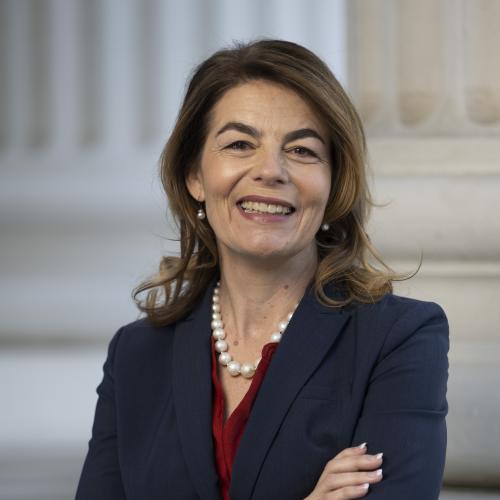
Rep. Dawn Addis
Sponsored bills
Under existing law, a candidate for the United States House of Representatives or local elective office may purchase space in the county voter information guide to make a candidate statement. A candidate for United States Senate may purchase space for a candidate statement in the state voter information guide. A candidate for state elective office may also purchase space to make a candidate statement in the state voter information guide, but only if the candidate accepts certain voluntary campaign expenditure limits. Existing law prohibits these candidate statements from making any reference to the candidate's opponents. This bill would limit a candidate statement to a recitation of the candidate's own education, professional experience, public service, community involvement, and qualifications. The bill would prohibit a candidate statement from including, in addition to references to other candidates, a link or other reference to external content other than the candidate's campaign website; content that is vulgar or profane, or that threatens or incites violence; false statements or misleading claims; or any other content that is unrelated to the candidate's qualifications. The candidate would be required to submit a declaration with the candidate statement that attests that the statement is true and correct. Because a person who willfully makes a false statement in that declaration would be guilty of the crime of perjury, this bill expands the scope of that crime and thereby creates a state-mandated local program. The bill would require the Secretary of State and county elections officials to omit from the voter information guide any portion of a candidate statement that does not comply with the bill, except false statements and misleading claims, and it would require them to print the remainder of the statement if it can stand independently and does not mislead voters. The bill would make a fee paid by a candidate for the printing or inclusion of a candidate statement nonrefundable if any part of the statement is printed in the voter information guide, but the fee would be refunded if the statement is omitted. By increasing the duties of county elections officials, this bill would create a state-mandated local program. Existing law provides for the public examination of state and county voter information guides. During the 20-day examination period for the state guide, an elector may seek a writ of mandate or an injunction requiring any or all of the materials to be amended or deleted. During the 10-day examination period for the county guide, a voter of the relevant jurisdiction in which an election is being held, or the relevant local elections official themselves, may seek a writ of mandate or an injunction requiring any or all of the materials to be amended or deleted. A court will issue such a writ of mandate or injunction only upon clear and convincing proof that the material in question is false, misleading, or inconsistent with law, and that issuance of the writ or injunction will not substantially interfere with the printing or distribution of official election materials as provided by law. This bill would similarly allow any registered voter to seek a writ of mandate or an injunction requiring any or all of the material in a candidate statement in the state or a county voter information guide to be amended or deleted, as specified. This bill would require that, as in current law, the writ of mandate or an injunction only be issued upon clear and convincing proof that the material in question is false, misleading, or inconsistent with the requirements of the bill, and that issuance of the writ or injunction will not substantially interfere with the printing or distribution of official election materials as provided by law. This bill would additionally allow a county elections official to bring such an action for a writ or injunction challenging a candidate statement in the county voter information guide over which they have jurisdiction. The California Constitution requires the state to reimburse local agencies and school districts for certain costs mandated by the state. Statutory provisions establish procedures for making that reimbursement. This bill would provide that with regard to certain mandates no reimbursement is required by this act for a specified reason. With regard to any other mandates, this bill would provide that, if the Commission on State Mandates determines that the bill contains costs mandated by the state, reimbursement for those costs shall be made pursuant to the statutory provisions noted above.
This measure would call on Congress to enact legislation that restores and strengthens the full protections of the Voting Rights Act of 1965, and it would call on the President to sign the legislation.
Existing law requires the legislative ethics committee of each house of the Legislature to conduct at least semiannually an orientation course on the relevant ethical issues and laws related to lobbying, in consultation with the Fair Political Practices Commission. Existing law requires the committees to impose fees on lobbyists for attending these courses, as specified. This bill would, commencing on January 1, 2029, require the Fair Political Practices Commission to develop, maintain, and offer an orientation course for registered lobbyists on the relevant ethical issues and laws relating to lobbying, and on each house of the legislature's policies against harassment, including sexual harassment, in connection with lobbying activities. The bill would require the course be developed with the legislative ethics committees and give the committees final approval over the content of the course that relates to the legislature's polices against harassment. The bill would require the course be available on-demand through an online platform, internet webpage, or application. The bill would authorize the commission to impose a fee on a lobbyist for the course, as specified. The bill would update cross-references. The Political Reform Act of 1974 requires individual lobbyists to prepare certifications, as specified, for filing with the Secretary of State. The act also requires lobbying firms and certain lobbyist employers to register with the Secretary of State. A violation of the act is punishable as a misdemeanor, and any person convicted of violating the act is prohibited from acting as a lobbyist for 4 years following the date of conviction, except as specified. This bill would prohibit a person who has been convicted of a crime of public corruption, as defined, from serving as a lobbyist for 12 years following the date of conviction. The bill would also void an existing lobbying certification in the event of such a conviction. The bill would prohibit the Secretary of State from accepting a lobbying certification from any person unless it includes a statement signed under penalty of perjury that the person has not been convicted of a crime of public corruption within the previous 12 years. Because these provisions would be part of the Political Reform Act of 1974 and a violation would therefore be a crime, this bill would impose a state-mandated local program. The Political Reform Act of 1974, an initiative measure, provides that the Legislature may amend the act to further the act's purposes upon a 23 vote of each house of the Legislature and compliance with specified procedural requirements. This bill would declare that it furthers the purposes of the act. The California Constitution requires the state to reimburse local agencies and school districts for certain costs mandated by the state. Statutory provisions establish procedures for making that reimbursement. This bill would provide that no reimbursement is required by this act for a specified reason.
Existing law makes it a crime to, by force, threat of force, or physical obstruction that is a crime of violence, intentionally injure, intimidate, interfere with, or attempt to injure, intimidate, or interfere with any person lawfully exercising or seeking to exercise the First Amendment right of religious freedom at a place of religious worship. This bill would make it unlawful for a person to, within a radius of 100 feet from an entrance or exit of a place of religious worship, as defined, intentionally approach another person seeking to enter or exit a place of religious worship within 8 feet of that person to either pass a leaflet or handbill to, display a sign to, or engage in oral protest or education or to harass, obstruct, threaten, or intimidate the person or occupant. The bill would, for the purposes of determining that distance, measure from the body of the person seeking to enter or exit, or the exterior of a motor vehicle they occupy, to the body of, or any sign or object held by, the other person. The bill would prescribe specified fines, imprisonment, or fine and imprisonment for a violation of these provisions. By creating a new crime, the bill would impose a state-mandated local program. The California Constitution requires the state to reimburse local agencies and school districts for certain costs mandated by the state. Statutory provisions establish procedures for making that reimbursement. This bill would provide that no reimbursement is required by this act for a specified reason.
Existing federal law, the National Suicide Hotline Designation Act of 2020, designates the 3-digit telephone number "988" as the universal number within the United States for the purpose of the national suicide prevention and mental health crisis hotline system operating through the 988 Suicide and Crisis Lifeline. Existing law, the Miles Hall Lifeline and Suicide Prevention Act, requires, among other things, the Office of Emergency Services (OES) to verify that technology that allows for transfers between 988 centers, as well as between 988 centers and 911 public safety answering points, is available to 988 centers and 911 public safety answering points throughout the state, to appoint a 988 system director, and to verify interoperability between and across 911 and 988. Existing law establishes the 988 State Suicide and Behavioral Health Crisis Services Fund and provides that 988 surcharge revenue in the fund is available, upon appropriation by the Legislature, for purposes of the act. This bill would require the California Health and Human Services Agency (agency) to annually determine whether an adequate specialized LGBTQ+ suicide prevention hotline is activated by the federal government under 988. When making this determination, the bill would require the agency to consider specified factors, including, among other things, any factor the agency considers relevant to evaluating the adequacy of press 3 operations. The bill would authorize the agency to, no later than 6 months after its determination, request the federal Substance Abuse and Mental Health Services Administration (SAMHSA) to allow the state to implement the press 3 function at the state level for calls originating in the State of California, which would allow callers to dial "988" and press "3" to be automatically routed to a specialized 988 center. The bill would require OES and the agency to, no later than 12 months following the approval by SAMHSA, ensure that press 3 function technologies are available. This bill would require, no later than 12 months following approval by SAMHSA, the agency to identify and contract with a qualified entity or entities that specialize in LGBTQ+ suicide prevention services. The bill would require the agency to determine the eligibility criteria, establish an application process, and administer funds to the qualified entity, as specified. The bill would require a qualified entity to comply with various requirements, including having a primary objective of reducing suicide rates or addressing mental health crises. The bill would make its implementation subject to an appropriation by the Legislature, as specified. This bill would declare that it is to take effect immediately as an urgency statute.
Existing law establishes various healing arts boards within the Department of Consumer Affairs that license and regulate various healing arts licensees. Existing laws, including the Licensed Marriage and Family Therapist Act, the Educational Psychologist Practice Act, the Clinical Social Worker Practice Act, and the Licensed Professional Clinical Counselor Act, make a violation of those acts a crime. Existing law regulates the use of artificial intelligence, as defined. Existing law requires a health facility, clinic, physician's office, or office of a group practice that uses generative artificial intelligence to generate written or verbal patient communications pertaining to patient clinical information to ensure those communications include a disclaimer that indicates to the patient that a communication was generated by artificial intelligence and instructions describing how a patient may contact a human health care provider, employee, or other appropriate person. This bill would regulate the use of artificial intelligence in connection with providing or facilitating psychotherapy services, as defined. The bill, among other things, would authorize an individual, corporation, or entity that provides or facilitates psychotherapy services to use artificial intelligence tools or systems only to assist in providing administrative or supplementary support in psychotherapy services, as specified. The bill would prohibit an individual, corporation, or entity from using artificial intelligence to record or transcribe psychotherapeutic communications or sessions or to triage or screen a person for the need for psychotherapy services unless the patient or client or their authorized representative is informed that artificial intelligence will be used and the purpose of the artificial intelligence tool or system, and the patient or client or their authorized representative provides consent, as specified. The bill would prohibit an individual, corporation, or entity from advertising or otherwise purporting to offer psychotherapy services when the services are provided through the use of companion chatbots. The bill would prohibit an individual, corporation, or entity from allowing artificial intelligence to perform certain acts, including making therapeutic decisions or detecting emotions or mental states, as specified, without review and approval by a licensed professional. The bill would make a violation of the bill's provisions subject to the jurisdiction of the appropriate health care professional licensing board or enforcement agency, as specified, and would authorize those boards and enforcement entities to pursue any remedies authorized by law. Existing law, the Confidentiality of Medical Information Act, generally restricts the persons and entities to whom, and the purposes for which, a health care provider, health care service plan, or contractor may release a patient's medical information. The Confidentiality of Medical Information Act additionally imposes certain disclosure requirements for the release of medical information that specifically relates to the patient's participation in outpatient treatment with a psychotherapist. In this regard, the act prohibits a health care provider, health care service plan, or contractor from releasing that information to persons or entities who have requested that information and who are otherwise authorized by specified laws to receive that information, unless the requester makes certain written disclosures to the patient and to the provider of health care, health care service plan, or contractor, as specified. Those disclosures include, among other things, the specific intended uses of the information, and the length of time during which the information will be kept before being destroyed or disposed of, as specified. Existing law makes a violation of those provisions that result in economic loss or personal injury to a patient punishable as a misdemeanor. This bill would require the use of artificial intelligence in patient or client records for psychotherapy services to comply with the confidentiality requirements of the above-described provision of the Confidentiality of Medical Information Act and would prohibit a company or entity from sharing, selling, storing, or training their models on any data obtained from psychotherapy in a manner inconsistent with any applicable law. By expanding the scope of existing crimes, the bill would impose a state-mandated local program. The California Constitution requires the state to reimburse local agencies and school districts for certain costs mandated by the state. Statutory provisions establish procedures for making that reimbursement. This bill would provide that no reimbursement is required by this act for a specified reason.
Existing law requires the Governor to proclaim various days as days of remembrance or recognition. This bill would require the Governor to annually proclaim September 25 as Dolly Parton Day. This bill would declare that it is to take effect immediately as an urgency statute.
Existing law, the K–12 Pupil Online Personal Information Protection Act (KOPIPA) , generally protects the personal information of a student enrolled in a K–12 course of instruction, defined as a "pupil," by prescribing requirements and prohibitions applicable to an operator of an internet website, online service, online application, or mobile application with actual knowledge that the site, service, or application is used primarily for K–12 school purposes and was designed and marketed for K–12 school purposes. Existing law, the Early Learning Personal Information Protection Act (ELPIPA) , generally protects the personal information of a child enrolled in a preschool or prekindergarten course of instruction, defined as a "pupil," by prescribing requirements and prohibitions applicable to an operator of an internet website, online service, online application, or mobile application with actual knowledge that the site, service, or application is used primarily for preschool or prekindergarten purposes and was designed and marketed for preschool and prekindergarten purposes. This bill would instead apply the provisions of KOPIPA and ELPIPA to an operator, or an entity working on behalf of the operator, of an internet website, online service, online application, or mobile application with actual knowledge that the site, service, or application is used for the applicable school purposes and was designed or marketed for those purposes, as specified. The bill would, among other changes to KOPIPA and ELPIPA related to protecting the personal information of students, prohibit an operator from using covered information, as defined, including persistent unique identifiers, created or gathered by the operator's site, service, or application to train a generative artificial intelligence system or service or develop an artificial intelligence system. This bill would also enact the Higher Education Student Information Protection Act (HESIPA) , which would generally protect the personal information of a student enrolled in a higher education institution, as defined, in a similar manner as KOPIPA and ELPIPA. The bill would make HESIPA operative on July 1, 2027. This bill would authorize a pupil or student actually harmed by noncompliance with KOPIPA, ELPIPA, or HESIPA to bring a civil action against the noncompliant operator, as prescribed, and would require a person bringing that action to furnish a copy of the complaint to the Attorney General within 10 days after filing the action.
The Public Employees' Retirement Law (PERL) establishes the Public Employees' Retirement System (PERS) to provide a defined benefit to members of the system based on final compensation, credited service, and age at retirement, subject to certain variations. Existing law creates the Public Employees' Retirement Fund, which is continuously appropriated for purposes of PERS, including depositing employer and employee contributions. Under the California Constitution, assets of a public pension or retirement system are trust funds. The California Public Employees' Pension Reform Act of 2013 (PEPRA) establishes a variety of requirements and restrictions on public employers offering defined benefit pension plans. In this regard, PEPRA restricts the amount of compensation that may be applied for purposes of calculating a defined pension benefit for a new member, as defined, by restricting it to specified percentages of the contribution and benefit base under a specified federal law with respect to old age, survivors, and disability insurance benefits. Existing law, the Teachers' Retirement Law, establishes the State Teachers' Retirement System (STRS) and creates the Defined Benefit Program of the State Teachers' Retirement Plan, which provides a defined benefit to members of the program, based on final compensation, creditable service, and age at retirement, subject to certain variations. This bill, for service performed on and after January 1, 2027, would prohibit the pensionable compensation for calendar year 2027 used to calculate the defined benefit paid to a new member of a retirement system subject to PEPRA who retires from the system from exceeding specified percentages of the contribution and benefit base under the specified federal law with respect to old age, survivors, and disability insurance benefits. The bill would make related, conforming changes to these provisions on pensionable compensation. The bill also would require a new member of STRS to be subject to specified limits of the Teachers' Retirement Law. PEPRA requires each retirement system that offers a defined benefit plan for safety members of the system to use one of 3 formulas for safety members, 2% at age 57, 2.5% at age 57, or 2.7% at age 57. This bill would establish new retirement formulas, for employees first hired on or after January 1, 2027, as 2.5% at age 55, 2.7% at age 55, or 3% at age 55, subject to certain exceptions. For new members hired on or after January 1, 2013, who are safety members, the bill would require employers to adjust the formulas for service performed on or after January 1, 2027, to offer the formula that has the same fraction at age 55 as the fraction at age 57 in the formula the employer offered pursuant to existing law. The bill would authorize a public employer and a recognized employee organization to negotiate a prospective increase to the retirement benefit formulas for safety members and new safety members, consistent with the formulas permitted under PEPRA, including the new formulas described above. This bill would authorize an employer and its employees to agree in a memorandum of understanding to be subject to a higher safety plan or a lower safety plan, subject to certain requirements, including that the memorandum of understanding is collectively bargained in accordance with applicable laws. By increasing the contribution to continuously appropriated funds, and by increasing expenditures from those funds, this bill would make an appropriation.