

Existing law authorizes the Public Utilities Commission to supervise and regulate every public utility in the state, including telephone corporations, and to fix just and reasonable rates and charges for public utilities. Existing law establishes the state's 6 universal service funds in the State Treasury, including the California High-Cost Fund-A Administrative Committee Fund (CHCF-A) and the California High-Cost Fund-B Administrative Committee Fund (CHCF-B) , and provides that moneys in each of the state's universal service funds are the proceeds of rates and are held in trust for the benefit of ratepayers and to compensate telephone corporations for their costs of providing universal service. Moneys in the funds may only be expended to accomplish specified telecommunications universal service programs, upon appropriation in the annual Budget Act or upon supplemental appropriation. Existing law, the CHCF-A program, until January 1, 2028, requires the commission to develop, implement, and maintain a suitable program to establish a fair and equitable local rate structure aided by universal service rate support to small independent telephone corporations that serve rural areas and are subject to rate-of-return regulation by the commission. Existing law, the CHCF-B program, until January 1, 2028, requires the commission to develop, implement, and maintain a suitable, competitively neutral, and broad-based program to establish a fair and equitable local rate support structure aided by universal service rate support to telephone corporations serving areas where the cost of providing services exceeds rates charged by providers, as determined by the commission. This bill would extend the CHCF-A program and CHCF-B program requirements to January 1, 2033. Under existing law, a violation of the Public Utilities Act or an order, decision, rule, direction, demand, or requirement of the commission is a crime. Because the CHCF-A program and CHCF-B program, which would be extended under the provisions of this bill, are part of the act, and a violation of a commission action implementing the programs' requirements would be a crime, the bill would impose a state-mandated local program. The California Constitution requires the state to reimburse local agencies and school districts for certain costs mandated by the state. Statutory provisions establish procedures for making that reimbursement. This bill would provide that no reimbursement is required by this act for a specified reason. This bill would declare that it is to take effect immediately as an urgency statute.
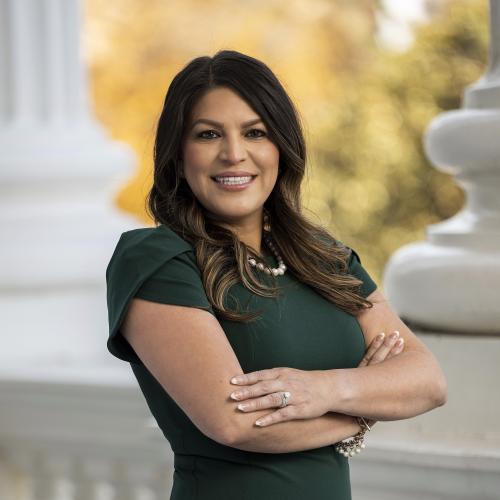
Asm. Esmeralda Soria
Sponsored bills
The Safe Drinking Water, Wildfire Prevention, Drought Preparedness, and Clean Air Bond Act of 2024, approved by the voters as Proposition 4 at the November 5, 2024, statewide general election, authorized the issuance of bonds in the amount of $10,000,000,000 pursuant to the State General Obligation Bond Law to finance projects for safe drinking water, drought, flood, and water resilience, wildfire and forest resilience, coastal resilience, extreme heat mitigation, biodiversity protection and nature-based climate solutions, climate-smart, sustainable, and resilient farms, ranches, and working lands, park creation and outdoor access, and clean air programs. Of these funds, the act makes $300,000,000 available, upon appropriation by the Legislature, for improving climate resilience and sustainability of agricultural lands, including, among other things, by making $15,000,000 available, upon appropriation by the Legislature, to the State Department of Education, in consultation with the Department of Food and Agriculture, for purposes of providing grants to public postsecondary educational institutions that are designated as Agricultural Experiment Stations or Agricultural Research Institutes, to develop research farms to improve climate resiliency, as specified. Existing law authorizes a state agency to furnish services, materials, or equipment to, or perform work for, any other state agency upon terms and conditions and for the consideration as they may determine, and to enter into agreements for that purpose, subject to approval of the Director of General Services. Existing law requires a state agency that furnishes the services, materials, or equipment to, or performs the work for, the other state agency to compute charges in a manner approved by the Director of Finance. Existing law authorizes a state agency to provide for the advancing of funds, as provided, to defray those charges. This bill would authorize the State Department of Education to advance a payment for a contract or agreement made with the Department of Food and Agriculture pursuant to the research farm provisions of Proposition 4, described above, in the 2026–27 and 2027–28 fiscal years. The bill would exempt those contracts and agreements from the above-described requirement of approval by the Director of General Services. The bill would provide, for purposes of those contracts and agreements, that developing a research farm pursuant to the research farm provisions of Proposition 4 includes constructing a new research farm and maintaining, altering, or improving an existing research farm previously constructed by the Agricultural Experiment Station or the Agricultural Research Institute. This bill would provide, for purposes of the research farm grants, that Agricultural Experiment Stations and Agricultural Research Institutes are designated by the University of California and the California State University.
Existing law establishes the California Community Colleges, under the administration of the Board of Governors of the California Community Colleges. Existing law establishes community college districts throughout the state, under the administration of community college district governing boards, and authorizes these districts to provide instruction at the community college campuses they operate. Existing law establishes a statewide baccalaureate degree program that authorizes up to a total of 30 baccalaureate degree programs at community college districts to be approved per academic year, as provided. This bill would require the office of the Chancellor of the California Community Colleges to develop a Baccalaureate Degree in Nursing Pilot Program that authorizes select community college districts to offer a Bachelor of Science in Nursing degree. The bill would limit the pilot program to 10 community college districts statewide and would require the chancellor's office to identify and select eligible community college districts based on specified criteria. The bill would require the chancellor's office to develop a process designed to assist community college districts with nursing programs that are applying for national accreditation for the purpose of qualifying for the pilot program, as provided. The bill would require each participating community college district to give priority registration for enrollment in the pilot program to students with an associate degree in nursing from that community college district. The bill would require the Legislative Analyst's Office to conduct an evaluation of the pilot program to determine the effectiveness of the program and the need to continue or expand the program, as specified, to be submitted to the Legislature on or before July 1, 2034. The bill would repeal these provisions as of January 1, 2036.
Existing law prohibits a person from driving a motor vehicle upon a highway unless that person holds a valid driver's license to operate the type of vehicle that the person is driving. Existing law requires the Department of Motor Vehicles to require an examination for issuance of a driver's license. The examination is required to be appropriate to the type of motor vehicle or combination of vehicles the applicant desires a license to drive or tow, in accordance with certain license classifications. A class C driver's license includes the operation of, among other vehicles, firefighting equipment, provided that the equipment is operated by a person who holds a firefighter endorsement, as specified. This bill would include the operation of specified emergency equipment under a class C driver's license, provided the equipment is owned by a law enforcement agency and is operated by a person who has completed the emergency equipment training described below. Existing law establishes the Commission on Peace Officer Standards and Training to set minimum standards for the recruitment and training of peace officers and to develop training courses and curriculum. This bill would require specified peace officers and volunteers registered with specified law enforcement agencies be permitted to operate emergency equipment, as specified. The bill would require the training to include both classroom and driver training components, as specified, and a written examination. The bill would impose certification, experience, and licensure requirements on instructors for the training program, including, among other things, a requirement that an instructor be certified as a qualified training instructor by the State of California, the federal government, or a county training officers' association. The bill would define "emergency equipment" as a motor vehicle or combination of vehicles that meets the definition of a class A or class B vehicle and is subject to certain requirements, including, but not limited to, that they are used to travel to and from the scene of an emergency situation, to and from a place where the emergency equipment is repaired or positioned, or to transport equipment used in the control of an emergency situation and that is owned, leased, rented by, or under the exclusive control of specified law enforcement agencies.
Existing law establishes within the office of the Governor, the office of the Governor's Tribal Advisor, which is headed by the Governor's Tribal Advisor who is appointed by and serves at the pleasure of the Governor. This bill would, instead, establish within the Office of the Governor, the Office of Tribal Affairs (office) , which is headed by the Secretary of Tribal Affairs who is appointed by and serves at the pleasure of the Governor, as specified. The bill would require each state agency that engages, or has programs, services, or responsibilities affecting tribal governments to, among other things, designate a tribal liaison, as described. The bill would require the office to be advised by a Tribal Advisory Committee, as described, and would require the committee to, among other things, provide recommendations and tribal perspectives to assist the office in strengthening government-to-government engagement and improving the design, access, and implementation of state programs and services affecting tribal governments. The bill would require the office to, among other things, support the implementation of consultation policies, facilitate direct engagement between state agencies and tribal governments, and provide training, guidance, and technical assistance to tribal liaisons and state agency personnel, as specified.
Existing law appropriates certain unallocated moneys and other specified moneys deposited into the Fair and Exposition Fund, a continuously appropriated fund, to the Secretary of Food and Agriculture for capital outlay to California fairs for, among other things, fair projects involving public health and safety, fair projects involving major and deferred maintenance, and fair projects necessary due to any emergency, as specified. This bill would instead appropriate those moneys described above to the secretary for capital outlay to California fairs for fair projects involving public health, fire and life safety, and emergency services improvement projects at fairs, California Code of Regulations compliance projects, and maintenance projects at fairgrounds, as specified. By expanding the purposes for which those moneys may be used, the bill would make an appropriation. The bill would require moneys deposited into the fund after November 1 of each year to be allocated within 90 days of the receipt of the moneys, as provided. The bill would require all available moneys in the fund to be allocated to the network of California fairs pursuant to an approved expenditure plan no later than December 31 of each calendar year, except that beginning January 1, 2027, and every year thereafter, a reasonable amount may be retained from year to year as a prudent reserve for contingencies, as specified.
Existing law creates the Office of Farm to Fork within the Department of Food and Agriculture, and requires the office, to the extent that resources are available, to work with various entities, including, among others, the agricultural industry and other organizations involved in promoting food access, to increase the amount of agricultural products available to underserved communities and schools in the state. This bill would require the office, upon appropriation by the Legislature, to establish the Healthy Food for California Public Institutions Program for the purpose of identifying vendors in California that have the capacity to provide healthy foods to California public institutions, as defined. The bill would require the office, to the extent that funding is available, to implement initiatives under the program, including, but not limited to, an initiative to develop a list of approved vendors that public institutions can use to procure food products that are whole or minimally processed and are grown or produced in California using climate-smart agriculture practices and climate-smart agriculture production systems.
Existing law authorizes a groundwater sustainability agency to impose fees, including, but not limited to, permit fees and fees on groundwater extraction or other regulated activity, to fund the costs of a groundwater sustainability program, and investigations, inspections, compliance assistance, enforcement, and program administration, as provided. Existing law prohibits a groundwater sustainability agency from imposing those fees on a de minimis extractor, as defined, unless the agency has regulated the user, as provided. This bill would authorize a local government, including, but not limited to, a groundwater sustainability agency, that imposes a fee, levy, charge, or exaction for groundwater monitoring or management, upon making specified findings, to exempt de minimis extractors, including the above-described regulated users, from the payment of the fee, levy, charge, or exaction, as provided.
Existing law makes it a misdemeanor for any person to engage in the noncommercial canning of salmon, or in the commercial canning of any fish or fish product, meat or meat product, or any other food product for the use of man or animal, the sterilization of which in the opinion of the State Department of Public Health requires the use of a pressure cooker or a retort, without first obtaining a license from the department. Existing law requires the department to issue an annual license to any person on the receipt of a specified fee and evidence showing the applicant is in compliance with the department's sanitary requirements. Existing law establishes the Cannery Inspection Board to estimate specified costs for inspection and laboratory control. Existing law establishes the Cannery Inspection Fund for the receipt of moneys received pursuant to these provisions. This bill would repeal these provisions. The bill would make related conforming changes. Existing law, the Sherman Food, Drug, and Cosmetic Law, under the administration and enforcement of the department, provides for the regulation of various subjects relating to the manufacturing, processing, labeling, advertising, and sale of food, drugs, and cosmetics. A violation of the Sherman Food, Drug, and Cosmetic Law is punishable as a misdemeanor. Existing law makes it unlawful for any person to misbrand any food or manufacture, sell, deliver, hold, or offer for sale any food that is misbranded. Existing law prohibits a person from manufacturing, packing, or holding any processed food in this state unless the person has a valid registration from the department, except as specified. Existing law requires a registration application to be completed annually and accompanied by a specified nonreturnable registration fee. This bill would prohibit a person from engaging in the commercial manufacturing, processing, or packing of an acidified food or low-acid food for the use or consumption by people or animals without first being registered with the department. The bill would prohibit a person from engaging in the commercial manufacturing, processing, or packing of an acidified food or low-acid food for the use or consumption by people or animals without a scheduled process, as defined, obtained from a processing authority. The bill would deem an acidified food or low-acid food that is manufactured, processed, or packed by a person without a scheduled process obtained from a processing authority as misbranded. The bill would require every person engaged in the manufacture, packing, or holding of an acidified food or low-acid food required to have a scheduled process in this state to pay $350 annually in addition to their annual registration fee. The bill would require the additional fee to be deposited into the Food Safety Fund for use by the department, upon appropriation by the Legislature, for the purpose of conducting inspections and reviews of facilities that manufacture, hold, or pack an acidified food or low-acid food required to have a scheduled process. By expanding the scope of existing crimes, this bill would impose a state-mandated local program. This bill would state that the Food Safety Fund is the successor fund to the Cannery Inspection Fund, and would require all moneys to be transferred to, and become a part of, the Food Safety Fund, to be available for immediate use for specified purposes. By using appropriated funds for a new purpose, the bill would make an appropriation. The California Constitution requires the state to reimburse local agencies and school districts for certain costs mandated by the state. Statutory provisions establish procedures for making that reimbursement. This bill would provide that no reimbursement is required by this act for a specified reason.
Existing law establishes a specialized license plate program and requires the Department of Motor Vehicles to issue specialized license plates, also referred to as environmental license plates, on behalf of a sponsoring state agency if the agency receives 7,500 applications for that plate within a 12-month period, among other requirements. Existing law authorizes a person who is the registered owner or lessee of a vehicle to apply to the department for specialized license plates. Existing law imposes a fee, in addition to the regular registration fee, for the issuance, renewal, retention, transfer, and duplication of specialized license plates. Existing law requires that all revenue derived from these fees be deposited in the California Environmental License Plate Fund. This bill would require the Arts Council to apply to the department to sponsor "The Lowrider" specialized license plate program, as specified. The bill would require the design of the plate to reflect lowrider culture and heritage. The bill would require the council to consult with a nonprofit entity for plate design consultation, stakeholder engagement, publicity, and community outreach. The bill would authorize the council to accept and use donated or licensed artwork from a nonprofit entity for these purposes, and to use funds from nonprofit or private sources to augment implementation. The bill would require the department, after deducting its administrative costs, to deposit additional revenue derived from the issuance, renewal, transfer, and substitution of the plate into the Specialized License Plate Fund in the State Treasury. The bill would require the council to use those funds, upon appropriation by the Legislature, to fund projects that include, among others, supporting lowrider arts and cultural preservation efforts. The bill would authorize the council to use 4 to 6% of those funds to consult with or enter into an agreement with a nonprofit entity to support implementation of the program.