

Existing law authorizes, until January 1, 2024, the Counties of Alameda, Butte, Napa, Nevada, Santa Clara, and Ventura to establish a pilot program to operate a deferred entry of judgment program for eligible defendants. Existing law authorizes a defendant to participate in the program within the county's juvenile hall if that person is charged with committing a felony offense, except as specified, pleads guilty to the charge or charges, and the probation department determines that the person meets prescribed requirements, including that the defendant meets the age requirements. Existing law requires each participating county to establish a multidisciplinary team to meet periodically to review and discuss the implementation, practices, and impact of the program, and to submit data on the pilot program to the Board of State and Community Corrections. Existing law requires the board to conduct an evaluation of the pilot program's impact and effectiveness, as specified, and would require, no later than December 31, 2022, the evaluation to be combined into a comprehensive report and submitted to the Assembly and Senate Committees on Public Safety. This bill would remove the Counties of Napa and Ventura from the counties authorized to establish a pilot program. The bill would extend the pilot program to January 1, 2026, and would instead require, no later than December 31, 2024, counties to conduct the above-specified evaluation and to submit a report based on that evaluation to the Assembly and Senate Committees on Public Safety.
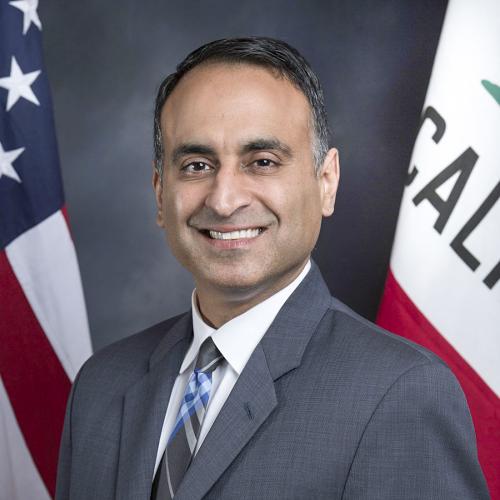
Asm. Ash Kalra
Sponsored bills
Existing law prohibits the sale and distribution of certain consumer products that include chemicals such as phthalates, polybrominated diphenyl ether, and perfluoroalkyl and polyfluoroalkyl substances. This bill would prohibit the sale or offering for sale in the state of sodium nitrite at a purity level that exceeds 10% without a specified label on the immediate container and shipping package of sodium nitrite, and would make a violation of this provision subject to a civil penalty, as specified. The bill would make related findings and declarations.
Existing law establishes the state prisons under the jurisdiction of the Department of Corrections and Rehabilitation. Existing law requires the Department of Corrections and Rehabilitation to provide operation and fiscal information to the Joint Legislative Budget Committee, including, among other things, data regarding the total expenditures and average daily population for each adult institution. This bill would require the department to prepare and publish monthly demographic data, based on voluntary self-identification information from people admitted, in custody, and released and paroled, disaggregated by race and ethnicity, as specified. The bill would require, beginning January 1, 2025, the department to make the data publicly available on the department's internet website via the Offender Data Points dashboard.
By Executive Order No. N-82-20, Governor Gavin Newsom directed the Natural Resources Agency to combat the biodiversity and climate crises by, among other things, establishing the California Biodiversity Collaborative and conserving at least 30% of California's lands and coastal waters by 2030. Existing law requires the Secretary of the Natural Resources Agency to prepare and submit, on or before March 31, 2024, and annually thereafter, a report to the Legislature on the progress made in the prior calendar year toward achieving the goal to conserve 30% of California's lands and coastal waters by 2030. This bill would codify the goal of the state to conserve at least 30% of California's lands and coastal waters by 2030.
Under existing law, a person sentenced to imprisonment in a state prison or in a county jail for a felony offense, as specified, may during that period of confinement be deprived of only those rights as is reasonably related to legitimate penological interests. Existing law enumerates certain civil rights of these prisoners, including the right to purchase, receive, and read newspapers, periodicals, and books accepted for distribution by the United States Post Office. This bill would include the right to exercise religious freedom, including accommodations for religious grooming, clothing, and headwear, as specified. The bill would allow these rights to be denied only when in furtherance of a compelling governmental interest with regard to institutional security that may impact the facility, staff, the individual, or others in custody. The bill would require a facility to accommodate these rights in specified ways, including, among others, by allowing the individual to purchase or access facility-issued, or Department of Corrections and Rehabilitation-approved, religious clothing and headwear or, if unavailable, allowing the individual to retain their personal religious clothing and headwear until a facility-issued, or department-approved, clothing or headwear can be accessed or purchased. If purchased by an individual in custody, the bill would require the price of facility-issued, or department-approved, religious clothing and headwear to not exceed the purchase price and normal taxes of the items. The bill would authorize the department to promulgate regulations necessary to implement these religious rights, as specified. The bill would require the sheriff of each county or the administrator of each local detention facility to develop and implement a policy following these requirements on or before January 1, 2025. By imposing duties on local jails, this bill would create a state-mandated local program. The California Constitution requires the state to reimburse local agencies and school districts for certain costs mandated by the state. Statutory provisions establish procedures for making that reimbursement. This bill would provide that, if the Commission on State Mandates determines that the bill contains costs mandated by the state, reimbursement for those costs shall be made pursuant to the statutory provisions noted above.
The False Advertising Law makes it a crime for a person or a firm, corporation, or association, or any employee thereof, to engage in specified false or misleading advertising practices. The Unfair Competition Law makes various unfair competition practices unlawful, including any unlawful, unfair, or fraudulent business act or practice and unfair, deceptive, untrue, or misleading advertising. The Consumers Legal Remedies Act makes unlawful certain unfair methods of competition and certain unfair or deceptive acts or practices undertaken by a person in a transaction intended to result or that results in the sale or lease of goods or services to a consumer, including advertising goods or services with intent not to sell them as advertised. Existing law authorizes a consumer who suffers damage as a result of the use or employment by a person of a method, act, or practice declared to be unlawful by that provision to bring an action against that person to recover or obtain certain relief, including actual damages of at least $1,000. This bill would, beginning on July 1, 2024, with specified exceptions, additionally make unlawful advertising, displaying, or offering a price for a good or service that does not include all mandatory fees or charges other than taxes or fees imposed by a government on the transaction, as specified. The bill would provide that assessments made pursuant to the California Tourism Marketing Act and the Parking and Business Improvement Area Law of 1989, and business assessments made pursuant to the Property and Business Improvement District Law of 1994, are fees imposed by a government on the transaction for purposes of these provisions. Existing law authorizes vehicle rental companies, when providing a quote or imposing charges for a rental, to separately state specified rates and charges that a renter must pay to hire or lease the vehicle for the period of time to which the rental rate applies. Existing law prohibits a rental company from imposing charges or fees in addition to the rental rate unless specified conditions are met. Existing law requires the rate advertisements of vehicle rental companies to include a disclaimer providing that additional mandatory charges may be imposed, as specified. This bill would provide that a rental company is not in violation of unlawful advertising, displaying, or offering a price for a good or service for excluding from the advertised, displayed, or offered price of a rental vehicle charges that are disclosed to the consumer in compliance with the above-described provisions. Existing law requires any solicitation to enter into a lease contract that includes the amount of any payment, as specified, to also state, among other things, "Plus tax and license" or a substantially similar statement, if amounts due for use tax, license fees, and registration fees are not included in the payments. This bill would specify that a lessor is not in violation of this prohibition against unlawfully advertising, displaying, or offering a price for a good or service because it excludes from the advertised, displayed, or offered lease payment a fee or charge in accordance with the provision described above. Existing law imposes specified requirements on dealers of motor vehicles and motorcycles sold or leased in this state. Existing law prohibits a holder of a dealer's license from doing specified acts, including advertising the total price of a vehicle without including all costs to the purchaser at time of sale, except taxes, vehicle registration fees, the California tire fee, emission testing charges not exceeding $50, actual fees charged for certificates, finance charges, and any dealer document processing charge or charge to electronically register or transfer the vehicle. This bill would specify that a holder of a dealer's license is not in violation of unlawful advertising, displaying, or offering a price for a good or service for excluding from the advertised, displayed, or offered price of a vehicle a tax, a vehicle registration fee, the California tire fee, an emission testing charge not exceeding $50, an actual fee charged for a certificate, a finance charge, or a dealer document processing charge or charge to electronically register or transfer the vehicle. Existing law imposes specified requirements on manufacturers of motor vehicles and motorcycles and prohibits a person from acting as a motor vehicle manufacturer without having first been issued a license by the Department of Motor Vehicles, as specified. This bill would specify that a motor vehicle manufacturer, or any other person, that advertises a motor vehicle manufacturer's suggested retail price (MSRP) set by an automobile manufacturer, or lease payments based upon an MSRP, does not, by doing so, violate the prohibition described above relating to unlawful advertising, displaying, or offering a price for a good or service.
The California Global Warming Solutions Act of 2006 requires the State Air Resources Board to adopt regulations to require the reporting and verification of statewide greenhouse gas emissions and to monitor and enforce compliance with the act. The act requires the state board to make available, and update at least annually, on its internet website the emissions of greenhouse gases, criteria pollutants, and toxic air contaminants for each facility that reports to the state board, as provided. This bill would require, on or before January 1, 2026, and biennially thereafter, a covered entity, as defined, to prepare a climate-related financial risk report disclosing the entity's climate-related financial risk and measures adopted to reduce and adapt to climate-related financial risk. The bill would require the covered entity to make a copy of the report available to the public on its own internet website. The bill would require the state board to contract with a climate reporting organization, as defined, to biennially prepare a public report that contains specified information, including a review of the disclosure of climate-related financial risk contained in a subset of publicly available climate-related financial risk reports and an analysis of the systemic and sectorwide climate-related financial risks facing the state. The bill would require the state board to adopt regulations that authorize it to seek administrative penalties from covered entities for failing to make the report publicly available on its internet website or publishing an inadequate or insufficient report, as specified. The bill would require covered entities to pay an annual fee for the state board's actual and reasonable costs to administer and implement the bill. The bill would create the Climate-Related Financial Risk Disclosure Fund, require the proceeds of the fees to be deposited in the fund, and continuously appropriate the moneys in the fund to the state board for purposes of the bill. By creating a continuously appropriated fund, the bill would make an appropriation.
The California Constitution authorizes the Legislature to permit private, nonprofit organizations to conduct raffles as a funding mechanism to support beneficial and charitable works, if, among other conditions, at least 90% of the gross receipts from the raffle go directly to beneficial or charitable purposes in California. The California Constitution further authorizes the Legislature to amend the percentage of gross receipts required to be dedicated to beneficial or charitable purposes by a statute passed by a 23 vote of each house of the Legislature. Existing statutory law implements those provisions and requires the Department of Justice to administer and enforce those provisions. Existing statutory law, until January 1, 2024, authorizes a major league sports raffle at a home game conducted by an eligible organization, as defined, for the purpose of directly supporting specified beneficial or charitable purposes in California, or financially supporting another private, nonprofit, eligible organization, as defined, that performs those purposes if, among other requirements, 50% of the gross receipts generated from the sale of raffle tickets are used to benefit or provide support for beneficial or charitable purposes, as defined, the other 50% is paid to the winner, and the winners of the prizes are determined by a manual draw, as specified. This bill would permanently extend the operation of those provisions beyond January 1, 2024. By extending the operation of provisions that revise the percentage of gross receipts required to go to beneficial or charitable purposes pursuant to the California Constitution, this bill would require a 23 vote of each house.
The California Global Warming Solutions Act of 2006 requires the State Air Resources Board to adopt regulations to require the reporting and verification of statewide greenhouse gas emissions and to monitor and enforce compliance with the act. The act requires the state board to make available, and update at least annually, on its internet website the emissions of greenhouse gases, criteria pollutants, and toxic air contaminants for each facility that reports to the state board, as provided. This bill would require the state board, on or before January 1, 2025, to develop and adopt regulations requiring specified partnerships, corporations, limited liability companies, and other business entities with total annual revenues in excess of $1,000,000,000 and that do business in California, defined as "reporting entities," to publicly disclose to the emissions reporting organization, as defined, and obtain an assurance engagement on, starting in 2026 on a date to be determined by the state board, and annually thereafter, their scope 1 and scope 2 greenhouse gas emissions, as defined, and, starting in 2027 and annually thereafter, their scope 3 greenhouse gas emissions, as defined, from the reporting entity's prior fiscal year, as provided. The bill would require the state board to review during 2029, and update as necessary on or before January 1, 2030, these deadlines to evaluate trends in scope 3 emissions reporting and to consider changes to the deadlines, as provided. The bill would require a reporting entity to obtain an assurance engagement, performed by an independent third-party assurance provider, of the entity's public disclosure as provided. The bill would require the state board, in developing these regulations, to consult with the Attorney General, other government stakeholders, investors, stakeholders representing consumer and environmental justice interests, and reporting entities that have demonstrated leadership in full-scope greenhouse gas emissions accounting and public disclosure and greenhouse gas emissions reductions. The bill would also require the state board to ensure that the assurance process minimizes the need for reporting entities to engage multiple assurance providers and ensures sufficient assurance provider capacity, as well as timely reporting implementation, as required. The bill would further require the state board to contract with an emissions reporting organization to develop a reporting program to receive and make publicly available the required disclosures. The bill would authorize the state board, starting in 2033 and every 5 years thereafter, to assess the global greenhouse gas accounting and reporting standards and to adopt an alternative standard if it determines that using the alternative standard would more effectively further the goals of the bill. This bill would require the state board, on or before July 1, 2027, to contract with the University of California, the California State University, a national laboratory, or another equivalent academic institution to prepare a report on the public disclosures made by reporting entities to the emissions reporting organization. The bill would require, in preparing the report, consideration to be given to, at a minimum, greenhouse gas emissions from reporting entities in the context of state greenhouse gas emissions reduction and climate goals. The bill would require the state board to provide the report to the emissions reporting organization to post on a digital platform that would be required to be created by the emissions reporting organization, and publicly accessible, to house the state board's report and the reporting entities' public disclosures. The bill would require the emissions reporting organization to provide the state board's report to the relevant policy committees of the Legislature. This bill would require a reporting entity, upon filing its disclosure, to pay to the state board an annual fee set by the state board, as provided. The bill would create the Climate Accountability and Emissions Disclosure Fund, require the proceeds of the fees to be deposited in the fund, and continuously appropriate the moneys in the fund to the state board for purposes of the bill. By creating a continuously appropriated fund, the bill would create an appropriation. The bill would require the state board to adopt regulations that authorize it to seek administrative penalties for violations of these provisions, as specified.
Existing law, the Ralph C. Dills Act (Dills Act) , governs collective bargaining between the state and recognized state public employee organizations. Existing law excludes certain employees from coverage under the Dills Act, including, among others, managerial employees, supervisory employees, and confidential employees, as defined. Existing law creates the Public Employment Relations Board and authorizes it, among other things, to determine appropriate state employee bargaining units, as specified. This bill would enact the Legislature Employer-Employee Relations Act, to provide employees of the Legislature, except certain specified categories of excluded employees, the right to form, join, and participate in the activities of employee organizations of their own choosing for the purpose of representation on all matters of employer-employee relations. The bill would prescribe rights, duties, and prohibitions in this context that parallel those in the Dills Act. For the purposes of bargaining or meeting and conferring in good faith, the bill would define "employer" to mean the Assembly Committee on Rules or the Senate Committee on Rules. The bill would require the employer to meet and confer with representatives of recognized employee organizations regarding matters within the scope of representation. The bill would exclude certain matters from the scope of representation, as specified. The bill would grant exclusive jurisdiction to the Public Employment Relations Board to make an initial determination as to whether charges of unfair practices are justified, and, if so, the necessary remedy, as specified. However, the bill would prohibit the board from issuing a decision or order that intrudes upon or interferes with the Legislature's core function of efficient and effective lawmaking or the essential operation of the Legislature. The bill would require the board to determine appropriate bargaining units, and would prohibit the board from including employees in a bargaining unit that includes employees other than those of the employer. The bill would prohibit the board from including within a bargaining unit employees from both the Assembly and Senate. This bill would make it a misdemeanor for any person to willfully resist, prevent, impede, or interfere with any member of the board, or any of its agents, in the performance of duties pursuant to its provisions. By expanding the definition of a crime, this bill would impose a state-mandated local program. The bill would provide that the provisions of the Legislature Employer-Employee Relations Act are severable. The bill would become operative on July 1, 2026. The California Constitution requires the state to reimburse local agencies and school districts for certain costs mandated by the state. Statutory provisions establish procedures for making that reimbursement. This bill would provide that no reimbursement is required by this act for a specified reason. This bill would additionally exempt from public inspection records related to activities governed by the Legislature Employer-Employee Relations Act that reveal the employer's deliberative processes, impressions, evaluations, opinions, recommendations, meeting minutes, research, work product, theories, or strategy, or that provide instruction, advice, or training to employees who do not have full collective bargaining and representation rights under the Legislature Employer-Employee Relations Act. Existing constitutional provisions require that a statute that limits the right of access to the meetings of public bodies or the writings of public officials and agencies be adopted with findings demonstrating the interest protected by the limitation and the need for protecting that interest. This bill would make legislative findings to that effect.