

Existing law, until January 1, 2024, increases the smog abatement fee on certain vehicles by a specified amount and requires the revenues generated by the increase to be deposited in the Air Quality Improvement Fund and the Alternative and Renewable Fuel and Vehicle Technology Fund. Existing law, until January 1, 2024, increases vehicle registration fees and certain service fees for identification plates by specified amounts. Existing law requires the revenue generated by the increase in those fees to be deposited in the Alternative and Renewable Fuel and Vehicle Technology Fund and either the Air Quality Improvement Fund or the Enhanced Fleet Modernization Subaccount, as provided. This bill would extend the increases in those charges to July 1, 2035. Existing law, until January 1, 2024, prohibits the State Air Resources Board from enforcing any element of its clean fuels outlet regulations or other regulation that requires or has the effect of requiring suppliers, as defined, to construct, operate, or provide funding for the construction or operation of publicly available hydrogen-fueling stations. Existing law, until January 1, 2024, requires the state board to aggregate and make available certain information regarding projected leases and sales of, and the registration of, hydrogen-fueled vehicles, to evaluate, based on that information, the need for additional publicly available hydrogen-fueling stations for the actual and projected number of hydrogen-fueled vehicles, the geographic areas where fuel will be needed, and station coverage, and to report the finding of the evaluation to the State Energy Resources Conservation and Development Commission (Energy Commission) . Existing law, until January 1, 2024, requires the Energy Commission to annually allocate $20,000,000 to fund the number of publicly available hydrogen-fueling stations identified by the state board, not to exceed 20% of the moneys appropriated by the Legislature from the Alternative and Renewable Fuel and Vehicle Technology Fund, until at least 100 publicly available hydrogen-fueling stations are operating in the state. This bill would extend the above-described provisions to July 1, 2035, and would repeal them as of January 1, 2036. The bill would require the annual allocation described above to instead be no less than 15% of the moneys appropriated by the Legislature from the Alternative and Renewable Fuel and Vehicle Technology Fund from revenues attributable to specified sources, would require the commission to make that allocation only until July 1, 2030, and would impose other specified requirements. The bill would also delete the requirements that the hydrogen-fueling stations be publicly available and that there be at least 100 hydrogen-fueling stations operating in the state. Existing law creates the Enhanced Fleet Modernization Program to provide compensation for the retirement and replacement of passenger vehicles and light-duty and medium-duty trucks that are high polluters. Existing law requires the Bureau of Automotive Repair to administer the program and the state board to adopt the guidelines for the program. Existing law requires the guidelines to ensure vehicle replacement or a mobility option be an option for all motor vehicle owners and may be in addition to compensation for vehicles retired. This bill would require the guidelines to ensure each replacement vehicle in the program be either a plug-in hybrid or zero-emission vehicle unless the state board makes a specified determination regarding either the availability of vehicles or the availability of charging and refueling capabilities in consultation with the Energy Commission, as specified. Existing law establishes the Air Quality Improvement Program under the administration of the State Air Resources Board for the purpose of funding air quality improvement projects relating to fuel and vehicle technologies. The primary purpose of the program is to fund projects to reduce criteria air pollutants, improve air quality, and provide funding for research to determine and improve the air quality impacts of alternative transportation fuels and vehicles, vessels, and equipment technologies. This bill would instead provide that the purpose of the program is to fund air quality improvement projects relating to zero-emission fuel and vehicle technologies and that the primary purpose of the program is to fund projects to reduce criteria air pollutants in the logistics, goods movement, off-road, warehouse, and port sectors, improve air quality in nonattainment basins, with a priority for projects located in the areas of extreme nonattainment, and improve the air quality impacts of zero-emission transportation fuels and vehicles, vessels, and equipment technologies. The bill would also revise the list of the types of projects eligible for funding under the program. Existing law establishes the Clean Transportation Program that is administered by the Energy Commission to provide financial assistance to develop and deploy innovative technologies that transform California's fuel and vehicle types to help attain the state's climate change policies with an emphasis on the development and deployment of technology and alternative and renewable fuels in the marketplace. Existing law authorizes the Energy Commission to make a single source or sole source award for applied research. This bill would revise and recast the Clean Transportation Program to, among other things, change the emphasis of the program to the development and deployment of zero-emission technology and fuels in the marketplace where feasible and near-zero-emission technology and fuels elsewhere. The bill would require certain information regarding electric vehicle charging infrastructure and hydrogen-fueling infrastructure funded by the program to be reported to the Energy Commission. The bill would additionally authorize the Energy Commission to make a single source or sole source award to public or nonpublic entities that manage a United States Department of Energy national laboratory. The bill would require the Energy Commission, on and after January 1, 2025, to expend at least 50% of the moneys appropriated to the program on programs and projects that directly benefit or serve residents of disadvantaged and low-income communities and low-income Californians. The bill would require the Energy Commission, for any hydrogen application scoring under the program, to provide preference to applicants with the least carbon-intensive proposed fuel, as specified. The bill would also require the Energy Commission, by January 1, 2026, in consultation with the State Air Resources Board and the Department of Motor Vehicles, to propose to the Legislature alternative funding methodologies or fee structures for funding zero-emission vehicle infrastructure for light-, medium-, and heavy-duty vehicles. The bill would require the proposal to include an assessment of the economic equity of the alternatives. Existing law requires the Energy Commission, in consultation with the Public Utilities Commission, to develop uptime recordkeeping and reporting standards for electric vehicle chargers and charging stations by January 1, 2024, that only apply to electric vehicle chargers and charging stations installed on or after January 1, 2024, and that received an incentive from a state agency or through a charge on ratepayers. Existing law authorizes the Energy Commission, in consultation with the Public Utilities Commission, to adopt tools to increase charging station uptime and to include incentives, as specified. Existing law repeals these provisions on January 1, 2035. This bill would require the Energy Commission, by January 1, 2025, to set standards for how these stations shall notify customers about the availability and accessibility of publicly available charging infrastructure. This bill also would require, rather than authorize, the Energy Commission to adopt tools to increase charging station uptime. This bill would declare that it is to take effect immediately as an urgency statute.
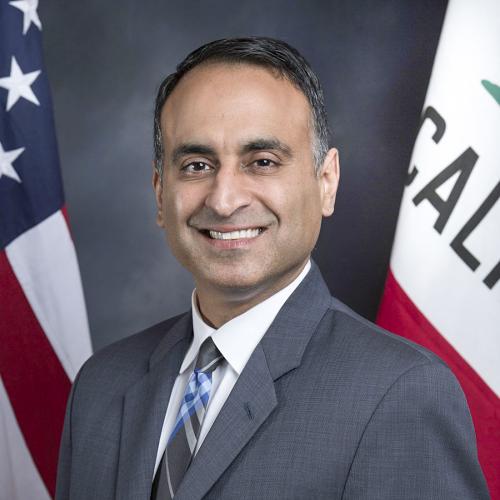
Asm. Ash Kalra
Sponsored bills
Existing law, the Healthy Workplaces, Healthy Families Act of 2014 (act) , establishes requirements relating to paid sick days and paid sick leave, as described. The act excludes specified employees from its provisions, including an employee covered by a valid collective bargaining agreement, as described (CBA employees) . This bill would exclude railroad carrier employers and their employees from the act's provisions. Existing law, with certain exceptions, entitles an employee to paid sick days for certain purposes if the employee works in California for the same employer for 30 or more days within a year from the commencement of employment. Existing law imposes procedural requirements on employers regarding the use of paid sick days, including by prohibiting retaliation for using paid sick days, by prohibiting the imposition of certain conditions on the use of paid sick days, and by requiring the use of paid sick days for specified health care and situations. Existing law requires the leave to be accrued at a rate of no less than one hour for every 30 hours worked, and to be available for use beginning on the 90th day of employment. This bill would extend the above-described procedural requirements on the use of paid sick days to CBA employees. Existing law authorizes an employer to use a different accrual method as long as an employee has no less than 24 hours of accrued sick leave or paid time off by the 120th calendar day of employment or each calendar year, or in each 12-month period. Existing law also provides that an employer may satisfy the accrual requirements by providing not less than 24 hours or 3 days of paid sick leave that is available to the employee to use by the completion of the employee's 120th calendar day of employment. This bill would modify the employer's alternate sick leave accrual method to additionally require that an employee have no less than 40 hours of accrued sick leave or paid time off by the 200th calendar day of employment or each calendar year, or in each 12-month period. The bill would modify that satisfaction provision to authorize an employer to satisfy accrual requirements by providing, in addition to the existing criteria for satisfaction above, not less than 40 hours or 5 days of paid sick leave that is available to the employee to use by the completion of the employee's 200th calendar day of employment. Existing law requires accrued paid sick days to carry over to the following year of employment. Existing law, however, authorizes an employer to limit an employee's use of accrued paid sick days to 24 hours or 3 days in each year of employment, calendar year, or 12-month period. Under existing law, this provision is satisfied and no accrual or carryover is required if the full amount of leave is received at the beginning of each year of employment, calendar year, or 12-month period. Existing law defines "full amount of leave" for these purposes to mean 3 days or 24 hours. This bill would raise the employer's authorized limitation on the use of carryover sick leave to 40 hours or 5 days in each year of employment. The bill would redefine "full amount of leave" to mean 5 days or 40 hours. Existing law also entitles individual providers of in-home supportive services and waiver personal care services, as defined, to paid sick days in specified amounts in accordance with minimum wage increases, up to a maximum of 24 hours or 3 days each year of employment when the minimum wage has reached $15 per hour. Existing law authorizes the State Department of Social Services to implement and interpret these provisions. This bill would increase the sick leave accrual rate for these providers to 40 hours or 5 days in each year of employment, beginning January 1, 2024. Under existing law, an employer is not required to provide additional paid sick days pursuant to these provisions if the employer has a paid leave or paid time off policy, makes an amount of leave available to employees that may be used for the same purposes and under the same conditions as these provisions, and the policy satisfies one of specified conditions. Under that law, one of those conditions requires the employer to have provided paid sick leave or paid time off in a manner that results in an employee's eligibility to earn at least 3 days or 24 hours of sick leave or paid time off within 9 months of employment. This bill would change that condition so that the employee must be eligible to earn at least 5 days or 40 hours of sick leave or paid time off within 6 months of employment. Under existing law, an employer has no obligation under these provisions to allow an employee's total accrual of paid sick leave to exceed 48 hours or 6 days, provided that an employee's rights to accrue and use paid sick leave are not otherwise limited, as specified. This bill would increase those accrual thresholds for paid sick leave to 80 hours or 10 days. Existing paid sick days law sets forth provisions on, among other things, compensation for accrued, unused paid sick days upon specified employment events, the lending of paid sick days to employees, written notice requirements, the calculation of paid sick leave, reasonable advance notification requirements, and payment of sick leave taken. This bill would provide that these provisions shall preempt any local ordinance to the contrary. The bill would include findings that changes proposed by this bill address a matter of statewide concern rather than a municipal affair and, therefore, apply to all cities, including charter cities.
(1) Existing law establishes an accidental release prevention program for the state. Under that law, stationary sources subject to the accidental release prevention program may be required to prepare and submit a risk management plan (RMP) to prevent accidental releases of certain substances. Existing law imposes criminal penalties upon a stationary source that knowingly violates the requirements of the accidental release prevention program. Existing law requires an owner or operator of a stationary source that is engaged in certain petroleum-related activities, and with one or more covered processes that require the preparation and submission of an RMP, when contracting for the performance of construction, alteration, demolition, installation, repair, or maintenance work at the stationary source, to require that its contractors and any subcontractors use a skilled and trained workforce to perform all onsite work within an apprenticeable occupation in the building and construction trades. Existing law defines "skilled and trained workforce" to include, among other criteria, skilled journeypersons who are paid at least a rate equivalent to the applicable prevailing hourly wage rate. This bill would extend that workforce requirement to contracts awarded, extended, or renewed on or after January 1, 2024, by an owner or operator of a stationary source that is engaged in manufacturing hydrogen, biofuels, or certain specified chemicals, or in capturing, sequestering, or using carbon dioxide in specified conditions. By expanding the scope of a crime, and by extending the laws enforced by uniform program agencies to additional stationary source owners or operators and thereby imposing additional duties, the bill would impose a state-mandated local program. (2) Existing law provides for the establishment of apprenticeship programs in various trades, to be approved by the Chief of the Division of Apprenticeship Standards within the Department of Industrial Relations in any trade in the state or in a city or trade area whenever the apprentice training needs justify the establishment. Existing law requires apprentice training needs in the building and construction trades to be deemed to justify a new apprentice program only if one or more specified conditions are met, including, but not limited to, there being sufficient capacity for apprentices in a geographic area. This bill would require an above-described stationary source to be considered when determining whether an existing apprenticeship program has sufficient capacity for apprentices in a geographic area. (3) The California Constitution requires the state to reimburse local agencies and school districts for certain costs mandated by the state. Statutory provisions establish procedures for making that reimbursement. This bill would provide that no reimbursement is required by this act for specified reasons.
Existing law authorizes any employer, whose employee has suffered unlawful violence or a credible threat of violence from any individual that can reasonably be construed to be carried out or to have been carried out at the workplace, to seek a temporary restraining order and an order after hearing on behalf of the employee and other employees at the workplace, as described. This bill, commencing January 1, 2025, would also authorize a collective bargaining representative of an employee, as described, to seek a temporary restraining order and an order after hearing on behalf of the employee and other employees at the workplace, as described. The bill would require an employer or collective bargaining representative of an employee, before filing such a petition, to provide the employee who has suffered unlawful violence or a credible threat of violence from any individual an opportunity to decline to be named in the temporary restraining order. Under the bill, an employee's request to not be named in the temporary restraining order would not prohibit an employer or collective bargaining representative from seeking a temporary restraining order on behalf of other employees at the workplace, and, if appropriate, other employees at other workplaces of the employer. The bill would make various conforming changes. Existing law, the California Occupational Safety and Health Act of 1973, imposes safety responsibilities on employers and employees, including the requirement that an employer establish, implement, and maintain an effective injury prevention program, and makes specified violations of these provisions a crime. The act is enforced by the Division of Occupational Safety and Health (division) within the Department of Industrial Relations, including the enforcement of standards adopted by the Occupational Safety and Health Standards board (standards board) . This bill would require an employer, as specified, to also establish, implement, and maintain, at all times in all work areas, an effective workplace violence prevention plan containing specified information. The bill would require the employer to record information in a violent incident log for every workplace violence incident, as specified. The bill would require the employer to provide effective training to employees on the workplace violence prevention plan, among other things, and provide additional training when a new or previously unrecognized workplace violence hazard has been identified and when changes are made to the plan. The bill would require records of workplace violence hazard identification, evaluation, and correction and training records to be created and maintained, and violent incident logs and workplace incident investigation records to be maintained, as specified. The bill would require certain records to be made available to the division, employees, and employee representatives, as specified. The bill would make these requirements operative on and after July 1, 2024. Existing law requires the division to issue, with reasonable promptness, a citation to an employer if, upon inspection or investigation, the division believes the employer has violated any standard, rule, order, or regulation established pursuant to specified provisions of law. Existing law specifies procedures for issuance of the citation and provides there is a rebuttable presumption that a violation is enterprise-wide if an employer has multiple worksites and the division has evidence of a pattern or practice of the same violation or violations committed by the employer involving more than one of their worksites, or if the employer has a written policy or procedure that violates specified provisions of law, except as provided. Existing law also authorizes the division to impose certain civil penalties pursuant to specified law, including when any employer violates any occupational safety or health standard, order, or special order, depending on whether the violation is serious. This bill would require the division to enforce the workplace violence prevention plan and related requirements by issuance of a citation and a notice of civil penalty, as specified. The bill would authorize the appeal of a citation and penalty, as specified. The bill would require the division to propose, no later than December 1, 2025, and the standards board to adopt, no later than December 31, 2026, standards regarding the plan required by the bill, as specified. This bill would also require every employer to include the workplace violence prevention plan as part of their effective injury prevention program, a violation of which is a misdemeanor in specified circumstances. By expanding the scope of a crime, the bill would impose a state-mandated local program. This bill would incorporate additional changes to Section 527.8 of the Code of Civil Procedure added by SB 428 to be operative only if this bill and SB 428 are enacted and this bill is enacted last. The California Constitution requires the state to reimburse local agencies and school districts for certain costs mandated by the state. Statutory provisions establish procedures for making that reimbursement. This bill would provide that no reimbursement is required by this act for a specified reason.
Existing law, the Local Agency Public Construction Act, regulates contracting by local agencies, including counties and special districts. The act includes specific provisions for contracting by counties and contracting for county highways. Those provisions include change order authorization for construction contracts, as prescribed, and impose specified caps on the extra cost of any change order, varying with the value of the original contract. The act prohibits a change or alteration cost from exceeding $210,000. The act, until January 1, 2027, authorizes the County of Los Angeles to be subject to a change order cap of $400,000 for construction contracts whose original cost exceeds $25,000,000 and of $750,000 for those contracts whose original cost exceeds $50,000,000, both of which are adjusted annually to reflect the percentage change in the California Consumer Price Index. The act provides a similar authorization for the County of Los Angeles with regard to county highways. The act requires the County of Los Angeles to modify no more than 7 contracts pursuant to these provisions and requires the County of Los Angeles to provide a review report to the Assembly Committee on Local Government and the Senate Committee on Governance and Finance no later than July 1, 2026. This bill would authorize the County of Santa Clara to be subject to a change order of $400,000 for contracts whose original cost exceeds $25,000,000 and of $750,000 for contracts whose original cost exceeds $50,000,000, adjusted annually to reflect the percentage change in the California Consumer Price Index. These change order caps would apply to construction contracting by the county and contracting for county highways. The bill would require the County of Santa Clara to modify no more than 7 contracts pursuant to these provisions and would require the County of Santa Clara provide a review report to the Assembly Committee on Local Government and the Senate Committee on Governance and Finance no later than July 1, 2026. This bill would make legislative findings and declarations as to the necessity of a special statute for the County of Santa Clara.
Existing law, after a tenant has continuously and lawfully occupied a residential real property for 12 months, prohibits the owner of the residential real property from terminating the tenancy without just cause and requires that just cause to be stated in the written notice to terminate tenancy. Existing law distinguishes between at-fault just cause and no-fault just cause and defines no-fault just cause to mean intent to occupy the residential real property by the owner or the owner's spouse, domestic partner, children, grandchildren, parents, or grandparents, withdrawal of the residential real property from the rental market, the owner complying with specified government orders that necessitate vacating the real property, and intent to demolish or to substantially remodel the residential real property. This bill would, with respect to the no-fault just cause related to an eviction based on an intent to occupy the residential real property, require, among other things, that the owner, as defined, or the owner's spouse, domestic partner, children, grandchildren, parents, or grandparents occupy the residential real property for a minimum of 12 continuous months as the person's primary residence, as provided. The bill would also, with respect to the no-fault just cause related to withdrawal of the residential real property from the rental market, require the rental units at the rental property be withdrawn from the rental market, as prescribed. The bill would require an owner who displaces a tenant to substantially remodel or demolish a unit to provide the tenant with written notice providing the tenant with specified information, including a description of the substantial remodel to be completed and the expected duration of the repairs, or the expected date by which the property will be demolished, and a copy of permits required to undertake the substantial remodel or demolition, as specified. This bill would also prescribe new enforcement mechanisms with respect to the provisions described above, including by making an owner who attempts to recover possession of a rental unit in material violation of those provisions liable to the tenant in a civil action for damages of up to 3 times the actual damages, in addition to punitive damages. The bill would authorize the Attorney General and the city attorney or county counsel, within whose jurisdiction the rental unit is located, to bring actions for injunctive relief against the owner, as specified. Existing law, until January 1, 2030, prohibits an owner of residential real property from, over the course of any 12-month period, increasing the gross rental rate for a dwelling or a unit more than 5% plus the percentage change in the cost of living, or 10%, whichever is lower, of the lowest gross rental rate charged for that dwelling or unit at any time during the 12 months before the effective date of the increase, subject to specified conditions. This bill would make an owner who demands, accepts, receives, or retains any payment of rent in excess of the maximum rent increase allowed, as prescribed, liable in a civil action to the tenant from whom those payments are demanded, accepted, received, or retained for certain relief, including, upon a showing that the owner has acted willfully or with oppression, fraud, or malice, damages up to 3 times the amount by which any payment demanded, accepted, received, or retained exceeds the maximum allowable rent. This bill would authorize the Attorney General and the city attorney or county counsel, within whose jurisdiction the residential property is located, to enforce the bill's provisions and bring an action for injunctive relief, as specified. This bill would also make a technical, nonsubstantive change to those provisions. The bill would provide that its provisions become effective on April 1, 2024.
(1) Existing law provides for the licensure and regulation of various categories of medical professionals by boards within the Department of Consumer Affairs, including, among others, the Medical Board of California and the Dental Board of California. Existing law makes specified actions by licensed health care providers unprofessional conduct and, in certain cases, a criminal offense. This bill would prohibit a healing arts board, as defined, from denying an application for a license or imposing discipline upon a licensee or health care practitioner on the basis of a civil judgment, criminal conviction, or disciplinary action in another state if that judgment, conviction, or disciplinary action is based solely on the application of another state's law that interferes with a person's right to receive sensitive services, as defined, that would be lawful if provided in this state, regardless of the patient's location. The bill would further provide that the performance, recommendation, or provision of a legally protected health care activity by a licensee or health care practitioner acting within their scope of practice for a patient who resides in a state in which the performance, recommendation, or provision of that legally protected health care activity is illegal, does not, by itself, constitute professional misconduct, upon which discipline or other penalty may be taken. In this connection, the bill would define a "legally protected health care activity" to mean specified acts, including, among others, the exercise and enjoyment, or attempted exercise and enjoyment, by a person of rights related to reproductive health care services or gender-affirming health care services secured by the Constitution or laws of this state or the provision of by a health care service plan contract or a policy, or a certificate of health insurance, that provides for those services. (2) Existing law, the Confidentiality of Medical Information Act, generally prohibits a health care provider, health care service plan, contractor, or corporation from sharing, selling, using for marketing, or otherwise using medical information for a purpose not necessary to provide health care services to the patient. This bill would prohibit a person or business from collecting, using, disclosing, or retaining the personal information of a person who is physically located at, or within a precise geolocation of, a family planning center, as defined, except as necessary to perform the services or provide the goods requested. The bill would prohibit the sale or sharing of this information. The bill would authorize an aggrieved person or entity to institute and prosecute a civil action for a violation of these provisions and specify damages and costs authorized to be recovered. The bill would specify these provisions do not apply to a provider of health care, a health care service plan, or a contractor, as defined. (3) Existing law, the Reproductive Privacy Act, declares as contrary to the public policy of this state a law of another state that authorizes a person to bring a civil action against a person or entity that engages in certain activities relating to obtaining or performing an abortion. Existing law prohibits the state from applying an out-of-state law described above to a case or controversy in state court or enforcing or satisfying a civil judgment under the out-of-state law. This bill would state that California law governs in any action against a person who provides or receives by any means, including telehealth, reproductive health care services or gender-affirming health care services, as specified, if the care was legal in the state in which it was provided at the time of the challenged conduct. The bill would state that interference with the right to reproductive health care services, gender-affirming health care services, or gender-affirming mental health care services, as those terms are defined, is against the public policy of California. The bill would declare as a violation of public policy a public act or record of a foreign jurisdiction that, among other things, authorizes a person to bring a civil action against a person, provider, or other entity in California for, among other acts, seeking or providing reproductive health care services, gender-affirming health care services, or gender-affirmative mental health care services. The bill would declare the intent of the Legislature that nothing in the bill be interpreted to undermine or decrease any existing protections under California law. The bill would authorize a person to institute a civil action against a person who engages in abusive litigation, as defined, that infringes on or interferes with a legally protected health care activity, among other things. The bill would specify damages and costs authorized to be recovered and would specify circumstances under which a court may exercise jurisdiction over a person in such a civil action. The bill would authorize an aggrieved person, provider, or other entity, as defined, to move to modify or quash a subpoena issued in connection with abusive litigation. The bill would specify the laws of California govern in a case or controversy heard in California related to reproductive health care services, gender-affirming health care services, or gender-affirming mental health care services, except as required by federal law. (4) Existing law permits a judgment creditor to apply for the entry of a judgment based on a sister state judgment by filing an application with a superior court and requires the court clerk to enter a judgment based on the application. Existing law also requires courts to grant a stay enforcement of such a judgment under specified circumstances. This bill would additionally require a court to grant a stay of enforcement of a sister state judgment if a money judgment or lien on real property was obtained for the exercise of a right guaranteed by the United States Constitution, a right guaranteed by the California Constitution, or against a person or entity for aiding and abetting the exercise of those rights, as specified. (5) Existing law prohibits an abortion from being performed upon an unemancipated minor unless she first has given her written consent to the abortion and also has obtained the written consent of one of her parents or legal guardian. Existing law provides specified judicial procedures to be followed if one or both of the unemancipated pregnant minor's or her guardian refuse to consent or if the minor elects not to seek their consent. This bill would repeal these provisions. (6) Existing law defines murder as the unlawful killing of a human being, or a fetus, with malice aforethought. Existing law creates an exemption for a person who commits an act that results in the death of a fetus under specific circumstances, including if the act is solicited, aided, abetted, or consented to by the person pregnant with the fetus. This bill would expand that exemption to include a person pregnant with a fetus who committed the act that resulted in the death of the fetus. (7) Existing law prohibits a state or local law enforcement agency or officer from knowingly arresting or knowingly participating in the arrest of any person for performing, supporting, or aiding in the performance of an abortion or for obtaining an abortion, if the abortion is lawful in this state. Existing law prohibits a state or local public agency from cooperating with or providing information to an individual or agency from another state or a federal law enforcement agency, as specified, regarding a lawful abortion. This bill would additionally prohibit a state or local government employee or a person acting on behalf of the local or state government, among others, from providing information or expending resources in furtherance of an investigation that seeks to impose civil or criminal liability or professional sanctions on an individual for a legally protected health care activity that occurred in this state or that would be legal if it occurred in this state. The bill would require any out-of-state subpoena, warrant, wiretap order, pen register trap and trace order, or other legal process to include an affidavit or declaration under penalty of perjury that the discovery request is not in connection with an out-of-state proceeding relating to a legally protected health care activity, except as specified. By requiring an individual seeking to discovery under these provisions to declare certain conditions are present under penalty of perjury, this bill would expand the crime of perjury and impose a state-mandated local program. (8) Existing law authorizes a magistrate to issue a warrant, upon application by a bail bondsman, as described, for an individual fleeing bail in another state and found in this state upon a finding of probable cause for believing that the person is a fugitive. Existing law makes it a misdemeanor to take a person who is a fugitive admitted to bail in another state into custody, except pursuant to a magistrate's order. This bill would prohibit a magistrate from issuing a warrant for the arrest of an individual whose alleged offense or conviction is for the violation of the laws of another state that authorize a criminal penalty to an individual performing, receiving, supporting, or aiding in the performance or receipt of sexual or reproductive health care, including, but not limited to, an abortion, contraception, or gender-affirming care if the sexual or reproductive health care is lawful under the laws of this state, regardless of the recipient's location. The bill would make a bail bondsman who takes such an individual into custody without a warrant guilty of an infraction punishable by a fine of $5,000 and ineligible for and subject to forfeiture of specified licenses. The bill would create a civil cause of action for an individual taken into custody in violation of this provision. By creating a new crime, this bill would create a state-mandated local program. (9) Existing law, the Bail Fugitive Recovery Persons Act, prohibits a person, other than a certified law enforcement officer, from apprehending, detaining, or arresting a bail fugitive unless the person is a licensed bail fugitive recovery agent, or both a bail licensee and private investigator who are also bail fugitive recovery agents. Existing law makes a violation of the Bail Fugitive Recovery Persons Act a misdemeanor. This bill would prohibit a person authorized under the act from apprehending, detaining, or arresting a bail fugitive who has been admitted to bail in another state and whose alleged offense or conviction is for the violation of a law of another state that authorizes a criminal penalty to an individual performing, receiving, supporting, or aiding in the performance or receipt of sexual or reproductive health care, including, but not limited to, abortion, contraception, or gender-affirming care, if the sexual or reproductive health care is lawful under the laws of this state, regardless of the recipient's location. The bill would make a violation of this provision an infraction punishable by a fine of $5,000 and make the authorized individual ineligible for and subject to forfeiture of specified licenses. The bill would create a civil cause of action for an individual taken into custody in violation of this provision. By expanding the application of a crime, this bill would create a state-mandated local program. (10) Existing law establishes a process by which a material witness in this state may be ordered to attend and testify in a pending prosecution or grand jury in another state. This bill would prohibit a judge from ordering a witness to appear pursuant to these provisions if the criminal prosecution is based on the laws of another state that authorizes a criminal penalty to an individual performing, receiving, supporting, or aiding in the performance or receipt of sexual or reproductive health care, including, but not limited to, an abortion, contraception, or gender-affirming care if the sexual or reproductive health care is lawful under the laws of this state. (11) Existing law provides for the California Work Opportunity and Responsibility to Kids (CalWORKs) program, under which each county provides cash assistance and other benefits to qualified low-income families and individuals. Existing federal law establishes the federal Supplemental Nutrition Assistance Program (SNAP) , known in California as CalFresh, under which supplemental nutrition assistance benefits allocated to the state by the federal government are distributed to eligible individuals by each county. Existing federal regulations disqualify a fleeing felon, as defined, from receiving benefits under the CalFresh program. This bill would require a determination that a person is fleeing to avoid prosecution for purposes of eligibility in the CalWORKs program if a federal, state, or local law enforcement officer in their official capacity presents an outstanding felony arrest warrant containing specified National Crime Information Center Uniform Offense Classification Codes. (12) Existing law refers to "unborn children" and "unborn persons" in various contexts, including, among others, defining low-risk pregnancy conditions for determining the scope of authorization of a certificate to practice nurse-midwifery, defining active labor for health facility licensing provisions, and defining spouse for California State Teachers' Retirement System benefits. This bill would replace "unborn child" and "unborn person" with "fetus" in those provisions. (13) Existing law also refers to "unborn persons" in various contexts, including naming unknown defendants in real property actions, allowing a court to appoint a guardian ad litem to advocate for inadequately represented interests in probate proceedings, allowing a guardian ad litem to give consent on behalf of a beneficiary who lacks legal capacity, and providing an exception for requiring a personal representative to file an account of the distributions of a decedent's estate. This bill would replace "unborn person" with "unborn beneficiary" in those provisions. (14) The California Constitution requires the state to reimburse local agencies and school districts for certain costs mandated by the state. Statutory provisions establish procedures for making that reimbursement. This bill would provide that no reimbursement is required by this act for a specified reason. (15) This bill would incorporate additional changes to Section 2746.5 of the Business and Professions Code proposed by SB 667 to be operative only if this bill and SB 667 are enacted and this bill is enacted last.
Existing law declares another state's law authorizing a civil action against a person or entity that receives or seeks, performs or induces, or aids or abets the performance of an abortion, or who attempts or intends to engage in those actions, to be contrary to the public policy of this state, and prohibits the application of that law to a controversy in state court and the enforcement or satisfaction of a civil judgment received under that law. This bill would specifically include within these provisions, in addition to abortion performers, abortion providers. Existing law, the Knox-Keene Health Care Service Plan Act of 1975, provides for the licensure and regulation of health care service plans by the Department of Managed Health Care and makes a willful violation of the act a crime. Existing law also provides for the regulation of health insurers by the Department of Insurance. The bill would also prohibit a contract issued, amended, or renewed on or after January 1, 2024, between a health care service plan or health insurer and a health care services provider from containing any term that would result in termination or nonrenewal of the contract or otherwise penalize the provider based on a civil judgment, criminal conviction, or another professional disciplinary action in another state if the judgment, conviction, or professional disciplinary action is solely based on the application of another state's law that interferes with a person's right to receive care that would be lawful if provided in California. The bill would also prohibit a health care service plan or health insurer from discriminating against a licensed provider solely on the basis of a civil judgment, criminal conviction, or another professional disciplinary action in another state if the judgment, conviction, or professional disciplinary action is solely based on the application of another state's law that interferes with a person's right to receive care that would be lawful if provided in California. Because a willful violation of these provisions by a health care service plan would be a crime, the bill would impose a state-mandated local program. Existing law requires that the State Department of Public Health automatically suspend as a Medi-Cal provider any individual or entity that has a license, certificate, or other approval to provide health care that is revoked or suspended by a federal, California, or another state's licensing, certification, or approval authority, has otherwise lost that license, certificate, or approval, or has surrendered that license, certificate, or approval while a disciplinary hearing was pending. The bill would also authorize the department, subject to obtaining necessary federal approvals and the availability of federal financial participation under Medi-Cal, to elect to not suspend an individual or entity as a provider in the Medi-Cal program if the revocation, suspension, or loss of the individual or entity's license, certification, or approval authority in another state or the pending disciplinary hearing during which the individual or entity surrendered the license, certification, or approval authority in another state is based solely on conduct that is not deemed to be unprofessional conduct under California law. The bill would also require the department to seek any necessary federal approvals to implement these provisions. Under existing law, the Director of Health Care Services is authorized, for purposes of administering the Medi-Cal program, to suspend a provider of service from further participation under the program for specified reasons, including conviction of any felony or any misdemeanor involving fraud, abuse of the Medi-Cal program or any patient, or otherwise substantially related to the qualifications, functions, or duties of a provider of service. Existing law requires the director, upon receipt of written notification from the Secretary of the United States Department of Health and Human Services that a physician or other individual practitioner has been suspended from participation in the Medicare or Medicaid programs, to promptly suspend the practitioner from participation in the Medi-Cal program. Existing law also requires the Director of Health Care Services to notify the administrative director of a suspension of a physician from participation in the Medi-Cal program imposed pursuant to provisions authorizing the director to suspend a provider of service from participation. This bill would authorize the director, subject to obtaining necessary federal approvals and the availability of federal financial participation under Medi-Cal, to request a waiver under federal law, as permitted, if the provider's suspension from participating in the Medicare or Medicaid program was based solely on conduct that is not deemed to be unprofessional conduct under California law. The bill would also require the department to seek any necessary federal approvals to implement these provisions. The California Constitution requires the state to reimburse local agencies and school districts for certain costs mandated by the state. Statutory provisions establish procedures for making that reimbursement. This bill would provide that no reimbursement is required by this act for a specified reason.
Existing law authorizes a court to issue an ex parte gun violence restraining order prohibiting the subject of the petition from having custody or control of, owning, purchasing, possessing, or receiving, or attempting to purchase or receive a firearm or ammunition when it is shown that there is a substantial likelihood that the subject of the petition poses a significant danger of harm to themselves or to another person in the near future by having custody or control of, owning, purchasing, possessing, or receiving a firearm, and that the order is necessary to prevent personal injury to themselves or to another. Existing law requires the court, when determining whether grounds for a gun violence restraining order exists, to consider evidence of, among other things, a recent threat of violence by the subject of the petition, and also authorizes the court to consider evidence of, among other things, recent acquisition of firearms, ammunition, or other deadly weapons by the subject of the petition. This bill would additionally authorize the court to consider evidence of acquisition of body armor when determining whether grounds for a gun violence restraining order exist.
(1) Existing law requires any person who manufactures more than 3 firearms in a year to be licensed by the state as a firearms manufacturer. Existing law prohibits any person from using a three-dimensional printer to manufacture a firearm unless that person is a state-licensed firearms manufacturer. Existing law prohibits any person from using a computer numerical control (CNC) milling machine to manufacture a firearm unless the person is a federally licensed manufacturer or importer. This bill would instead require anybody who uses a three-dimensional printer or CNC milling machine to manufacture a firearm to be a state-licensed manufacturer. (2) Existing law prohibits the sale, purchase, possession, or receipt of a CNC milling machine that has the sole or primary function of manufacturing firearms to or by anybody in the state other than a federally licensed manufacturer or importer. This bill would also prohibit the sale, purchase, possession, or receipt of a three-dimensional printer that has the sole or primary function of manufacturing firearms to or by any person in the state other than a state-licensed firearms manufacturer, as specified. (3) Existing law commencing on July 1, 2023, requires a firearm industry member, as defined, to take reasonable precautions to ensure that they do not sell, distribute, or provide a firearm-related product, as defined, to a downstream distributor or retailer who fails to establish reasonable controls or adhere to laws pertaining to unfair methods of competition, unfair or deceptive acts or practices, and false advertising, and prohibits a firearm industry member from manufacturing, marketing, importing, or offering for sale a firearm-related product that is abnormally dangerous and likely to create an unreasonable risk of harm to public health and safety, and also authorizes a person who has suffered harm, or the Attorney General, or city or county attorneys, to bring a civil action against a firearm industry member for an act or omission in violation of these requirements This bill would add three-dimensional printers and CNC milling machines, as specified, to the definition of firearm-related products. (4) The bill would additionally provide that a civil action may be brought against a person who distributes any code or digital instructions to a specified person for the manufacture of a firearm using a three-dimensional printer or CNC milling machine, or who violates specified provisions relating to the use, sale, marketing, advertising, transfer, possession, purchase, or receipt of a CNC milling machine or three-dimensional printer. The bill would specify that a person is strictly liable for any personal injury or property damage, as specified, caused by any firearm manufactured using the distributed code or manufactured by a CNC milling machine, three-dimensional printer, or similar machine. The bill would authorize the Attorney General, a county counsel, or a city attorney to bring an action seeking a civil penalty not to exceed $25,000 for each violation as well as injunctive relief. (5) The bill would declare its provisions to be severable. (6) By expanding existing crimes, this bill would impose a state-mandated local program. The California Constitution requires the state to reimburse local agencies and school districts for certain costs mandated by the state. Statutory provisions establish procedures for making that reimbursement. This bill would provide that no reimbursement is required by this act for a specified reason.