

Existing law establishes the California Violence Intervention and Prevention (CalVIP) Grant Program, administered by the Board of State and Community Corrections, to award competitive grants for the purpose of violence intervention and prevention. Existing law imposes various taxes, including taxes on the privilege of engaging in certain activities. The Fee Collection Procedures Law, the violation of which is a crime, provides procedures for the collection of certain fees and surcharges. This bill, the Gun Violence Prevention and School Safety Act, would, commencing July 1, 2024, impose an excise tax in the amount of 11% of the gross receipts from the retail sale in this state of a firearm, firearm precursor part, and ammunition, as specified. The tax would be collected by the state pursuant to the Fee Collection Procedures Law. The bill would require that the revenues collected be deposited in the Gun Violence Prevention and School Safety Fund, which the bill would establish in the State Treasury. The bill would require the moneys received in the fund to be used to fund various gun violence prevention, education, research, response, and investigation programs, as specified. The bill would require the Director of Finance to transfer, as a loan, $2,400,000 from the General Fund to the California Department of Tax and Fee Administration to implement these provisions, as specified. The bill would require each licensed firearms dealer, firearms manufacturer, and ammunition vendor to register with the department for a certificate, as specified. The bill would also provide procedures for the issuance, revocation, and reinstatement of a permit. This bill would include a change in state statute that would result in a taxpayer paying a higher tax within the meaning of Section 3 of Article XIIIA of the California Constitution, and thus would require for passage the approval of 23 of the membership of each house of the Legislature. Because this bill would expand the scope of the Fee Collection Procedures Law, the violation of which is a crime, this bill would impose a state-mandated local program. The California Constitution requires the state to reimburse local agencies and school districts for certain costs mandated by the state. Statutory provisions establish procedures for making that reimbursement. This bill would provide that no reimbursement is required by this act for a specified reason.
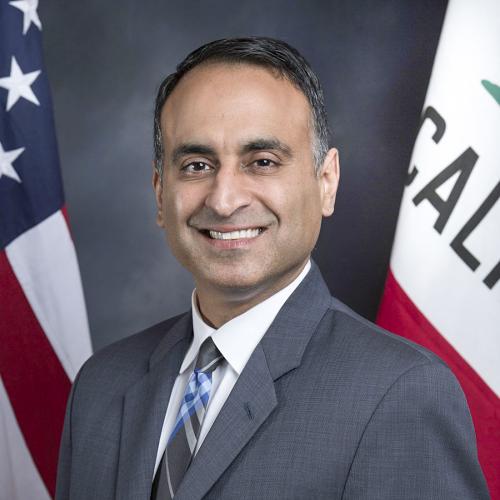
Asm. Ash Kalra
Sponsored bills
Existing law establishes the system of public elementary and secondary schools in this state and provides for the establishment of local educational agencies to operate these schools and provide instruction to pupils. Existing law states the policy of the State of California to afford all persons in public schools, regardless of their disability, gender, gender identity, gender expression, nationality, race or ethnicity, religion, sexual orientation, or any other specified characteristic, equal rights and opportunities in the educational institutions of the state. Existing law requires, no later than July 1, 2021, the State Department of Education to develop resources or, as appropriate, update existing resources for in-service training on schoolsite and community resources for the support of lesbian, gay, bisexual, transgender, queer, and questioning (LGBTQ) pupils, and strategies to increase support for LGBTQ pupils, as specified. Existing law encourages schools operated by a school district or county office of education and charter schools to use those resources to provide training at least once every 2 years to teachers and other certificated employees of those schools that serve pupils in grades 7 to 12, inclusive. This bill would require the State Department of Education, on or before July 1, 2025, to finalize the development of an online training delivery platform and an online training curriculum to support LGBTQ cultural competency training for teachers and other certificated employees, as specified. The bill would delete the above-described encouragement and instead would require, commencing with the 2025–26 school year and ending with the completion of the 2029–30 school year, each local educational agency, as defined, serving pupils in grades 7 to 12, inclusive, to use the online training delivery platform and curriculum, or an in-service alternative, to provide at least one hour of required training annually to teachers and other certificated employees at those schools, as provided. The bill would require each local educational agency to maintain records documenting the training, as provided. The bill would require the department to monitor compliance with the training requirement as part of the department's annual compliance monitoring of state and federal programs. The bill would require the department, within 9 months of the completion of the 5-year training period, to report data from that compliance monitoring to the Legislature, and post the report on the department's internet website, as provided. By imposing additional duties on local educational agencies, the bill would impose a state-mandated local program. The bill would require these provisions to be known as the Safe and Supportive Schools Act. This bill would make these requirements inoperative on July 1, 2031, and would repeal them as of January 1, 2032. The California Constitution requires the state to reimburse local agencies and school districts for certain costs mandated by the state. Statutory provisions establish procedures for making that reimbursement. This bill would provide that, if the Commission on State Mandates determines that the bill contains costs mandated by the state, reimbursement for those costs shall be made pursuant to the statutory provisions noted above.
The measure would apply to the United States Congress to call a constitutional convention under Article V of the Constitution of the United States for the purpose of proposing a constitutional amendment relating to firearms, as specified.
This measure would denounce the actions of the Tennessee House of Representatives in expelling two African-American Democratic Representatives.
(1) The California Constitution prohibits the ad valorem tax rate on real property from exceeding 1% of the full cash value of the property, subject to certain exceptions. This measure would create an additional exception to the 1% limit that would authorize a city, county, city and county, or special district to levy an ad valorem tax to service bonded indebtedness incurred to fund the construction, reconstruction, rehabilitation, or replacement of public infrastructure, affordable housing, including downpayment assistance, or permanent supportive housing, or the acquisition or lease of real property for those purposes, if the proposition proposing that tax is approved by 55% of the voters of the city, county, city and county, or special district, as applicable, and the proposition includes specified accountability requirements. The measure would prohibit a city, county, city and county, or special district from placing a proposition on the ballot pursuant to these provisions if the voters have previously approved a proposition pursuant to these provisions or the below special tax provisions until all funds from the previous proposition are committed to programs and projects listed in the specific local program or ordinance, as described. The measure, subject to certain vote thresholds, would authorize the Legislature to enact laws establishing additional accountability measures and laws for the downpayment assistance programs authorized by the measure, as specified. The measure would specify that these provisions apply to any city, county, city and county, or special district measure imposing an ad valorem tax to pay the interest and redemption charges on bonded indebtedness for these purposes that is submitted at the same election as this measure. (2) The California Constitution conditions the imposition of a special tax by a local government upon the approval of 23 of the voters of the local government voting on that tax. This measure would authorize a local government to impose, extend, or increase a sales and use tax or transactions and use tax imposed in accordance with specified law or a parcel tax for the purposes of funding the construction, reconstruction, rehabilitation, or replacement of public infrastructure, affordable housing, including downpayment assistance, or permanent supportive housing, or the acquisition or lease of real property for those purposes, if the proposition proposing that tax is approved by a majority vote of the membership of the governing board of the local government and by 55% of its voters voting on the proposition and the proposition includes specified accountability requirements. The measure would prohibit a local government from placing a proposition on the ballot pursuant to these provisions if the voters have previously approved a proposition pursuant to these provisions or the above ad valorem tax provisions until all funds from the previous proposition are committed to programs and projects listed in the specific local program or ordinance, as described. The measure, subject to certain vote thresholds, would authorize the Legislature to enact laws establishing additional accountability measures and laws for the downpayment assistance programs authorized by the measure, as specified. This measure would also make conforming changes to related provisions. The measure would specify that these provisions apply to any local measure imposing, extending, or increasing a sales and use tax, transactions and use tax, or parcel tax for these purposes that is submitted at the same election as this measure. (3) The California Constitution prohibits specified local government agencies from incurring any indebtedness exceeding in any year the income and revenue provided in that year, without the assent of 23 of the voters and subject to other conditions. In the case of a school district, community college district, or county office of education, the California Constitution permits a proposition for the incurrence of indebtedness in the form of general obligation bonds for the construction, reconstruction, rehabilitation, or replacement of school facilities, including the furnishing and equipping of school facilities, or the acquisition or lease of real property for school facilities, to be adopted upon the approval of 55% of the voters of the district or county, as appropriate, voting on the proposition at an election. This measure would expressly prohibit a special district, other than a board of education or school district, from incurring any indebtedness or liability exceeding any applicable statutory limit, as prescribed by the statutes governing the special district. The measure would also similarly require the approval of 55% of the voters of the city, county, city and county, or special district, as applicable, to incur bonded indebtedness, exceeding in any year the income and revenue provided in that year, that is in the form of general obligation bonds issued to fund the construction, reconstruction, rehabilitation, or replacement of public infrastructure, affordable housing, or permanent supportive housing projects, if the proposition proposing that bond includes specified accountability requirements. The measure would specify that this 55% threshold applies to any proposition for the incurrence of indebtedness by a city, county, city and county, or special district for these purposes that is submitted at the same election as this measure. (4) This measure would deem another measure on the same statewide election ballot relating to state or local requirements for the imposition, adoption, creation, or establishment of taxes, charges, and other revenue measures in conflict with it and would make the other measure null and void if this measure receives more affirmative votes.
The California Constitution authorizes a person to vote if the person is a United States citizen, at least 18 years of age, and a resident of the state. The California Constitution requires the Legislature to provide for the disqualification of electors while serving a state or federal prison term for the conviction of a felony. This measure would repeal that requirement regarding the disqualification of electors incarcerated for felony convictions, thereby authorizing an otherwise qualified elector serving a state or federal prison term for the conviction of a felony to vote.
Existing law authorizes a peace officer to make an arrest pursuant to a warrant or without a warrant if, among other circumstances, the officer has probable cause to believe that the person has committed a public offense in the officer's presence. Under existing law, it is unlawful to disobey the lawful order, signal, or direction of a uniformed peace officer performing any duties pursuant to the Vehicle Code or to refuse to submit to any lawful vehicular inspection authorized by the Vehicle Code. Existing case law deems a temporary detention of a person during an automobile stop by the police, even if only for a brief period and for a limited purpose, a seizure, under the Fourth Amendment of the Constitution of the United States, and as such, requires the actions to be reasonable. Under existing case law, the decision to stop an automobile is reasonable if the police have probable cause to believe that a traffic violation has occurred. Existing case law holds that constitutional reasonableness of traffic stops does not depend on the actual motivations of the individual officers involved and that ulterior motives do not invalidate police conduct that is justifiable on the basis of probable cause to believe that a violation of law has occurred. This bill would prohibit a peace officer from stopping or detaining the operator of a motor vehicle or bicycle for a low-level infraction, as defined, unless a separate, independent basis for a stop exists or more than one low-level infraction is observed. The bill would state that a violation of these provisions is not grounds for a defendant to move for return of property or to suppress evidence. The bill would authorize a peace officer who does not have grounds to stop a vehicle or bicycle, but can determine the identity of the owner, to send a citation or warning letter to the owner. The bill would authorize local authorities to enforce a nonmoving or equipment violation of the Vehicle Code through government employees who are not peace officers. This bill would incorporate additional changes to Section 21100 of the Vehicle Code proposed by AB 436 and AB 825 to be operative only if this bill and AB 436, this bill and AB 825, or this bill, AB 436, and AB 825 are enacted and this bill is enacted last.
This measure would proclaim the month of September 2023 as Suicide Prevention Awareness Month.
This measure would proclaim September 2023 as California Emergency Preparedness Month.
This measure would commemorate June 2023 as the 80th Anniversary of the Zoot Suit Riots.