

Existing law generally regulates classes of insurance, including property and fire insurance. Existing law creates the Department of Insurance, headed by the Insurance Commissioner, and prescribes the department's powers and duties. Existing department regulations prohibit an insurer from using a rating plan that does not take into account and reflect specified wildfire risk mitigation, including property-level building hardening measures. This bill would require the department, on or before January 1, 2030, and every 5 years thereafter, to consider whether or not to update its regulations to include additional building hardening measures for property-level mitigation efforts and communitywide wildfire mitigation programs. As part of this consideration, the bill would require the department to consult with specified agencies to identify additional building hardening measures to consider, as well as to develop and implement a public participation process during the evaluation.
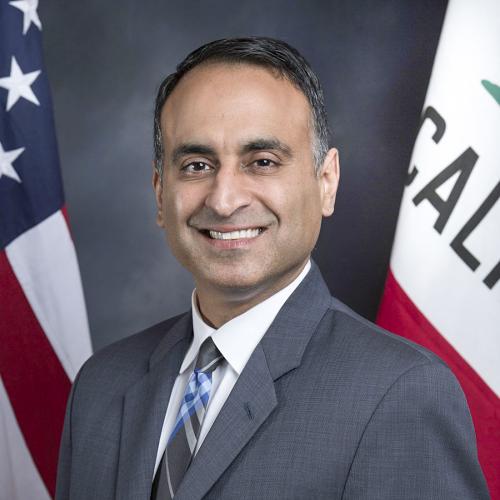
Asm. Ash Kalra
Sponsored bills
Existing law imposes varying requirements upon employers to share the pay scale for a position with an applicant or in a job posting, as provided. Existing law defines "pay scale" as the salary or hourly wage range that the employer reasonably expects to pay for the position. This bill would revise the definition of "pay scale" to mean an estimate of this expected wage range that an employer reasonably expects to pay for the position upon hire and is made in good faith. Existing law prohibits an employer from paying its employees at wage rates less than the rates paid to employees of the opposite sex or another race or ethnicity for substantially similar work, except under specified circumstances. Existing law requires a civil action to recover wages for a violation of those provisions to be commenced no later than 2 years after the cause of action occurs or, if the cause of action arises out of a willful violation, no later than 3 years after the cause of action occurs. This bill would prohibit an employer from paying employees at wage rates less than the rates paid to employees of another sex instead of the opposite sex, and would require a civil action to recover wages to be commenced no later than 3 years after the last date the cause of action occurs. The bill would provide that an employee is entitled to obtain relief for the entire period of time in which a violation of its provisions exists, but not to exceed 6 years. This bill would specify that a cause of action occurs when an alleged unlawful compensation decision or practice is adopted, when an individual becomes subject to the decision or practice, or when an individual is affected by the application of the decision or practice. The bill would provide that its provisions do not prohibit the application of prescribed legal doctrine. The bill would define "wages," "wage rates," and "sex" for purposes of those provisions, and would specify that its provisions shall not be construed to define these terms for other purposes.
(1) Existing law, the California Nutrition Monitoring Development Act of 1986, requires the State Department of Public Health to assess the availability and adequacy of existing state and local food and nutrition data systems. The act requires different state departments, including the State Department of Education, to provide to the State Department of Public Health, upon request, nutrition-related data collection forms, documentation, and reports of various programs. This bill would define "ultraprocessed food" for certain school-related purposes and would require the State Department of Public Health to adopt regulations, on or before June 1, 2028, to define "ultraprocessed foods of concern" and "restricted school foods," as specified. The bill would require the department, when defining ultraprocessed foods of concern and restricted school foods, to consider specified factors, including, among others, whether, based on reputable peer-reviewed scientific evidence, a substance or group of substances are linked to health harms or adverse health consequences, as specified. The bill would require schools, as defined, to begin to phase out restricted school foods and ultraprocessed foods of concern by no later than July 1, 2029. Beginning July 1, 2032, the bill would prohibit a vendor from offering restricted school foods and ultraprocessed foods of concern to a school. This bill, on or before February 1, 2028, and on or before February 1 of each year thereafter through February 1, 2032, would require a vendor to report specified information to the State Department of Public Health for each food product sold to a school in the past calendar year, including, among others, the total quantity of food product sold to schools and whether that food product is an ultraprocessed food, a restricted school food, or an ultraprocessed food of concern. The bill, on or before July 1, 2028, and on or before July 1 of each year thereafter through July 1, 2032, would require the State Department of Public Health, in consultation with the State Department of Education, to submit to the Legislature and the Governor a report that contains, among other things, a summary and analysis of the information reported to the State Department of Public Health by vendors and recommendations for state and local legislative actions that could reduce the consumption of ultraprocessed foods, restricted school foods, and ultraprocessed foods of concern in schools. The bill would require the State Department of Public Health to consult with the State Department of Education regarding compliance training and technical assistance for school food service and procurement staff for these purposes and would require the State Department of Public Health to establish a structure to deliver training and technical assistance to local educational agencies. (2) Existing law requires the State Department of Education to develop and maintain nutrition guidelines for school lunches and breakfasts, and for all food and beverages sold on public school campuses, consistent with the requirements for a nutritionally adequate breakfast and a nutritionally adequate lunch. Existing law defines a nutritionally adequate breakfast and a nutritionally adequate lunch for these purposes to mean those that qualify for reimbursement under the most current meal pattern for the federal School Breakfast Program and the federal National School Lunch Program, respectively. Existing law requires a school district, county superintendent of schools, or charter school maintaining kindergarten or any of grades 1 to 12, inclusive, to make available a nutritionally adequate breakfast and a nutritionally adequate lunch, free of charge, during each schoolday to any pupil who requests a meal without consideration of the pupil's eligibility for a federally funded free or reduced-price meal. Existing law authorizes a school operated and maintained by a school district or county office of education, from the midnight before to 30 minutes after the end of the official schoolday, to sell food and beverages other than meals reimbursed by specified federal nutrition programs, only if the food or beverages meet dietary guidelines, as specified, depending on grade level. This bill, beginning July 1, 2035, would prohibit a school district, county superintendent of schools, or charter school maintaining kindergarten or any of grades 1 to 12, inclusive, from offering a nutritionally adequate breakfast or lunch that includes restricted school foods or ultraprocessed foods of concern, as provided, and would prohibit a school operated and maintained by a school district or county office of education from selling food or beverages, except for food items sold as part of a school fundraising event, containing those restricted school foods or ultraprocessed foods of concern, as provided. (3) To the extent this bill would impose additional requirements on public schools, the bill would impose a state-mandated local program. (4) The California Constitution requires the state to reimburse local agencies and school districts for certain costs mandated by the state. Statutory provisions establish procedures for making that reimbursement. This bill would provide that, if the Commission on State Mandates determines that the bill contains costs mandated by the state, reimbursement for those costs shall be made pursuant to the statutory provisions noted above.
Existing law, the Elder Abuse and Dependent Adult Civil Protection Act, provides for the award of attorney's fees and costs to, and the recovery of damages by, a plaintiff when it is proven by clear and convincing evidence that the defendant is liable for physical abuse or neglect, and the defendant has also been found guilty of recklessness, oppression, fraud, or malice in the commission of that abuse. This bill would authorize a court to apply a preponderance of the evidence standard to any claim brought against a residential care facility for the elderly, an adult community care facility, or a skilled nursing facility, except as specified, for remedies sought pursuant to the above provisions, upon circumstances in which spoliation of evidence, as defined, has been committed by the defendant, as specified. The bill would make this provision inoperative if there is a final judicial determination in any action by any party, or a final determination by the Centers for Medicare and Medicaid Services, that the state is required by state or federal law or regulation to provide reimbursement under the Medi-Cal program to those facilities for costs associated with this bill and the Legislature does not appropriate sufficient funds to pay for those costs. The bill would make conforming changes to a related provision.
Existing law, the Veterinary Medicine Practice Act, establishes the California Veterinary Medical Board to license and regulate the practice of veterinary medicine. Existing law authorizes registered veterinary technicians and veterinary assistants to perform animal health care services prescribed by law under the supervision of a veterinarian, and authorizes registered veterinary technicians to perform animal health care services on animals impounded by a state, county, city, or city and county agency pursuant to an order of a veterinarian. This bill would instead authorize registered veterinary technicians and veterinary assistants to perform animal health care services not otherwise prohibited by law under the supervision of a veterinarian, and would authorize both registered veterinary technicians and veterinary assistants to perform animal health care services not otherwise prohibited by law on animals housed in public or private animal shelters, humane societies, or societies for the prevention of cruelty to animals pursuant to an order of a veterinarian. The bill would also authorize a registered veterinary technician to perform dental care procedures, including tooth extractions, under the supervision of a veterinarian.
Existing law, the Mobilehome Residency Law, governs tenancies in mobilehome parks and includes provisions that are applicable to those who have an ownership interest in a subdivision, cooperative, or condominium for mobilehomes, or a resident-owned mobilehome park, as specified. Among other things, these provisions set forth the rights of residents and homeowners regarding the use of the property. This bill would make any covenant, restriction, or condition contained in any rental agreement or other instrument affecting the tenancy of a homeowner or resident in a mobilehome park, in a subdivision, cooperative, or condominium for mobilehomes, or in a resident-owned mobilehome park that effectively prohibits or restricts the installation, upgrade, replacement, or use of a cooling system, as defined, in a mobilehome void and unenforceable. The bill would make it unlawful for the management or the ownership to prohibit or restrict a homeowner or resident from installing, upgrading, replacing, or using a cooling system in their mobilehome or to take other specified actions in connection with the installation, upgrade, replacement, or use of a cooling system, subject to specified exceptions. This bill would prohibit the termination of tenancy for the installation, upgrade, replacement, or use of a cooling system. The bill would make any entity that willfully violates these provisions in a subdivision, cooperative, or condominium for mobilehomes, or a resident-owned mobilehome park liable to the homeowner, resident, or other party for actual damages occasioned thereby, and for a civil penalty paid to the homeowner, resident, or other party in an amount not to exceed $2,000.
Existing law outlines requirements for civil actions for unlawful detainer filed by landlords to remove tenants from their properties. Existing law also requires plaintiffs to ensure service of a summons and complaint to defendants in civil suits, as specified. Existing law requires a summons to contain, among other things, (1) a direction that the defendant file with the court a written pleading in response to the complaint within 30 days after service on the defendant, (2) a notice that, unless the defendant responds, default will be entered upon application of the plaintiff, (3) a statement advising the defendant of their right to seek an attorney, and (4) an introductory legend at the top of the summons, in English and Spanish, notifying the defendant that they have been sued. This bill would require the Judicial Council to create, by January 1, 2027, a single summons form for mandatory use in an action for unlawful detainer to remove a tenant from a residential property that includes the information specified above in English, Spanish, Chinese, Tagalog, Vietnamese, and Korean. The bill would require the Judicial Council to publish this form on its internet website.
Existing law authorizes, until January 1, 2026, the Counties of Alameda, Butte, Nevada, and Santa Clara to establish a pilot program to operate a deferred entry of judgment pilot program for eligible defendants who are 18 years of age or older, but under 21 years of age, on the date the offense was committed, as specified. Existing law requires a probation department to submit data relating to the effectiveness of the pilot program to the Division of Recidivism Reduction and Re-Entry, within the Department of Justice. Existing law requires a participating county to submit an evaluation of its pilot program's impact and effectiveness to the Assembly and Senate Committees on Public Safety, no later than December 31, 2024. This bill would extend the pilot program, for the Counties of Butte, Nevada, and Santa Clara, to January 1, 2029, and would require an evaluation to be submitted to the Assembly and Senate Committees on Public Safety no later than December 31, 2027. Existing law requires the Board of State and Community Corrections to review a county's pilot program to ensure compliance with specific federal law. This bill would instead require the Office of Youth and Community Restoration to review a county's pilot program for compliance and would require the office to report findings from the review to the board.
Existing federal law, the Migratory Bird Treaty Act, provides for the protection of migratory birds, as specified. The federal act also authorizes states and territories of the United States to make and enforce laws or regulations that give further protection to migratory birds, their nests, and eggs. Existing law, the California Migratory Bird Protection Act, until January 20, 2025, made unlawful the taking or possession of any migratory nongame bird designated in the federal act before January 1, 2017, any additional migratory nongame bird that may be designated in the federal act after that date, or any part of those migratory nongame birds, except as provided. Existing law, as of January 1, 2026, repeals this provision. This bill would, indefinitely, make unlawful the taking or possessing of any migratory bird, as designated in the federal act before January 1, 2025, any additional migratory birds that may be designated in the federal act after that date, or any part of those migratory birds, except as provided. Existing law, operative January 20, 2025, makes it unlawful to take or possess any migratory nongame bird as designated in the federal Migratory Bird Treaty Act, or any part of a migratory nongame bird, except as provided. This bill would repeal this provision. Under existing law, a violation of the Fish and Game Code is a crime. By narrowing the exception to a crime defined in existing law, the bill would expand the scope of a crime, thus imposing a state-mandated local program. The California Constitution requires the state to reimburse local agencies and school districts for certain costs mandated by the state. Statutory provisions establish procedures for making that reimbursement. This bill would provide that no reimbursement is required by this act for a specified reason. This bill would declare that it is to take effect immediately as an urgency statute.
Existing law governs motor vehicle conditional sale contracts, as defined, and requires a seller, prior to the execution of a conditional sale contract, to make certain disclosures to the buyer, including a description and the price of each item sold if the contract includes a charge for the item, and the sum of all of those charges. Existing law prohibits a dealer from selling specified used vehicles at retail to an individual for personal, family, or household use without offering the buyer a contract cancellation option agreement that allows the buyer to return the vehicle without cause. Existing law sets forth certain requirements for the contract cancellation option agreement, including prescribing the purchase price for the contract cancellation option and requiring specified disclosures. This bill would enact the California Combating Auto Retail Scams (CARS) Act. The bill would define the terms "vehicle" and "used vehicle" for these purposes. The bill would make it a violation of the act for a dealer to make any misrepresentation regarding material information about specified matters relating to the vehicle sale, including the costs or terms of purchasing, financing, or leasing a vehicle, the availability of vehicles at a total price communicated by the dealer, and the remedy available if a dealer fails to sell or lease a vehicle at the total price, as defined. The bill would also make it a violation of the act for a dealer to fail to make certain disclosures clear and conspicuous, including specified information relating to the total price and any add-on products or services, and would exempt from that provision a used vehicle sold at an auction, as defined. The bill would make it a violation of the act for a dealer, in connection with the sale or financing of a vehicle, to charge for certain items, including an add-on product or service if the vehicle purchaser or lessee would not benefit from the add-on product or service. The bill would repeal the above-described contract cancellation option agreement requirement and would instead prohibit a dealer from selling or leasing specified used vehicles without providing the purchaser or lessee a 3-day right to cancel the purchase or lease, as provided. The bill would require a dealer to create and retain, for a period of 2 years from the date the record is created, all records necessary to demonstrate compliance with the act, including specified records. The bill would make its provisions operative on October 1, 2026. The bill would make related conforming changes.