

Existing law designates specific days as holidays in this state. Existing law designates holidays on which community colleges and public schools are authorized to close pursuant to a memorandum of understanding between the governing board and represented employees, including "Native American Day" on the 4th Friday in September. Existing law entitles state employees, with specified exceptions, and authorizes certain community college and public school employees, to be given time off with pay for specified holidays, as specified. This bill would add "Diwali" to the list of state holidays. The bill would authorize community colleges and public schools to close on "Diwali," as specified. The bill would authorize state employees to elect to take, and would authorize certain community college and public school employees to be given, time off with pay in recognition of "Diwali," as specified. The bill would authorize public schools and educational institutions throughout the state to include exercises acknowledging and celebrating the meaning and importance of Diwali, as specified. Existing law adopts state holidays as judicial holidays, with certain exceptions, including Admission Day and Columbus Day. This bill would add "Diwali" to the list of holidays that are excluded from designation as a judicial holiday. This bill would make related findings and declarations.
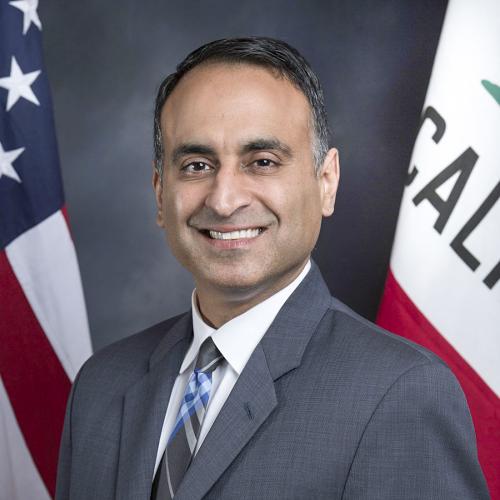
Asm. Ash Kalra
Sponsored bills
Existing law provides that a tenant is guilty of unlawful detainer if the tenant continues to possess the property without permission of the landlord after the tenant defaults on rent or fails to perform a condition or covenant of the lease under which the property is held, among other reasons. Existing law requires a tenant be served a 3 days' notice in writing to cure a default or perform a condition of the lease, or return possession of the property to the landlord, as specified. Existing law, until January 1, 2030, prohibits an owner of residential real property from terminating a tenancy without just cause, as specified. This bill would, until January 20, 2029, enact the Social Security Tenant Protection Act of 2025 (the Act) . The Act would authorize a tenant of residential real property to assert Social Security hardship as an affirmative defense in an unlawful detainer proceeding based on the nonpayment of rent. The Act would define "Social Security hardship" as a loss of income due to an interruption in the payment of Social Security benefits due to the action or inaction of the federal government. The Act would require a tenant asserting Social Security hardship as an affirmative defense to provide, to the satisfaction of the court, evidence that Social Security payments typically received by the tenant's household have been terminated, delayed, or reduced due to no fault of the tenant and that the hardship prevented the tenant from paying the rent. If the tenant successfully provides this evidence, the Act would require the court to issue a stay of the unlawful detainer action, as specified. The Act would not relieve a tenant of their obligation to pay past due rent, and it would require a tenant, within 14 days of the Social Security benefits being restored, to either pay all past due rent or enter into a mutually agreed upon payment plan with the owner of the residential real property. If the tenant pays all past due rent or enters into a payment plan with the owner, the Act would require the court to either dismiss the unlawful detainer action with prejudice or set aside the judgment against all named and unnamed defendants in the action. The Act would further require the Judicial Council, by January 1, 2027, to adopt or modify forms as needed to implement the Act.
Proposition 117, an initiative measure approved by the electors at the June 5, 1990, direct primary election, enacted the California Wildlife Protection Act of 1990. The act creates the Habitat Conservation Fund and requires the moneys in the fund to be used for specified purposes generally relating to the acquisition, enhancement, or restoration of wildlife habitat. The act requires the Controller, until June 30, 2020, to annually transfer $30,000,000 from the General Fund to the Habitat Conservation Fund, less any amount transferred to the Habitat Conservation Fund from specified accounts and funds. The act, until July 1, 2020, continuously appropriates specified amounts from the Habitat Conservation Fund to the Department of Parks and Recreation, the State Coastal Conservancy, the Santa Monica Mountains Conservancy, and the California Tahoe Conservancy, and continuously appropriates the balance of the fund to the Wildlife Conservation Board. Chapter 31 of the Statutes of 2019 requires the Controller to continue to annually transfer $30,000,000 from the General Fund, less any amount transferred to the Habitat Conservation Fund from specified accounts and funds, to the Habitat Conservation Fund until June 30, 2030, and continuously appropriates that amount on an annual basis in the same proportions to the specified entities until July 1, 2030. This bill would require the Controller to continue to annually transfer $30,000,000 from the General Fund, less any amount transferred to the Habitat Conservation Fund from specified accounts and funds, to the Habitat Conservation Fund until June 30, 2035, and would continuously appropriate that amount on an annual basis in the same proportions to the specified entities described above until July 1, 2035.
Existing law declares the public policy of the state regarding labor organization, including, among other things, that it is necessary for a worker to have full freedom of association, self-organization, and designation of representatives of their own choosing, to negotiate the terms and conditions of their employment, and to be free from the interference, restraint, or coercion of employers of labor, or their agents, in the designation of such representatives or in self-organization or in other concerted activities for the purpose of collective bargaining or other mutual aid or protection. Existing law, the Protect App-Based Drivers and Services Act, added by Proposition 22, as approved by the voters at the November 3, 2020, statewide general election (the initiative) , categorizes app-based drivers for network companies, as defined, as independent contractors if certain conditions are met. Existing law requires, among other things, that the network company provide a health care subsidy to qualifying app-based drivers, provide a minimum level of compensation for app-based drivers, and not restrict app-based drivers from working in any other lawful occupation or business. Existing case law holds that specified provisions of the initiative are invalid on separation of powers grounds; however, the court severed the unconstitutional provisions, allowing the rest of the initiative to remain in effect. Existing law also establishes the Public Employment Relations Board (board) in state government as a means of resolving disputes and enforcing the statutory duties and rights of specified public employers and employees under various acts regulating collective bargaining. Existing law vests the board with jurisdiction to enforce certain provisions over charges of unfair practices for represented employees. This bill, the Transportation Network Company Drivers Labor Relations Act (act) , would establish that transportation network company (TNC) drivers have the right to form, join, and participate in the activities of TNC driver organizations, to bargain through representatives of their own choosing, to engage in concerted activities for the purpose of bargaining or other mutual aid or protection, and to refrain from such activities. The bill would require the board to enforce these provisions. This bill would require all TNCs to submit certain information every quarter, including information identifying and related personal work information about TNC drivers to the board in a list format, as prescribed. The bill would establish various procedures governing the certification and decertification of TNC driver organizations for purposes of representing drivers in the collective bargaining process. In this connection, the bill would require the board to determine if an entity is a TNC driver organization, as prescribed, and make certain determinations as to whether a specific organization has been designated as the bargaining representative for TNC drivers pursuant to an election process. The bill would establish various notice requirements, conditions, and timelines governing the representation of TNC drivers. The bill would, among other things, require TNCs and certified driver bargaining organizations to negotiate in good faith pursuant to the act, as described, and would set forth procedures for mediation and arbitration for purposes of reaching a sectoral agreement. The bill would set forth procedures and guidelines for the board to approve or disapprove sectoral agreements. The bill would require a TNC that was not a covered TNC when a sectoral agreement took effect but subsequently became a covered TNC to be bound by all terms of the sectoral agreement, as specified. This bill would make it an unfair practice for a TNC, an agent of a TNC, or a multicompany committee, as defined, to fail or refuse to negotiate in good faith with a certified driver bargaining organization, among other things. The bill would also make it an unfair practice for a certified driver bargaining organization or its agents to fail to negotiate in good faith with a TNC or multicompany committee, among other things. The bill would set forth unfair practice charge procedures and remedies for those practices. The bill would define terms for purposes of the act, make the provisions of the act severable, and make related legislative policy statements. Existing law, the Bagley-Keene Open Meeting Act, generally requires all meetings of a state body to be open and public. This bill would exempt any meeting of a mediator or arbitrator with any party or group to the negotiations process and the mediation and arbitration processes in the act from the Bagley-Keene Open Meeting act. Existing law, the California Public Records Act, requires state and local agencies to make their records available for public inspection, unless an exemption from disclosure applies. This bill would exclude from public disclosure information regarding TNC drivers that is submitted to the board pursuant to the act, except as specified. Existing constitutional provisions require that a statute that limits the right of access to the meetings of public bodies or the writings of public officials and agencies be adopted with findings demonstrating the interest protected by the limitation and the need for protecting that interest. This bill would make legislative findings to that effect.
Existing law, the Political Reform Act of 1974, prohibits a public officer from expending, and a candidate from accepting, public moneys for the purpose of seeking elective office. This bill would remove prohibitions imposed on a public officer or candidate to expend or accept public funds, as defined, for the purpose of seeking elective office unless the funds are earmarked by a state or local entity for education, transportation, or public safety. The bill would require candidates to abide by specified expenditure limits and meet strict criteria, as defined, to qualify for public funds. The bill would prohibit public funds from being used to pay legal defense fees or fines or to repay personal loans to their campaign. The bill would permit a statute, ordinance, or charter to establish standards to increase the expenditure limits for each qualified, voluntarily participating candidate pursuant to a specified formula. The bill would provide that the Fair Political Practices Commission is not responsible for administering or enforcing a system of public funding of candidates established by a local governmental agency. Existing law prohibits a foreign government or foreign principal, as defined, from making a contribution, expenditure, or independent expenditure in connection with the qualification or support of, or opposition to, any state or local ballot measure or in connection with the election of a candidate to state or local office. Under existing law, a person who violates this prohibition is guilty of a misdemeanor and subject to a fine equal to the amount contributed or expended. This bill would instead require that a person guilty of that misdemeanor, in addition to other penalties, be fined an amount at least equal to the amount contributed or expended, but not exceeding a maximum amount of 3 times the amount contributed or expended. The Political Reform Act of 1974, an initiative measure, provides that the act may be amended by a statute that becomes effective upon approval of the voters. This bill would require the Secretary of State to submit the provisions of the bill, as specified, to the voters for approval at the November 3, 2026, statewide general election. This bill would incorporate additional changes to Section 85320 of the Government Code proposed by AB 953 to be operative pursuant to specified conditions.
(1) Existing law establishes the Department of Industrial Relations within the Labor and Workforce Development Agency and sets forth the functions of the department, which include, among others, fostering, promoting, and developing the welfare of the wage earners of California and improving their working conditions. Existing law establishes within the department the Division of Labor Standards Enforcement, headed by the Labor Commissioner, for the purposes of enforcing labor laws. Existing law requires the Labor Commissioner to enforce and administer a program to register and supervise foreign labor contractors who perform foreign labor contracting activities to recruit or solicit foreign workers. Existing law defines foreign workers for purposes of these provisions to mean any person seeking employment who is not a United States citizen or permanent resident but who is authorized by the federal government to work in the United States, including a person who engages in temporary nonagricultural labor, as specified. Existing law requires foreign labor contractors to register under the program, as prescribed. Existing law requires an applicant for registration as a foreign labor contractor to execute a written application in a form prescribed by the commissioner, as specified, that includes, among other things, the names and addresses of all persons financially interested in the proposed operation as a foreign labor contractor, as provided. Existing law imposes specific requirements on foreign labor contractors relating to recruitment or solicitation for employment and relating to work contracts. Existing law authorizes the commissioner to adopt regulations or policies and procedures to implement these provisions. Existing law authorizes the commissioner, or a person aggrieved by a violation of these provisions, to bring certain actions against the violator, including an action for injunctive relief, as provided. A violation of these provisions is a crime. Existing law makes these provisions applicable only to nonagricultural workers, and exempts persons licensed as farm labor contractors, specified persons exempt from farm labor contractor licensing requirements, and employers of agricultural workers. This bill would, beginning July 1, 2027, expand the above-described provisions to agricultural workers under the federal H-2A visa program. The bill would make related conforming changes and findings and declarations. The bill would additionally require, beginning July 1, 2027, the above-described application to contain a listing of each federal visa program under which the person will be performing foreign labor contracting activities. The bill would authorize the commissioner to enforce the above-described foreign labor contractor registration provisions through specified procedures, including the issuance of a citation or filing of a civil action against a person who violates those provisions. (2) Existing law requires farm labor contractors to be licensed by the commissioner and to comply with specified employment laws applicable to farm labor contractors. Existing law prohibits the commissioner from issuing to any person, or renewing, a license to act as a farm labor contractor unless certain conditions are satisfied, including a requirement that the person has executed a written application in a form prescribed by the commissioner as a foreign labor contractor, as prescribed. This bill would require, beginning July 1, 2027, a person who is licensed or acting as a farm labor contractor and who performs foreign labor contracting activities to register with the commissioner as a foreign labor contractor, as prescribed. The bill would authorize the commissioner to eliminate duplicative application information requirements for information previously obtained from the farm labor contractor's license application, as specified. By expanding the application of the foreign labor contractor registration provisions, the bill would expand an existing crime, thereby imposing a state-mandated local program. This bill would require the Department of Industrial Relations to submit to the Legislature, by January 1, 2028, a study on how to extend foreign labor contractor registration requirements to certain foreign labor contractors, as specified. (3) The California Constitution requires the state to reimburse local agencies and school districts for certain costs mandated by the state. Statutory provisions establish procedures for making that reimbursement. This bill would provide that no reimbursement is required by this act for a specified reason.
Existing law prohibits a person or business, as defined, from collecting, using, disclosing, or retaining the personal information of a person who is physically located at, or within a precise geolocation of, a family planning center, as defined, except as necessary to perform the services or provide the goods requested and prohibits a person or business from selling or sharing this personal information. Existing law authorizes an aggrieved person or entity to institute and prosecute a civil action against a person or business for a violation of these provisions and specifies the damages and costs authorized to be recovered. This bill would recast the above-described provisions, and instead prohibit the collection, use, disclosure, sale, sharing, or retention of the personal information of a natural person who is physically located at, or within a precise geolocation of, a family planning center, except under certain circumstances, including, among others, for the collection or use as necessary to perform the services or provide the goods requested. The bill would also provide that these provisions do not alter applicable law regarding use by a law enforcement agency, as defined, of personal information generated by an electronic monitoring device. The bill would authorize an aggrieved person to institute and prosecute a civil action against a natural person, association, proprietorship, corporation, trust, foundation, partnership, or any other organization or group of people acting in concert for a violation of these provisions. The bill would also make other nonsubstantive changes. This bill would, subject to specified exceptions, prohibit geofencing, or selling or sharing personal information with a third party to geofence, as defined, an entity that provides in-person health care services in California for specified purposes, and would prohibit the use of personal information obtained in violation of this provision. The bill would provide that violators are subject to an injunction and liable for a civil penalty assessed and recovered in a civil action brought by the Attorney General, and deposited in the California Reproductive Justice and Freedom Fund. The bill would require those penalties to be awarded by the State Department of Public Health for grants to implement a program or to fund an existing program that provides and promotes medically accurate and comprehensive reproductive and sexual health education, as provided. The bill would also provide that a statement signed under penalty of perjury, as specified, that the personal information will not be used for selling or sharing personal information in violation of these geofencing provisions is prima facie evidence that the personal information was not sold or shared in violation of these geofencing provisions. By expanding the crime of perjury, this bill would impose a state-mandated local program. Existing law, the Confidentiality of Medical Information Act (CMIA) , generally prohibits a provider of health care, a health care service plan, or a contractor from disclosing medical information regarding a patient, enrollee, or subscriber without first obtaining an authorization, unless a specified exception applies. The CMIA prohibits a provider of health care, a health care service plan, a contractor, or an employer from releasing medical information that would identify an individual or related to an individual seeking or obtaining an abortion in response to a subpoena or a request or to law enforcement if that subpoena, request, or the purpose of law enforcement for the medical information is based on, or for the purpose of enforcement of, either another state's laws that interfere with a person's rights to choose or obtain an abortion or a foreign penal civil action. This bill would, similar to the provisions of the CMIA, prohibit the release of research records, in a personally identifying form, developed or acquired by a person in the course of conducting research relating to anyone seeking or obtaining health care services, or relating to personal information, in response to a subpoena or a request or to law enforcement if that subpoena, request, or the purpose of law enforcement for the medical information is based on, or for the purpose of enforcement of, either another state's laws that interfere with a person's rights to choose or obtain an abortion or a foreign penal civil action. The California Constitution requires the state to reimburse local agencies and school districts for certain costs mandated by the state. Statutory provisions establish procedures for making that reimbursement. This bill would provide that no reimbursement is required by this act for a specified reason.
This measure would designate November 1, 2025, as Fernando Valenzuela Day, to highlight the positive impact his legacy created in the Latino and Hispanic community.
This measure would recognize the importance of California Native American Day, celebrated this year on September 26, 2025, and the annual California Indian Cultural Awareness Conference, to the enhancement of awareness of California Indian culture.
(1) Existing law prohibits, except as required by state or federal law or as required to administer a state or federally supported educational program, school officials and employees of a school district, county office of education, or charter school from collecting information or documents regarding citizenship or immigration status of pupils or their family members. Existing law requires the superintendent of a school district, the superintendent of a county office of education, and the principal of a charter school, as applicable, to report to the respective governing board or body of the local educational agency in a timely manner any requests for information or access to a schoolsite by an officer or employee of a law enforcement agency for the purpose of enforcing the immigration laws in a manner that ensures the confidentiality and privacy of any potentially identifying information. This bill would prohibit school officials and employees of a local educational agency from allowing an officer or employee of an agency conducting immigration enforcement to enter a nonpublic area of a schoolsite, as defined, for any purpose without being presented with a valid judicial warrant, judicial subpoena, or a court order. The bill would require school officials and employees of a local educational agency, to the extent practicable, to request valid identification of any officer or employee of an agency conducting immigration enforcement seeking to enter a nonpublic area of a schoolsite. The bill would also prohibit a local educational agency and its personnel from disclosing or providing, in writing, verbally, or in any other manner, the education records of or any information about a pupil or a pupil's family and household without the pupil's parents' or guardians' written consent, a school employee, or a teacher to an officer or employee of an agency conducting immigration enforcement without a valid judicial warrant or judicial subpoena, or court order directing the local educational agency or its personnel to do so. By imposing additional duties on local educational agencies, the bill would impose a state-mandated local program. (2) Existing law requires the Attorney General, by April 1, 2018, in consultation with the appropriate stakeholders, to publish model policies limiting assistance with immigration enforcement at public schools, to the fullest extent possible consistent with federal and state law, and ensuring that public schools remain safe and accessible to all California residents, regardless of immigration status, as provided. Existing law requires local educational agencies, by July 1, 2018, to adopt those model policies developed by the Attorney General or equivalent policies. This bill would require the Attorney General, by December 1, 2025, to update those model policies to ensure that the policies align with the above-described prohibitions on school officials and employees of local educational agencies allowing an officer or employee of an agency conducting immigration enforcement to enter a nonpublic area of a schoolsite without a valid judicial warrant or judicial subpoena, or a court order and from disclosing or providing certain information to those officers or employees, as provided. The bill also would require a local educational agency to update its model policy by March 1, 2026, and to make the policy available to the State Department of Education upon request. By imposing additional duties on local educational agencies, the bill would impose a state-mandated local program. (3) This bill would make these provisions severable. (4) The California Constitution requires the state to reimburse local agencies and school districts for certain costs mandated by the state. Statutory provisions establish procedures for making that reimbursement. This bill would provide that, if the Commission on State Mandates determines that the bill contains costs mandated by the state, reimbursement for those costs shall be made pursuant to the statutory provisions noted above. (5) This bill would declare that it is to take effect immediately as an urgency statute.