

Existing law declares every contract by which anyone is restrained from engaging in a lawful profession, trade, or business of any kind to be void, except as expressly provided. Existing law provides for a system of labor standards enforcement administered by the Labor Commissioner. This bill would, for contracts entered into on or after January 1, 2026, make it unlawful to include in any employment contract, or to require a worker to execute as a condition of employment or a work relationship a contract that includes, specified contract terms, including a term that requires the worker to pay an employer, training provider, or debt collector for a debt if the worker's employment or work relationship with a specific employer terminates. The bill would declare these contracts as contracts that restrain a person from engaging in a lawful profession, trade, or business, and as void and contrary to public policy, except as provided. This bill would authorize a worker who has been subjected to the above-described prohibited conduct regarding a contract or its terms or a work representative to bring an action on behalf of that worker, other persons similarly situated, or both, in any court of competent jurisdiction. The bill would make a person who violates these provisions liable for specified civil penalties and relief.
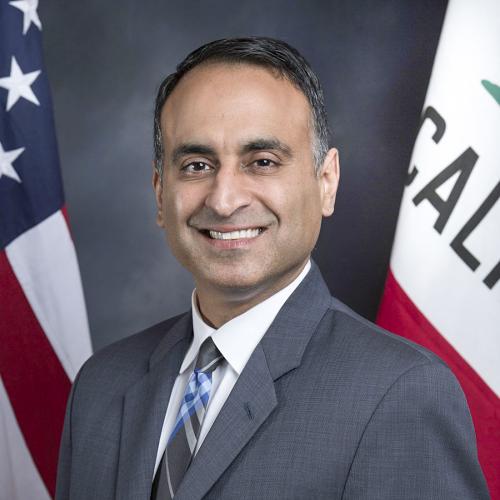
Asm. Ash Kalra
Sponsored bills
Existing law prohibits the state from seeking, obtaining, or imposing a criminal conviction or sentence on the basis of race, ethnicity, or national origin. Under existing law, a defendant may pursue relief for a violation of this prohibition by filing a motion pursuant to the provisions that prohibit this conduct, a petition for a writ of habeas corpus, or a motion to vacate a conviction or sentence. This bill would authorize the defendant in these proceedings to file a motion for disclosure of all relevant evidence related to a potential violation of the prohibition on the state seeking, obtaining, or imposing a criminal conviction or sentence on the basis of race, ethnicity, or national origin, as specified. The bill would also authorize the court to remedy a violation of these provisions with any other remedy not prohibited by another law. The bill would make other technical changes. This bill makes legislative findings and declarations in support of its provisions. This bill would incorporate additional changes to Sections 745, 1473, and 1473.7 of the Penal Code proposed by SB 734 to be operative only if this bill and SB 734 are enacted and this bill is enacted last.
Existing law requires each live birth to be registered with the local registrar of births and deaths for the district in which the birth occurred, and prescribes specified information to be listed on a certificate of live birth, including the full name and sex of the child and the full name, birthplace, and date of birth of each parent. Existing law requires, in addition to the information mentioned above, the certificate of live birth to contain specified medical and social information, including, among other things, race and ethnicity of the mother and any other parent, and requires that information to be kept confidential. This bill, commencing July 1, 2027, would instead require the birthplace of each parent to be contained in the medical and social portion of the certificate of live birth and to be kept confidential. Existing constitutional provisions require that a statute that limits the right of access to the meetings of public bodies or the writings of public officials and agencies be adopted with findings demonstrating the interest protected by the limitation and the need for protecting that interest. This bill would make legislative findings to that effect.
(1) Under existing law, a caregiver who is 18 years of age or older and signs a caregiver's authorization affidavit under penalty of perjury for a minor who lives in their home is authorized to enroll the minor in school and consent to school-related medical care on behalf of the minor. Under existing law, a caregiver who is 18 years of age or older, signs the caregiver's authorization affidavit under penalty of perjury, and who is a certain type of relative of the minor who lives in their home, has the same rights to authorize medical care and dental care for the minor that are given to guardians, as specified. Under existing law, a person who acts in good faith reliance on a completed caregiver's authorization affidavit to provide medical or dental care, without actual knowledge of facts contrary to those stated on the affidavit, is not subject to criminal or civil liability or professional disciplinary action for that reliance, but is not relieved from liability for violations of other provisions of law. This bill, the Family Preparedness Plan Act of 2025, would revise the definition of relative to expand the type of relative who is authorized to execute a caregiver's authorization affidavit and grant them the same rights to authorize school-related medical care, as defined, for the minor that are given to guardians, as specified. By expanding who is authorized to sign a caregiver's authorization affidavit for these purposes under penalty of perjury, this bill would expand the crime of perjury, thereby imposing a state-mandated local program. This bill would amend the statutory form for a caregiver's authorization affidavit. (2) Existing law generally provides for the establishment and administration of guardianships. Existing law authorizes a court to appoint joint guardians of a person, an estate, or a person and an estate. Existing law requires a nomination of a guardian to become effective when made, and remain effective, unless stated otherwise in writing, as specified. This bill would authorize a court, in its discretion, to appoint a custodial parent and a person nominated by the custodial parent as joint guardians of the person of the minor, if the custodial parent will be temporarily unavailable due to specified circumstances, including, among other things, an immigration-related administrative action, as specified. The bill would make all records, petitions, orders, and documents related to these proceedings confidential, as specified. The bill would provide that absence is a basis for a delayed effectiveness of a guardianship and that such circumstances would not be a basis for subsequent legal incapacity for the nomination. (3) Existing law prohibits, except as required by state or federal law or as required to administer a state or federally supported educational program, school officials and employees of a local educational agency, as defined, from collecting information or documents regarding citizenship or immigration status of pupils or their family members. Existing law requires the governing board or body of a local educational agency to perform specified actions relating to pupils and immigration status, including, among others, providing information to parents and guardians, as appropriate, regarding their child's right to a free public education, regardless of immigration status or religious beliefs. Existing law requires the Attorney General, by April 1, 2018, in consultation with the appropriate stakeholders, to publish model policies limiting assistance with immigration enforcement at public schools, to the fullest extent possible consistent with federal and state law, as specified. Existing law requires all local educational agencies to adopt the model policies developed by the Attorney General, or equivalent policies, by July 1, 2018. This bill would revise the information disclosure requirements to require the governing board or body of a local educational agency to provide information related to specified guidance on immigration enforcement issued by the Attorney General and would require that information to be revised as necessary to be consistent with any revisions or updates to the Attorney General's guidance. This bill would also require local educational agencies to revise their model policies as necessary to be consistent with any revisions or updates to the model policies developed by the Attorney General, as specified. By imposing additional duties on local educational agencies, the bill would impose a state-mandated local program. (4) Existing law, the California Child Day Care Facilities Act, provides for the licensure and regulation of child daycare facilities, including daycare centers and daycare homes, by the State Department of Social Services. The act exempts certain types of facilities from licensure under its provisions, including California state preschool programs that meet certain requirements, including, among other things, that the programs are operated by local educational agencies in a school building. Similar to the provisions related to local educational agencies described above, this bill would prohibit licensed child daycare facilities, as defined, employees of licensed child daycare facilities, and license-exempt California state preschool program facilities from collecting information or documents regarding citizenship or immigration status of children or their family members, except as required by state or federal law or as required to administer a state or federally supported educational program. The bill would require the licensee or administrator of a licensed child day care facility, as applicable, to report to the department and the Attorney General any requests for information or access to the facility by an officer or employee of a law enforcement agency. The bill would authorize license-exempt California state preschool program facilities to make that report to the State Department of Education and the Attorney General. The bill would require the State Department of Social Services to provide any information on California state preschool programs collected pursuant to those provisions to the Superintendent of Public Instruction. The bill would require a licensed child daycare facility and a license-exempt California state preschool program facility to first exhaust any parental instruction relating to the child's care found in the child's emergency contact information if an employee of the facility is aware that a child's parent or authorized representative is not available to care for the child. The bill would require licensees or administrators of those facilities to request that parents or authorized representatives update their emergency contact information. The bill would require the Attorney General, by April 1, 2026, in consultation with the appropriate stakeholders, to publish model policies limiting assistance with immigration enforcement at child daycare facilities and license-exempt California state preschool program facilities similar to the model policies developed for local educational agencies described above. The bill would require the State Department of Social Services to inform licensed daycare facilities, and the State Department of Education to inform license-exempt California state preschool program facilities, of the model policies. The bill would require all California state preschool programs to adopt the model policies developed by the Attorney General, or equivalent policies, as soon as possible, but in no event later than July 1, 2026. The bill would require California state preschool programs to update these policies to conform with any revisions or updates to the model policies developed by the Attorney General. The bill would require a licensed child daycare facility and license-exempt California state preschool program facilities to provide the parent or authorized representative with information about how to access those model policies. The bill would require the State Department of Social Services to inform licensed child day care facilities, and the State Department of Education to inform license-exempt California state preschool program facilities, of any revisions or updates to the model policies and require any information, policies, or guidance provided by facilities to parents or authorized representatives to be updated to include any revisions or updates to the model policies issued by the Attorney General. The bill would authorize the State Department of Social Services to administer these provisions by interim licensing standards until regulations are adopted. (5) This bill would provide that its provisions are severable. (6) Existing constitutional provisions require a statute that limits the right of access to the meetings of public bodies or the writings of public officials and agencies to be adopted with findings demonstrating the interest protected by the limitation and the need for protecting that interest. This bill would make legislative findings to that effect. (7) The California Constitution requires the state to reimburse local agencies and school districts for certain costs mandated by the state. Statutory provisions establish procedures for making that reimbursement. This bill would provide that with regard to certain mandates no reimbursement is required by this act for a specified reason. With regard to any other mandates, this bill would provide that, if the Commission on State Mandates determines that the bill contains costs so mandated by the state, reimbursement for those costs shall be made pursuant to the statutory provisions noted above. This bill would incorporate additional changes to Section 234.7 of the Education Code proposed by AB 49, AB 419, or both, to be operative only if this bill and AB 49, AB 419, or both, are enacted and this bill is enacted last.
(1) Existing law, as established in the case of Dynamex Operations W. v. Superior Court (2018) 4 Cal.5th 903 (Dynamex) , creates a presumption that a worker who performs services for a hirer is an employee for purposes of claims for wages and benefits arising under wage orders issued by the Industrial Welfare Commission. Existing law requires a 3-part test, commonly known as the "ABC" test, to determine if workers are employees or independent contractors for those purposes. Existing law establishes that, for purposes of the Labor Code, the Unemployment Insurance Code, and the wage orders of the Industrial Welfare Commission, a person providing labor or services for remuneration is considered an employee rather than an independent contractor unless the hiring entity demonstrates that the person is free from the control and direction of the hiring entity in connection with the performance of the work, the person performs work that is outside the usual course of the hiring entity's business, and the person is customarily engaged in an independently established trade, occupation, or business. This test is commonly known as the "ABC" test, as described above. Existing law charges the Labor Commissioner with the enforcement of labor laws, including worker classification. Existing law exempts specified occupations and business relationships from the application of Dynamex and the provisions described above. This bill would provide that mere ownership of a vehicle, including a personal vehicle or a commercial vehicle, used by a person in providing labor or services for remuneration does not make that person an independent contractor. The bill would state that this provision is declarative of existing law. (2) Existing law establishes the Motor Carrier Employer Amnesty Program administered by the Labor Commissioner and the Employment Development Department. Pursuant to the program, notwithstanding any law, a motor carrier performing drayage services may be relieved of liability for statutory or civil penalties associated with the misclassification of commercial drivers as independent contractors if the motor carrier enters into a settlement agreement with the commissioner, with the cooperation and consent of the department, prior to January 1, 2017, whereby the motor carrier agrees to classify all of its commercial drivers as employees, and the settlement agreement contains prescribed components, including, but not limited to, an agreement by the motor carrier to pay all wages, benefits, and taxes owed, if any. This bill would establish a similar program, known as the Construction Trucking Employer Amnesty Program, to be administered by the commissioner and the department. Under the bill, an eligible construction contractor would be relieved of liability for statutory or civil penalties, except as provided, associated with the misclassification of construction drivers as independent contractors, if the eligible construction contractor executes a settlement agreement negotiated with, or approved by, the commissioner prior to January 1, 2029, whereby the eligible construction contractor agrees to properly classify all drivers performing construction work on their behalf as employees and the settlement agreement contains prescribed components, including, but not limited to, an agreement by the construction contractor to pay all wages, benefits, and taxes owed, if any. If a construction driver declines to accept the terms of a settlement agreement, the bill would still require an eligible construction contractor to reclassify the construction driver as an employee and the construction driver would be precluded from pursuing a claim for civil or statutory penalties under specified provisions of law for a claim arising during the period of time covered by the settlement agreement. (3) Existing law requires an employer to indemnify their employee for all necessary expenditures or losses incurred by the employee in direct consequence of the discharge of their duties, or of their obedience to the directions of the employer, as provided. This bill would provide that the duty of an employer to indemnify their employee for all necessary expenses or losses applies to the use of a vehicle owned by an employee and used by that employee in the discharge of their duties. The bill would provide that, with respect to construction trucking, a commercial motor vehicle driver who owns the truck, tractor, trailer, or other commercial vehicle that they use in the discharge of their duties as an employee working for an employer would be entitled to reimbursement for the use, upkeep, and depreciation of that truck, tractor, trailer, or other commercial vehicle, as provided. The bill would state that specified provisions described above are declarative of existing law.
Existing law grants current and former employees, or their representative, the right to inspect and receive a copy of personnel records maintained by the employer relating to the employee's performance or to any grievance concerning the employee. Existing law requires the employer to make the contents of those personnel records available for inspection, as specified, and makes it a crime for an employer to violate these requirements. This bill would provide that personnel records relating to the employee's performance include education and training records and would require an employer who maintains education and training records to ensure those records include specified information. By expanding the scope of an existing crime, this bill would impose a state-mandated local program. The California Constitution requires the state to reimburse local agencies and school districts for certain costs mandated by the state. Statutory provisions establish procedures for making that reimbursement. This bill would provide that no reimbursement is required by this act for a specified reason.
Existing law prohibits public funds from being used in connection with any athletic program conducted under the auspices of a school district governing board or any student organization within the district, which does not provide equal opportunity to both sexes for participation and for use of facilities. Existing law prohibits a city, county, city and county, or special district from discriminating against any person on the basis of gender in the operation, conduct, or administration of community youth athletics programs, as defined, or in the allocation of parks and recreation facilities and resources, as defined, that support or enable these programs. Existing law creates an independent right to bring a civil action for a violation of this prohibition for equitable and monetary relief, as specified. This bill would instead prohibit a city, county, city and county, special district, school district, county office of education, or charter school from discriminating against a person on the basis of sex or gender in the operation, conduct, or administration of community youth athletics programs, or in the allocation of parks and recreation facilities and resources or school and recreation facilities and resources that support or enable these programs. The bill would define various terms for these purposes and make related conforming changes. By imposing a new duties on local agencies, the bill would impose a state-mandated local program. The California Constitution requires the state to reimburse local agencies and school districts for certain costs mandated by the state. Statutory provisions establish procedures for making that reimbursement. This bill would provide that, if the Commission on State Mandates determines that the bill contains costs mandated by the state, reimbursement for those costs shall be made pursuant to the statutory provisions noted above.
(1) Existing law makes it a crime for a person to take a woman unlawfully, against her will, and by force, menace, or duress, compel her to marry that person, to marry any other person, or to be defiled, as specified. This bill would eliminate the crime of compelling a person to be defiled. The bill would specify that the crime of compelling a person to marry shall be applied equally regardless of the age of the victim of a forced marriage at the time of the forced marriage. (2) Existing law provides that a marriage is voidable and may be adjudged a nullity if certain conditions existed at the time of the marriage, including, among others, the party commencing the proceeding was under the age of consent, either party was of unsound mind, the consent of either party was obtained by fraud or by force, or either party was, at the marriage, physically incapable of entering into the marriage state, and that incapacity continues, and appears to be incurable. Existing law requires a proceeding to obtain a judgment of nullity of marriage for the causes described above to be commenced by specified parties within specified periods, including, among others, by the party whose consent was obtained by fraud or by force, within 4 years after the marriage. This bill would, commencing January 1, 2027, authorize a court to grant permission, upon a showing of good cause, for a party to proceed with a petition for nullity of marriage that is filed beyond the relevant filing period if the party's consent to the marriage was obtained by force. The bill would require the Judicial Council to modify or develop the forms necessary to implement those provisions.
Existing law authorizes the legislative body of a city or a county to establish an enhanced infrastructure financing district to finance public capital facilities or other specified projects of communitywide significance, including the acquisition, construction, or rehabilitation of housing for persons of very low, low, and moderate income. Existing law authorizes the City and County of San Francisco to establish a downtown revitalization and economic recovery financing district for the purpose of financing commercial-to-residential conversion projects with incremental tax revenues generated by commercial-to-residential conversion projects within the district. Existing law requires the City and County of San Francisco to establish a board for the district at the same time that it adopts the resolution of intention to form the district, and requires the district to prepare a downtown revitalization financing plan (financing plan) that includes specified information and requirements, including that the first distribution of incremental tax revenues distributed back to a commercial-to-residential conversion project commence with the fiscal year that begins after the project is issued a certificate of occupancy. Existing law, among other things, requires a district to establish a process for eligible commercial-to-residential conversion projects identified in the financing plan to opt into receiving incremental tax revenue generated by the respective project. Existing law specifies that the commercial-to-residential conversion projects that opt in to receive incremental tax revenue are public works for which prevailing wages are required to be paid, as specified, and requires the commercial-to-residential conversion projects that opt in to receiving incremental tax revenue to comply with labor standards adopted by the Board of Supervisors of the City and County of San Francisco, as provided. This bill would additionally authorize any city, county, or city and county, except the City and County of San Francisco, to establish a downtown revitalization and economic recovery financing district for the purpose of financing specified commercial-to-residential conversion projects with incremental tax revenues generated by commercial-to-residential conversion projects within the district. The bill would require the district to meet the requirements imposed on the City and County of San Francisco when establishing a downtown revitalization and economic recovery financing district described above and would modify the required components of the district's proposed financing plan, as provided. The bill would make various conforming changes to the above-described provisions in this regard and would also make technical changes. This bill would further specify that, for purposes of the preparation of a financing plan, if the city, county, or city and county does not issue certificates of occupancy, the first distribution of incremental tax revenue to a commercial-to-residential conversion project shall be made with the fiscal year that begins after the project completes a final inspection. The bill would remove the requirement that commercial-to-residential conversion projects that opt in to receive incremental tax revenue comply with labor standards adopted by the Board of Supervisors of the City and County of San Francisco and would instead subject such projects to specified labor standards. Existing law requires a certain portion of any ad valorem property tax revenue annually allocated to the local government that is specified in the adopted financing plan, as described, to be allocated to and, when collected, apportioned to a special fund of the district for all lawful purposes of the district. Existing law also requires those revenues to be allocated and apportioned to the local government when the district ceases to exist pursuant to the financing plan. This bill would remove those provisions.
Existing law authorizes the Public Utilities Commission to fix the rates and charges for public utilities, including electrical corporations and gas corporations, and requires those rates and charges to be just and reasonable. Under existing law, a regulated public utility is prohibited from using ratepayer funds for advocacy-related activities that are political or do not otherwise benefit ratepayers. This bill would prohibit, except as provided, each electrical corporation or gas corporation from recording to accounts that contain expenses that the electrical corporation or gas corporation recovers from ratepayers, or otherwise recovering from ratepayers, various expenses, including those associated with political influence activities or promotional advertising, as specified. The bill would require each electrical corporation or gas corporation to clearly and conspicuously disclose in all of its public messages whether the costs of the public messages are paid for by the corporation's shareholders or ratepayers. The bill would require each electrical corporation or gas corporation, on or before May 31, 2026, and annually thereafter, to report, as part of a specified statement to the commission, certain related information. The bill would require the commission to make the reports publicly available, as provided. This bill would require the commission to assess a civil penalty, based on the severity of the violation, against an electrical corporation or gas corporation that violates the prohibition described above, or that neglects to comply with any part or provision of any order, decision, decree, rule, direction, demand, or requirement of the commission related to implementing that prohibition, as provided. Under existing law, a violation of the Public Utilities Act or any order, decision, rule, direction, demand, or requirement of the commission is a crime. Because the above provisions would be part of the act and a violation of a commission action implementing this bill's requirements would be a crime, the bill would impose a state-mandated local program. The California Constitution requires the state to reimburse local agencies and school districts for certain costs mandated by the state. Statutory provisions establish procedures for making that reimbursement. This bill would provide that no reimbursement is required by this act for a specified reason.