

Existing law creates the Department of Insurance, headed by the Insurance Commissioner, and prescribes the department's powers and duties. Existing law generally regulates classes of insurance. This bill would require the department, upon appropriation and in consultation with specified entities and affordable housing entities, to conduct a study of the property, liability, and builders' risk insurance coverages available to affordable housing entities, as defined, that receive a grant, loan, or tax credit awarded by the Department of Housing and Community Development or the California Tax Credit Allocation Committee. The bill would require an insurer to provide necessary information requested by the commissioner for the study. The bill would require the department, in conducting the study, to, among other things, (1) collect information from relevant entities, (2) identify barriers to keeping the affordable housing entities appropriately insured, and (3) analyze and request any other relevant information that may help the department analyze the availability of property, liability, and builders' risk insurance coverage for specified affordable housing entities. The bill would also require the department to analyze how, if at all, insurers consider specified determinations of offers or rate setting, including the level or source of income of an individual or group of individuals residing or intending to reside upon the property to be insured. The bill would require the department to submit a report on the study to the Senate Committee on Insurance and the Assembly Committee on Insurance within one year of the above-described appropriation. The bill would require that report to make recommendations on potential policy and budget options to address insurance coverage cost and access challenges for specified affordable housing entities as identified in the study. The bill would repeal these provisions as of January 1, 2031. The bill would also make related findings and declarations.
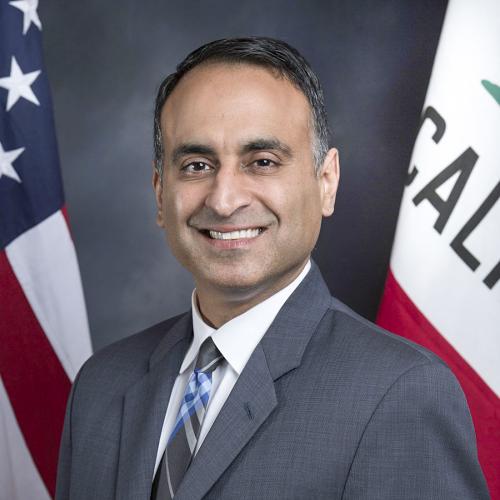
Asm. Ash Kalra
Sponsored bills
Existing law requires the Department of Forestry and Fire Protection, in accordance with policies established by the State Board of Forestry and Fire Protection, to assist local governments in preventing future high-intensity wildland fires and instituting appropriate fuels management by making its wildland fire prevention and vegetation management expertise available to local governments, as provided. This bill would define an environmentally sensitive vegetation management project to mean vegetation management that reduces catastrophic wildfire risk over the long term while supporting native wildlife and biodiversity. The bill would require a state public entity to consider incorporating specified criteria into its funding guidelines for a grant program that funds environmentally sensitive vegetation management projects.
Existing law establishes the Division of Labor Standards Enforcement, under the direction of the Labor Commissioner, within the Department of Industrial Relations and sets forth its powers and duties regarding the enforcement of labor laws. Existing law authorizes the commissioner to investigate employee complaints and to provide for a hearing in any action to recover wages, penalties, and other demands for compensation, as specified. Existing law provides that the judgment creditor, or the commissioner, as assignee of the judgment creditor, is entitled to court costs and reasonable attorney's fees for enforcing the judgment, as specified. This bill would instead require that the judgment creditor, or the Labor Commissioner or public prosecutor as assignee of the judgment creditor, be awarded the above-described court costs and reasonable attorney's fees. Existing law provides for enforcement if a final judgment against an employer arising from the employer's nonpayment of wages for work performed in this state remains unsatisfied after specified periods of time, including prohibiting the employer from conducting business in the state, as specified, if a final judgment against the employer remains unsatisfied for 30 days. This bill would additionally require the judgment debtor to be subject to a civil penalty not to exceed 3 times the outstanding judgment amount if a final judgment arising from the nonpayment of work performed in this state remains unsatisfied after a period of 180 days, as provided. The bill would require a court to award a prevailing plaintiff all reasonable attorney's fees and costs in any action brought by a judgment creditor, the commissioner, or a public prosecutor to enforce a final judgment arising from the nonpayment of wages, penalties, or other amounts owed arising from work performed in this state, as provided. This bill would also make findings and declarations related to its provisions.
Existing law establishes the Department of Industrial Relations in the Labor and Workforce Development Agency and requires the department to be conducted under the control of an executive officer known as the Director of Industrial Relations. Existing law states that the function of the department, among other things, is to foster, promote, and develop the welfare of the wage earners of California, to improve their working conditions, and to advance their opportunities for profitable employment and vests the department with responsibility for administering the state plan for the development and enforcement of occupational safety and health standards relating to issues covered by corresponding standards adopted pursuant to federal law. Existing law establishes the Occupational Safety and Health Standards Board within the department to adopt occupational safety and health standards for the state, including standards dealing with exposure to harmful airborne contaminants. Existing law requires the Division of Occupational Safety and Health within the department to enforce all occupational safety and health standards, as specified. A violation of these standards and regulations under specific circumstances is a crime. Existing law, the California Occupational Safety and Health Act of 1973 (OSHA) , requires employers to comply with certain safety and health standards, as specified, and charges the Division of Occupational Safety and Health with enforcement of the act. OSHA defines "serious injury or illness" for purposes of the act to mean any injury or illness occurring in a place of employment or in connection with any employment that results in one of a list of conditions, including inpatient hospitalization, as provided, the loss of a member of the body, any serious degree of permanent disfigurement, and impairment sufficient to cause a part of the body or the function of an organ to become permanently and significantly reduced in efficiency on or off the job, as specified. Under OSHA, certain knowing, negligent, or willful violations of safety and health standards are punishable as a misdemeanor. This bill would add silicosis and silica-related lung cancer to the list of conditions that, if resulting from an injury or illness occurring in a place of employment or in connection with an employment, would constitute a "serious injury or illness." By expanding the scope of a crime under OSHA, the bill would impose a state-mandated local program. OSHA creates a rebuttable presumption that a "serious violation" exists in a place of employment if the division demonstrates that there is a realistic possibility that death or serious physical harm could result from the actual hazard created by the violation. OSHA defines "serious physical harm" for purposes of that provision. This bill would expand that definition of "serious physical harm" to include silicosis and silica-related lung cancer. The bill would impose restrictions on specified high-exposure trigger tasks on artificial stone, as those terms are defined. Specifically, a person or entity engaged in high-exposure trigger tasks would be prohibited from using dry methods, and would be required to use effective wet methods when engaging in any high-exposure trigger tasks. The bill would make a violation of these provisions grounds for, among other disciplinary action, an immediate order by the division prohibiting continued work. The bill would require the division to enforce these provisions by issuing a citation alleging a violation and a notice of civil penalty. The bill would require the owner or operator of a fabrication shop, or any individual who will employ another individual to perform high-exposure trigger tasks in a fabrication shop, to ensure that an employee who will perform high-exposure tasks receives specified training and, beginning on July 1, 2026, and annually thereafter, to attest to the division that these employees have been trained. The bill would require the division to enforce these provisions by issuing a citation alleging a violation and a notice of civil penalty. The bill would require the State Department of Public Health to consider a report of silicosis related to occupational exposure to artificial stone a serious illness and to report that case to the division. The bill would require the division, if it receives such a report, to subject the employer or place of employment to investigation, as specified. The bill would require the division to notify the State Department of Public Health of any cases of silicosis related to artificial stone identified through enforcement activities. The bill would require the State Department of Public Health to conduct specified activities to address silicosis risk exposure in fabrication shops, including providing technical assistance to local health jurisdictions engaged in silicosis surveillance and prevention activities. The bill would define various terms for these purposes. The bill would make findings and declarations related to these provisions. Existing constitutional provisions require that a statute that limits the right of access to the meetings of public bodies or the writings of public officials and agencies be adopted with findings demonstrating the interest protected by the limitation and the need for protecting that interest. This bill would make legislative findings to that effect. The California Constitution requires the state to reimburse local agencies and school districts for certain costs mandated by the state. Statutory provisions establish procedures for making that reimbursement. This bill would provide that no reimbursement is required by this act for a specified reason.
Existing law establishes the Civil Rights Department within the Business, Consumer Services, and Housing Agency to enforce civil rights laws with respect to housing and employment and to protect and safeguard the right of all persons to obtain and hold employment without discrimination based on specified characteristics or status. Existing law requires a private employer that has 100 or more employees to submit an annual pay data report to the Civil Rights Department that includes the number of employees by race, ethnicity, and sex in 10 specified job categories, the number of employees by race, ethnicity, and sex whose pay falls within federal pay bands, within each job category the median and mean hourly rate for employees having any combination of those characteristics, and the total number of hours worked by each employee counted in each pay band during the "Reporting Year," as specified. This bill would require an employer to collect and store any demographic information gathered by an employer or labor contractor for the purpose of submitting the pay data report separately from employees' personnel records, and, beginning January 1, 2027, increase the number of job categories, as specified above, to 23. Existing law authorizes the department, if it does not receive the pay data report, to seek an order requiring an employer to comply with these provisions. Existing law provides that upon the request of the department, a court may impose a civil penalty upon any employer for failure to file the required report, which shall be payable to the Civil Rights Enforcement and Litigation Fund. This bill would require a court to impose a civil penalty against an employer that fails to file the report if requested to do so by the department.
Existing law establishes the Department of Industrial Relations within the Labor and Workforce Development Agency to, among other things, foster, promote, and develop the welfare of wage earners, to improve their working conditions, and to advance their opportunities for profitable employment. This bill would, until January 1, 2031, require the department, upon appropriation of funds for this purpose, to establish and maintain the California Workplace Outreach Program to promote awareness of, and compliance with, workplace protections that affect workers. The bill would require the department to issue a competitive request for application for qualified organizations, as defined, to provide education and outreach services to workers and to assist workers to assert their workplace rights. This bill would require the department to guide discussions with qualified organizations regarding priority topics for outreach and education and to consult with those organizations and the Labor and Workforce Development Agency and, as relevant, its departments and boards to create education and outreach materials informing workers of their rights on priority topics and training materials for workers and organizations. The bill would require the materials to be translated into non-English languages, to be determined by the department in consultation with each qualified organization, as appropriate for the geographic region the qualified organization serves, and would require the materials to be made in consultation and collaboration with the Civil Rights Department if those materials involve protections under the California Fair Employment and Housing Act or certain other statutes. The bill would require the department and qualified organizations to meet at least twice a year to coordinate outreach and education efforts and for qualified organizations to share information relevant to enforcement activities of the department.
Existing law governs the adoption of unmarried minors. Existing law grants a court of this state with jurisdiction of adoption proceedings for minors in specified circumstances, including, among others, when the minor and the prospective adoptive parent are physically present in this state and the minor has been abandoned or it is necessary in an emergency to protect the minor because the minor has been subjected to or threatened with mistreatment or abuse or is otherwise neglected. This bill would expand the court's jurisdiction to include adoption proceedings for California-born minors when (1) proceedings to free the minor from the custody and control of one or both parents are not required to make the minor available for adoption and (2) the proceedings to free the minor from the custody and control of one or both parents to make the minor available for adoption are being brought in this state. The bill would clarify that the above provisions do not limit jurisdiction that is otherwise permitted under the Interstate Compact on the Placement of Children. The bill would also require an adoption order issued for unmarried minors to include the names of the adoptive parent or parents and any existing parent or parents who will maintain their parental rights after the finalization of the adoption. Existing law sets forth the procedures for completing an independent adoption, including an investigation and a report by the State Department of Social Services or the delegated county adoption agency on the proposed independent adoption, as specified. For investigations involving petitioners who are residents of a state other than California, existing law requires a review of an updated and current home study report that was conducted and approved by a licensed adoption agency or other authorized resource in the state in which the petitioner resides if the standards and criteria for the home study report in the other state are substantially commensurate with the standards and criteria established in California adoption regulations. This bill would require a petitioner to be responsible for providing any additional documentation or information necessary to complete the investigation described above if the out-of-state home study report is not substantially commensurate with California standards or is otherwise missing required information.
Existing law generally regulates social media platforms, including, among other laws, the Protecting Our Kids from Social Media Addiction Act that prohibits an operator of an addictive internet-based service or application, including a social media platform, from providing an addictive feed, as defined, to a minor user, except as prescribed. This bill would enact the Social Media Warning Law that would require a covered platform, as defined, to display a certain black box warning to certain users each day the user initially accesses the social media platform, again after 3 hours of cumulative active use, and thereafter at least once per hour of cumulative active use, as prescribed. This bill would specify that its provisions shall not be interpreted to serve as the basis for a private right of action, as specified. The bill would make its provisions operative on January 1, 2027, and would declare these provisions severable.
(1) Existing law authorizes reproductive health care service providers, employees, volunteers, and patients, and individuals who face threats of violence or violence or harassment from the public because of their affiliation with a reproductive health care services facility, to complete an application to be approved by the Secretary of State for the purposes of enabling state and local agencies to respond to requests for public records without disclosing a program participant's residence address contained in any public record and otherwise provide for confidentiality of identity for that person, subject to specified conditions. Under existing law, any person who makes a false statement in an application is guilty of a misdemeanor. This bill would expand the address confidentiality program to a gender-affirming health care provider, employee, or volunteer, as defined, who faces threats of violence or harassment from the public because of their affiliation with a gender-affirming health care services facility. The bill would also make conforming changes. By imposing new duties on local agencies and expanding the scope of a crime, this bill would create a state-mandated local program. (2) Existing law prohibits a person, business, or association from knowingly publicly posting or publicly displaying, disclosing, or distributing on internet websites or on social media, the personal information or image of any reproductive health care services patient, provider, or assistant, or other individuals residing at the same home address, with the intent to incite a 3rd person to cause imminent great bodily harm to the person identified in the posting or display, or to a coresident of that person, as specified, or to threaten the person identified in the posting or display, or a coresident of that person, as specified. Existing law additionally prohibits a person, business, or association from soliciting, selling, or trading on the internet or social media the personal information or image of a reproductive health care services patient, provider, or assistant with the intent described above. Existing law establishes a cause of action for injunctive or declarative relief for a violation of these prohibitions. Existing law prohibits a person from posting on the internet or social media, with the intent that another person imminently use that information to commit a crime involving violence or a threat of violence against a reproductive health care services patient, provider, or assistant, or other individuals residing at the same home address, the personal information or image of a reproductive health care services patient, provider, or assistant, or other individuals residing at the same home address. Existing law makes a violation of this prohibition punishable by a fine of up to $10,000 per violation, imprisonment, as specified, or by both that fine and imprisonment. This bill would additionally prohibit a person, business, or association from soliciting, selling, or trading on the internet or social media the personal information or image of a gender-affirming health care services provider, employee, volunteer, or patient with the intent described above. The bill would also prohibit a person from posting on the internet or social media, as described above, the personal information or image of a gender-affirming health care services provider, employee, volunteer, or patient, or other individuals residing at the same home address. The bill would define various terms for these purposes. By expanding the scope of a crime, this bill would create a state-mandated local program. (3) Existing law, the California Uniform Controlled Substances Act (the act) , classifies controlled substances into 5 designated schedules, with the most restrictive limitations generally placed on controlled substances classified in Schedule I, and the least restrictive limitations generally placed on controlled substances classified in Schedule V. The act requires the Department of Justice to maintain the Controlled Substances Utilization Review and Evaluation System (CURES) for the electronic monitoring of the prescribing and dispensing of certain controlled substances by a health care practitioner authorized to prescribe, order, administer, furnish, or dispense those controlled substances. Existing law limits the entities to which data may be provided from CURES, as well as the type of data that may be released and the uses to which it may be put. Existing law makes a violation of the act a crime. Existing law defines the term "legally protected health care activity" to include the exercise of, or an act undertaken to aid a person to exercise, the provision of reproductive health care services, gender-affirming health care services, or gender-affirming mental health care services. This bill would prohibit a prescription for or the dispensing of testosterone or mifepristone from being reported to the department, CURES, or a contractor, as specified. The bill would require the department, on or before January 1, 2027, to remove certain existing records that were created or maintained prior to January 1, 2026, and make other conforming changes. By creating a new crime, the bill would establish a state-mandated local program. (4) Existing law authorizes a court to issue various orders relating to criminal investigations, including the interception of wire or electronic communications, the installation and use of a pen register or trap and trace device, or a search warrant upon specified grounds. Existing law prohibits the issuance of any orders or warrants for the purpose of investigating or recovering evidence of a prohibited violation. Existing law defines "prohibited violation" for this purpose as a violation of a law that creates liability for, or arising out of, either providing, facilitating, or obtaining an abortion or intending or attempting to provide, facilitate, or obtain an abortion that is lawful under the laws of this state. This bill would instead define a prohibited violation as a violation of a law that creates liability for, or arising out of, either providing, facilitating, or obtaining a legally protected health care activity or intending or attempting to provide, facilitate, or obtain a legally protected health care activity, as defined. (5) Existing law requires superior court judges in each county to prepare, adopt, and annually revise a uniform countywide schedule of bail for all bailable offenses, as specified. Existing law requires a uniform countywide schedule of bail to set $0 bail for an individual who has been arrested in connection with a proceeding in another state regarding an individual performing, supporting, or aiding in the performance of an abortion in this state, or an individual obtaining an abortion in this state, if the abortion is lawful under California law. This bill would instead require a uniform countywide schedule of bail to set $0 bail for an individual who has been arrested in connection with a proceeding in another state regarding an individual performing, supporting, or aiding in the performance of a legally protected health care activity in this state, or an individual obtaining a legally protected health care activity in this state, as specified. (6) Existing law prohibits a state or local law enforcement agency or officer from knowingly arresting or knowingly participating in the arrest of any person for performing, supporting, or aiding in the performance of an abortion or for obtaining an abortion, if the abortion is lawful in this state. Existing law prohibits a state or local public agency from cooperating with or providing information to an individual or agency from another state or a federal law enforcement agency, as specified, regarding a lawful abortion. Existing law prohibits specified persons, including a judicial officer, a court employee, or an authorized attorney, among others, from issuing a subpoena in connection with a proceeding in another state regarding an individual performing, supporting, or aiding in the performance of an abortion in this state, or an individual obtaining an abortion in this state, if the abortion is lawful in this state. Existing law does not prohibit the investigation of criminal activity that may involve an abortion, provided that no information relating to any medical procedure performed on a specific individual is shared with an agency or individual from another state for the purpose of enforcing another state's abortion law. This bill would instead expand those above-described provisions to apply to legally protected health care activity, as defined. (7) Existing law prohibits a state or local government employee or a person acting on behalf of the local or state government, among others, from providing information or expending resources in furtherance of an investigation that seeks to impose civil or criminal liability or professional sanctions on an individual for a legally protected health care activity, as defined, that occurred in this state or that would be legal if it occurred in this state. Existing law requires any out-of-state subpoena, warrant, wiretap order, pen register trap and trace order, or other legal process to include an affidavit or declaration under penalty of perjury that the discovery request is not in connection with an out-of-state proceeding relating to a legally protected health care activity, except as specified. This bill would authorize the Attorney General to bring a civil action against a person or entity that submitted a false affidavit under these provisions and would make submission of a false affidavit punishable by a civil penalty of $15,000, in addition to any other penalties or remedies provided by law. (8) Existing constitutional provisions require that a statute that limits the right of access to the meetings of public bodies or the writings of public officials and agencies be adopted with findings demonstrating the interest protected by the limitation and the need for protecting that interest. This bill would make legislative findings to that effect. (9) This bill would incorporate additional changes to Section 11165 of the Health and Safety Code proposed by SB 497 to be operative only if this bill and SB 497 are enacted and this bill is enacted last. (10) The California Constitution requires the state to reimburse local agencies and school districts for certain costs mandated by the state. Statutory provisions establish procedures for making that reimbursement. This bill would provide that with regard to certain mandates no reimbursement is required by this act for a specified reason. With regard to any other mandates, this bill would provide that, if the Commission on State Mandates determines that the bill contains costs so mandated by the state, reimbursement for those costs shall be made pursuant to the statutory provisions noted above.
Under existing law, a prisoner can reduce their term of imprisonment by earning credit for, among other things, continuous incarceration, good behavior, and participation in approved rehabilitative programming. Existing law makes an inmate of a county jail or state prison who has completed training for assignment to a conservation camp, state or county facility, or a correctional institution as an inmate firefighter, or who is assigned to a state or county facility or a correctional institution as an inmate firefighter, and who is eligible to earn one day of credit for every one day of incarceration, instead eligible to earn 2 days of credit for every one day served in that assignment or after completing that training. Existing law authorizes a juvenile court to order placement of a ward at the Pine Grove Youth Conservation Camp if specified criteria are met, including if the county has entered into a contract with the Department of Corrections and Rehabilitation and the department has found the ward amenable. Existing law authorizes the department to enter into contracts with counties to operate the Pine Grove Youth Conservation Camp through a state-local partnership, or other management arrangement, to train justice-involved youth, as specified, in wildland firefighting skills. This bill would require an incarcerated individual hand crew member, in addition to receiving credits, and a ward or youth hand crew member placed at the Pine Grove Youth Conservation Camp to be paid an hourly wage equal to $7.25 while assigned to an active fire incident. The bill would require that wage rate to be reviewed annually. The bill would require the Department of Corrections and Rehabilitation and counties to maintain regulations regarding an administrative adjudication and remedy process for any disputes over sums owned pursuant to these provisions. This bill would declare that it is to take effect immediately as an urgency statute.