

Existing law establishes the University of California under the administration of the Regents of the University of California. Existing law, the Higher Education Employer-Employee Relations Act, contains provisions relating to employer-employee relations between the State of California and the employees of the University of California. The act assigns major responsibilities for its implementation to the Public Employment Relations Board. A provision of the act relates to the factors to be considered in the determination of the appropriateness of an employee representation unit. The act specifies that the only appropriate representation units that include members of the Academic Senate of the University of California are either a single statewide unit consisting of all eligible members of the senate or divisional units consisting of all eligible members of a division of the senate. If the University of California adds to the academic senate an existing job classification that was previously outside of the academic senate, and employees in that job classification were represented by an exclusive representative, this bill would instead require continued representation of that job classification and those employees by that exclusive representative.
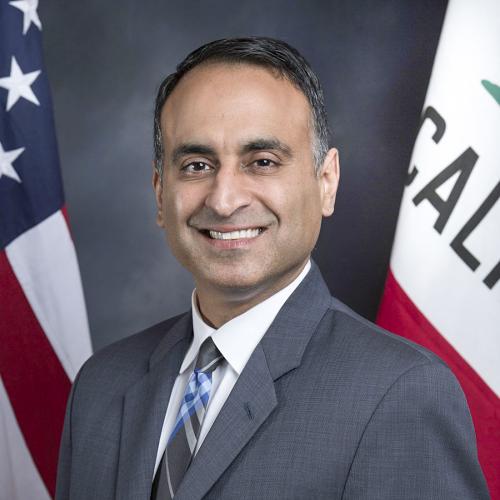
Asm. Ash Kalra
Sponsored bills
Existing law establishes the State Department of Social Services in the Health and Welfare Agency and sets forth its powers and duties relating to the administration of various programs relating to public social services. This bill would enact the Community Response Initiative to Strengthen Emergency Systems Act, or the C.R.I.S.E.S. Act, for purposes of creating, implementing, and evaluating the C.R.I.S.E.S. Grant Pilot Program, which the act would establish. The bill would require the department to administer the program if appropriate funding is made available to the department. The bill would require the department to award grants to qualified grantees, which include city, county, and tribal departments of social services, disability services, health services, public health, or behavioral health, based on grant eligibility criteria developed in partnership with a stakeholder workgroup. This bill would require each grantee to receive a minimum award of $250,000 per year under the program. The bill would require a grantee to award at least 90% of grant funds received to one or more qualifying community-based organizations, as defined. The bill would require funds awarded under the program to be utilized to create and strengthen community-based alternatives to law enforcement to lessen the reliance on law enforcement agencies as first responders to crisis situations unrelated to a fire department or emergency medical service response. This bill would require a grantee to report at least annually to the department on the use of funding awarded under the program. The bill would require the department to convene a stakeholder workgroup consisting of specified individuals to make recommendations to the department regarding the implementation of the program, as specified. This bill would establish the Community Response Initiative to Strengthen Emergency Systems Program Fund within the State Treasury, and would provide that, upon appropriation by the Legislature, the moneys may be expended by the department for purposes of the program. The bill would prohibit the department from expending more than 5% of appropriated funds on administrative costs, as specified. The bill would require the department to award all grants by January 1, 2023. This bill would authorize the department to implement, interpret, or make specific the provisions of the program without taking regulatory action, as specified. The bill would grant immunity to the state from liability resulting from the activities of a grantee or community-based organization under the program. This bill would repeal these provisions on June 30, 2026.
Existing law requires a public school maintaining any combination of classes from grade 6 to grade 12, inclusive, that meets a 40% pupil poverty threshold specified in federal law, to stock 50% of the school's restrooms with feminine hygiene products, and prohibits a public school from charging for any menstrual products provided to pupils. This bill would enact the Menstrual Equity for All Act of 2021, which would require a public school, as provided, maintaining any combination of classes from grades 6 to 12, inclusive, to stock the school's restrooms with an adequate supply of free menstrual products, as defined, available and accessible, free of cost, in all women's restrooms and all-gender restrooms, and in at least one men's restroom, at all times, and to post a designated notice, on or before the start of the 2022–23 school year, as prescribed. This bill would require the California State University and each community college district, and would encourage the Regents of the University of California and private universities, colleges, and institutions of higher learning, to stock an adequate supply of menstrual products, available and accessible, free of cost, at no fewer than one designated and accessible central location on each campus and to post a designated notice, as provided. By imposing additional requirements on public schools and community college districts, this bill would impose a state-mandated local program. The California Constitution requires the state to reimburse local agencies and school districts for certain costs mandated by the state. Statutory provisions establish procedures for making that reimbursement. This bill would provide that, if the Commission on State Mandates determines that the bill contains costs mandated by the state, reimbursement for those costs shall be made pursuant to the statutory provisions noted above.
Under existing law, classified employees of school districts and community college districts subject to layoff as a result of the expiration of a specially funded program at the end of a school year are required to be given written notice on or before April 29 informing them of certain rights. Existing law also requires that notice be given not less than 60 days before the effective layoff date if the termination date of a specially funded program is other than June 30, or if classified employees are subject to layoff as a result of a bona fide reduction or elimination of a service performed by a department. This bill instead would revise and recast provisions relating to the layoff of classified employees of school districts and community college districts to require certain notices and opportunities for a hearing when a permanent classified employee's services will not be required for the ensuing year due to lack of work or lack of funds. The bill would, for the purposes of specified notice and hearing rights, define "permanent classified employee" to include both an employee who was permanent at the time the notice or right to a hearing was required and an employee who became permanent after the date of the required notice. The bill would express the intent of the Legislature in enacting the bill to provide permanent classified school employees and those who become permanent classified school employees with the same rights to notice and hearing with respect to layoffs as are provided to certificated employees of school districts, including teachers and administrators, and academic employees of community college districts. If classified positions must be eliminated as a result of the expiration of a specially funded program, the bill would require written notice of the layoff date and certain rights be given to the classified employees not less than 60 days before the effective layoff date. If, after January 1, 2021, the Legislature provides certificated or academic employees with any additional rights to notice or hearing as to layoffs, the bill would require the respective permanent classified employees, as described, to be afforded the same rights by the school district or community college district, as applicable. To the extent school districts and community college districts are required to perform additional duties, the bill would impose a state-mandated local program. The California Constitution requires the state to reimburse local agencies and school districts for certain costs mandated by the state. Statutory provisions establish procedures for making that reimbursement. This bill would provide that, if the Commission on State Mandates determines that the bill contains costs mandated by the state, reimbursement for those costs shall be made pursuant to the statutory provisions noted above.
(1) Under existing law, the Public Utilities Commission has regulatory authority over public utilities, including telephone corporations. Existing law requires the commission to develop, implement, and administer the California Advanced Services Fund (CASF) to encourage deployment of high-quality advanced communications services to all Californians that will promote economic growth, job creation, and the substantial social benefits of advanced information and communications technologies. Existing law authorizes the commission to impose a surcharge to collect $330,000,000 for deposit into the CASF beginning January 1, 2018, and continuing through the 2022 calendar year. Existing law specifies the amount of surcharge revenues to be deposited into each account within the CASF, subject to appropriation by the Legislature. This bill would authorize the commission to impose the surcharge to fund the CASF until December 31, 2032, as specified. Existing law requires the commission, until April 1, 2023, to annually report specified information to the Legislature, including the remaining unserved areas in the state, the status of the CASF balance, and the projected amount to be collected in each year. This bill would require the commission to report that information in perpetuity. This bill would authorize the commission to require each internet service provider, as defined, to report specified information regarding each free, low-cost, income-qualified, or affordable internet service plan advertised by the provider. (2) Existing law requires the commission to require interconnected Voice over Internet Protocol service providers to collect and remit surcharges on their California intrastate revenues in support of specified public purpose program funds. Existing law authorizes those providers to use certain methodologies to identify their intrastate revenues subject to the surcharge. This bill would repeal that authorization to use those methodologies. (3) Existing law establishes the deaf and disabled telecommunications program and requires the commission to establish a rate recovery mechanism through a surcharge not to exceed 12 of 1% uniformly applied to a subscriber's intrastate telephone service, other than one-way radio paging service and universal telephone service, until January 1, 2025, to allow providers of equipment and service pursuant to that program to recover their costs as they are incurred. This bill would revise those requirements to instead require the commission to administer a surcharge to collect revenues of up to $100,000,000 per year until January 1, 2025, subject to annual appropriation of moneys by the Legislature, to allow providers of equipment and service pursuant to the deaf and disabled telecommunications program to recover their costs as they are incurred. (4) Under existing law, a violation of the Public Utilities Act or any order, decision, rule, direction, demand, or requirement of the commission is a crime. Because certain of the above provisions would be part of the act and a violation of a commission action implementing this bill's requirements would be a crime, the bill would impose a state-mandated local program. The California Constitution requires the state to reimburse local agencies and school districts for certain costs mandated by the state. Statutory provisions establish procedures for making that reimbursement. This bill would provide that no reimbursement is required by this act for a specified reason. (5) This bill would become effective only if SB 4 of the 2021–22 Regular Session is enacted and takes effect on or before January 1, 2022. (6) This bill would declare that it is to take effect immediately as an urgency statute.
(1) Existing law requires a pupil to complete designated coursework while in grades 9 to 12, inclusive, in order to receive a diploma of graduation from high school. These graduation requirements include, among others, the completion of 3 years of courses in English and 3 years of courses in social studies, including one-year courses in United States history and geography and world history, culture, and geography, a one-semester course in American government and civics, and a one-semester course in economics. Existing law requires the Instructional Quality Commission to develop, and the State Board of Education to adopt, modify, or revise, a model curriculum in ethnic studies. Existing law also encourages each school district and charter school that maintains any of grades 9 to 12, inclusive, and that does not otherwise offer a standards-based ethnic studies curriculum to offer, beginning in the school year following the adoption of the model curriculum, a course of study in ethnic studies based on the model curriculum. This bill would add the completion of a one-semester course in ethnic studies, meeting specified requirements, to the graduation requirements commencing with pupils graduating in the 2029–30 school year, including for pupils enrolled in a charter school. The bill would expressly authorize local educational agencies, including charter schools, to require a full-year course in ethnic studies at their discretion. The bill would require local educational agencies, including charter schools, to offer an ethnic studies course commencing with the 2025–26 school year, as specified. The bill would authorize, subject to the course offerings of a local educational agency, including a charter school, a pupil to satisfy the ethnic studies course requirement by completing either (A) a course based on the model curriculum in ethnic studies developed by the commission, (B) an existing ethnic studies course, (C) an ethnic studies course taught as part of a course that has been approved as meeting the A–G requirements of the University of California and the California State University, or (D) a locally developed ethnic studies course approved by the governing board of the school district or the governing body of the charter school. The bill would prohibit a course that does not use ethnic studies content as the primary content through which the subject is taught from being used to satisfy the ethnic studies course requirement. The bill would require a pupil who completes a course described above to also accrue credit for coursework in the subject that the course is offered, including, if applicable, credit towards satisfying a course required for a diploma of graduation from high school. These provisions would become operative only upon an appropriation of funds by the Legislature for these purposes in the annual Budget Act or another statute. Because the bill would add new duties to local educational agencies, it would constitute a state-mandated local program. (2) The California Constitution requires the state to reimburse local agencies and school districts for certain costs mandated by the state. Statutory provisions establish procedures for making that reimbursement. This bill would provide that, if the Commission on State Mandates determines that the bill contains costs mandated by the state, reimbursement for those costs shall be made pursuant to the statutory provisions noted above.
Existing law, the Student Loan Servicing Act, provides for the licensure, regulation, and oversight of student loan servicers by the Commissioner of Financial Protection and Innovation, who is the head of the Department of Financial Protection and Innovation. The act prohibits a person from engaging in the business of servicing a student loan in this state without a license, unless the person falls within certain exceptions. Existing law, the Student Borrower Bill of Rights, imposes requirements on a student loan servicer, including, among others, the timely posting, processing, and crediting of student loan payments, and applying overpayments consistent with the best financial interest of a student loan borrower. Existing law also prohibits a student loan servicer from engaging in unfair or deceptive practices, or abusive acts or practices in connection with the servicing of a student loan, and authorizes a person to bring an action for actual damages, injunctive relief, restitution, punitive damages, attorney's fees, and other relief, including treble damages in certain circumstances. This bill would enact the Private Student Loan Collections Reform Act, which would become operative July 1, 2022. The act would prohibit a private education lender or a private education loan collector, as defined, from making any written statement to a debtor in an attempt to collect a private education loan unless the private education lender or private education loan collector possesses certain information regarding the loan and provides this information to the debtor, as specified. The act would require all settlement agreements between a private education lender or private education loan collector and a debtor to be documented in open court or otherwise reduced to writing, as specified. The act would also require a private education lender or private education loan collector that accepts a payment as payment in full or as a full and final compromise of a private education loan, within 30 calendar days, to provide specified information to the debtor regarding the loan. The act would also prohibit a private education lender or private education loan collector from bringing suit or initiating an arbitration or other legal proceeding to collect a private education loan if the applicable statute of limitations on the claim has expired. The act would require a complaint, with respect to an action brought by a private education lender or private education loan collector to collect a private education loan, to contain specified information and would prohibit a default or other judgment from being entered against a defendant unless documents submitted to the court establish the facts alleged. The act would require a plaintiff seeking an exemption, as an exempt entity, from those requirements to attach to the complaint a declaration or affidavit, signed under penalty of perjury, stating certain information. By expanding the scope of the crime of perjury, the bill would create a state-mandated local program. The act would also authorize a person to bring a cause of action against a creditor, private education lender, or private education loan collector for violating the act for actual damages, statutory damages, restitution, and other specified relief. The California Constitution requires the state to reimburse local agencies and school districts for certain costs mandated by the state. Statutory provisions establish procedures for making that reimbursement. This bill would provide that no reimbursement is required by this act for a specified reason.
Existing law creates, in the Labor and Workforce Development Agency, the Employment Development Department, which is vested with the duties, purposes, responsibilities, and jurisdiction with respect to job creation activities. The department is authorized to study and make recommendations as to actions that might tend to do several things, including, but not limited to, promoting the prevention of unemployment and the stabilization of employment, reducing and preventing unemployment, and establishing the most effective methods of providing economic security through all forms of social insurance. This bill would require the department to develop and, upon appropriation by the Legislature, implement a recession plan to prepare for an increase in unemployment insurance compensation benefits claims due to an economic recession. The bill would require the plan to detail how to respond to economic downturns with a predetermined strategy that has considered the full effect on the department's operations, and include, but not be limited to, identifying the lessons learned from previous economic downturns, identifying ways to improve self-serve services to avoid long wait times to speak to staff, and enhancing claims processing tools to ensure that the department's identity verification processes are as robust as possible. The bill would require the department to provide a copy of the recession plan to specified legislative committees and the Department of Finance by March 1, 2022, and to update the recession plan and provide a copy to specified legislative committees and the Department of Finance every 2nd year thereafter.
Existing law prohibits granting probation or suspending a sentence for persons convicted of specified crimes relating to controlled substances, including possessing or agreeing to sell or transport opiates or opium derivatives, possessing or transporting cannabis, planting or cultivating peyote, and various crimes relating to forging or altering prescriptions, among other crimes, if the person has previously been convicted of any one of specified felony offenses relating to controlled substances. Existing law also prohibits granting probation or suspending a sentence for persons convicted of specified crimes relating to controlled substances, including possessing for sale or selling 14.25 grams or more of a substance containing heroin and possessing for sale 14.25 grams or more of any salt or solution of phencyclidine or its analogs, among other crimes. This bill would delete various crimes relating to controlled substances, including, but not limited to, the crimes described above, from those prohibitions against granting probation or a suspended sentence. The bill would authorize the remaining prohibitions on probation to be waived by a court in the interests of justice. By making additional persons eligible for probation, the bill would impose a state-mandated local program. The California Constitution requires the state to reimburse local agencies and school districts for certain costs mandated by the state. Statutory provisions establish procedures for making that reimbursement. This bill would provide that, if the Commission on State Mandates determines that the bill contains costs mandated by the state, reimbursement for those costs shall be made pursuant to the statutory provisions noted above.
Existing law, the Cemetery and Funeral Act, establishes the Cemetery and Funeral Bureau within the Department of Consumer Affairs and sets forth its powers and duties relating to the regulation of cemeteries, crematoria, funeral establishments, and their personnel. Existing law requires all securities purchased by, and all money received from, the trustor, as defined, for deposit in trust to be placed in trust within 30 days of receipt by the funeral establishment pursuant to a trust agreement executed by the funeral establishment, the trustor, and the trustee. Existing law requires the trustee, upon the signature of a majority of the trustees, to deliver the corpus of the trust and any income accrued in trust, as specified. Existing law specifies that a willful violation of the act is a crime. Existing law, the Unclaimed Property Law, provides that all intangible personal property maintained in a deposit or account, and the income or increment on that property held in a fiduciary capacity for the benefit of another that has remained unclaimed by the owner for more than 3 years escheats to the state. Under existing law, a person who claims to have been the owner, as defined, of property paid or delivered to the Controller under that law may file a claim to the property or to the net proceeds from its sale. Existing law requires to Controller to consider each claim, as specified, to determine if the claimant is the owner. This bill, commencing January 1, 2023, would recast provisions of the Cemetery and Funeral Act to permit the corpus of the trust and any income accrued in the trust, including interest, dividends, and capital gains, to escheat to the state, in accordance with the Unclaimed Property Law, if for more than 3 years after the funds became payable and distributable, as defined, to the funeral establishment or the trustor, the beneficiary or trustor has not corresponded electronically or in writing concerning the property or otherwise indicated an interest. The bill would require a funeral establishment to report and pay or deliver all unclaimed preneed funeral trust funds, including the corpus of the trust, together with any income accrued, less a revocation fee, to the Controller, as specified. This bill would specify that all funds maintained in a preneed funeral trust held by a trustee for a funeral establishment that has been dissolved, sold, closed, or had its license revoked shall be returned to the beneficiary, trustor, or the legal representative of either the beneficiary or trustor within 30 days of providing specified written notice to the trustee according to specified procedures if the funeral establishment does not transfer its preneed funeral agreements, or within 30 days of the beneficiary, trustor, or legal representative canceling the preneed funeral agreement according to specified procedures if the funeral establishment transfers its agreements. In the case of a funeral establishment that does not transfer its preneed funeral agreements, the bill would provide that if that person cannot be located or if that person does not provide written direction to the trustee to return the funds to them within 6 months of receiving specified notice, the funds escheat to the state in accordance with the Unclaimed Property Law, as specified. The bill would make other conforming changes. This bill would require, commencing January 1, 2023, a funeral establishment that intends to cease engaging in business operations by reason of dissolution, closure, sale, or revocation to also send notices to the bureau, beneficiaries or trustors, or their legal representatives, and trustees of preneed funeral agreements, as provided. The bill would require the notices to include specified information depending on whether the funeral establishment plans to transfer or not transfer its agreements to a licensed successor funeral establishment. The bill would require the notices to be sent on forms developed by the bureau and would require the bureau to develop the forms by January 1, 2023. The bill would require the bureau to adopt and post on its internet website, by January 1, 2023, regulations regarding the type of proof the funeral establishment ceasing operations and the licensed successor funeral establishment are required to retain or provide. Because this bill would change the definition of a crime, the bill would impose a state-mandated local program. The California Constitution requires the state to reimburse local agencies and school districts for certain costs mandated by the state. Statutory provisions establish procedures for making that reimbursement. This bill would provide that no reimbursement is required by this act for a specified reason.