

Existing law establishes the Department of Housing and Community Development (HCD) and requires it to administer various housing programs. Existing law establishes a program for providing rental assistance, using funding made available pursuant to existing federal law to provide financial assistance and housing stability services to eligible households, as provided, administered by HCD. This bill, in order to ensure that data is available for research and analysis to inform future state policy and programs, would require HCD to retain data from designated sources for at least 10 years, including data on the state rental assistance program, information submitted by eligible grantees that received the federal funding, and data on rental registries operated by local governments, as specified. The bill would prohibit personal information collected that pertains to the application for or receipt of rental assistance by any individual or household from being subject to public disclosure, as provided. Existing constitutional provisions require that a statute that limits the right of access to the meetings of public bodies or the writings of public officials and agencies be adopted with findings demonstrating the interest protected by the limitation and the need for protecting that interest. This bill would make legislative findings to that effect.
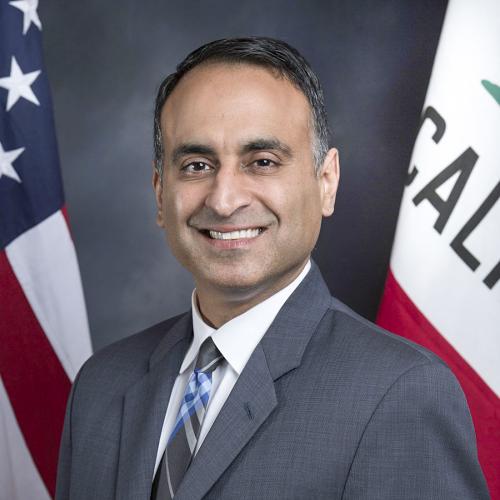
Asm. Ash Kalra
Sponsored bills
Existing law establishes the California Community Colleges, under the administration of the Board of Governors of the California Community Colleges, the California State University, under the administration of the Trustees of the California State University, the University of California, under the administration of the Regents of the University of California, independent institutions of higher education, and private postsecondary educational institutions as the segments of postsecondary education in the state. Existing law requires each campus of the California Community Colleges and the California State University, and requests each campus of the University of California, to identify in the online version of the campus course schedule its courses that exclusively use digital course materials, as specified, and communicate to students that the course materials for these courses are free of charge and therefore not required to be purchased. Provisions of the Donahoe Higher Education Act apply to the University of California only to the extent that the regents act, by resolution, to make them applicable. This bill would establish the Fair Access to College Textbooks Act as part of the Donahoe Higher Education Act. The act would prohibit a campus of the California Community Colleges, the California State University, an independent institution of higher education, or a private postsecondary educational institution from assessing an automatic charge for instructional materials, as defined, to a student, or enter into an agreement with a book publisher or other entity to assess the charge, unless certain conditions are met. The bill would request each campus of the University of California to comply with these provisions. The bill would provide that these provisions only apply to a contract entered into or renewed after January 1, 2022.
Existing law, commonly known as the Ellis Act, generally prohibits public entities from adopting any statute, ordinance, or regulation, or taking any administrative action, to compel the owner of residential real property to offer or to continue to offer accommodations, as defined, in the property for rent or lease. Existing law authorizes any public entity that has in effect any control or system of control on the price at which accommodations are offered for rent or lease to require by statute or ordinance, or by regulation, that the owner notify the entity of an intention to withdraw those accommodations from rent or lease, and to require that the notice contain specified statements. This bill would, when a public entity has a price control system in effect, prohibit an owner of accommodations from filing a notice with a public entity of an intent to withdraw accommodations or prosecuting an action to recover possession of accommodations, or threatening to do so, if not all the owners of the accommodations have been owners of record for at least 5 continuous years, with specified exceptions, or with respect to property that the owner acquired within 10 years after providing notice of an intent to withdraw accommodations at a different property. This bill would require an owner of accommodations notifying the public entity of an intention to withdraw accommodations from rent or lease, as provided, to identify each person or entity with an ownership interest in the accommodations, as provided. That information would be available for public inspection. The bill would prohibit an owner or any person or entity with an ownership interest from acting in concert with a coowner, successor owner, prospective owner, agent, employee, or assignee to circumvent these provisions. The bill would provide specified, nonexclusive remedies for a violation. The bill would include findings that changes proposed by this bill address a matter of statewide concern rather than a municipal affair and, therefore, apply to all cities, including charter cities.
Existing law establishes the Department of Housing and Community Development in the Business, Consumer Services, and Housing Agency and makes the department responsible for administering various housing programs throughout the state, including, among others, the Multifamily Housing Program, the Housing for a Healthy California Program, and the California Emergency Solutions Grants Program. This bill would establish the Reentry Housing and Workforce Development Program. The bill would require the department, on or before July 1, 2022, to take specified actions to, upon appropriation by the Legislature, provide grants to applicants, as defined, for innovative or evidence-based housing, housing-based services, and employment interventions to allow people with recent histories of incarceration to exit homelessness and remain stably housed. The bill would require the department to establish a process, in collaboration with the Department of Corrections and Rehabilitation and with counties in which recipients are operating, for referral of participants, in accordance with certain guidelines and procedures. The bill would require the department to score applicants to the program competitively according to specified criteria. The bill would require recipients of funds from the program to use those funds for, among other things, long-term rental assistance in permanent housing, incentives to landlords, and innovative or evidence-based services to assist participants in accessing permanent supportive housing. The bill would require the department to distribute funds allocated by executing contracts with awarded entities for a term of 5 years, subject to automatic renewal. The bill would require a recipient of the program to submit an annual report to the department. The bill would require the department to hire an independent evaluator to assess outcomes from the program and would require the department to submit that analysis to specified committees of the Legislature.
Existing law, the Healthy Workplaces, Healthy Families Act of 2014, requires employers to provide an employee, who works in California for 30 or more days within a year from the commencement of employment, with paid sick days for prescribed purposes, to be accrued at a rate of no less than one hour for every 30 hours worked. Existing law authorizes an employer to limit an employee's use of paid sick days to 24 hours or 3 days in each year of employment. Existing law charges the Labor Commissioner, who is the Chief of the Division of Labor Standards Enforcement, with enforcement of various labor laws. This bill, the Health Care Workers Recognition and Retention Act, would require a covered employer, as defined, to pay hazard pay retention bonuses in the prescribed amounts on January 1, 2022, April 1, 2022, July 1, 2022, and October 1, 2022, to each covered health care worker, as defined, that it employs. The bill would provide that hazard pay retention bonuses are in addition to all other compensation due and are not part of the health care worker's regular rate of pay or compensation. The bill would make it a violation of these provisions for a covered employer to discharge, layoff, or reduce a covered health care worker's compensation or hours so as to prevent that worker from receiving hazard pay retention bonuses, as specified. The bill would authorize a covered employer to reduce the total sum of the hazard pay retention bonuses by an amount equal to qualifying hazard pay and qualifying monetary bonuses already paid to a covered health care worker during the state of emergency related to the COVID-19 pandemic, as provided. The bill would state the intent of the Legislature that the provisions regarding the discharge, layoff, or reduction in a covered health care worker's compensation or hours in order to avoid paying the bonuses as being a violation of these provisions be retroactively applied to March 1, 2021. The bill would make a covered employer who violates these provisions liable for wages, civil penalties, and reasonable attorney's fees and costs, as specified. The bill would also authorize the commissioner to issue a citation against a covered employer or other person acting on behalf of the health care provider who violates this part, in accordance with certain procedures. The bill would authorize a covered employer to seek a complete or partial exemption from the hazard pay retention bonus requirements based on an inability to pay. The bill would require the commissioner, for a private employer, to make a determination of whether to grant the exemption based on an affidavit from the covered private employer, submitted under penalty of perjury, in which the covered private employer would be required to declare that specified conditions are true and accurate. By expanding the crime of perjury, the bill would impose a state-mandated local program. The bill would also require the commissioner to require the covered employer to pay an amount, not to exceed the reasonable administrative costs, of determining whether the employer is entitled to the exemption. The bill would provide that a covered health care provider that obtains an exemption from the commissioner pursuant to this provision may be eligible to receive grant moneys from a Health Care Worker Recognition and Retention Fund or other fund created by the Legislature for the purpose of providing hazard pay or bonuses to health care workers, upon meeting the requirements for disbursements from that fund. The bill would include related legislative findings. The bill would make the act inoperative on December 31, 2023. The California Constitution requires the state to reimburse local agencies and school districts for certain costs mandated by the state. Statutory provisions establish procedures for making that reimbursement. This bill would provide that no reimbursement is required by this act for a specified reason.
(1) Existing law provides for the licensure and regulation of various professions and vocations by boards within the Department of Consumer Affairs. Existing law establishes the California Board of Accountancy, which is within the Department of Consumer Affairs, and requires the board to license and regulate accountants in this state. This bill would require the board to prescribe rules relating to the requirements established in this bill for all licensees who plan, direct, or approve any financial or compliance audit report on school districts, county offices of education, and charter schools, as described in (6) below. (2) Existing law requires the Controller, in consultation with the Department of Finance and the State Department of Education, to develop a plan to review and report on financial and compliance audits, and with representatives of other entities, to recommend the statements and other information to be included in the audit reports filed with the state by local educational agencies, and to propose the content of an audit guide. This bill would require the Education Audits Appeal Panel to include in the audit guide, Standards and Procedures for Audits of California K–12 Local Educational Agencies, certain requirements on school districts, county offices of education, charter schools, and certified public accountants and public accountants who audit local educational agencies relating to attendance accounting documentation for independent study, including requiring these certified public accountants and public accountants to analyze enrollment at a charter school classified as a nonclassroom-based charter school each fiscal year, and to report to the State Department of Education any instance where enrollment increases or decreases by more than 5% at the charter school during any month over the prior month. By imposing additional duties on local educational agencies, the bill would impose a state-mandated local program. (3) Existing law, whenever in the Education Code the power to contract is invested in the governing board of a school district or any member thereof, authorizes that power, by a majority vote of the governing board, to be delegated to its district superintendent, or to any persons the district superintendent may designate, or if there is no district superintendent, to any other officer or employee of the district that the governing board may designate, as specified. Existing law similarly authorizes the designation of school district officers or employees to exercise the authority to purchase supplies, materials, apparatus, equipment, and services on behalf of the district. In the event of malfeasance in office, existing law requires the school district officer or employee invested by the governing board with the power to contract to be personally liable for any and all moneys of the school district paid out as a result of the malfeasance. This bill would add to existing law similar provisions relating to charter school governing bodies and charter school officials that may be designated by those governing bodies in these instances. (4) Existing law establishes the State Department of Education, under the administration of the Superintendent of Public Instruction, and assigns to it numerous duties relating to the governance and financing of the public elementary and secondary schools of this state. This bill would establish the Office of Inspector General in the department. The bill would provide for the appointment of the Inspector General by the Governor, subject to confirmation by a vote of the majority of the membership of the Senate. The bill would require the Inspector General to conduct and supervise audits and investigations relating to the programs and operations of the department, to provide leadership and coordination and recommend policies to prevent and detect fraud and abuse in programs and operations of the department, and to provide a means for keeping the Superintendent and the Legislature fully and currently informed about problems and deficiencies relating to the administration of the programs and operations of the department and the necessity for and progress of corrective actions that the Inspector General deems to be appropriate. (5) Existing law, with specified exceptions, authorizes school districts to operate programs of multitrack year-round scheduling at one or more schools within the district. This bill, beginning in the 2022–23 school year, would prohibit a school district or charter school from operating a program of multitrack year-round scheduling unless a multitrack calendar is authorized by the State Board of Education due to impacted facilities, as specified. (6) Existing law requires county superintendents of schools to provide for an audit of all funds under their jurisdiction and control, and requires the governing boards of each local educational agency to either provide for an audit of the books and accounts of the agency or make arrangements with county superintendents of schools to provide for that auditing. This bill, commencing with the 2022–23 fiscal year Guide for Annual Audits of K–12 Local Education Agencies and State Compliance Reporting, would require the Controller to include instructions requiring specified supplemental information and schedules in audit report components for charter school audits. The bill would require the instructions to ensure that all school districts, county offices of education, and charter schools are audited annually. The bill would also require specified training to be provided, pursuant to regulations adopted, on or before January 1, 2023, by the California Board of Accountancy, in consultation with other entities as prescribed, to certified public accountants and public accountants who audit local educational agencies, including charter schools. The bill would also require the board, in consultation with the prescribed entities, to adopt regulations, on or before January 1, 2023, providing for peer review of certified public accountants and public accountants, as specified. (7) Existing law requires the Commission on Teacher Credentialing, among other duties, to establish standards for the issuance and renewal of credentials, certificates, and permits. Existing law requires a county superintendent of schools to monitor and review school district certificated employee assignment practices, as provided. Existing law requires a county superintendent of schools to submit an annual report to the commission and the State Department of Education summarizing the results of all assignment monitoring and reviews. Existing law requires the commission to administer a State Assignment Accountability System to provide local educational agencies with a data system for assignment monitoring. Existing law requires the commission to annually use data it receives from the department to produce an initial data file of vacant positions and assignments that do not have a clear match of credential to assignment. Existing law requires a monitoring authority to review and determine any potential misassignments, as defined, reported in and identified through the system for local educational agencies within its authority, as provided. Existing law grants the commission the authority to make a final determination for all potential misassignments. Existing law requires, commencing with the 2020-21 school year, the commission to make annual misassignment and vacant position data publicly available on its internet website. Existing law specifies that, for these purposes, in a charter school, "misassignment" applies only to employees in teaching positions. This bill would delete the provision that limits the application of "misassignment" in charter schools only to employees in teaching positions. To the extent that this provision would create new duties for county superintendents of schools, it would constitute a state-mandated local program. The bill would require teachers of certain courses offered by a local educational agency to hold the certificate, permit, or other document required by the commission for that assignment and be monitored. The bill would require any person who is employed by a vendor providing direct services to pupils at a local educational agency for which certification qualifications are established to hold the certificate, permit, or other document required by the commission for their assignment, or would require supervision of pupils by an appropriate credentialholder, as specified, during services provided by the vendor. The bill would require direct services to pupils provided by the vendor to be standards-aligned curriculum. (8) Existing law establishes a system of financing public elementary and secondary schools in this state. This system includes the apportionment of state funds to local educational agencies based, to a significant degree, on the average daily attendance of pupils as reported to the State Department of Education by those local educational agencies. This bill would require the department to provide a report, including specified data, to the Legislature relating to the possible integration of the California Longitudinal Pupil Achievement Data System and the average daily attendance apportionment data system. The bill would authorize the State Board of Education to adopt regulations as it deems appropriate and consistent with these provisions. The bill would also, upon the operative date of the bill, require, as specified, the state board to adopt regulations specifying that the record of daily engagement is no longer required of a charter school day of nonclassroom-based independent study attendance. (9) The Charter Schools Act of 1992 authorizes the establishment, operation, and governance of charter schools. Existing law requires a petition to establish a charter school to include reasonably comprehensive descriptions of certain things, including the manner in which annual, independent financial audits shall be conducted, and the manner in which audit exceptions and deficiencies shall be resolved to the satisfaction of the chartering authority. The bill would require, not later than May 1 of each fiscal year, each chartering authority to provide for an audit of all funds of charter schools authorized by that authority, and would expressly require the governing body of each charter school to either provide for an audit of the books and accounts of the charter school or to make arrangements with the chartering authority to provide for that audit, as specified. The bill would require each chartering authority to certify specified data relating to the verification of the reporting of average daily attendance by nonclassroom-based charter schools. The bill would require the state board, in consultation with the Superintendent, to revise regulations to require charter schools to report periodic and annual financial data in the same manner and on the same form prescribed for school districts. The bill would phase in, from the 2023–24 fiscal year to the 2025–26 fiscal year, inclusive, and based on the average daily attendance of the charter school, the requirement that charter schools report this data in the same manner and on the same form prescribed for school districts. The bill would require the state board to appoint an advisory committee on charter schools that would include representatives from school district superintendents, charter schools, teachers, members of the governing boards of school districts, county superintendents of schools, and the Superintendent. The bill would limit the size of the totality of nonclassroom-based charter schools that a school district may authorize based on the average daily attendance of the school district. The bill would establish the Charter Authorizing Support Team program, which would be implemented only upon an appropriation for its purposes in the annual Budget Act or other statute, to be administered by the County Office Fiscal Crisis and Management Assistance Team, as an initiative to expand uniform charter school authorizing and oversight practices. The bill would specify the goals and proposed activities of the program, including the appointment of a 12-member advisory board with designated membership and responsibilities. The bill would require the Legislative Analyst's Office to submit to the Governor and the appropriate education policy and budget committees, on or before December 1, 2026, an evaluation of the program. The bill would require charter schools, in addition to complying with existing requirements relating to minimum minutes of instruction, to adhere to designated minimum schoolday requirements in applicable statutes generally relating to school districts. Existing law authorizes a chartering authority to charge for the actual costs of supervisorial oversight of a charter school (A) not to exceed 1% of the revenue of the charter school, or (B) not to exceed 3% of the revenue of the charter school if the charter school is able to obtain substantially rent-free facilities from the chartering authority. The bill would gradually change the costs a chartering authority can charge such that, on and after July 1, 2023, the chartering authority could charge for the actual costs of supervisorial oversight of a charter school (A) not to exceed 3% of the revenue of the charter school, or (B) not to exceed 2% of the revenue of the charter school if the charter school is able to obtain substantially rent-free facilities from the chartering authority. On and after July 1, 2022, the bill would require charter schools to comply with specified requirements relating to the expenditure of public funds for the payment of vendors, and would require the extent of the charter school's compliance with these requirements to be reviewed and reported as part of the annual, independent financial audit that the charter school is required to submit. The bill would revise and recast provisions of the act relating to the reporting of average daily attendance by charter schools, and would distinguish between the reporting of average daily attendance for classroom-based instruction and the reporting of average daily attendance for nonclassroom-based instruction. To the extent that these additions to the act would impose new duties on local educational agencies, they would constitute a state-mandated local program. The bill would also make various conforming changes to the act. (10) Existing law requires community school and independent study average daily attendance to be claimed by school districts, county superintendents of schools, and charter schools only for pupils who are residents of the county in which the apportionment claim is reported, or who are residents of a county immediately adjacent to the county in which the apportionment claim is reported. This bill would delete the provision allowing community school and independent study average daily attendance to be claimed by nonclassroom-based charter schools for residents of a county immediately adjacent to the county in which the apportionment claim is reported. (11) Existing law authorizes the governing boards of school districts and county offices of education to offer independent study to meet the educational needs of pupils when certain requirements are met. Existing law prohibits courses that are required for high school graduation from being offered exclusively through independent study. This bill would recast and revise provisions related to the calculation of average daily attendance for independent study pupils, and extend the scope of those provisions to charter schools. These provisions would become operative on July 1, 2022. (12) Existing law prohibits a school district or county office of education from being eligible to receive apportionments for independent study by pupils unless the school district or county office has adopted written policies, and implemented those policies, in accordance with rules and regulations adopted by the Superintendent, as specified. This bill would extend this prohibition to charter schools, and would add requirements to the independent study policies and procedures. The bill would require that an independent study written agreement, with specified content, be agreed to and signed, under penalty of perjury. This provision would impose a state-mandated local program by imposing new duties on local educational agencies and by creating a new crime. The bill would require the course of study, including specific courses, offered through independent study to be annually certified by a school district, county office of education, or charter school governing board or body resolution, to be of the same rigor and educational quality as an equivalent classroom-based course of study, and to be aligned to relevant local and state content standards. These provisions would become operative on July 1, 2022, and to the extent that they impose new duties on local educational agencies, would constitute a state-mandated local program. (13) This bill would make certain provisions relating to independent study, and rendered duplicative by other provisions added by this bill, inoperative on July 1, 2022, and would repeal these provisions as of January 1, 2023. (14) The Local Agency Public Construction Act regulates, among other things, the letting of contracts by school district governing boards involving an expenditure of more than $50,000 for specified purposes, including the purchase of equipment, materials, or supplies to be furnished, sold, or leased to the district, services other than construction services, and repairs, including maintenance, as defined. This bill would extend to charter schools the provisions of the act that currently apply to school districts. To the extent the bill would impose additional duties on charter schools, the bill would impose a state-mandated local program. (15) The California Constitution requires the state to reimburse local agencies and school districts for certain costs mandated by the state. Statutory provisions establish procedures for making that reimbursement. This bill would provide that with regard to certain mandates no reimbursement is required by this act for a specified reason. With regard to any other mandates, this bill would provide that, if the Commission on State Mandates determines that the bill contains costs so mandated by the state, reimbursement for those costs shall be made pursuant to the statutory provisions noted above.
The Political Reform Act of 1974 provides for the comprehensive regulation of campaign financing, including requiring elected officials, candidates for elective office, committees formed primarily to support or oppose a candidate for public office or a ballot measure, and other entities to file periodic campaign statements and reports concerning campaign finances. This bill would require a limited liability company that qualifies as a committee or a sponsor of a committee under the act, as specified, to file a statement of members with the Secretary of State. The bill would require the statement of members to include certain information about the limited liability company, including a list of all persons who have a membership interest in the limited liability company of at least 10% or who made a cumulative capital contribution of at least $10,000 to the limited liability company after it qualified as a committee or sponsor of a committee, or within the 2 calendar quarters before it qualified. Existing law makes a knowing or willful violation of the Political Reform Act of 1974 a misdemeanor. By expanding the scope of an existing crime, this bill would impose a state-mandated local program. The California Constitution requires the state to reimburse local agencies and school districts for certain costs mandated by the state. Statutory provisions establish procedures for making that reimbursement. This bill would provide that no reimbursement is required by this act for a specified reason. The Political Reform Act of 1974, an initiative measure, provides that the Legislature may amend the act to further the act's purposes upon a 23 vote of each house of the Legislature and compliance with specified procedural requirements. This bill would declare that it furthers the purposes of the act.
The California Drought, Water, Parks, Climate, Coastal Protection, and Outdoor Access For All Act of 2018, approved by the voters as Proposition 68 at the June 5, 2018, statewide primary direct election, authorizes the issuance of bonds in the amount of $4,100,000,000 pursuant to the State General Obligation Bond Law to finance a drought, water, parks, climate, coastal protection, and outdoor access for all program. Article XVI of the California Constitution requires measures authorizing general obligation bonds to specify the single object or work to be funded by the bonds and further requires a bond act to be approved by a 23 vote of each house of the Legislature and a majority of the voters. This bill would enact the Safe Drinking Water, Wildfire Prevention, Drought Preparation, Flood Protection, Extreme Heat Mitigation, and Workforce Development Bond Act of 2022, which, if approved by the voters, would authorize the issuance of bonds in the amount of $7,080,000,000 pursuant to the State General Obligation Bond Law to finance projects for safe drinking water, wildfire prevention, drought preparation, flood protection, extreme heat mitigation, and workforce development programs. This bill would provide for the submission of these provisions to the voters at the June 7, 2022, statewide primary election. This bill would declare that it is to take effect immediately as an urgency statute.
Existing law imposes various taxes, including personal income and excise taxes. The California Constitution requires a 23 vote of both houses of the Legislature for the passage of any change in statute that results in any taxpayer paying a higher tax. The California Constitution generally prohibits the total annual appropriations subject to limitation of the state and each local government from exceeding the appropriations limit of the entity of government for the prior fiscal year, adjusted for the change in the cost of living and the change in population, and prescribes procedures for making adjustments to the appropriations limit. This measure would impose an excise tax, payroll taxes, and a State Personal Income CalCare Tax at specified rates to fund comprehensive universal single-payer health care coverage and a health care cost control system for the benefit of every resident of the state, as well as reserves deemed necessary to ensure payment, to be established in statute. The measure would authorize the Legislature, upon an economic analysis determining insufficient amounts to fund these purposes, to increase any or all of these tax rates by a statute passed by majority vote of both houses of the Legislature. This measure would establish the CalCare Trust Fund in the State Treasury and would deposit these tax revenues in the fund for the purpose of funding this health care coverage, cost control system, and reserves, and would authorize the Legislature to appropriate these funds by a statute passed by a majority vote of the membership of both houses. The measure would exclude appropriations of revenues from the CalCare Trust Fund from the limitation on appropriations and from consideration for purposes of educational funding mandated by the California Constitution. This measure would prohibit the above-described provisions from becoming operative until the later operative date of a statute that establishes comprehensive universal single-payer health care coverage, a health care cost control system, and necessary reserves, and a statute that establishes the administration, collection, and enforcement of the excise tax, payroll taxes, and a State Personal Income CalCare Tax imposed by the measure.