

Employer-provided benefits: health care workers: COVID-19: hazard pay retention bonuses.
Summary
Existing law, the Healthy Workplaces, Healthy Families Act of 2014, requires employers to provide an employee, who works in California for 30 or more days within a year from the commencement of employment, with paid sick days for prescribed purposes, to be accrued at a rate of no less than one hour for every 30 hours worked. Existing law authorizes an employer to limit an employee's use of paid sick days to 24 hours or 3 days in each year of employment. Existing law charges the Labor Commissioner, who is the Chief of the Division of Labor Standards Enforcement, with enforcement of various labor laws. This bill, the Health Care Workers Recognition and Retention Act, would require a covered employer, as defined, to pay hazard pay retention bonuses in the prescribed amounts on January 1, 2022, April 1, 2022, July 1, 2022, and October 1, 2022, to each covered health care worker, as defined, that it employs. The bill would provide that hazard pay retention bonuses are in addition to all other compensation due and are not part of the health care worker's regular rate of pay or compensation. The bill would make it a violation of these provisions for a covered employer to discharge, layoff, or reduce a covered health care worker's compensation or hours so as to prevent that worker from receiving hazard pay retention bonuses, as specified. The bill would authorize a covered employer to reduce the total sum of the hazard pay retention bonuses by an amount equal to qualifying hazard pay and qualifying monetary bonuses already paid to a covered health care worker during the state of emergency related to the COVID-19 pandemic, as provided. The bill would state the intent of the Legislature that the provisions regarding the discharge, layoff, or reduction in a covered health care worker's compensation or hours in order to avoid paying the bonuses as being a violation of these provisions be retroactively applied to March 1, 2021. The bill would make a covered employer who violates these provisions liable for wages, civil penalties, and reasonable attorney's fees and costs, as specified. The bill would also authorize the commissioner to issue a citation against a covered employer or other person acting on behalf of the health care provider who violates this part, in accordance with certain procedures. The bill would authorize a covered employer to seek a complete or partial exemption from the hazard pay retention bonus requirements based on an inability to pay. The bill would require the commissioner, for a private employer, to make a determination of whether to grant the exemption based on an affidavit from the covered private employer, submitted under penalty of perjury, in which the covered private employer would be required to declare that specified conditions are true and accurate. By expanding the crime of perjury, the bill would impose a state-mandated local program. The bill would also require the commissioner to require the covered employer to pay an amount, not to exceed the reasonable administrative costs, of determining whether the employer is entitled to the exemption. The bill would provide that a covered health care provider that obtains an exemption from the commissioner pursuant to this provision may be eligible to receive grant moneys from a Health Care Worker Recognition and Retention Fund or other fund created by the Legislature for the purpose of providing hazard pay or bonuses to health care workers, upon meeting the requirements for disbursements from that fund. The bill would include related legislative findings. The bill would make the act inoperative on December 31, 2023. The California Constitution requires the state to reimburse local agencies and school districts for certain costs mandated by the state. Statutory provisions establish procedures for making that reimbursement. This bill would provide that no reimbursement is required by this act for a specified reason.
Bill status
died
1 of 4 stages cleared
Introduction
Feb 2021
Committee Review
Floor Vote
Governor
Introduced Feb 12, 2021
Last action Feb 1, 2022
Floor votes
How they voted
No floor votes recorded yet.
Full legislative history
Actions timeline
Total actions
15
Key actions
4
Committee
6
Amendments
5
Jun 1, 2021
Lower · Passed
Read third time and amended. Ordered to third reading. (Page 1709.)
lower
May 24, 2021
Lower · Passed
Read second time and amended. Ordered returned to second reading.
lower
May 20, 2021
Introduced
From committee: Amend, and do pass as amended. (Ayes 9. Noes 1.) (May 20).
lower
May 12, 2021
Committee
In committee: Set, first hearing. Referred to APPR. suspense file.
lower
Apr 26, 2021
Lower · Passed
From committee: Do pass and re-refer to Com. on APPR. (Ayes 5. Noes 2.) (April 22). Re-referred to Com. on APPR.
lower
Apr 13, 2021
Committee
Re-referred to Com. on L. & E.
lower
Apr 12, 2021
Introduced
From committee chair, with author's amendments: Amend, and re-refer to Com. on L. & E. Read second time and amended.
lower
Mar 26, 2021
Committee
Re-referred to Com. on L. & E.
lower
Mar 25, 2021
Introduced
From committee chair, with author's amendments: Amend, and re-refer to Com. on L. & E. Read second time and amended.
lower
Mar 25, 2021
Committee
Referred to Com. on L. & E.
lower
Feb 13, 2021
Lower · Passed
From printer. May be heard in committee March 15.
lower
1 primary · 2 co-sponsors
Sponsors
Role
Legislator
Party
State
District
P
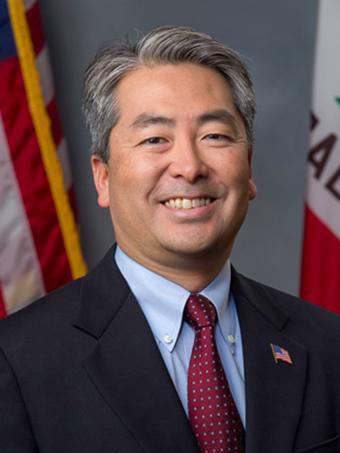
Al Muratsuchi
DDemocratic
Co
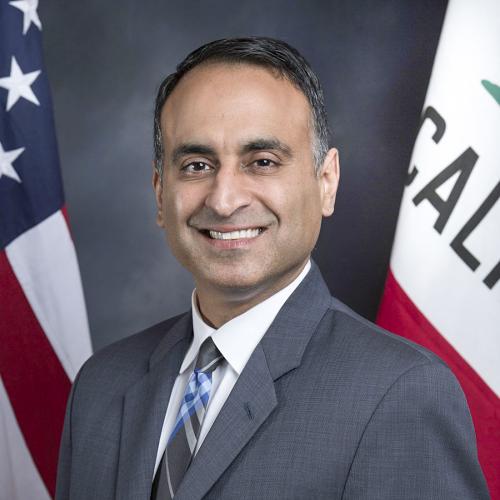
Ash Kalra
DDemocratic
Co
Freddie Rodriguez
DDemocratic
Ask Maddy
·
AI policy assistant
Ask Maddy about AB 650
Scope: CA
Hi! I can help you understand AB 650. What would you like to know?
Try one of these
i
Maddy answers using official bill text and legislative records. Always verify before sharing.
Sources cited inline