

Existing law, the Mental Health Services Act, an initiative statute enacted by the voters as Proposition 63 at the November 2, 2004, statewide general election, funds a system of county mental health plans for the provision of mental health services, as specified. Existing law establishes the continuously appropriated Mental Health Services Fund. Existing law requires the Controller, prior to distributing the balance of the funds to the counties, as specified, to reserve up to 5% of the total annual revenues of the fund for the costs for the State Department of Health Care Services, the California Behavioral Health Planning Council, the Office of Statewide Health Planning and Development, the Mental Health Services Oversight and Accountability Commission, the State Department of Public Health, and any other state agency to implement all duties pursuant to the programs set forth in the act. This bill would amend Proposition 63 by appropriating $20,000,000 annually from the administrative account of the Mental Health Services Fund to the University of California, if the University of California chooses to accept the moneys, the California State University, and the California Community Colleges, as specified, to implement the College Mental Health Services Program. The bill would require those funds to be used for the purpose of funding programs to increase campus student mental health services and mental health-related education and training. The bill would require campuses that participate in the program to report on the use of those grant funds, as specified, and to post that information on their internet websites.
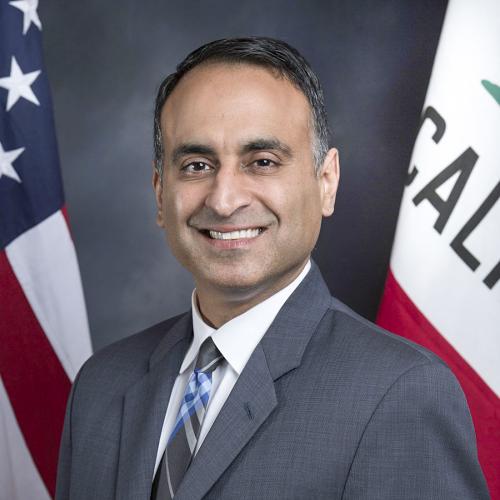
Asm. Ash Kalra
Sponsored bills
Existing law provides that it is the Department of Fish and Wildlife's mission to manage California's diverse fish, wildlife, and plant resources, and the habitats upon which they depend, for their ecological values and for their use and enjoyment of the public. Existing law provides that one of the department's core programs is biodiversity conservation. This bill would establish the Biodiversity Protection and Restoration Act and would provide that it is the policy of the state that all state agencies, boards, and commissions shall utilize their authorities in furtherance of the biodiversity conservation purposes and goals of certain executive orders. The bill would require all state agencies, boards, and commissions to consider and prioritize the protection of biodiversity in carrying out their statutory mandates. The bill would require strategies related to the goal of the state to conserve at least 30% of California's land and coastal waters by 2030 to be made available to the public and provided to certain legislative committees by no later than June 30, 2022.
The Political Reform Act of 1974 imposes various limitations on contributions that may be made to, or accepted by, candidates for elective office. A violation of the act's provisions is punishable as a misdemeanor and subject to specified penalties. This bill, the Corporate-Free Elections Act, would prohibit a candidate for elective office from receiving a contribution from a business entity, and a business entity from making a contribution to a candidate for elective office, and would make related findings and declarations. By expanding the scope of existing crimes with regard to contribution limitations, this bill would impose a state-mandated local program. The California Constitution requires the state to reimburse local agencies and school districts for certain costs mandated by the state. Statutory provisions establish procedures for making that reimbursement. This bill would provide that no reimbursement is required by this act for a specified reason. The Political Reform Act of 1974, an initiative measure, provides that the Legislature may amend the act to further the act's purposes upon a 23 vote of each house of the Legislature and compliance with specified procedural requirements. This bill would declare that it furthers the purposes of the act.
Existing law requires the Department of Food and Agriculture to promote and protect the agricultural industry of the state. Existing law under Article XVI of the California Constitution requires measures authorizing general obligation bonds to specify the single object or work to be funded by the bonds and further requires a bond act to be approved by a 23 vote of each house of the Legislature and a majority of the voters. This bill would enact the Equitable Economic Recovery, Healthy Food Access, Climate Resilient Farms, and Worker Protection Bond Act of 2022, which, if approved by the voters, would authorize the issuance of bonds in the amount of $3,302,000,000 pursuant to the State General Obligation Bond Law, to finance programs related to, among other things, agricultural lands, food and fiber infrastructure, climate resilience, agricultural professionals, including farmers, ranchers, and farmworkers, workforce development and training, air quality, tribes, disadvantaged communities, nutrition, food aid, meat processing facilities, fishing facilities, and fairgrounds. The bill would provide for the submission of the bond act to the voters at the November 8, 2022, statewide general election.
Existing law, the Compassionate Use Act of 1996, an initiative measure enacted by the approval of Proposition 215 at the November 6, 1996, statewide general election, authorizes the use of cannabis for medical purposes and provides certain protections to a physician and surgeon who recommends the use of medical cannabis to a patient. The Control, Regulate and Tax Adult Use of Marijuana Act of 2016 (AUMA) , an initiative measure approved as Proposition 64 at the November 8, 2016, statewide general election, authorizes a person who obtains a state license under AUMA to engage in commercial adult-use cannabis activity pursuant to that license and applicable local ordinances. The Medicinal and Adult-Use Cannabis Regulation and Safety Act (MAUCRSA) , among other things, provides for the licensure and regulation of commercial medicinal and adult-use cannabis activities and states that the purpose and intent of MAUCRSA is to establish a comprehensive system to control and regulate the cultivation, distribution, transport, storage, manufacturing, processing, and sale of both medicinal cannabis and medicinal cannabis products for patients with a valid physician recommendation and adult-use cannabis and adult-use cannabis products for adults 21 years of age and over. MAUCRSA defines various terms for these purposes, including "cannabis," "cannabis products," "cannabis concentrate," and "edible cannabis product." The Veterinary Medicine Practice Act provides for the licensure and regulation of veterinarians and the practice of veterinary medicine by the Veterinary Medical Board, which is within the Department of Consumer Affairs. The act authorizes the board to revoke or suspend the license of a person to practice veterinary medicine, or to assess a fine, for specified causes, including discussing medicinal cannabis with a client while the veterinarian is employed by, or has an agreement with, a MAUCRSA licensee and distributing advertising for cannabis in California. The act prohibits the board from disciplining a licensed veterinarian solely for discussing the use of cannabis on an animal for medicinal purposes, absent negligence or incompetence. The act requires the board, on or before January 1, 2020, to adopt guidelines for veterinarians to follow when discussing cannabis within the veterinarian-client-patient relationship. The act prohibits a licensed veterinarian from dispensing or administering cannabis or cannabis products to an animal patient. This bill would additionally prohibit the board from disciplining a veterinarian licensed under the act who recommends the use of cannabis on an animal for potential therapeutic effect or health supplementation purposes, unless the veterinarian is employed by or has an agreement with a cannabis licensee, as specified. The bill would require the board to adopt guidelines, on or before January 1, 2023, for veterinarians to follow when recommending cannabis within the veterinarian-client-patient relationship, and would require the board to post the guidelines on its internet website. This bill would revise the definitions of "cannabis products," "cannabis concentrate," and "edible cannabis product" under MAUCRSA to include products intended to be used for therapeutic effect or health supplementation use on, or for consumption by, an animal. The bill would define "animal" for these purposes to mean any member of the animal kingdom other than humans, including fowl, fish, and reptiles, wild or domestic, whether living or dead, but would exclude livestock and food animals, as specified. AUMA authorizes legislative amendment of its provisions with a 23 vote of both houses, without submission to the voters, to further its purposes and intent. This bill would declare that its provisions further the purposes and intent of AUMA.
The Personal Income Tax Law and California Constitution impose taxes based upon taxable income of individuals, estates, and trusts at specified rates. This bill, for taxable years beginning on or after January 1, 2021, in addition to those taxes, would impose an additional tax of at the rates of 1%, 3%, and 3.5% on that portion of a taxpayer's taxable income over specified thresholds, as provided. This bill would include a change in state statute that would result in a taxpayer paying a higher tax within the meaning of Section 3 of Article XIIIA of the California Constitution, and thus would require for passage the approval of 23 of the membership of each house of the Legislature. This bill would take effect immediately as a tax levy.
Existing law imposes various sentence enhancements, consisting of additional and consecutive terms of imprisonment, including, among others, enhancements for being armed with a firearm during the commission of a felony, being armed with a firearm during the commission of a street gang crime, as defined, being armed with ammunition designed to penetrate armor during the commission of a felony, furnishing a firearm to another for the purpose of aiding, abetting, or enabling that person to commit a felony, and using a firearm during the commission of a felony. This bill would repeal those enhancements and make conforming changes. Existing law imposes a sentence enhancement in the state prison of 10 years for personally using a firearm in the commission of specified felonies, 20 years for personally and intentionally discharging a firearm in the commission of those felonies, and 25 years to life for personally and intentionally discharging a firearm and causing great bodily injury or death to any other person during the commission of those felonies. This bill would reduce those enhancements to 1, 2, and 3 years, respectively. Existing law imposes a sentence enhancement of 5, 6, or 10 years in the state prison for, with intent to inflict great bodily injury or death, discharging a firearm from a motor vehicle in the commission of a felony and inflicting great bodily injury or death in the commission of a felony. This bill would reduce that enhancement to 1, 2, or 3 years in the state prison. This bill would additionally authorize a person serving a term for those provisions as they read on or before December 31, 2021, to petition the court for a recall of sentence and to request resentencing in accordance with these changes.
Existing law requires the governing board of a school district to give diligent care to the health and physical development of pupils and authorizes the governing board of a school district to employ properly certified persons for the work. Existing law authorizes the governing board of a school district to provide a comprehensive educational counseling program for all pupils enrolled in the school district. This bill would establish the California Student Success Coach Grant Program to award competitive grants to local- and state-operated AmeriCorps programs to support and expand the presence of student success coaches, as defined, in high-need schools, as defined. The bill would make implementation of the grant program contingent on an appropriation being made for its purposes by the Legislature in the annual Budget Act or another statute.
Existing law establishes the California Health and Human Services Agency (CHHSA) , which includes departments charged with the administration of health, social, and other human services. Existing law requires CHHSA to enter into partnerships to increase patient access to affordable drugs and to produce or distribute generic prescription drugs and at least one form of insulin, as specified. This bill would create the Affordable Prescription Drug Importation Program in CHHSA, under which the state would be a licensed wholesaler that imports prescription drugs, as specified, for the exclusive purpose of dispensing those drugs to program participants. The bill would require CHHSA to seek federal approval for the importation program on or before June 1, 2022, and would require CHHSA to contract with at least one contracted importer to provide services under the importation program within 6 months of receiving federal approval. The bill would require a contracted importer to, among other things, establish a wholesale prescription drug importation list that identifies the prescription drugs that have the highest potential for cost savings to the state and identify and contract with eligible Canadian suppliers who have agreed to export prescription drugs on that list. This bill would authorize a contracted importer to import a prescription drug from a Canadian supplier if specified requirements are met. The bill would authorize CHHSA to expand the importation program to authorize a manufacturer, wholesale distributor, or pharmacy in a foreign country other than Canada to export prescription drugs to California if specified requirements are met, including a change in federal law. If the importation program is expanded, the bill would authorize a contracted importer to import prescription drugs from a manufacturer, wholesale distributor, or pharmacy in a foreign country other than Canada.
Existing law establishes the California Workforce Development Board as the body responsible for assisting the Governor in the development, oversight, and continuous improvement of California's workforce investment system and the alignment of the education and workforce investment systems to the needs of the 21st century economy and workforce. This bill would require the board, upon appropriation of funds by the Legislature for this purpose, to establish and maintain an outreach, education, and certification program, with specified purposes, including training restaurant employees, managers, and employers to identify and address disparities in their workforce and implementing high-road employment policies that promote equity of income and career pathways for people of color, immigrants, women, and people who are transgender, nonbinary, or intersex. This bill would require the board to contract with one or more qualified community-based organizations, chosen on a competitive basis, to provide education, certification, and technical support services that promote equity of income and career pathways in the restaurant industry for certain groups. The bill would require the community-based organization to be responsible for developing, in consultation with the board, the core assessment and education and outreach materials, as provided. The bill would require the board to have final approval over the education and outreach materials.