Existing law, commencing January 1, 2025, prohibits a person or entity from manufacturing, selling, delivering, holding, or offering for sale in commerce any cosmetic product that contains any of several specified intentionally added ingredients except under specified circumstances. This bill would, commencing January 1, 2027, expand that prohibition by adding specified banned ingredients.
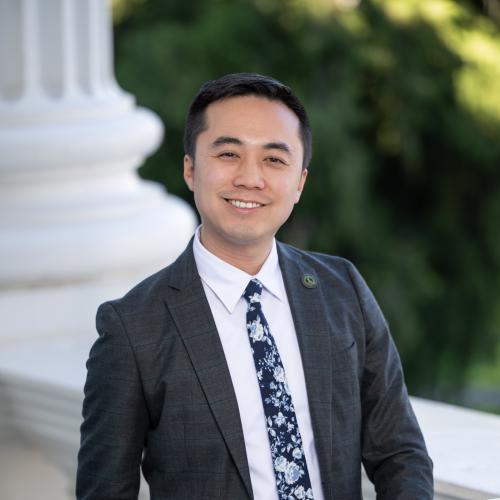
Asm. Alex Lee
Sponsored bills
Existing law establishes various holidays in this state, including Lunar New Year. Existing law requires community colleges to close on specified holidays, including February 12, known as "Lincoln Day," and the third Monday in February, known as "Washington Day." Existing law entitles certain community college employees to be given time off with pay for specified holidays, including for Lincoln Day and Washington Day. This bill would authorize the governing board of a community college district, pursuant to a memorandum of understanding, to replace closing on Lincoln Day or Washington Day with the date corresponding with the second new moon following the winter solstice, or the third new moon following the winter solstice should an intercalary month intervene, known as "Lunar New Year." The bill would require that certain community college employees, in lieu of a paid holiday for Lincoln Day or Washington Day, receive a paid holiday for the Lunar New Year if the governing board of the community college replaces closing on Lincoln Day or Washington Day with closing on Lunar New Year.
Existing law prohibits a local agency from authorizing or requiring the imposition of a penalty against a resident, owner, tenant, landlord, or other person as a consequence of law enforcement or emergency assistance being summoned by certain individuals, including a victim of abuse or crime, as specified. This bill would prohibit a local government from, among other things, imposing a penalty against a resident, owner, tenant, landlord, or other person as a consequence of contact with a law enforcement agency, as specified. The bill similarly would prohibit a local government from requiring or encouraging a landlord to evict or penalize a tenant because of the tenant's association with another tenant or household member who has had contact with a law enforcement agency or has a criminal conviction or to perform a criminal background check of a tenant or a prospective tenant. The bill would preempt inconsistent local ordinances, rules, policies, programs, or regulations and prescribe remedies for violations. The bill would include findings that changes proposed by this bill address a matter of statewide concern rather than a municipal affair and, therefore, apply to all cities, including charter cities.
Existing law, the California Retail Food Code, provides for the regulation of health and sanitation standards for retail food facilities by the State Department of Public Health. Existing law, with specified exceptions, requires a food handler to obtain a food handler card within 30 days of their date of hire and to maintain a valid food handler card for the duration of their employment as a food handler. Under existing law, a food handler card is issued only upon successful completion of a food handler training course and examination that meets certain requirements. Existing law requires that at least one food handler training course and examination cost no more than $15, including a food handler card. A violation of the California Retail Food Code is generally a misdemeanor. This bill would require an employer to consider the time that it takes for the employee to complete the training and the examination as compensable "hours worked," for which the employer would pay, and to pay the employee for any necessary expenditures or losses associated with the employee obtaining a food handler card. The bill would require the employer to relieve an employee of all other work duties while the employee is taking the training course and examination. The bill would prohibit an employer from conditioning employment on the applicant or employee having an existing food handler card. Under existing law, the provisions relating to a food handler card do not apply to a food handler subject to an existing local food handler program that took effect before January 1, 2009. This bill would make the new provisions described above also applicable to a food handler who is subject to one of those existing programs. The bill would require the department, by January 1, 2025, to post on its internet website a link to the internet website of certain accredited food handler training programs. The bill would require a local public health department to provide a link to that web page on its own internet website. By increasing the scope of a crime and creating new duties for local public health departments, the bill would impose a state-mandated local program. The California Constitution requires the state to reimburse local agencies and school districts for certain costs mandated by the state. Statutory provisions establish procedures for making that reimbursement. This bill would provide that with regard to certain mandates no reimbursement is required by this act for a specified reason. With regard to any other mandates, this bill would provide that, if the Commission on State Mandates determines that the bill contains costs so mandated by the state, reimbursement for those costs shall be made pursuant to the statutory provisions noted above.
The California Global Warming Solutions Act of 2006 requires the State Air Resources Board to adopt regulations to require the reporting and verification of statewide greenhouse gas emissions and to monitor and enforce compliance with the act. The act requires the state board to make available, and update at least annually, on its internet website the emissions of greenhouse gases, criteria pollutants, and toxic air contaminants for each facility that reports to the state board, as provided. This bill would require the state board, on or before January 1, 2025, to develop and adopt regulations requiring specified partnerships, corporations, limited liability companies, and other business entities with total annual revenues in excess of $1,000,000,000 and that do business in California, defined as "reporting entities," to publicly disclose to the emissions reporting organization, as defined, and obtain an assurance engagement on, starting in 2026 on a date to be determined by the state board, and annually thereafter, their scope 1 and scope 2 greenhouse gas emissions, as defined, and, starting in 2027 and annually thereafter, their scope 3 greenhouse gas emissions, as defined, from the reporting entity's prior fiscal year, as provided. The bill would require the state board to review during 2029, and update as necessary on or before January 1, 2030, these deadlines to evaluate trends in scope 3 emissions reporting and to consider changes to the deadlines, as provided. The bill would require a reporting entity to obtain an assurance engagement, performed by an independent third-party assurance provider, of the entity's public disclosure as provided. The bill would require the state board, in developing these regulations, to consult with the Attorney General, other government stakeholders, investors, stakeholders representing consumer and environmental justice interests, and reporting entities that have demonstrated leadership in full-scope greenhouse gas emissions accounting and public disclosure and greenhouse gas emissions reductions. The bill would also require the state board to ensure that the assurance process minimizes the need for reporting entities to engage multiple assurance providers and ensures sufficient assurance provider capacity, as well as timely reporting implementation, as required. The bill would further require the state board to contract with an emissions reporting organization to develop a reporting program to receive and make publicly available the required disclosures. The bill would authorize the state board, starting in 2033 and every 5 years thereafter, to assess the global greenhouse gas accounting and reporting standards and to adopt an alternative standard if it determines that using the alternative standard would more effectively further the goals of the bill. This bill would require the state board, on or before July 1, 2027, to contract with the University of California, the California State University, a national laboratory, or another equivalent academic institution to prepare a report on the public disclosures made by reporting entities to the emissions reporting organization. The bill would require, in preparing the report, consideration to be given to, at a minimum, greenhouse gas emissions from reporting entities in the context of state greenhouse gas emissions reduction and climate goals. The bill would require the state board to provide the report to the emissions reporting organization to post on a digital platform that would be required to be created by the emissions reporting organization, and publicly accessible, to house the state board's report and the reporting entities' public disclosures. The bill would require the emissions reporting organization to provide the state board's report to the relevant policy committees of the Legislature. This bill would require a reporting entity, upon filing its disclosure, to pay to the state board an annual fee set by the state board, as provided. The bill would create the Climate Accountability and Emissions Disclosure Fund, require the proceeds of the fees to be deposited in the fund, and continuously appropriate the moneys in the fund to the state board for purposes of the bill. By creating a continuously appropriated fund, the bill would create an appropriation. The bill would require the state board to adopt regulations that authorize it to seek administrative penalties for violations of these provisions, as specified.

Under existing law, specified county officers are required to be elected by the voters in that county. Existing law generally requires the election to select county officers to be held with a statewide primary election, but if no candidate for a county office receives a majority of the votes cast for that office at the primary election, the 2 candidates who received the most votes advance to the ensuing statewide general election. This bill would authorize the Board of Supervisors of the County of Santa Clara to adopt, and a voter of that county to propose by initiative, an ordinance to elect county officers by ranked choice voting, as specified. The bill would authorize the county, in accordance with such an ordinance, to hold a ranked choice voting election at the statewide primary election at which the election otherwise would be held in accordance with existing law, the first statewide general election following that statewide primary election, or a combination thereof, and to use ranked choice voting in special elections to fill vacancies in county offices, as specified. This bill would make legislative findings and declarations as to the necessity of a special statute for the County of Santa Clara.
Existing law, the California Building Standards Law, establishes the California Building Standards Commission within the Department of General Services. Existing law requires the commission to approve and adopt building standards and to codify those standards in the California Building Standards Code. Existing law requires the State Fire Marshal to research and develop, and authorizes the State Fire Marshal to propose to the California Building Standards Commission, mandatory building standards for fire resistance based on occupancy risk categories in very high, high, and moderate California fire severity zones, as provided. This bill would require the State Fire Marshal to research standards for single-exit, single stairway apartment houses, with more than 2 dwelling units, in buildings above 3 stories and provide a report to specified legislative committees and to the California Building Standards Commission by January 1, 2026. The bill would require this report to address fire and life safety or emergency activities in single-exit, single stairway apartment houses, with more than 2 dwelling units, in buildings above 3 stories. The bill would repeal the above-mentioned provisions on January 1, 2028.
Existing law establishes a system of public elementary and secondary schools in this state, and provides for their governance. Existing law establishes county boards of education and school districts throughout the state to administer the public elementary and secondary schools within their respective jurisdictions. Existing law requires county boards of education and the governing board of each school district to prescribe and enforce rules not inconsistent with state law for their own government. Existing law requires a petition to establish a charter school to include, among other things, a reasonably comprehensive description of the governance structure of the charter school. Existing law requires county boards of education, school district governing boards, and, commencing July 1, 2023, the governing body of a charter school or of an entity managing multiple charter schools to appoint at least one high school pupil as a pupil member of the board or body, as applicable, in response to a petition from high school pupils requesting the appointment of one or more pupil members. Existing law authorizes the members of city or county boards of education or the governing boards of school districts to receive compensation, as provided. Existing law, on an annual basis, authorizes the county board of education or school district governing board to increase the compensation of individual board members beyond these limits in an amount not to exceed 5% based on the present monthly rate of compensation. Existing law authorizes any member who does not attend all meetings held in any month to receive, as compensation for their services, an amount not greater than the maximum amount allowed by law divided by the number of meetings held, and multiplied by the number of meetings actually attended. Existing law also authorizes an absent member to be paid for any meeting if the county board of education or school district governing board, by resolution, makes specified findings. Existing law does not entitle a pupil member of a county board of education, school district governing board, or governing body of a charter school or of an entity managing multiple charter schools to compensation pursuant to these provisions, except that the county board of education, the school district governing board, or the governing body of a charter school or of an entity managing multiple charter schools may award a pupil member elective course credit, as provided. This bill would revise and recast provisions related to the compensation of regular members and pupil members, as defined, of county boards of education, school district governing boards, and governing bodies of charter schools and of entities managing multiple charter schools. The bill would authorize the county board of education, the governing board of a school district, and the governing body of a charter school or of an entity managing multiple charter schools to award a pupil member elective course credit or monthly financial compensation, or both, as provided. For county boards of education and school district governing boards, the bill would authorize a pupil member to also receive partial monthly compensation, as described above, and would authorize an absent pupil member or an absent regular member to be paid for any meeting if the county board of education or school district governing board, by resolution, makes specified findings. This bill would incorporate additional changes to Section 1000 of the Education Code proposed by AB 417 to be operative only if this bill and AB 417 are enacted and this bill is enacted last.
(1) Existing law, subject to an appropriation of funds for this purpose in the annual Budget Act, requires the State Department of Social Services, in collaboration with the State Department of Education, to administer the California Newcomer Education and Well-Being Program (CalNEW) to provide services for newcomer pupils, English learners, and immigrant families by allocating funding to school districts and county offices of education, as specified. Existing law, for the purposes of CalNEW, defines "newcomer pupils" as individuals 3 through 21 years of age who were not born in any state and have not been attending one or more schools in any one or more states for more than 3 full academic years. This bill would require the State Department of Education to (A) curate and maintain on its internet website information regarding requirements, best practices, and available state and federally funded programs for newcomer pupils and (B) publicly report on an annual basis on its internet website the enrollment of newcomer pupils, as provided. (2) Existing law requires the Instructional Quality Commission to recommend curriculum frameworks to the State Board of Education. This bill would require the commission to consider including content designed to provide teachers with resources to meet the unique academic and English language development needs of newcomer pupils at all grade levels at the next regularly scheduled revision of the curriculum framework in English Language Arts and English Language Development. The bill would also require the commission to ensure that the instructional materials for pupils in kindergarten or any of grades 1 to 8, inclusive, that it recommends to the state board for adoption include resources to help teachers meet the needs of newcomer pupils. (3) Existing law defines "a pupil participating in a newcomer program" as a pupil who is participating in a program designed to meet the academic and transitional needs of newly arrived immigrant pupils that has as a primary objective the development of English language proficiency. Existing law requires local educational agencies to exempt a pupil participating in a newcomer program and who is in their 3rd or 4th year of high school from all coursework and other requirements adopted by the governing body of the local educational agency that are in addition to the statewide coursework requirements necessary to receive a diploma of graduation from high school, unless the local educational agency makes a finding that the pupil is reasonably able to complete the local educational agency's graduation requirements in time to graduate from high school by the end of the pupil's 4th year of high school. Existing law requires local educational agencies to comply with other procedures in relation to pupils participating in newcomer programs, including, among other things, consultation and notice provisions. Existing law requires local educational agencies to issue, and new local educational agencies to accept, full or partial credit for all full or partial coursework satisfactorily completed by a pupil participating in a newcomer program while attending a public school, a juvenile court school, a charter school, a school in a country other than the United States, or a nonpublic, nonsectarian school, as provided. This bill would require that local educational agencies comply with the above-described coursework exemptions, pupil consultation and notice requirements, acceptance of coursework completed at other schools, and other requirements for newcomer pupils, as defined, instead of for pupils participating in a newcomer program. By imposing new duties on local educational agencies, the bill would impose a state-mandated local program. (4) Existing law prohibits a middle or high school pupil who is classified as an English learner from being denied participation in the standard instructional program of a school, as provided. Existing law authorizes certain pupils to be denied access to enrollment in courses that are part of the standard instructional program, including middle school or high schools pupils classified as English learners and who have recently arrived in the United States or who are participating in a program designed to meet the academic and transitional needs of newly arrived immigrant pupils that has as a primary objective the development of English language proficiency, as provided. This bill instead would authorize a middle or high school pupil who is classified as an English learner and who is a newcomer pupil, as defined, or is participating in a program designed to meet the transitional needs of newcomer pupils that has as a primary objective the development of English language proficiency to be denied access to enrollment in courses that are part of the standard instructional program, as provided. By imposing new requirements on local educational agencies, the bill would impose a state-mandated local program. (5) The California Constitution requires the state to reimburse local agencies and school districts for certain costs mandated by the state. Statutory provisions establish procedures for making that reimbursement. This bill would provide that, if the Commission on State Mandates determines that the bill contains costs mandated by the state, reimbursement for those costs shall be made pursuant to the statutory provisions noted above.
Existing law, the Ralph C. Dills Act (Dills Act) , governs collective bargaining between the state and recognized state public employee organizations. Existing law excludes certain employees from coverage under the Dills Act, including, among others, managerial employees, supervisory employees, and confidential employees, as defined. Existing law creates the Public Employment Relations Board and authorizes it, among other things, to determine appropriate state employee bargaining units, as specified. This bill would enact the Legislature Employer-Employee Relations Act, to provide employees of the Legislature, except certain specified categories of excluded employees, the right to form, join, and participate in the activities of employee organizations of their own choosing for the purpose of representation on all matters of employer-employee relations. The bill would prescribe rights, duties, and prohibitions in this context that parallel those in the Dills Act. For the purposes of bargaining or meeting and conferring in good faith, the bill would define "employer" to mean the Assembly Committee on Rules or the Senate Committee on Rules. The bill would require the employer to meet and confer with representatives of recognized employee organizations regarding matters within the scope of representation. The bill would exclude certain matters from the scope of representation, as specified. The bill would grant exclusive jurisdiction to the Public Employment Relations Board to make an initial determination as to whether charges of unfair practices are justified, and, if so, the necessary remedy, as specified. However, the bill would prohibit the board from issuing a decision or order that intrudes upon or interferes with the Legislature's core function of efficient and effective lawmaking or the essential operation of the Legislature. The bill would require the board to determine appropriate bargaining units, and would prohibit the board from including employees in a bargaining unit that includes employees other than those of the employer. The bill would prohibit the board from including within a bargaining unit employees from both the Assembly and Senate. This bill would make it a misdemeanor for any person to willfully resist, prevent, impede, or interfere with any member of the board, or any of its agents, in the performance of duties pursuant to its provisions. By expanding the definition of a crime, this bill would impose a state-mandated local program. The bill would provide that the provisions of the Legislature Employer-Employee Relations Act are severable. The bill would become operative on July 1, 2026. The California Constitution requires the state to reimburse local agencies and school districts for certain costs mandated by the state. Statutory provisions establish procedures for making that reimbursement. This bill would provide that no reimbursement is required by this act for a specified reason. This bill would additionally exempt from public inspection records related to activities governed by the Legislature Employer-Employee Relations Act that reveal the employer's deliberative processes, impressions, evaluations, opinions, recommendations, meeting minutes, research, work product, theories, or strategy, or that provide instruction, advice, or training to employees who do not have full collective bargaining and representation rights under the Legislature Employer-Employee Relations Act. Existing constitutional provisions require that a statute that limits the right of access to the meetings of public bodies or the writings of public officials and agencies be adopted with findings demonstrating the interest protected by the limitation and the need for protecting that interest. This bill would make legislative findings to that effect.