

Existing law specifies procedures for manual vote counts for a semifinal official canvass in a precinct, including, among others, after the polls have closed, commencing a public count of the ballots cast, unopened, to ascertain whether the number of ballots corresponds with the number of signatures on the roster. These manual vote count procedures apply to all elections in which ballots are counted by hand. Ballots counted manually in a central place are required to be counted by precinct, separately, under the direction of the elections official or their authorized deputies, in the same manner as provided where ballots are counted at the polling place. This bill would prohibit an elections official from performing a manual vote count in a semifinal official canvass pursuant to the above procedures in any contest held on an established election date, as specified, where there are more than 1,000 registered voters eligible to participate in that election as of 154 days in advance of the election, or in any contest held on a date other than an established election date, where there are more than 5,000 registered voters eligible to participate in that election as of 154 days in advance of the election. The bill would only allow an elections official to conduct a manual vote count for a semifinal official canvass in a precinct pursuant to the above procedures if the count is conducted pursuant to a plan approved by the Secretary of State, as specified. The bill would require the Secretary of State to adopt regulations regarding manual vote counts. Existing law authorizes the governing board of a local jurisdiction to adopt a voting system for use in an election if the system has been certified or conditionally approved by the Secretary of State. This bill would require an elections official or the governing body of a jurisdiction that administers elections to use a certified voting system, as specified. This bill would make the termination of a contract for a certified voting system provisional unless and until the jurisdiction has a transition plan and has finalized and signed a new contract for a certified voting system. By requiring local elections officials to perform additional duties, this bill would impose a state-mandated local program. The California Constitution requires the state to reimburse local agencies and school districts for certain costs mandated by the state. Statutory provisions establish procedures for making that reimbursement. This bill would provide that, if the Commission on State Mandates determines that the bill contains costs mandated by the state, reimbursement for those costs shall be made pursuant to the statutory provisions noted above. This bill would declare that it is to take effect immediately as an urgency statute.
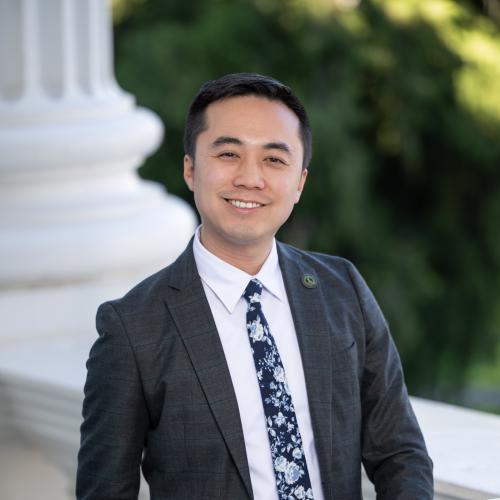
Asm. Alex Lee
Sponsored bills
Existing law, after a tenant has continuously and lawfully occupied a residential real property for 12 months, prohibits the owner of the residential real property from terminating the tenancy without just cause and requires that just cause to be stated in the written notice to terminate tenancy. Existing law distinguishes between at-fault just cause and no-fault just cause and defines no-fault just cause to mean intent to occupy the residential real property by the owner or the owner's spouse, domestic partner, children, grandchildren, parents, or grandparents, withdrawal of the residential real property from the rental market, the owner complying with specified government orders that necessitate vacating the real property, and intent to demolish or to substantially remodel the residential real property. This bill would, with respect to the no-fault just cause related to an eviction based on an intent to occupy the residential real property, require, among other things, that the owner, as defined, or the owner's spouse, domestic partner, children, grandchildren, parents, or grandparents occupy the residential real property for a minimum of 12 continuous months as the person's primary residence, as provided. The bill would also, with respect to the no-fault just cause related to withdrawal of the residential real property from the rental market, require the rental units at the rental property be withdrawn from the rental market, as prescribed. The bill would require an owner who displaces a tenant to substantially remodel or demolish a unit to provide the tenant with written notice providing the tenant with specified information, including a description of the substantial remodel to be completed and the expected duration of the repairs, or the expected date by which the property will be demolished, and a copy of permits required to undertake the substantial remodel or demolition, as specified. This bill would also prescribe new enforcement mechanisms with respect to the provisions described above, including by making an owner who attempts to recover possession of a rental unit in material violation of those provisions liable to the tenant in a civil action for damages of up to 3 times the actual damages, in addition to punitive damages. The bill would authorize the Attorney General and the city attorney or county counsel, within whose jurisdiction the rental unit is located, to bring actions for injunctive relief against the owner, as specified. Existing law, until January 1, 2030, prohibits an owner of residential real property from, over the course of any 12-month period, increasing the gross rental rate for a dwelling or a unit more than 5% plus the percentage change in the cost of living, or 10%, whichever is lower, of the lowest gross rental rate charged for that dwelling or unit at any time during the 12 months before the effective date of the increase, subject to specified conditions. This bill would make an owner who demands, accepts, receives, or retains any payment of rent in excess of the maximum rent increase allowed, as prescribed, liable in a civil action to the tenant from whom those payments are demanded, accepted, received, or retained for certain relief, including, upon a showing that the owner has acted willfully or with oppression, fraud, or malice, damages up to 3 times the amount by which any payment demanded, accepted, received, or retained exceeds the maximum allowable rent. This bill would authorize the Attorney General and the city attorney or county counsel, within whose jurisdiction the residential property is located, to enforce the bill's provisions and bring an action for injunctive relief, as specified. This bill would also make a technical, nonsubstantive change to those provisions. The bill would provide that its provisions become effective on April 1, 2024.
Existing law prohibits a person from carrying a concealed firearm or carrying a loaded firearm in public. Existing law authorizes a licensing authority, as specified, if good cause exists for the issuance, and subject to certain other criteria including, among other things, the applicant is of good moral character and has completed a specified course of training, to issue a license to carry a concealed handgun or to carry a loaded and exposed handgun, as specified. Under existing law, the required course of training for an applicant is no more than 16 hours and covers firearm safety and laws regarding the permissible use of a firearm. This bill would require the licensing authority to issue or renew a license if the applicant is not a disqualified person for the license and the applicant is at least 21 years of age. The bill would remove the good character and good cause requirements from the issuance criteria. Under the bill, the applicant would be a disqualified person if they, among other things, are reasonably likely to be a danger to self, others, or the community at large, as specified. This bill would add the requirement that the applicant be the recorded owner, with the Department of Justice, of the pistol, revolver, or other firearm capable of being concealed upon the person. This bill would change the training requirement to be no less than 16 hours in length and would add additional subjects to the course including, among other things, the safe storage and legal transportation of firearms. The bill would require an issuing authority, prior to that issuance, renewal, or amendment to a license, if it has direct access to the designated department system to determine if the applicant is the recorded owner of the pistol, revolver, or other firearm. The bill would require an issuing authority without access to that system to confirm the ownership with the sheriff of the county in which the agency is located. By requiring local agencies to issue licenses for concealed firearms, this bill would create a state-mandated local program. The bill would require a licensing authority to provide the applicant notice if a new license or license renewal is denied or revoked. If an application is denied or a license is revoked based on a determination that the applicant is a disqualified person, the bill would permit the applicant to request a hearing to challenge the license denial or revocation, and require the licensing authority to inform the applicant of the ability to seek a hearing. If a new license or license renewal is denied or revoked for any other reason, the bill would authorize the applicant to seek a writ of mandate from a superior court within 30 days of receipt of notice of denial or revocation, and require the licensing authority to inform the applicant of the ability to seek a writ of mandate. By imposing new duties on local licensing authorities, this bill would create a state-mandated local program. Existing law requires an agency issuing a license described above to set forth specified information on the license, including, among other things, the licensee's name, occupation, and reason for desiring a license to carry the weapon. This bill would revise that information to include, among other things, the licensee's driver's license or identification number, fingerprints, and information relating to the date of expiration of the license, and would remove the requirement that the license detail the reason for desiring a license to carry the weapon. Existing law requires an applicant for a license described above to provide fingerprints, as specified. Existing law exempts an applicant from this requirement if they have previously applied to the same licensing authority and the applicant's fingerprints have previously been forwarded to the department, as specified, and instead requires that authority to note data that would provide positive identification in the files of the department, on the copy of any subsequent license submitted to the department. This bill would require the licensing authority to submit fingerprint images and related information to the department for each applicant applying for a new or renewal license. The bill would require the department to notify the licensing authority if the department is unable to ascertain, among other things, the final disposition of an arrest or criminal charge under state or federal law that would prohibit the person from possessing, receiving, owning, or purchasing a firearm. This bill would prohibit a license from being issued or renewed unless the department reports to a licensing authority that the applicant is eligible to possess, receive, own, or purchase a firearm. Existing law requires a licensing authority to charge an additional fee in an amount equal to reasonable processing costs for a new license. Existing law also prohibits a licensing authority from imposing, among other things, a requirement or condition that an applicant pay additional funds or obtain liability insurance. This bill would authorize a licensing authority to charge the additional processing cost fee for a license renewal and would permit the licensing authority to collect the first 50% of the fee upon filing of the application. The bill also removes the prohibition on licensing authority requirements for additional fees or liability insurance. Existing law requires that licenses and applications for licenses be uniform throughout the state, and to be submitted upon forms prescribed by the Attorney General. When revising the standard application form for licenses, existing law requires the Attorney General to convene a committee to review and revise the existing application form. Existing law requires the Attorney General to develop a uniform license that may be used as indicia of proof of licensure throughout the state. Existing law also requires the committee to convene to review and revise the design standard for a uniform license. This bill would authorize the Attorney General to revise the standard form for licenses and the design standard if the committee does not revise the form or issue a design standard within a specified time period. Under existing law, it is a crime to bring a firearm into a state or local building, and makes it a crime to bring a loaded firearm into, or upon the grounds of, any residence of the Governor, any other constitutional officer, or Member of the Legislature. Existing law exempts a licensee from that prohibition if, among other things, the licensee has a valid license to carry the firearm. This bill would remove those exemptions, except as specified. The bill would make it a crime to bring an unloaded firearm into, or upon the grounds of, any residence of the Governor, any other constitutional officer, or Member of the Legislature. The bill would also prohibit a licensee from carrying a firearm to specified locations, including, among other places, a building designated for a court proceeding and a place of worship, as defined, with specific exceptions. By expanding the scope of an existing crime, the bill would impose a state-mandated local program. Existing law prohibits a person from knowingly possessing a firearm in a sterile area of an airport, passenger vessel terminal, or public transit facility, as defined. This bill would additionally prohibit a person from knowingly possessing a firearm in any building, real property, or parking area under the control of an airport or passenger vessel terminal, as specified. By expanding the scope of an existing crime, the bill would impose a state-mandated local program. Existing law, the Gun-Free School Zone Act of 1995, makes it a crime to possess a firearm in a place that the person knows, or reasonably should know, is a school zone. Existing law defines a school zone as an area in, or on the grounds of, a public or private school providing instruction in kindergarten or grades 1 to 12, inclusive, or within a distance of 1,000 feet from the grounds of the public or private school. Existing law provides exceptions to that crime, including if a person with a valid concealed carry license who is carrying the firearm described in the license in an area that is not in, or on the grounds of, a public or private school and when a firearm is an unloaded pistol, revolver, or other firearm capable of being concealed on the person and is in a locked container or within the locked trunk of a motor vehicle. This bill would revise the exception for a person who has a valid concealed carry license to permit them to carry a specified firearm in an area that is not within any building, real property, or parking area under the control of a public or private school, or on a street or sidewalk immediately adjacent to a building, real property, or parking area under the control of that public or private school, as specified. Existing law requires a licensing authority to revoke a license to carry a firearm if the licensing authority is notified by the department or the licensing authority determines that a licensee is prohibited from possessing, receiving, owning, or purchasing a firearm under state or federal law. This bill would also require a licensing authority to revoke a license if, among other things, a licensee has provided inaccurate or incomplete information on their application for a new license or license renewal. Existing law authorizes a licensing authority to impose reasonable restrictions on the time, place, manner, and circumstances when a licensee may carry a firearm capable of being concealed. While carrying a firearm, this bill would prohibit a licensee from, among other things, consuming an alcoholic beverage or controlled substance and from falsely representing that the licensee is a peace officer. The bill would authorize the department to adopt emergency regulations to implement the concealed firearm licensing system, as specified. This bill would make conforming changes. The bill would additionally make various findings and declarations of the Legislature. The bill would state that its provisions are severable. This bill would incorporate additional changes to Section 29805 of the Penal Code proposed by SB 368 to be operative only if this bill and SB 368 are enacted and this bill is enacted last. This bill would also incorporate additional changes to Section 30370 of the Penal Code proposed by AB 135 and SB 135 to be operative only if this bill and either of those bills are enacted and this bill is enacted last. The California Constitution requires the state to reimburse local agencies and school districts for certain costs mandated by the state. Statutory provisions establish procedures for making that reimbursement. This bill would provide that with regard to certain mandates no reimbursement is required by this act for a specified reason. With regard to any other mandates, this bill would provide that, if the Commission on State Mandates determines that the bill contains costs so mandated by the state, reimbursement for those costs shall be made pursuant to the statutory provisions noted above.
Existing law establishes the California Violence Intervention and Prevention (CalVIP) Grant Program, administered by the Board of State and Community Corrections, to award competitive grants for the purpose of violence intervention and prevention. Existing law imposes various taxes, including taxes on the privilege of engaging in certain activities. The Fee Collection Procedures Law, the violation of which is a crime, provides procedures for the collection of certain fees and surcharges. This bill, the Gun Violence Prevention and School Safety Act, would, commencing July 1, 2024, impose an excise tax in the amount of 11% of the gross receipts from the retail sale in this state of a firearm, firearm precursor part, and ammunition, as specified. The tax would be collected by the state pursuant to the Fee Collection Procedures Law. The bill would require that the revenues collected be deposited in the Gun Violence Prevention and School Safety Fund, which the bill would establish in the State Treasury. The bill would require the moneys received in the fund to be used to fund various gun violence prevention, education, research, response, and investigation programs, as specified. The bill would require the Director of Finance to transfer, as a loan, $2,400,000 from the General Fund to the California Department of Tax and Fee Administration to implement these provisions, as specified. The bill would require each licensed firearms dealer, firearms manufacturer, and ammunition vendor to register with the department for a certificate, as specified. The bill would also provide procedures for the issuance, revocation, and reinstatement of a permit. This bill would include a change in state statute that would result in a taxpayer paying a higher tax within the meaning of Section 3 of Article XIIIA of the California Constitution, and thus would require for passage the approval of 23 of the membership of each house of the Legislature. Because this bill would expand the scope of the Fee Collection Procedures Law, the violation of which is a crime, this bill would impose a state-mandated local program. The California Constitution requires the state to reimburse local agencies and school districts for certain costs mandated by the state. Statutory provisions establish procedures for making that reimbursement. This bill would provide that no reimbursement is required by this act for a specified reason.
(1) Existing law, the Safe Place to Learn Act, requires the State Department of Education, as part of its regular monitoring and review of a local educational agency, to assess whether the local educational agency has, among other things, adopted a policy that prohibits discrimination, harassment, intimidation, and bullying based on specified protected characteristics. This bill would require that policy to include a statement that the policy applies to all acts of the governing board or body of the local educational agency, the superintendent of the school district, and the county superintendent of schools in enacting policies and procedures that govern the local educational agency. Because this provision would impose an additional requirement on local educational agency officials, the bill would create a state-mandated local program. The bill would require the department, no later than July 1, 2025, to develop guidance and public educational materials to ensure that all Californians can access information about educational laws and policies that safeguard the right to an accurate and inclusive curriculum. (2) Existing law requires, as a condition of receipt of specified funds for instructional materials, the governing board of a school district to take specified actions, including holding a public hearing or hearings and making a determination, through a resolution, as to whether each pupil in each school in the school district has sufficient textbooks and instructional materials aligned to specified content standards. Upon a determination that there are insufficient textbooks or instructional materials, existing law requires the governing board to take action, as provided, to ensure that each pupil has sufficient textbooks or instructional materials within 2 months of the beginning of the school year in which the determination is made. If the county superintendent determines that a school does not have sufficient textbooks or instructional materials in accordance with this public hearing process, existing law requires the county superintendent to provide the school district with the opportunity to remedy the deficiency. If the deficiency is not remedied, existing law requires the county superintendent to request the department, with approval by the State Board of Education, to purchase textbooks or instructional materials for the school, as provided. If a governing board of a school district makes the above-described determination, by resolution, that there are insufficient textbooks or instructional materials, this bill would require the governing board to submit a copy of that resolution to the county superintendent of schools no later than 3 business days after the governing board hearing. (3) Existing law requires a school district to use its uniform complaint process to help identify and resolve any deficiencies related to, among other things, instructional materials, and to report summarized data on unresolved complaints to the county superintendent of schools. Existing law requires a complaint under these provisions to be filed with the principal of the school or the principal's designee. Existing law requires the principal or the designee of the district superintendent to make all reasonable efforts to investigate any problem within their authority and to remedy a valid complaint within a reasonable time period, as specified. Existing law authorizes the complainant to appeal to the Superintendent of Public Instruction and requires the Superintendent to provide a written report to the state board describing the basis for the complaint and, as appropriate, a proposed remedy. This bill would authorize a complaint that more than one pupil does not have sufficient textbooks or instructional materials, as a result of an act or omission by the governing board of a school district, to be filed directly with the Superintendent. The bill would authorize the Superintendent to directly intervene without waiting for the principal or the designee of the district superintendent to investigate. (4) Existing law requires the governing board of each local educational agency to either provide for an audit of its books and accounts or make arrangements with the county superintendent to provide for that audit. Existing law requires the auditor's report to include, among other things, a summary of audit exceptions and requires each county superintendent to review audit exceptions related to, among other things, inventory of equipment and the use of instructional materials program funds. This bill would require a county superintendent of schools to take a range of actions if the county superintendent determines that there are insufficient textbooks or instructional materials pursuant to (A) the receipt of the above-described resolution related to insufficient textbooks or instructional materials from the governing board of a school district, (B) the receipt of the above-described report of an unresolved complaint related to instructional materials, or (C) the receipt of the above-described report related to an audit exception related to the inventory of equipment and the use of instructional materials program funds, as provided. The bill would require the county superintendent, upon making this determination, to provide the school district with the opportunity to remedy the deficiency by no later than the 2nd month of the school term. If the deficiency is not remedied, the bill would require the department to purchase textbooks or instructional materials for the school, as specified. The bill would require the funds necessary for the purchase to be considered a loan to the school district and, unless the loan is repaid based upon an agreed-upon schedule with the Superintendent, would require the Controller to deduct the amount of the loan from the school district's next principal apportionment or other apportionment of state funds. By imposing new duties on county superintendents of schools and county offices of education, the bill would impose a state-mandated local program. (5) Existing law establishes a public school financing system that requires state funding for school districts, county offices of education, and charter schools to be calculated pursuant to a local control funding formula, as specified. This bill would reduce a school district's local control funding formula allocation by a specified amount if the Superintendent determines the school district has not provided sufficient textbooks or instructional materials pursuant to these provisions. (6) Existing law requires instruction in social sciences to include a study of the role and contributions of men and women and culturally and racially diverse groups, including, among others, Mexican Americans and lesbian, gay, bisexual, and transgender Americans, and members of other ethnic and cultural groups. This bill would revise the list of the above-described groups to instead require instruction in social sciences to include a study of the role and contributions of, among others, people of all genders, Latino Americans, LGBTQ+ Americans, and members of other ethnic, cultural, religious, and socioeconomic status groups. By imposing new obligations on local educational agencies, the bill would create a state-mandated local program. (7) Existing law prescribes substantive requirements and particular processes that the State Board of Education, the Instructional Quality Commission, local educational agencies, and the Superintendent of Public Instruction are required to follow when adopting or evaluating instructional materials, as defined. Existing law requires governing boards of school districts, when adopting instructional materials for use in the schools, to include materials that accurately portray the cultural and racial diversity of our society, including the contributions of both men and women and the role and contributions of culturally and racially diverse groups, including, among others, Mexican Americans, lesbian, gay, bisexual, and transgender Americans, and members of other ethnic and cultural groups. Existing law requires the state board to comply with those requirements related to the accurate portrayal of cultural and racial diversity when reviewing and adopting or recommending for adoption submitted basic instructional materials. Existing law also requires the governing board of each school district maintaining one or more high schools to comply with those requirements related to the accurate portrayal of racial and cultural diversity when adopting instructional materials for use in the high schools under its control. This bill would revise the list of the above-described culturally and racially diverse groups to instead include materials that accurately portray the contributions of people of all genders and the role and contributions of Latino Americans, LGBTQ+ Americans, and other ethnic, cultural, religious, and socioeconomic status groups. By imposing new obligations on local educational agencies, the bill would impose a state-mandated local program. The bill would require the department, no later than July 1, 2025, to issue guidance related to how to help school districts, county offices of education, charter schools, and school personnel manage conversations about race and gender, and how to review instructional materials to ensure that they represent diverse perspectives and are culturally relevant. The bill would prohibit the governing board of a school district, a county board of education, or the governing body of a charter school from refusing to approve or prohibiting the use of any textbook, instructional material, or other curriculum or any book or other resource in a school library on the basis that it includes a study of the role and contributions of any individual or group consistent with the above-described requirements relating to instruction in social sciences and the adoption of instructional materials that accurately portray the cultural and racial diversity of our society. The bill would also prohibit the governing board of a school district or a county board of education from prohibiting the continued use of an appropriately adopted textbook, instructional material, or curriculum on the basis that it contains inclusive and diverse perspectives. By imposing new obligations on local educational agencies, the bill would create a state-mandated local program. (8) The California Constitution requires the state to reimburse local agencies and school districts for certain costs mandated by the state. Statutory provisions establish procedures for making that reimbursement. This bill would provide that, if the Commission on State Mandates determines that the bill contains costs mandated by the state, reimbursement for those costs shall be made pursuant to the statutory provisions noted above. (9) This bill would declare that it is to take effect immediately as an urgency statute.
(1) Existing law generally provides for the placement of foster youth in various placement settings. Existing law provides for the implementation of the resource family approval process and defines a resource family as an individual or family who has successfully met both the home environment assessment standards and permanency assessment criteria, as specified, necessary for providing care for a child placed by a public or private child placement agency by court order, or voluntarily placed by a parent or legal guardian. Under existing law, the resource family permanency standards include a family evaluation, including, but not limited to, interviews of an applicant, as specified, and a risk assessment. This bill would require a resource family to demonstrate an ability and willingness to meet the needs of a child, regardless of the child's sexual orientation, gender identity, or gender expression, as specified. To the extent this bill would create new duties for counties, the bill would impose a state-mandated local program. (2) Existing law requires counties to ensure resource family applicants and resource families have the necessary knowledge, skills, and abilities to support children in foster care by completing caregiver training. Existing law requires that training to include a curriculum that supports the role of a resource family in parenting vulnerable children and should be ongoing in order to provide resource families with information on trauma-informed practices and requirements and other topics within the foster care system. This bill would require counties to ensure that the caregiver training described above supports children of all races, ethnic group identifications, ancestries, national origins, colors, religions, sexes, sexual orientations, gender identities, mental or physical disabilities, or HIV statuses in foster care. To the extent this bill would create new duties for counties, the bill would impose a state-mandated local program. (3) The California Constitution requires the state to reimburse local agencies and school districts for certain costs mandated by the state. Statutory provisions establish procedures for making that reimbursement. This bill would provide that no reimbursement is required by this act for a specified reason.
Existing law requires the State Department of Education to develop resources or, as appropriate, update existing resources for in-service training on schoolsite and community resources for the support of lesbian, gay, bisexual, transgender, queer, and questioning (LGBTQ) pupils, and strategies to increase support for LGBTQ pupils and thereby improve overall school climate. Existing law requires those resources to be designed for use in schools operated by a school district or county office of education and charter schools serving pupils in grades 7 to 12, inclusive. This bill would require the Superintendent of Public Instruction, on or before July 1, 2024, to convene an advisory task force to identify the needs of lesbian, gay, bisexual, transgender, queer, questioning, and plus (LGBTQ+) pupils and to make recommendations to assist in implementing supportive policies and initiatives to address LGBTQ+ pupil education and well-being, as provided. The bill would require advisory task force members to be selected by the Superintendent, as provided. The bill would require the advisory task force to, on or before January 1, 2026, report their findings and recommendations to the Legislature, the Superintendent, and the Governor.
Existing law requires every restroom of every public and private school maintaining any combination of classes from kindergarten to grade 12, inclusive, to be maintained and cleaned regularly, fully operational, and stocked at all times with toilet paper, soap, and paper towels or functional hand dryers, and kept open during school hours when pupils are not in classes. Existing law requires that a sufficient number of restrooms be kept open during school hours when pupils are in classes. Existing law authorizes a school to temporarily close a restroom as necessary for pupil safety or as necessary to repair the facility. This bill would revise the conditions under which a restroom is authorized to be temporarily closed to instead be as necessary (1) for a documented pupil safety concern, (2) for an immediate threat to pupil safety, or (3) to repair the facility. The bill would require, on or before July 1, 2026, each school district, county office of education, and charter school, including charter schools operating in a school district facility, maintaining any combination of classes from grades 1 to 12, inclusive, to provide and maintain at least one all-gender restroom for voluntary pupil use at each of its schoolsites that meet specified criteria. The bill would require the all-gender restroom to meet certain requirements, including, among other things, that it has signage identifying the bathroom facility as being open to all genders and is unlocked, unobstructed, and easily accessible by any pupil. The bill would require the local educational agency to designate a staff member to serve as a point of contact for these purposes and to post a notice regarding these requirements in a prominent and conspicuous location outside at least one all-gender restroom. The bill would require these requirements to be subject to compliance review, as specified. By imposing additional requirements on local educational agencies, the bill would impose a state-mandated local program. The bill would authorize a local educational agency to use an existing restroom to satisfy these requirements, as provided. The bill would require the State Department of Education to post on its internet website guidance for implementation of these provisions. Existing law, the Leroy F. Greene School Facilities Act of 1998 (the Greene Act) , requires the State Allocation Board to allocate to applicant school districts prescribed per-unhoused-pupil state funding for the construction and modernization of school facilities, including hardship funding, and supplemental funding for site development and acquisition. This bill would require the governing board of a school district, a county board of education, or the governing body of a charter school that applies for state funding pursuant to the Greene Act for a school modernization project to include, as part of the modernization project, an all-gender restroom designed exclusively for pupil use for specified schoolsites, as provided. The bill would provide that these provisions apply only to those projects that are submitted for approval on or after July 1, 2026. The California Constitution requires the state to reimburse local agencies and school districts for certain costs mandated by the state. Statutory provisions establish procedures for making that reimbursement. This bill would provide that, if the Commission on State Mandates determines that the bill contains costs mandated by the state, reimbursement for those costs shall be made pursuant to the statutory provisions noted above.
Existing law authorizes a person to file a petition with the superior court seeking a judgment recognizing their change of gender to female, male, or nonbinary, including a person who is under 18 years of age. Existing law authorizes a person to file a single petition to simultaneously change the petitioner's name and recognize the change to the petitioner's gender and sex identifier, as specified. This bill would require any petition for a change of gender and sex identifier or a petition for change of gender, sex identifier, and name filed by a person under 18 years of age, and any papers associated with the proceeding, to be kept confidential by the court. The bill would require the court to limit access to these records to specified individuals, including, among others, the minor, the minor's parents, and their attorneys. Existing constitutional provisions require that a statute that limits the right of access to the meetings of public bodies or the writings of public officials and agencies be adopted with findings demonstrating the interest protected by the limitation and the need for protecting that interest. This bill would make legislative findings to that effect.
Existing law establishes the system of public elementary and secondary schools in this state and provides for the establishment of local educational agencies to operate these schools and provide instruction to pupils. Existing law states the policy of the State of California to afford all persons in public schools, regardless of their disability, gender, gender identity, gender expression, nationality, race or ethnicity, religion, sexual orientation, or any other specified characteristic, equal rights and opportunities in the educational institutions of the state. Existing law requires, no later than July 1, 2021, the State Department of Education to develop resources or, as appropriate, update existing resources for in-service training on schoolsite and community resources for the support of lesbian, gay, bisexual, transgender, queer, and questioning (LGBTQ) pupils, and strategies to increase support for LGBTQ pupils, as specified. Existing law encourages schools operated by a school district or county office of education and charter schools to use those resources to provide training at least once every 2 years to teachers and other certificated employees of those schools that serve pupils in grades 7 to 12, inclusive. This bill would require the State Department of Education, on or before July 1, 2025, to finalize the development of an online training delivery platform and an online training curriculum to support LGBTQ cultural competency training for teachers and other certificated employees, as specified. The bill would delete the above-described encouragement and instead would require, commencing with the 2025–26 school year and ending with the completion of the 2029–30 school year, each local educational agency, as defined, serving pupils in grades 7 to 12, inclusive, to use the online training delivery platform and curriculum, or an in-service alternative, to provide at least one hour of required training annually to teachers and other certificated employees at those schools, as provided. The bill would require each local educational agency to maintain records documenting the training, as provided. The bill would require the department to monitor compliance with the training requirement as part of the department's annual compliance monitoring of state and federal programs. The bill would require the department, within 9 months of the completion of the 5-year training period, to report data from that compliance monitoring to the Legislature, and post the report on the department's internet website, as provided. By imposing additional duties on local educational agencies, the bill would impose a state-mandated local program. The bill would require these provisions to be known as the Safe and Supportive Schools Act. This bill would make these requirements inoperative on July 1, 2031, and would repeal them as of January 1, 2032. The California Constitution requires the state to reimburse local agencies and school districts for certain costs mandated by the state. Statutory provisions establish procedures for making that reimbursement. This bill would provide that, if the Commission on State Mandates determines that the bill contains costs mandated by the state, reimbursement for those costs shall be made pursuant to the statutory provisions noted above.