

Existing law, the Home Care Services Consumer Protection Act, requires a home care organization, as defined, to ensure that an affiliated home care aide completes specified training requirements prior to providing home care services, including annual training related to the aide's clients' rights and safety and how to provide for a client's daily living needs. A violation of the act is a misdemeanor. This bill would, beginning on January 1, 2027, additionally require a home care organization to ensure that a home care aide completes, prior to providing home care and annually thereafter, training related to the special care needs of clients with dementia. Because the bill creates new crimes by expanding the act to include additional requirements for home care organizations, the bill would impose a state-mandated local program. The California Constitution requires the state to reimburse local agencies and school districts for certain costs mandated by the state. Statutory provisions establish procedures for making that reimbursement. This bill would provide that no reimbursement is required by this act for a specified reason.
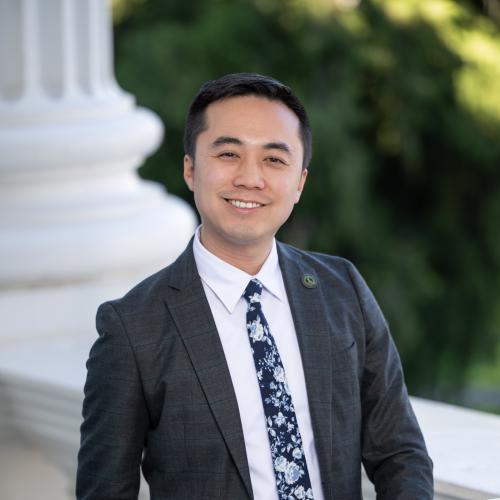
Asm. Alex Lee
Sponsored bills
Existing law designates specific days as holidays in this state. Existing law designates holidays on which community colleges and public schools are authorized to close pursuant to a memorandum of understanding between the governing board and represented employees, including "Native American Day" on the 4th Friday in September. Existing law entitles state employees, with specified exceptions, and authorizes certain community college and public school employees, to be given time off with pay for specified holidays, as specified. This bill would add "Diwali" to the list of state holidays. The bill would authorize community colleges and public schools to close on "Diwali," as specified. The bill would authorize state employees to elect to take, and would authorize certain community college and public school employees to be given, time off with pay in recognition of "Diwali," as specified. The bill would authorize public schools and educational institutions throughout the state to include exercises acknowledging and celebrating the meaning and importance of Diwali, as specified. Existing law adopts state holidays as judicial holidays, with certain exceptions, including Admission Day and Columbus Day. This bill would add "Diwali" to the list of holidays that are excluded from designation as a judicial holiday. This bill would make related findings and declarations.
The existing Trial Court Interpreter Employment and Labor Relations Act divides trial courts into 4 specified regions and establishes regional court interpreter employment relations committees for those regions. Existing law requires each committee to set terms and conditions of employment for court interpreters within the respective region, as specified. Existing law requires that compensation be uniform throughout the region. Existing law, with exceptions, requires that other terms and conditions of employment be uniform throughout the region, but authorizes health and welfare and pension benefits to be the same as those provided to other employees of the same trial court. Existing law authorizes trial courts to set additional local compensation subject to specified conditions. This bill would authorize a recognized employee organization to request a multiregional bargaining if more than one region is bargaining in a calendar year, subject to the mutual consent of the recognized employee organization and the regional court interpreter employment relations committee.
Existing law specifies the rules to be used when determining the residence of a child or a nonminor dependent for purposes of the Welfare and Institutions Code, and under certain circumstances, the county in which the child or nonminor dependent is living is deemed the county of residence if the child or nonminor dependent has had a physical presence in the county for one year, and in the case of a nonminor dependent, they have expressed their intent to remain in that county. Existing law authorizes the residence of a nonminor dependent to be changed to another county where they are living if the court finds that the nonminor dependent has had a continuous physical presence in the new county for one year as a nonminor dependent and the nonminor dependent expressed intent to remain in that county. Existing law requires the juvenile court of the county where that nonminor dependent then resides to take jurisdiction of the case upon the receipt and filing of the finding of the facts and an order transferring the case. This bill would additionally authorize the residence of a nonminor dependent to be changed to another county where they are living if the nonminor dependent requests the transfer of jurisdiction to the new county and the court finds that the transfer is in the best interest of the nonminor dependent, as specified. The bill would require a court issuing an order to transfer the case pursuant to this new authority to issue the order within 30 court days of the nonminor dependent's request, and deems the new county to have jurisdiction over the nonminor dependent within 10 calendar days of an issuance of an order to transfer. Existing law specifies conditions for a review hearing that is the last hearing held before a child attains 18 years of age or that is held in the 6-month period before the child attains 18 years of age, and for subsequent review hearings for the nonminor dependent, including that the hearings be conducted in a manner that respects the nonminor's status as a legal adult and is focused on the goals and services described in the youth's transitional independent living case plans. This bill would require during those and other certain review hearings that the court consider whether the nonminor dependent requests the transfer of jurisdiction to a new county.
Existing law declares the public policy of the state regarding labor organization, including, among other things, that it is necessary for a worker to have full freedom of association, self-organization, and designation of representatives of their own choosing, to negotiate the terms and conditions of their employment, and to be free from the interference, restraint, or coercion of employers of labor, or their agents, in the designation of such representatives or in self-organization or in other concerted activities for the purpose of collective bargaining or other mutual aid or protection. Existing law, the Protect App-Based Drivers and Services Act, added by Proposition 22, as approved by the voters at the November 3, 2020, statewide general election (the initiative) , categorizes app-based drivers for network companies, as defined, as independent contractors if certain conditions are met. Existing law requires, among other things, that the network company provide a health care subsidy to qualifying app-based drivers, provide a minimum level of compensation for app-based drivers, and not restrict app-based drivers from working in any other lawful occupation or business. Existing case law holds that specified provisions of the initiative are invalid on separation of powers grounds; however, the court severed the unconstitutional provisions, allowing the rest of the initiative to remain in effect. Existing law also establishes the Public Employment Relations Board (board) in state government as a means of resolving disputes and enforcing the statutory duties and rights of specified public employers and employees under various acts regulating collective bargaining. Existing law vests the board with jurisdiction to enforce certain provisions over charges of unfair practices for represented employees. This bill, the Transportation Network Company Drivers Labor Relations Act (act) , would establish that transportation network company (TNC) drivers have the right to form, join, and participate in the activities of TNC driver organizations, to bargain through representatives of their own choosing, to engage in concerted activities for the purpose of bargaining or other mutual aid or protection, and to refrain from such activities. The bill would require the board to enforce these provisions. This bill would require all TNCs to submit certain information every quarter, including information identifying and related personal work information about TNC drivers to the board in a list format, as prescribed. The bill would establish various procedures governing the certification and decertification of TNC driver organizations for purposes of representing drivers in the collective bargaining process. In this connection, the bill would require the board to determine if an entity is a TNC driver organization, as prescribed, and make certain determinations as to whether a specific organization has been designated as the bargaining representative for TNC drivers pursuant to an election process. The bill would establish various notice requirements, conditions, and timelines governing the representation of TNC drivers. The bill would, among other things, require TNCs and certified driver bargaining organizations to negotiate in good faith pursuant to the act, as described, and would set forth procedures for mediation and arbitration for purposes of reaching a sectoral agreement. The bill would set forth procedures and guidelines for the board to approve or disapprove sectoral agreements. The bill would require a TNC that was not a covered TNC when a sectoral agreement took effect but subsequently became a covered TNC to be bound by all terms of the sectoral agreement, as specified. This bill would make it an unfair practice for a TNC, an agent of a TNC, or a multicompany committee, as defined, to fail or refuse to negotiate in good faith with a certified driver bargaining organization, among other things. The bill would also make it an unfair practice for a certified driver bargaining organization or its agents to fail to negotiate in good faith with a TNC or multicompany committee, among other things. The bill would set forth unfair practice charge procedures and remedies for those practices. The bill would define terms for purposes of the act, make the provisions of the act severable, and make related legislative policy statements. Existing law, the Bagley-Keene Open Meeting Act, generally requires all meetings of a state body to be open and public. This bill would exempt any meeting of a mediator or arbitrator with any party or group to the negotiations process and the mediation and arbitration processes in the act from the Bagley-Keene Open Meeting act. Existing law, the California Public Records Act, requires state and local agencies to make their records available for public inspection, unless an exemption from disclosure applies. This bill would exclude from public disclosure information regarding TNC drivers that is submitted to the board pursuant to the act, except as specified. Existing constitutional provisions require that a statute that limits the right of access to the meetings of public bodies or the writings of public officials and agencies be adopted with findings demonstrating the interest protected by the limitation and the need for protecting that interest. This bill would make legislative findings to that effect.
The Cigarette and Tobacco Products Licensing Act of 2003 requires the California Department of Tax and Fee Administration to administer a statewide program to license manufacturers, distributers, and retailers of cigarettes and tobacco products. The act requires a retailer to have in place and maintain a license to engage in the sale of cigarettes or tobacco products. The act requires a $265 fee to be submitted with the application for the license. Existing law requires every retailer to file an application for renewal of the license accompanied by a $265 fee per retail location. This bill would make conforming changes to the provisions describing the application process for the license described above and recast that license as a retailer license. The bill would require each application for a retailer license filed on or after July 1, 2026, to be accompanied by a fee of $450 per retail location. The bill would increase the fee for renewal of a retailer license to $450 for renewal applications filed on or after July 1, 2026. The bill would authorize the department to adjust application and renewal fees applicable after July 1, 2026, to an amount not exceeding $600 per retail location to maintain the Cigarette and Tobacco Products Compliance Fund at a level that is no more than necessary to cover the reasonable costs of the department to administer the act. The act requires a retailer who sells tobacco products that are exempt from taxation under the Cigarette and Tobacco Products Tax Law to pay a fee of $265 for the issuance or renewal of a license. This bill would recast that license as a retailer license and make other conforming changes. The bill would require each application for a retailer license filed on or after July 1, 2026, to be accompanied by a fee of $450 per retail location. The bill would increase the fee for renewal of a retailer license to $450 for renewal applications filed on or after July 1, 2026. The bill would authorize the department to adjust application and renewal fees applicable after July 1, 2026, to an amount not exceeding $600 per retail location to maintain the Cigarette and Tobacco Products Compliance Fund at a level that is no more than necessary to cover the reasonable costs of the department to administer the act. This bill would require the Legislative Analyst, on or before December 1, 2027, and again on or before December 1, 2029, to prepare and submit reports to the Legislature on the tobacco retailer enforcement landscape, including enforcement of California's flavor, youth access, taxation, and licensing laws. The bill would require specified state agencies to cooperate with the Legislative Analyst in the preparation and production of the report. The bill would repeal those reporting requirements on January 1, 2034. Chapter 849 of the Statutes of 2024 (AB 3218) revised the Cigarette and Tobacco Products Licensing Act of 2003 by, among other things, authorizing the department or a law enforcement agency to seize illegal flavored tobacco products or tobacco product flavor enhancers that a wholesaler or retailer possesses, stores, owns, or sold, as specified. Existing law further requires the department to impose on the wholesaler or retailer a specified civil penalty per individual package of flavored tobacco product or tobacco product flavor enhancer. Existing law defines "package" for purposes of the penalty provision applicable to retailers. This bill would define "flavored tobacco product" and "tobacco product flavor enhancer" for these purposes and would add the same definition of "package" for purposes of the penalty provision applicable to wholesalers. Chapter 462 of the Statutes of 2024 (SB 1230) , among other things, added a provision to the Cigarette and Tobacco Products Licensing Act of 2003 similar to the above-described provision relating to the seizure of a retailer's products added by AB 3218. Specifically, SB 1230 authorizes the department to seize illegal flavored tobacco products or tobacco product flavor enhancers if the department discovers that a retailer sells, offers for sale, or possesses with the intent to sell or offer for sale, those products, and deems the seized products as forfeited. This bill would repeal the above-described provision added by SB 1230. Existing constitutional provisions require that a statute that limits the right of access to the meetings of public bodies or the writings of public officials and agencies be adopted with findings demonstrating the interest protected by the limitation and the need for protecting that interest. This bill would make legislative findings to that effect.
Existing law, until December 31, 2025, requires an employer, as defined, to offer its laid-off employees specified information about job positions that become available for which the laid-off employees are qualified, and to offer positions to those laid-off employees based on a preference system, in accordance with specified timelines and procedures. Existing law, until December 31, 2025, also prohibits an employer from refusing to employ, terminating, reducing compensation, or taking other adverse action against a laid-off employee for seeking to enforce their rights under these provisions. These provisions are enforced by the Division of Labor Standards Enforcement, as prescribed. Existing law defines "laid-off employee" for these purposes to mean an employee who was employed by the employer for 6 months or more and whose most recent separation from active employment by the employer occurred on or after March 4, 2020, and was due to a reason related to the COVID-19 pandemic, including a public health directive or reduction in force, among other reasons. Existing law also creates a presumption that a separation due to a lack of business, reduction in force, or other economic, nondisciplinary reason is due to a reason related to the COVID-19 pandemic, unless the employer establishes otherwise by a preponderance of the evidence. This bill would extend operation of these provisions until January 1, 2027, except as specified.
Existing law, the Political Reform Act of 1974, prohibits a public officer from expending, and a candidate from accepting, public moneys for the purpose of seeking elective office. This bill would remove prohibitions imposed on a public officer or candidate to expend or accept public funds, as defined, for the purpose of seeking elective office unless the funds are earmarked by a state or local entity for education, transportation, or public safety. The bill would require candidates to abide by specified expenditure limits and meet strict criteria, as defined, to qualify for public funds. The bill would prohibit public funds from being used to pay legal defense fees or fines or to repay personal loans to their campaign. The bill would permit a statute, ordinance, or charter to establish standards to increase the expenditure limits for each qualified, voluntarily participating candidate pursuant to a specified formula. The bill would provide that the Fair Political Practices Commission is not responsible for administering or enforcing a system of public funding of candidates established by a local governmental agency. Existing law prohibits a foreign government or foreign principal, as defined, from making a contribution, expenditure, or independent expenditure in connection with the qualification or support of, or opposition to, any state or local ballot measure or in connection with the election of a candidate to state or local office. Under existing law, a person who violates this prohibition is guilty of a misdemeanor and subject to a fine equal to the amount contributed or expended. This bill would instead require that a person guilty of that misdemeanor, in addition to other penalties, be fined an amount at least equal to the amount contributed or expended, but not exceeding a maximum amount of 3 times the amount contributed or expended. The Political Reform Act of 1974, an initiative measure, provides that the act may be amended by a statute that becomes effective upon approval of the voters. This bill would require the Secretary of State to submit the provisions of the bill, as specified, to the voters for approval at the November 3, 2026, statewide general election. This bill would incorporate additional changes to Section 85320 of the Government Code proposed by AB 953 to be operative pursuant to specified conditions.
Under existing law, it is a crime for a person to receive money or other valuable consideration to assist another to register to vote by receiving the completed affidavit of registration if the person fails to sign the affidavit and include certain other information, including the name and telephone number of the person, company, or organization, if any, that has agreed to pay the money or other valuable consideration. This bill would make it a crime, punishable by a fine of up to $10,000, imprisonment for up to 3 years, or both, for a person to knowingly or willfully pay or offer to pay money or other valuable consideration to another person with the intent to induce the person to vote or to register to vote, or where the payment is contingent upon whether the person voted or the person's voter registration status. By creating a new crime, this bill would impose a state-mandated local program. The California Constitution requires the state to reimburse local agencies and school districts for certain costs mandated by the state. Statutory provisions establish procedures for making that reimbursement. This bill would provide that no reimbursement is required by this act for a specified reason.
Existing law, the Child Care and Development Services Act, administered by the State Department of Social Services, establishes a system of childcare and development services for children up to 13 years of age, which includes various programs and services, including, among others, CalWORKs Stage 2 and Stage 3 childcare, migrant childcare, childcare and development services for children with special needs, the alternative payment program, and Head Start programs. Under existing law, for purposes of establishing initial income eligibility for services under the Child Care and Development Services Act, "income eligible" means that a family's adjusted monthly income is at or below 85% of the state median income, adjusted for family size. Existing law requires, to be eligible for the 3rd stage of childcare services, CalWORKs participants to have an income that does not exceed 70% of the state median income, adjusted for family size, as specified. This bill would revise the income eligibility for the 3rd stage of childcare services to also be 85% of the state median income, adjusted for family size. Existing law requires the department, in consultation with the State Department of Education, to establish a fee schedule for families who utilize childcare and development programs and to be assessed in a single monthly flat fee that is based on income, certified family need for full-time or part-time care services, and enrollment. Existing law authorizes that a family with children who are recipients of child protective services, or children who are at risk of being neglected or abused, may be exempt from being charged family fees for up to 12 months. This bill would extend the exemption period to up to 24 months. Existing law requires childcare providers reimbursed through childcare and development programs to submit monthly attendance records for each child under specified circumstances. Existing law defines "attendance" for purposes of the act to mean the number of children present at a childcare and development facility, and includes extended absences due to specified reasons for purposes of reimbursement. This bill would add medical and educational appointments to the list of reasons for extended absences that are included in attendance for purposes of reimbursement, and would also, for purposes of reimbursement, authorize a contractor to claim attendance for days that the contractor or provider is required to hold a space for a child during the period that a family is assumed to have abandoned care or is engaging in the appeal process based on disenrollment for abandoning care.