

(1) Existing law establishes the Department of Industrial Relations within the Labor and Workforce Development Agency and sets forth the functions of the department, which include, among others, fostering, promoting, and developing the welfare of the wage earners of California and improving their working conditions. Existing law establishes within the department the Division of Labor Standards Enforcement, headed by the Labor Commissioner, for the purposes of enforcing labor laws. Existing law requires the Labor Commissioner to enforce and administer a program to register and supervise foreign labor contractors who perform foreign labor contracting activities to recruit or solicit foreign workers. Existing law defines foreign workers for purposes of these provisions to mean any person seeking employment who is not a United States citizen or permanent resident but who is authorized by the federal government to work in the United States, including a person who engages in temporary nonagricultural labor, as specified. Existing law requires foreign labor contractors to register under the program, as prescribed. Existing law requires an applicant for registration as a foreign labor contractor to execute a written application in a form prescribed by the commissioner, as specified, that includes, among other things, the names and addresses of all persons financially interested in the proposed operation as a foreign labor contractor, as provided. Existing law imposes specific requirements on foreign labor contractors relating to recruitment or solicitation for employment and relating to work contracts. Existing law authorizes the commissioner to adopt regulations or policies and procedures to implement these provisions. Existing law authorizes the commissioner, or a person aggrieved by a violation of these provisions, to bring certain actions against the violator, including an action for injunctive relief, as provided. A violation of these provisions is a crime. Existing law makes these provisions applicable only to nonagricultural workers, and exempts persons licensed as farm labor contractors, specified persons exempt from farm labor contractor licensing requirements, and employers of agricultural workers. This bill would, beginning July 1, 2027, expand the above-described provisions to agricultural workers under the federal H-2A visa program. The bill would make related conforming changes and findings and declarations. The bill would additionally require, beginning July 1, 2027, the above-described application to contain a listing of each federal visa program under which the person will be performing foreign labor contracting activities. The bill would authorize the commissioner to enforce the above-described foreign labor contractor registration provisions through specified procedures, including the issuance of a citation or filing of a civil action against a person who violates those provisions. (2) Existing law requires farm labor contractors to be licensed by the commissioner and to comply with specified employment laws applicable to farm labor contractors. Existing law prohibits the commissioner from issuing to any person, or renewing, a license to act as a farm labor contractor unless certain conditions are satisfied, including a requirement that the person has executed a written application in a form prescribed by the commissioner as a foreign labor contractor, as prescribed. This bill would require, beginning July 1, 2027, a person who is licensed or acting as a farm labor contractor and who performs foreign labor contracting activities to register with the commissioner as a foreign labor contractor, as prescribed. The bill would authorize the commissioner to eliminate duplicative application information requirements for information previously obtained from the farm labor contractor's license application, as specified. By expanding the application of the foreign labor contractor registration provisions, the bill would expand an existing crime, thereby imposing a state-mandated local program. This bill would require the Department of Industrial Relations to submit to the Legislature, by January 1, 2028, a study on how to extend foreign labor contractor registration requirements to certain foreign labor contractors, as specified. (3) The California Constitution requires the state to reimburse local agencies and school districts for certain costs mandated by the state. Statutory provisions establish procedures for making that reimbursement. This bill would provide that no reimbursement is required by this act for a specified reason.
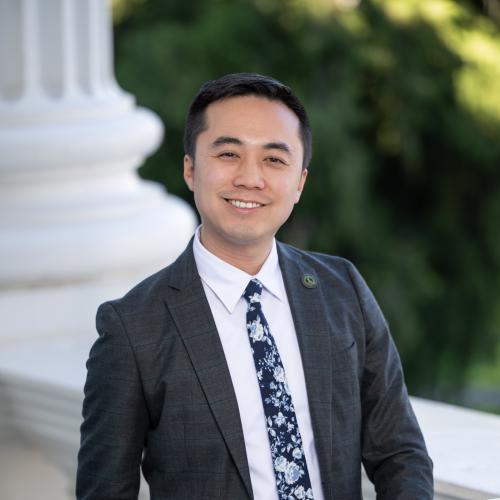
Asm. Alex Lee
Sponsored bills
Existing law, the Compulsory Education Law, generally makes persons between the ages of 6 and 18 years of age subject to compulsory full-time education, unless exempted. Existing law makes a parent or guardian of a pupil of 6 years of age or more who is in kindergarten or any of grades 1 to 8, inclusive, and subject to compulsory full-time or continuing education, whose child is a chronic truant, as defined, who has failed to reasonably supervise and encourage the pupil's school attendance, and who has been offered support services to address the pupil's truancy, guilty of a misdemeanor that is punishable by a fine of up to $2,000, or imprisonment in a county jail for up to one year, or both that fine and imprisonment. This bill would repeal that criminal offense.
This measure would designate November 1, 2025, as Fernando Valenzuela Day, to highlight the positive impact his legacy created in the Latino and Hispanic community.
This measure would recognize the importance of California Native American Day, celebrated this year on September 26, 2025, and the annual California Indian Cultural Awareness Conference, to the enhancement of awareness of California Indian culture.
(1) Existing law prohibits, except as required by state or federal law or as required to administer a state or federally supported educational program, school officials and employees of a school district, county office of education, or charter school from collecting information or documents regarding citizenship or immigration status of pupils or their family members. Existing law requires the superintendent of a school district, the superintendent of a county office of education, and the principal of a charter school, as applicable, to report to the respective governing board or body of the local educational agency in a timely manner any requests for information or access to a schoolsite by an officer or employee of a law enforcement agency for the purpose of enforcing the immigration laws in a manner that ensures the confidentiality and privacy of any potentially identifying information. This bill would prohibit school officials and employees of a local educational agency from allowing an officer or employee of an agency conducting immigration enforcement to enter a nonpublic area of a schoolsite, as defined, for any purpose without being presented with a valid judicial warrant, judicial subpoena, or a court order. The bill would require school officials and employees of a local educational agency, to the extent practicable, to request valid identification of any officer or employee of an agency conducting immigration enforcement seeking to enter a nonpublic area of a schoolsite. The bill would also prohibit a local educational agency and its personnel from disclosing or providing, in writing, verbally, or in any other manner, the education records of or any information about a pupil or a pupil's family and household without the pupil's parents' or guardians' written consent, a school employee, or a teacher to an officer or employee of an agency conducting immigration enforcement without a valid judicial warrant or judicial subpoena, or court order directing the local educational agency or its personnel to do so. By imposing additional duties on local educational agencies, the bill would impose a state-mandated local program. (2) Existing law requires the Attorney General, by April 1, 2018, in consultation with the appropriate stakeholders, to publish model policies limiting assistance with immigration enforcement at public schools, to the fullest extent possible consistent with federal and state law, and ensuring that public schools remain safe and accessible to all California residents, regardless of immigration status, as provided. Existing law requires local educational agencies, by July 1, 2018, to adopt those model policies developed by the Attorney General or equivalent policies. This bill would require the Attorney General, by December 1, 2025, to update those model policies to ensure that the policies align with the above-described prohibitions on school officials and employees of local educational agencies allowing an officer or employee of an agency conducting immigration enforcement to enter a nonpublic area of a schoolsite without a valid judicial warrant or judicial subpoena, or a court order and from disclosing or providing certain information to those officers or employees, as provided. The bill also would require a local educational agency to update its model policy by March 1, 2026, and to make the policy available to the State Department of Education upon request. By imposing additional duties on local educational agencies, the bill would impose a state-mandated local program. (3) This bill would make these provisions severable. (4) The California Constitution requires the state to reimburse local agencies and school districts for certain costs mandated by the state. Statutory provisions establish procedures for making that reimbursement. This bill would provide that, if the Commission on State Mandates determines that the bill contains costs mandated by the state, reimbursement for those costs shall be made pursuant to the statutory provisions noted above. (5) This bill would declare that it is to take effect immediately as an urgency statute.
Existing law prohibits credibly impersonating a peace officer, firefighter, or employee of a public utility, state or local government agency, or search and rescue team, as specified. Existing law also prohibits willfully and credibly impersonating a peace officer, firefighter, or employee of a public utility, state or local government agency, or search and rescue team through or on an internet website, or by other electronic means, for the purposes of defrauding another. A violation of these prohibitions is punishable as a misdemeanor. This bill would revise and recast these provisions to prohibit impersonating a law enforcement officer, and would clarify that a law enforcement officer, for these purposes, includes a federal law enforcement officer. The bill would extend these offenses to include willfully and credibly impersonating any of those entities through any means for the purpose of defrauding another. By expanding the scope of a crime, this bill would impose a state-mandated local program. This bill would, on and after January 1, 2026, require a law enforcement officer operating in California that is not uniformed to visibly display identification that includes their agency and either a name or badge number to the public when performing their enforcement duties, except as specified. The bill would make a violation of these provisions a misdemeanor. The bill would define personnel of a law enforcement agency as any peace officer under California law and any federal law enforcement officer. By creating a new crime and imposing duties on local law enforcement, this bill would impose a state-mandated local program. The bill would require any law enforcement agency operating in California to, by January 1, 2026, maintain and publicly post a written policy on the visible identification of sworn personnel, including a purpose statement affirming the agency's commitment to specified principles including transparency, accountability, and public trust, and a requirement for sworn personnel to visibly display identification and for specified exceptions. The bill would exempt personnel of any agency from the crime for not displaying identification if an agency maintains a policy pursuant to these provisions. The bill would deem a policy consistent with that exception unless a member of the public, an oversight body, or a local governing authority challenges it. The bill would, if the agency does not address deficiencies within 90 days, authorize the complaining party to proceed to a court of competent jurisdiction for a judicial determination of the exemption, as specified. The bill would also authorize a peace officer, as defined, to request an alleged law enforcement officer to present identification when there is probable cause or reasonable suspicion to believe the alleged law enforcement officer has committed crime, including, but not limited to, impersonating a peace officer. Existing law, the Bail Fugitive Recovery Persons Act, regulates bail fugitive recovery agents, defined as a person given written authorization by the bail or depositor of bail and contracted to investigate, surveil, locate, and arrest a bail fugitive and any person employed to assist the bail or depositor of bail to investigate, surveil, locate, and arrest a bail fugitive. This bill would prohibit a person authorized to apprehend a bail fugitive from using that position for the purposes of immigration enforcement and would prohibit a person authorized to apprehend a bail fugitive from disclosing personally identifiable information of any bail fugitive that is requested for purposes of immigration enforcement, except as specified. This bill would declare these provisions are severable. The California Constitution requires the state to reimburse local agencies and school districts for certain costs mandated by the state. Statutory provisions establish procedures for making that reimbursement. This bill would provide that with regard to certain mandates no reimbursement is required by this act for a specified reason. With regard to any other mandates, this bill would provide that, if the Commission on State Mandates determines that the bill contains costs so mandated by the state, reimbursement for those costs shall be made pursuant to the statutory provisions noted above. This bill would declare that it is to take effect immediately as an urgency statute.
Existing law makes it a misdemeanor to wear a mask, false whiskers, or any personal disguise, as specified, with the purpose of evading or escaping discovery, recognition, or identification while committing a public offense, or for concealment, flight, evasion, or escape from arrest or conviction for any public offense. This bill would make it a crime for a law enforcement officer to wear a facial covering in the performance of their duties, except as specified. The bill would define law enforcement officer as anyone designated by California law as a peace officer who is employed by a city, county, or other local agency, and any officer or agent of a federal law enforcement agency or law enforcement agency of another state, or any person acting on behalf of a federal law enforcement agency or agency of another state. The bill would make a violation of these provisions punishable as an infraction or a misdemeanor, as specified. By creating a new crime, this bill would impose a state-mandated local program. The bill would require any law enforcement agency operating in California to, by July 1, 2026, maintain and publicly post a written policy limiting the use of facial coverings, as specified. The bill would exempt personnel of any agency from the crime of wearing a facial covering if an agency maintains a policy pursuant to this section no later than July 1, 2026. The bill would deem a policy consistent with these provisions for the purposes of that exception unless a member of the public, an oversight body, or a local governing authority challenges it. The bill would also impose a specified civil penalty against certain officers for tortious conduct, including, but not limited to, false imprisonment or false arrest of an individual while wearing a facial covering. The bill would, if the agency does not address deficiencies within 90 days, authorize the complaining party to proceed to a court of competent jurisdiction for a judicial determination of the exemption, as specified. The bill would define a law enforcement agency for these purposes as any entity of a city, county, or other local agency, that employs anyone designated by California law as a peace officer, any federal law enforcement agency, or any law enforcement agency of another state. By imposing additional duties on local law enforcement agencies, this bill would create a state-mandated local program. This bill would declare its provisions to be severable. This bill would make related findings and declarations. The California Constitution requires the state to reimburse local agencies and school districts for certain costs mandated by the state. Statutory provisions establish procedures for making that reimbursement. This bill would provide that with regard to certain mandates no reimbursement is required by this act for a specified reason. With regard to any other mandates, this bill would provide that, if the Commission on State Mandates determines that the bill contains costs so mandated by the state, reimbursement for those costs shall be made pursuant to the statutory provisions noted above.
This measure would commemorate 50 years since Southeast Asian refugees began resettling in the United States, honor their sacrifices, recognize their contributions, uplift the principles of second chances, rehabilitation, and intergenerational healing for Southeast Asian Americans who resettled in the United States and California, and resolve the Legislature's continued pursuit of comprehensive policies for Southeast Asian American communities.
This measure would declare the Legislature's opposition to the unlawful Executive Order No. 14160, entitled "Protecting the Meaning and Value of American Citizenship," ending birthright citizenship as enshrined in the United States Constitution and would affirm the Legislature's commitment to birthright citizenship, as specified.
This measure would recognize March 21, 2025, as the United Nations International Day for the Elimination of Racial Discrimination and declare racism as a public health crisis.