

The Unfair Competition Law (UCL) makes various unfair competition practices unlawful, including any unlawful, unfair, or fraudulent business act or practice. Existing law regulates consumer refunds specific to certain industries under specified circumstances. This bill would require a hotel, third-party booking service, hosting platform, or short-term rental, as defined, to allow a reservation for a hotel accommodation or a short-term rental located in California to be canceled without penalty for at least 24 hours after the reservation is confirmed if the reservation is made 72 hours or more before the time of check-in. This bill would require, if a consumer cancels a reservation pursuant to that provision, the hotel, third-party booking service, hosting platform, or short-term rental to issue a refund to a consumer for all amounts paid to the hosting platform, hotel, third-party booking service, or short-term rental to the original form of payment within 30 days of the cancellation of the reservation. This bill would authorize certain public attorneys, including the Attorney General, to bring an enforcement action, as provided. The bill would require a court to impose a civil penalty of not more than $10,000 for each violation pursuant to consideration of specified factors. The bill would exempt certain types of reservations from its provisions, including a reservation made for a negotiated rate that was not advertised, or otherwise made available, for booking by the general public.
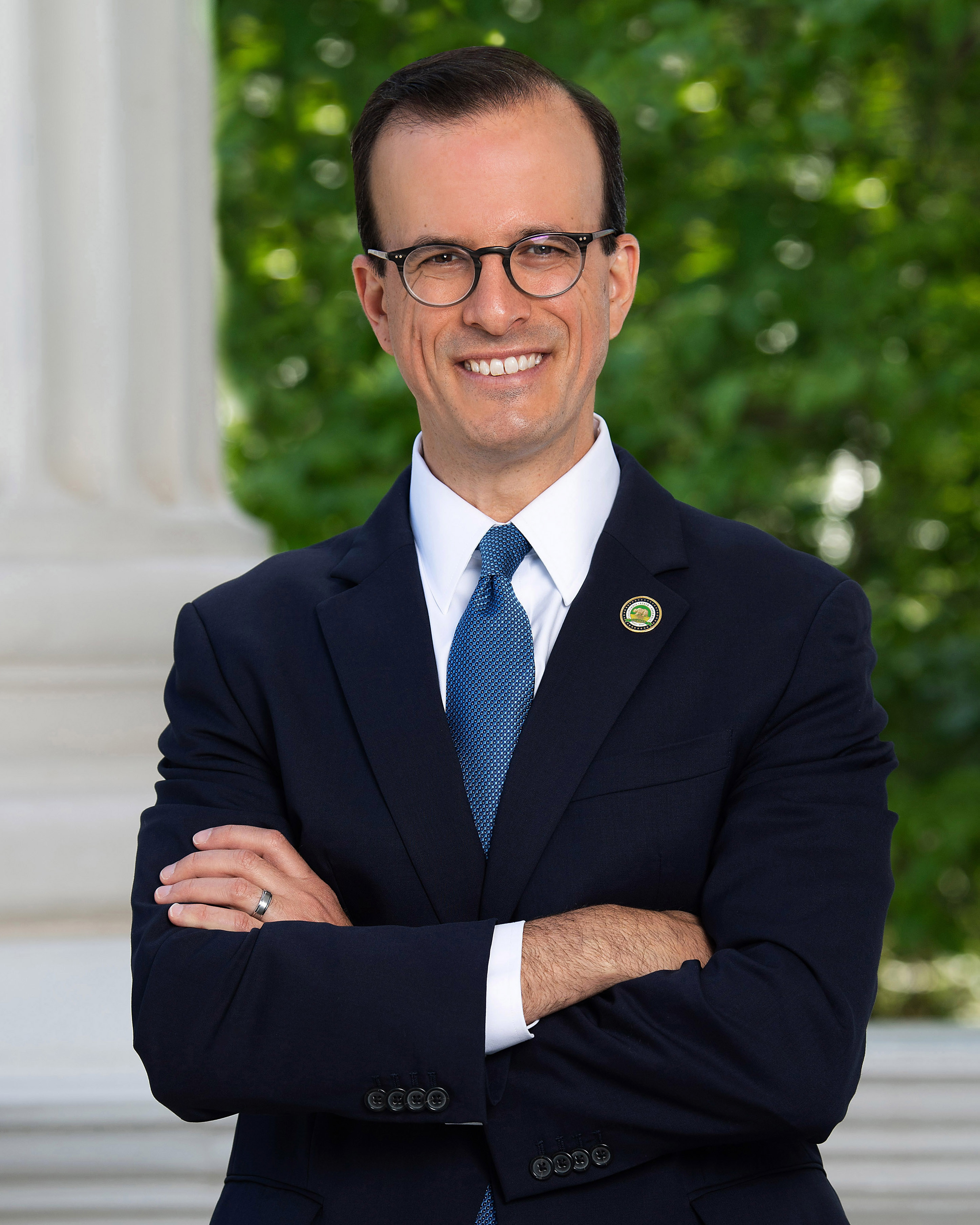
Asm. Marc Berman
Sponsored bills
(1) Existing law establishes a system of public elementary and secondary schools in this state. This system is composed of local educational agencies throughout the state that provide instruction to pupils in kindergarten and grades 1 to 12, inclusive, at schoolsites operated by these agencies. Existing law, commencing with the 2022–23 school year, requires each school district and county superintendent of schools maintaining kindergarten or any of grades 1 to 12, inclusive, and each charter school to provide 2 nutritiously adequate school meals free of charge during each schoolday, regardless of the length of the schoolday, to any pupil who requests a meal without consideration of the pupil's eligibility for a federally funded free or reduced-price meal, as specified, with a maximum of one free meal for each meal service period. Existing law requires the department to develop and maintain nutrition guidelines for school lunches and breakfasts, and for all food and beverages sold on public school campuses. Existing law requires a school district, county superintendent of schools, or charter school to provide each needy pupil with one nutritionally adequate free or reduced-price meal during each schoolday, except as provided. This bill would revise and recast provisions regarding school meals for needy pupils by, among other things, instead requiring each school district, county superintendent of schools, and charter school to make available a nutritionally adequate breakfast, as defined, and a nutritionally adequate lunch, as defined, free of charge during each schoolday, as defined, to any pupil who requests a meal, without consideration of the pupil's eligibility for a federally funded free or reduced-price meal, as provided. The bill would require each school district, county office of education, or charter school that offers independent study to meet the above meal requirements for any pupil on any schoolday that the pupil is scheduled for educational activities, as provided. The bill would require the State Department of Education to submit a waiver request to the United States Department of Agriculture to allow for one meal to be provided during a schoolday lasting 4 hours or less to be served in a noncongregate manner. The bill would authorize each school district, county superintendent of schools, and charter school to make available either a nutritionally adequate breakfast or a nutritionally adequate lunch, as defined, in a noncongregate manner, as provided, if the State Department of Education receives approval for the federal noncongregate waiver. The bill would require each school district, county superintendent of schools, and charter school to provide pupils with adequate time to eat, as determined by that school district, county superintendent of schools, or charter school in consideration of the recommendations provided by the department. The bill would require a chartering authority, among other things, to provide technical assistance to a charter school to meet these meal requirements, as provided. If the federal School Breakfast Program and federal National School Lunch Program allow more added sugar or sodium than is recommended by the most recent Dietary Guidelines for Americans, as described, the bill would require the department to convene representatives from specified entities to work in partnership to provide maximum daily added sugar and sodium intake recommendations for each grade level, as provided. The bill also would make conforming changes to related provisions of law. By imposing additional duties on local educational agencies and officials, the bill would impose a state-mandated local program. (2) Existing law authorizes the governing board of a school district to establish rules to determine which pupils are needy and authorizes a nominal cash payment for school meals to be collected from pupils that are not eligible for free meals and requires the State Department of Education to determine the amount of cash payment that may be required of those pupils. Existing law requires the Superintendent of Public Instruction to reimburse school districts for free and reduced-price meals served or sold based on the median statewide meal costs. This bill would delete those provisions. (3) Existing federal law provides for the permanent and nationwide Summer Electronic Benefit Transfer for Children (Summer EBT) program, under which pupils who are eligible for free and reduced-price school meals receive $40 per month during summer months for grocery benefits. This bill would require the State Department of Education to work in partnership with the State Department of Social Services to maximize participation in the federal Summer EBT program, as provided. (4) The California Constitution requires the state to reimburse local agencies and school districts for certain costs mandated by the state. Statutory provisions establish procedures for making that reimbursement. This bill would provide that, if the Commission on State Mandates determines that the bill contains costs mandated by the state, reimbursement for those costs shall be made pursuant to the statutory provisions noted above.
Existing law establishes the Structural Pest Control Board within the Department of Consumer Affairs, requires the board to license and regulate structural pest control operators, as specified, and authorizes the board to appoint a registrar to be the executive officer and secretary of the board. Existing law repeals those provisions on January 1, 2024, at which time the board is subject to review by the appropriate policy committees of the Legislature. Existing law makes a violation of provisions regulating structural pest control operators a misdemeanor. This bill would extend the operation of the board and the authority to appoint a registrar to January 1, 2028. Because this bill would expand the application of an existing crime by extending the above-described misdemeanor, this bill would create a state-mandated local program. The California Constitution requires the state to reimburse local agencies and school districts for certain costs mandated by the state. Statutory provisions establish procedures for making that reimbursement. This bill would provide that no reimbursement is required by this act for a specified reason.
(1) Existing law, the Electronic and Appliance Repair Dealer Registration Law, establishes the Bureau of Household Goods and Services, under the direction of a chief who is responsible to the Director of Consumer Affairs, and provides for the licensure and regulation of, among others, electronic and appliance repair dealers and service contractors by the bureau. A violation of its provisions is a crime. Existing law repeals those provisions relating to service contractors on January 1, 2024. This bill would extend operation of those provisions relating to service contractors until January 1, 2028. Because a violation of those provisions is a crime, the bill would impose a state-mandated local program. Existing law prohibits acting as a service dealer without obtaining registration under the law and defines "service dealer" for this purpose to include, among other things, a person who for compensation repairs, services, or maintains an electronic set or major appliance. Existing law defines various terms for purposes of the law, including, among other things, "electronic set," "appliance," and "video game." This bill would amend the definition of "electronic set" to additionally include a cellular device or any other device that depends for its functioning on digital electronics, as specified. The bill would expand the definition of "appliance" to mean any device primarily used for residential purposes, including an ice maker, dehumidifier, and portable residential furnace. The bill would amend the definition of "video game" to remove the requirement that it has its own cathode ray tube, television set, or monitor. By expanding the definition of "service dealer" for purposes of the law, the violation of which is a crime, this bill would impose a state-mandated local program. Existing law requires the director, on their own initiative, to conduct spot check investigations of service dealers of specified electronics and appliances throughout the state on a continuous basis. This bill would require the director to conduct spot check investigations, as described above, no less than twice per year. Existing law requires the director to distribute to each registered service dealer and each registered service contractor copies of these provisions and of the regulations adopted under these provisions. This bill would authorize the director to, alternatively, make those provisions and regulations available on its internet website. Under existing law, registration under the Electronic and Appliance Repair Dealer Registration Law expires no more than 12 months after the issue date. Existing law provides for the renewal of both unexpired and expired registrations, as specified. This bill would authorize the bureau to impose conditions on the renewal of an expired registration of a service contractor. The bill would cancel a registration of a service contractor that has not been renewed within 6 years of its issuance and would authorize a holder of a canceled registration to submit a new application for reissuance or reinstatement of the registration if specified requirements are met. (2) Existing law, the Home Furnishings and Thermal Insulation Act, prohibits any person from engaging in business regulated by the act unless they hold a valid, unexpired license, as specified. Existing law defines "person" for this purpose. This bill would expand the definition of "person" to include a limited liability company and would make conforming changes. Existing law imposes various labeling requirements, including requiring a manufacturer of a covered product to indicate whether or not the product contains added flame retardant chemicals by including a flame retardant chemical statement on the label, as specified. Existing law requires the manufacturer to retain documentation to show whether flame retardant chemicals were added to a product sold in California and to provide documentation upon request of the bureau establishing the accuracy of the flame retardant chemical statement on the label. Existing law imposes fines for a violation of those documentation requirements. This bill would delete the above-described documentation requirements and would make conforming changes. (3) Existing law, the Household Movers Act, provides for the licensure and regulation of household movers, including corporations and persons, as defined, by the Division of Household Movers established within the bureau. This bill would add to the definition of "corporation" a limited liability company and would make conforming changes. Existing law requires the bureau to issue a permit only to those applicants who it finds have demonstrated that they possess sufficient knowledge, ability, integrity, and financial resources and responsibility to perform the service within the scope of their application. This bill would delete that requirement. (4) Existing law subjects the powers and duties of the bureau to review by the appropriate policy committees of the Legislature and requires this review to be performed as if the laws administered by the bureau were scheduled to be repealed on January 1, 2024. This bill would instead require this review to be performed as if those laws were scheduled to be repealed on January 1, 2028. (5) Existing law, the Electronic and Appliance Repair Dealer Registration Law, establishes the Electronic and Appliance Repair Fund, and requires all fees collected pursuant to that law to be deposited in the fund and used for the administration of the bureau and the administration of that law. Existing law, the Home Furnishings and Thermal Insulation Act, establishes the Home Furnishings and Thermal Insulation Fund to be expended for the purposes of the bureau in carrying out the act. Existing law requires all fees collected under the act to be credited to the fund. Existing law, the Household Movers Act, establishes the Household Movers Fund to be used by the bureau for the administration of the act and requires all moneys collected pursuant to the act to be deposited into the fund. This bill would establish the Household Goods and Services Fund within the Professions and Vocations Fund to be administered by the bureau for the purposes of administering the Electronic and Appliance Repair Dealer Registration Law, the Home Furnishings and Thermal Insulation Act, and the Household Movers Act. The bill would require all moneys collected pursuant to those laws to instead be deposited in the Household Goods and Services Fund and would require all moneys in the above-described funds to be transferred to the Household Goods and Services Fund by July 1, 2026. The bill would abolish the Electronic and Appliance Repair Fund, the Home Furnishings and Thermal Insulation Fund, and the Household Movers Fund on July 1, 2026. (6) The California Constitution requires the state to reimburse local agencies and school districts for certain costs mandated by the state. Statutory provisions establish procedures for making that reimbursement. This bill would provide that no reimbursement is required by this act for a specified reason.
Existing law, the Cal Grant Program, establishes the Cal Grant A and B Entitlement Awards, the California Community College Expanded Entitlement Awards, the California Community College Transfer Entitlement Awards, the Competitive Cal Grant A and B Awards, the Cal Grant C Awards, and the Cal Grant T Awards under the administration of the Student Aid Commission. Existing law establishes eligibility requirements for awards under these programs for participating students attending qualifying institutions. For a student to qualify for a Cal Grant award, existing law requires that the student, among other things, make satisfactory academic progress at a qualifying institution. Existing law defines "satisfactory academic progress" as those criteria required by applicable federal standards published in Title 34 of the Code of Federal Regulations. Existing law authorizes the commission to adopt regulations defining "satisfactory academic progress" in a manner that is consistent with the federal standards. This bill would require, as part of the criteria to be a qualifying institution under the Cal Grant Program, an institution, by the start of the 2024–25 academic year, to comply with various requirements regarding "satisfactory academic progress" standards used to determine if a student qualifies for a Cal Grant and to develop and implement policies defining "satisfactory academic progress" in a manner that is consistent with the federal standards. The bill would delete the commission's authorization to adopt regulations defining "satisfactory academic progress."
Existing law, the Menstrual Equity for All Act of 2021, requires a public school, as provided, maintaining any combination of classes from grades 6 to 12, inclusive, to stock the school's restrooms with an adequate supply of free menstrual products, as defined, available and accessible, free of cost, in all women's restrooms and all-gender restrooms, and in at least one men's restroom, at all times, and to post a certain notice, on or before the start of the 2022–23 school year, as prescribed. This bill would extend these requirements, commencing on or before the start of the 2024–25 school year, to instead apply to public schools maintaining any combination of classes from grades 3 to 12, inclusive. By imposing new duties on local educational agencies, the bill would impose a state-mandated local program. The California Constitution requires the state to reimburse local agencies and school districts for certain costs mandated by the state. Statutory provisions establish procedures for making that reimbursement. This bill would provide that, if the Commission on State Mandates determines that the bill contains costs mandated by the state, reimbursement for those costs shall be made pursuant to the statutory provisions noted above.
Existing law establishes the California State Nonprofit Security Grant Program under the administration of the Director of Emergency Services to provide grant funding to improve the physical security of nonprofit organizations that are at high risk of violent attacks or hate crimes due to ideology, beliefs, or mission. Existing law authorizes applicants to use grant funds for prescribed security enhancements, including security training. Existing law makes the operation of the program contingent upon an appropriation in the annual Budget Act. This bill would require the grant program to provide the grants to nonprofit organizations and would authorize the grant program to provide grants to an applicant that provides support to the above-described at-risk nonprofit organizations for vulnerability assessments, security trainings, mass notification alert systems, monitoring and response systems, and lifesaving emergency equipment. The bill would prohibit the director from taking into account during the evaluation of an application the applicant's prior history with or receipt of grant funding to improve its physical security. The bill would require the director, when evaluating applications, to consider whether an applicant is more likely to be a target of hate-motivated violence. Existing law requires the Office of Emergency Services to provide ongoing technical assistance for nonprofit organizations that require a vulnerability assessment for a state application to the California State Nonprofit Security Grant Program or a threat assessment for a federal application to the Nonprofit Security Grant Program of the United States Department of Homeland Security. This bill would require that the above-described technical assistance include a resource page on the office's internet website, as specified, and continuous outreach to stakeholders on available resources for vulnerability assessments outside the established grant cycle.
(1) Existing law authorizes cities and counties, subject to certain limitations and approval requirements, to levy a transactions and use tax for general or specific purposes, in accordance with the procedures and requirements set forth in the Transactions and Use Tax Law, including a requirement that the combined rate of all taxes that may be imposed in accordance with that law in the county not exceed 2%. This bill would authorize the County of Santa Clara to impose a transactions and use tax for general or specific purposes at a rate of no more than 0.625% that, in combination with other transactions and use taxes, would exceed the above-described combined rate limit of 2%, if the county adopts an ordinance proposing the tax and the ordinance proposing the tax is approved by the voters, subject to applicable voter approval requirements, as specified. The bill would specify that a transactions and use tax established pursuant to its provisions would not be considered for purposes of the 2% combined rate limitation. The bill would repeal this authorization on December 31, 2028, if an ordinance proposing the tax has not been approved by that date. (2) Existing law authorizes the Ventura County Transportation Commission to impose a transactions and use tax for the support of countywide transportation programs at a rate of no more than 0.5% that, in combination with other transactions and use taxes, would exceed the above-described combined rate limit of 2%, if the county adopts an ordinance proposing the tax and the ordinance proposing the tax is approved by the voters, subject to applicable voter approval requirements. This bill would amend these provisions to instead authorize the County of Ventura to impose such a transactions and use tax for the support of countywide transportation programs. This bill would make legislative findings and declarations as to the necessity of a special statute for the Counties of Santa Clara and Ventura.
The California Constitution authorizes the Legislature to permit private, nonprofit organizations to conduct raffles as a funding mechanism to support beneficial and charitable works, if, among other conditions, at least 90% of the gross receipts from the raffle go directly to beneficial or charitable purposes in California. The California Constitution further authorizes the Legislature to amend the percentage of gross receipts required to be dedicated to beneficial or charitable purposes by a statute passed by a 23 vote of each house of the Legislature. Existing statutory law implements those provisions and requires the Department of Justice to administer and enforce those provisions. Existing statutory law, until January 1, 2024, authorizes a major league sports raffle at a home game conducted by an eligible organization, as defined, for the purpose of directly supporting specified beneficial or charitable purposes in California, or financially supporting another private, nonprofit, eligible organization, as defined, that performs those purposes if, among other requirements, 50% of the gross receipts generated from the sale of raffle tickets are used to benefit or provide support for beneficial or charitable purposes, as defined, the other 50% is paid to the winner, and the winners of the prizes are determined by a manual draw, as specified. This bill would permanently extend the operation of those provisions beyond January 1, 2024. By extending the operation of provisions that revise the percentage of gross receipts required to go to beneficial or charitable purposes pursuant to the California Constitution, this bill would require a 23 vote of each house.
Existing law establishes the Medi-Cal program, which is administered by the State Department of Health Care Services, under which qualified low-income individuals receive health care services. The Medi-Cal program is, in part, governed and funded by federal Medicaid Program provisions. Existing federal law, as a condition of receiving federal Medicaid funds, requires states to provide health care services to specified individuals. Existing federal law authorizes states to provide presumptive eligibility to pregnant women or children, and existing state law requires the department to provide presumptive eligibility to pregnant women and children, as specified. This bill would expand the presumptive eligibility for pregnant women to all pregnant people, renaming the program "Presumptive Eligibility for Pregnant People" (PE4PP) . For a pregnant person covered under PE4PP who applies for full-scope Medi-Cal benefits, if the application is submitted at any time from the date of their presumptive eligibility determination through the last day of the subsequent calendar month, the bill would require the department to ensure the pregnant person is covered under PE4PP until their full-scope Medi-Cal application is approved or denied, as specified. The bill would require the department to require providers participating in the PE4PP program to provide information to pregnant persons enrolled in PE4PP on how to contact the person's county to expedite the county's determination of a Medi-Cal application. The bill would make conforming changes to related provisions. Because counties are required to make eligibility determinations, and this bill would expand Medi-Cal eligibility, the bill would impose a state-mandated local program. The California Constitution requires the state to reimburse local agencies and school districts for certain costs mandated by the state. Statutory provisions establish procedures for making that reimbursement. This bill would provide that, if the Commission on State Mandates determines that the bill contains costs mandated by the state, reimbursement for those costs shall be made pursuant to the statutory provisions noted above.