

Existing law authorizes the Public Utilities Commission to fix the rates and charges for every public utility, and requires that those rates and charges be just and reasonable. Existing law requires the commission to enforce rules governing the extension of service by electrical corporations. This bill would require the commission to determine the criteria for timely service for electric customers to be energized, including, among other things, categories of timely electric service through energization, as specified. The bill would require each electrical corporation that energized less than 35% of customers with completed applications exceeding 12 months in duration by January 31, 2023, to submit a report to the commission, as specified, on or before December 1, 2024, demonstrating that the electrical corporation has energized 80% of customers with applications deemed complete as of January 31, 2023, as specified. To improve the accuracy of projected demand and facilitate achievement of the goal of timely electric service through energization, the bill would require each electrical corporation to evaluate and update, as necessary, its existing distribution planning processes. In order to inform the commission's determination of criteria for timely service, the bill would require the commission to annually collect certain information from each electrical corporation until new reporting requirements are established. Under the Public Utilities Act, a violation of an order, decision, rule, direction, demand, or requirements of the commission is a crime. Because the above-described provisions would be a part of the act, a violation of which would be a crime, this bill would impose a state-mandated local program. The California Constitution requires the state to reimburse local agencies and school districts for certain costs mandated by the state. Statutory provisions establish procedures for making that reimbursement. This bill would provide that no reimbursement is required by this act for a specified reason.
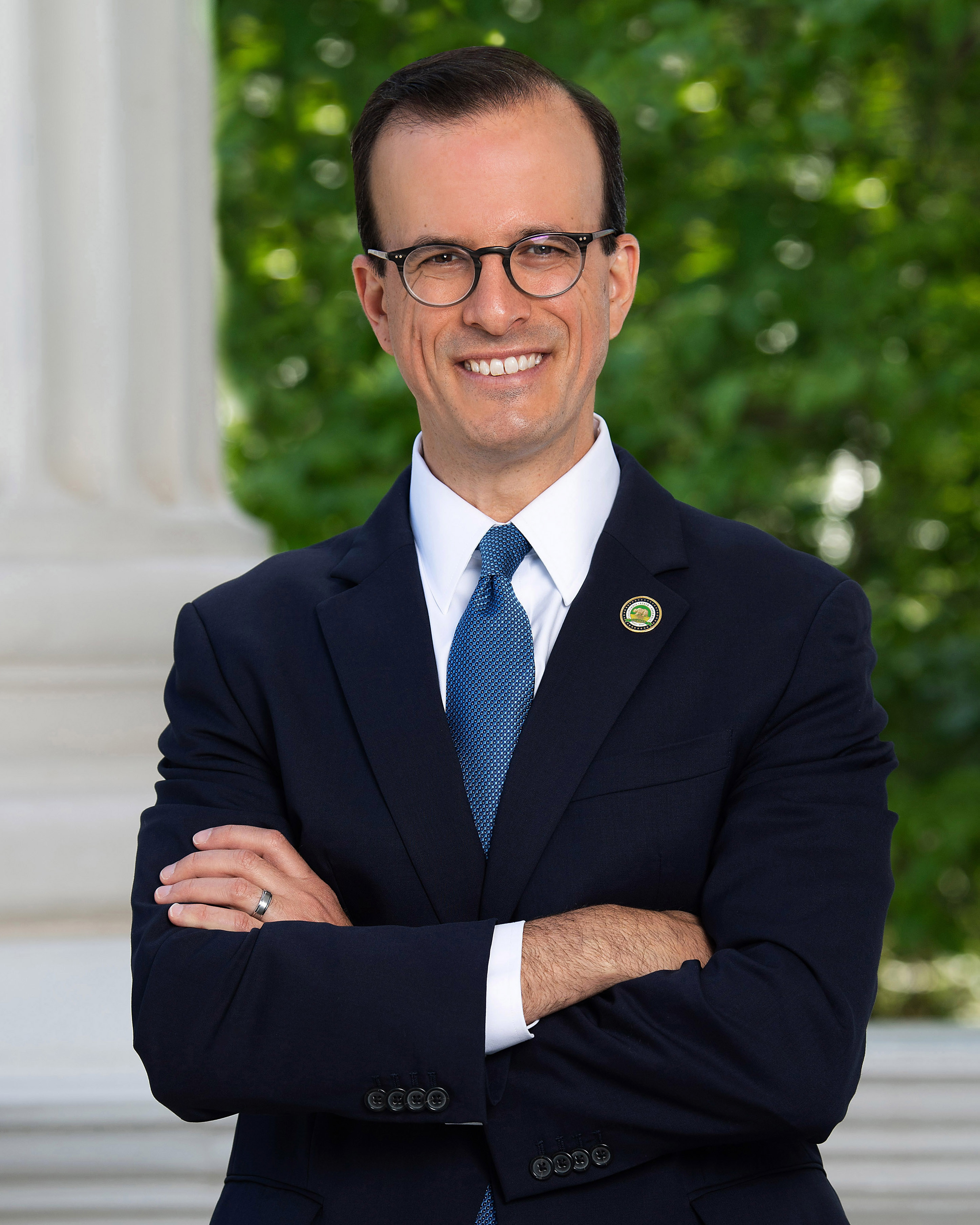
Asm. Marc Berman
Sponsored bills
Existing law, the Knox-Keene Health Care Service Plan Act of 1975, provides for the licensure and regulation of health care service plans by the Department of Managed Health Care and makes a willful violation of the act's requirements a crime. Existing law provides for the regulation of health insurers by the Department of Insurance. Existing law requires a health care service plan or health insurer to develop a maternal mental health program designed to promote quality and cost-effective outcomes. Existing law encourages a plan or insurer to include coverage for doulas. This bill would require a health care service plan or health insurer, on or before January 1, 2025, to develop a maternal and infant health equity program that addresses racial health disparities in maternal and infant health outcomes through the use of doulas. Under the bill, a Medi-Cal managed care plan would satisfy that requirement by providing coverage of doula services so long as doula services are a Medi-Cal covered benefit. The bill would require the Department of Managed Health Care, in consultation with the Department of Insurance, to collect data and submit a report describing the doula coverage and the above-described programs to the Legislature by January 1, 2027. Because a willful violation of the provisions relative to health care service plans would be a crime, the bill would impose a state-mandated local program. The California Constitution requires the state to reimburse local agencies and school districts for certain costs mandated by the state. Statutory provisions establish procedures for making that reimbursement. This bill would provide that no reimbursement is required by this act for a specified reason.
Existing law, the Ralph C. Dills Act (Dills Act) , governs collective bargaining between the state and recognized state public employee organizations. Existing law excludes certain employees from coverage under the Dills Act, including, among others, managerial employees, supervisory employees, and confidential employees, as defined. Existing law creates the Public Employment Relations Board and authorizes it, among other things, to determine appropriate state employee bargaining units, as specified. This bill would enact the Legislature Employer-Employee Relations Act, to provide employees of the Legislature, except certain specified categories of excluded employees, the right to form, join, and participate in the activities of employee organizations of their own choosing for the purpose of representation on all matters of employer-employee relations. The bill would prescribe rights, duties, and prohibitions in this context that parallel those in the Dills Act. For the purposes of bargaining or meeting and conferring in good faith, the bill would define "employer" to mean the Assembly Committee on Rules or the Senate Committee on Rules. The bill would require the employer to meet and confer with representatives of recognized employee organizations regarding matters within the scope of representation. The bill would exclude certain matters from the scope of representation, as specified. The bill would grant exclusive jurisdiction to the Public Employment Relations Board to make an initial determination as to whether charges of unfair practices are justified, and, if so, the necessary remedy, as specified. However, the bill would prohibit the board from issuing a decision or order that intrudes upon or interferes with the Legislature's core function of efficient and effective lawmaking or the essential operation of the Legislature. The bill would require the board to determine appropriate bargaining units, and would prohibit the board from including employees in a bargaining unit that includes employees other than those of the employer. The bill would prohibit the board from including within a bargaining unit employees from both the Assembly and Senate. This bill would make it a misdemeanor for any person to willfully resist, prevent, impede, or interfere with any member of the board, or any of its agents, in the performance of duties pursuant to its provisions. By expanding the definition of a crime, this bill would impose a state-mandated local program. The bill would provide that the provisions of the Legislature Employer-Employee Relations Act are severable. The bill would become operative on July 1, 2026. The California Constitution requires the state to reimburse local agencies and school districts for certain costs mandated by the state. Statutory provisions establish procedures for making that reimbursement. This bill would provide that no reimbursement is required by this act for a specified reason. This bill would additionally exempt from public inspection records related to activities governed by the Legislature Employer-Employee Relations Act that reveal the employer's deliberative processes, impressions, evaluations, opinions, recommendations, meeting minutes, research, work product, theories, or strategy, or that provide instruction, advice, or training to employees who do not have full collective bargaining and representation rights under the Legislature Employer-Employee Relations Act. Existing constitutional provisions require that a statute that limits the right of access to the meetings of public bodies or the writings of public officials and agencies be adopted with findings demonstrating the interest protected by the limitation and the need for protecting that interest. This bill would make legislative findings to that effect.
Existing law specifies procedures for manual vote counts for a semifinal official canvass in a precinct, including, among others, after the polls have closed, commencing a public count of the ballots cast, unopened, to ascertain whether the number of ballots corresponds with the number of signatures on the roster. These manual vote count procedures apply to all elections in which ballots are counted by hand. Ballots counted manually in a central place are required to be counted by precinct, separately, under the direction of the elections official or their authorized deputies, in the same manner as provided where ballots are counted at the polling place. This bill would prohibit an elections official from performing a manual vote count in a semifinal official canvass pursuant to the above procedures in any contest held on an established election date, as specified, where there are more than 1,000 registered voters eligible to participate in that election as of 154 days in advance of the election, or in any contest held on a date other than an established election date, where there are more than 5,000 registered voters eligible to participate in that election as of 154 days in advance of the election. The bill would only allow an elections official to conduct a manual vote count for a semifinal official canvass in a precinct pursuant to the above procedures if the count is conducted pursuant to a plan approved by the Secretary of State, as specified. The bill would require the Secretary of State to adopt regulations regarding manual vote counts. Existing law authorizes the governing board of a local jurisdiction to adopt a voting system for use in an election if the system has been certified or conditionally approved by the Secretary of State. This bill would require an elections official or the governing body of a jurisdiction that administers elections to use a certified voting system, as specified. This bill would make the termination of a contract for a certified voting system provisional unless and until the jurisdiction has a transition plan and has finalized and signed a new contract for a certified voting system. By requiring local elections officials to perform additional duties, this bill would impose a state-mandated local program. The California Constitution requires the state to reimburse local agencies and school districts for certain costs mandated by the state. Statutory provisions establish procedures for making that reimbursement. This bill would provide that, if the Commission on State Mandates determines that the bill contains costs mandated by the state, reimbursement for those costs shall be made pursuant to the statutory provisions noted above. This bill would declare that it is to take effect immediately as an urgency statute.
(1) Existing law governs professions and vocations that are regulated by various boards within the Department of Consumer Affairs, including the Medical Board of California and the Dental Board of California. Existing law requires those boards to require a licensee, at the time of issuance of a license, to provide specified federal taxpayer information, including the applicant's social security number or individual taxpayer identification number. Existing law prohibits a licensing board from processing an application for an initial license unless the applicant provides that information where requested on the application. Existing law, the Licensed Physicians and Dentists from Mexico Pilot Program, allows licensed physicians and dentists from Mexico to be issued a license by the Medical Board of California or a permit by the Dental Board of California to practice medicine or dentistry in California for a period not to exceed 3 years and establishes requirements for the participants in the program, as specified. This bill, for purposes of the pilot program, notwithstanding the above-described requirements to provide specified federal taxpayer information, would require the Medical Board of California (board) to issue a 3-year nonrenewable license to an applicant who has not provided an individual taxpayer identification number or social security number if the applicant meets specified conditions. The bill would require the applicant to immediately seek an appropriate 3-year visa and social security number from the federal government within 14 days of being issued the medical license and immediately provide the board with their social security number within 10 days of issuance of that card by the federal government. The bill would prohibit the applicant from engaging in the practice of medicine until the board determines that these conditions have been met. The bill would require the board to notify the applicant of their eligibility to practice medicine if the board determines the applicant has met these conditions. The bill would permit the board to extend the 3-year nonrenewable license period, as specified. The bill would require, for a licensee to be eligible for an extension, certain documents to be submitted to the board no later than January 30, 2024, including a declaration signed by the licensee under penalty of perjury that the licensee meets the requirements for an extension. By expanding the crime of perjury, the bill would impose a state-mandated local program. The bill would prohibit an extension from extending the license period beyond September 30, 2026, and would make an extension dependent upon the program having sufficient funding appropriated in the annual Budget Act. (2) Existing law, the Medical Practice Act, establishes the Medical Board of California within the Department of Consumer Affairs for the licensure, regulation, and discipline of physicians and surgeons. Under existing law, the board consists of 15 members, 7 of whom are public members. Existing law requires the Senate Committee on Rules and the Speaker of the Assembly to each appoint one public member. Existing law repeals these provisions on January 1, 2024. This bill would extend that date to January 1, 2028. (3) Existing law requires members of the Medical Board of California to only be appointed from persons who have been citizens of this state for at least 5 years next preceding their appointment. This bill would instead require members of the board to only be appointed from persons who have been residents of this state for at least the 5-year period preceding their appointment. The bill would also make conforming changes. (4) Existing law requires legal proceedings against the Medical Board of California to be instituted in the City of Sacramento, Los Angeles, San Diego, or San Francisco. This bill would make a technical, nonsubstantive change to these provisions. (5) Existing law authorizes the Medical Board of California to employ and fix the compensation of an executive director, and other specified staff, as provided. Existing law authorizes the Attorney General to act as legal counsel for the board for any judicial and administrative proceedings. Existing law repeals these provisions on January 1, 2022. This bill would extend that date to January 1, 2028. The bill would also establish a Complainant Liaison Unit comprised of board staff responsible for, among other things, responding to communications from the public about the complaint review and enforcement process. The bill would condition the implementation of the unit on allocation of positions in the annual Budget Act, as specified. (6) Existing law requires medical school graduates to obtain a physician's and surgeon's postgraduate training license within 180 days after enrollment in a board-approved training program, as specified. Existing law establishes that the physician's and surgeon's postgraduate training license shall be valid until 90 days after the holder has received 12 months' credit of board-approved postgraduate training for graduates of medical schools in the United States and Canada or 24 months of board-approved postgraduate training for graduates of foreign medical schools approved by the Medical Board of California, as specified. This bill would instead require a medical school graduate to obtain a physician's and surgeon's postgraduate training license within 180 days after beginning a board-approved postgraduate program. The bill would instead establish that any physician's and surgeon's postgraduate training license in an active status issued on or after January 1, 2020, shall be valid for a period of 36 months. (7) Existing law prohibits a postgraduate training licensee, intern, resident, postdoctoral fellow, or instructor from engaging in the practice of medicine, or receiving compensation for that practice, unless they hold a valid, unrevoked, and unsuspended physician's and surgeon's certificate issued by the Medical Board of California, except as provided. Existing law authorizes a graduate who has completed the first year of postgraduate training, in an approved residency or fellowship, to engage in the practice of medicine as part of that residency or fellowship, and to receive compensation for that practice. If the resident or fellow fails to receive a license to practice medicine within 27 months from the commencement of the residency or fellowship, except as otherwise specified, or if the board denies their application for licensure, existing law specifies that these privileges and exemptions automatically cease. Existing law establishes that all approved postgraduate training the medical school graduate has successfully completed in the United States or Canada shall count toward the 15-month license exemption for graduates of medical schools in the United States and Canada or the 27-month license exemption for graduates of board-approved foreign medical schools, except as otherwise allowed. Existing law permits the board, in its discretion and upon review of supporting documentation, to grant an extension beyond the 15 months to a postgraduate training licensee who graduated from a medical school in the United States or Canada, or beyond 27 months to a postgraduate training licensee who graduated from a foreign medical school approved by the board, as specified. This bill would delete the authorization provisions described above. The bill would instead establish that all approved postgraduate training the medical school graduate has successfully completed in the United States or Canada shall count toward the postgraduate training requirement to obtain a physician's and surgeon's license. The bill would modify requirements related to an applicant for a physician's and surgeon's license, who has either graduated from medical school in the United States or Canada to require the applicant to have received 12 months of board-approved postgraduate training in another state or in Canada, or has graduated from a foreign medical school approved by the board and has received 24 months credit of board-approved postgraduate training and who is accepted into an approved postgraduate program in California, to obtain their physician's and surgeon's license within 180 days after beginning that postgraduate program or all privileges and exemptions would automatically cease. The bill would also authorize the board, in its discretion and upon review of supporting documentation, to grant an extension beyond 36 months to a postgraduate training licensee who graduated from a medical school approved by the board, as specified. Existing law requires an applicant for a physician's and surgeon's license who received credit for 12 months of approved postgraduate training in another state or in Canada and who is accepted into an approved postgraduate training program in California to obtain their physician's and surgeon's license within 90 days after beginning that postgraduate training program. This bill would extend the period for an applicant for a physician's and surgeon's license who received credit of postgraduate training, as described above, to 180 days after beginning the postgraduate training program. (8) Existing law requires an applicant for a physician's and surgeon's license to successfully complete at least 12 months of board-approved postgraduate training for graduates of medical schools in the United States and Canada or 24 months of board-approved postgraduate training for graduates of foreign medical schools other than Canadian medical schools. Existing law requires the postgraduate training to include at least 4 months of general medicine and shall be obtained in a postgraduate training program, as specified. Existing law authorizes an applicant who has received credit for at least 12 months of board-approved postgraduate training for graduates of medical schools in the United States and Canada or 24 months of board-approved postgraduate training for graduates of foreign medical schools, as specified, and not less than 12 months of which were completed as part of an oral and maxillofacial surgery postgraduate training program as a resident after receiving a medical degree from a combined dental and medical degree program accredited by the Commission on Dental Accreditation (CODA) or approved by the board, to be eligible for licensure. This bill would delete the postrgraduate training requirement regarding the inclusion of 4 months of general training, as specified above. The bill would also delete the provision regarding eligibility for licensure for applicants who participated in an oral and maxillofacial surgery postgraduate training program. (9) For individuals issued a physician and surgeon license by the board on or after January 1, 2022, existing law requires a physician and surgeon to show satisfactory evidence to the Medical Board of California of postgraduate training, as specified, before a physician's and surgeon's license may be renewed. If a holder of a physician's and surgeon's certificate does not show evidence satisfactory to the board of the receipt of credit, as specified, of board-approved postgraduate training, as specified, existing law authorizes the board to automatically place a physician's and surgeon's certificate in delinquent status. The bill would require a physician and surgeon to show evidence satisfactory to the board of postgraduate training, as specified, before a physician's and surgeon's license may be renewed, except licensees or applicants who meet specified requirements, including among others, that the licensee or applicant holds an unlimited and unrestricted license as a physician and surgeon in another state and has held that license continuously for a minimum of 4 years prior to the date of application and meets other requirements. The bill would, in addition to the authority to automatically place a physician's and surgeon's certificate in delinquent status, authorize the board to grant an additional 60 days to the initial license expiration date, as specified. For a licensee who has received credit for at least 24 months of approved postgraduate training in an oral and maxillofacial surgery postgraduate training program, as specified, the bill would require, at the time of initial renewal, a licensee to show evidence satisfactory to the board, pursuant to the attestation of specified individuals before their physician's and surgeon's license may be renewed. For a physician whose license is canceled or who surrenders their license prior to meeting the renewal requirements described above, this bill would prohibit a physician from having their license reinstated, except as specified. Existing law authorizes the Division of Licensing to prepare and mail a questionnaire, as specified, to every licensed physician at the time of license renewal, and requires that questionnaire to include questions to establish that the physician currently has no mental, physical, or behavioral disorder that would impair the physician's ability to practice medicine safely. This bill would instead authorize the Division of Licensing to prepare and provide electronically or mail a questionnaire to every licensed physician at the time of license renewal, and would require that the questionnaire include questions to establish that the physician currently has no disorder that would impair the physician's ability to practice medicine safely. (10) Existing law requires any complaint determined to involve the quality of care rendered by a physician and surgeon, except as provided, before complaint closure or referral to a field office for further investigation, to be reviewed by one or more medical experts with the pertinent education, training, and expertise to evaluate the specific standard of care issues raised by the complaint to determine if further field investigation is required. Existing law requires that review to include specified information, as requested by the board. Before a complaint, as specified, pertaining to the quality of care that a licensee provided to their patient may be closed, this bill would require the board to conduct an interview with the complainant, patient, or the patient's representative, as specified. The bill would only make that provision operative 6 months following the allocation of positions for this purpose in the annual Budget Act. The bill would also require a complainant, patient, or patient representative to be provided with an opportunity to provide a statement relative to the harm they experienced, as specified. The bill would require the statement to be considered by the board, or a panel of the board, for the purposes of adjudicating the case to which the statement pertains. (11) Existing law authorizes the Medical Board of California to delegate its specified authority to conduct investigations and inspections and to institute proceedings to the executive director of the board or other specified personnel, but prohibits specified delegations of authority. Existing law requires the board to delegate to the executive director the authority to adopt a decision entered by default and a stipulation for surrender of a license. This bill would additionally require the board to delegate to the executive director the authority to adopt automatic revocations. (12) Existing law requires a licensee who fails or refuses to comply with a request for the certified medical records of a patient, as specified, to pay to the Medical Board of California a civil penalty, as specified. Existing law requires a licensee or health care facility to pay the board a civil penalty, as specified, if a licensee or health care facility refuses to comply with a court order, issued in the enforcement of a subpoena, mandating the release of records to the board. Existing law establishes that any statute of limitations applicable to the filing of an accusation by the board shall be tolled during the period the licensee is out of compliance with the court order and during any related appeals. This bill would require that the statute of limitations relating to the licensee as described above be tolled upon the service of an order to show cause, as specified, until such time as the subpoenaed records are produced, including any period the licensee is out of compliance with the court order and during any related appeals, or until the court declines to issue an order mandating release of the records to the board. This bill would require that the statute of limitations relating to the health care facility as described above be tolled during the period the health care facility is out of compliance with the court order and during any related appeals, or until the court declines to issue an order mandating release of records to the board. The bill would require the owner, corporate officer, or manager of an entity licensed by the Board of Pharmacy to provide the board, or its authorized representatives, records requested by an authorized officer of law or authorized representative of the board, within 3 business days of the time the request was made. The bill would permit the entity to request an extension of this timeframe, as specified. (13) Existing law requires the Medical Board of California to take action against any licensee who is charged with unprofessional conduct, defined as, among other things, including the failure of a certificate holder, who is the subject of an investigation of the board, to attend and participate in an interview by the board, as specified, and the failure of a physician and surgeon to maintain adequate and accurate records relating to the provision of services to their patients. Existing law provides that it shall constitute unprofessional conduct for a physician and surgeon to disseminate misinformation or disinformation related to COVID-19, as specified. This bill would specify the failure to attend and participate in an interview by the board no later than 30 calendar days after being notified by the board constitutes unprofessional conduct. The bill would specify that the failure of a physician and surgeon to maintain adequate and accurate records as described above for at least 7 years after the last date of service to a patient constitutes unprofessional conduct. The bill would include as unprofessional conduct any action of the licensee intended to cause their patient to rescind consent to the release of the patient's medical records to the board of the Health Quality Investigation Unit of the Department of Consumer Affairs and dissuading, intimidating, or tampering with a patient, witness, or any person in an attempt to prevent them from reporting or testifying about a licensee. This bill would require the board or its designee to automatically suspend a license following a conviction of a felony by a licensee, as specified. The bill would require the board or its designee to automatically revoke the license, as prescribed. The bill would authorize the licensee to request a hearing within 30 days of the automatic suspension order, as specified. This bill would repeal the above-described provisions that provide that it shall constitute unprofessional conduct for a physician and surgeon to disseminate misinformation or disinformation related to COVID-19, as provided. Existing law specifies the time period before a person whose certificate has been surrendered or revoked or placed on probation may petition the board for reinstatement of a license. Existing law specifies a period of 3 years for reinstatement of a license surrendered or revoked for unprofessional conduct, except that the board may, for good cause shown, specify in a revocation order that a petition for reinstatement may be filed after 2 years. This bill would update certain of those time periods, including specifying a period of 5 years for reinstatement of a license surrendered or revoked for unprofessional conduct, except that the board may, for good cause shown, specify in a revocation order that a petition for reinstatement may be filed after 3 years. The bill would require the board to automatically reject a petition for early termination of modification, as specified. The bill would authorize the board to establish a fee paid by a person seeking license reinstatement or modification of penalty, as specified. The bill would require the board to adopt regulations pursuant to the Administrative Procedure Act to implement this provision. (14) Existing law prohibits the use of expert testimony in matters brought by the Medical Board of California unless specified information, including a complete expert witness report with prescribed components, is exchanged with counsel for the other party, and requires the exchange of the information to be completed 30 calendar days prior to the commencement date of the hearing or as specified. This bill would additionally require a statement from a complainant, patient, or patient representative relative to the harm they experienced to be exchanged in written form with counsel for the other party. The bill would require the exchange of the information to be completed 90 days prior to the commencement date of the hearing or as specified. (15) Under existing law, all moneys paid to and received by the Medical Board of California are required to be paid into the State Treasury and credited to the Contingent Fund of the Medical Board of California. Under existing law, moneys in the contingent fund shall be available, upon appropriation by the Legislature, as provided. Existing law, applicable to the licensure of physicians and surgeons, requires an applicant for a certificate based upon a national board diplomate certificate, an applicant for a certificate based on reciprocity, and an applicant for a certificate based upon written examination to pay a nonrefundable application and processing fee at the time the application is filed. Existing law requires an applicant who qualifies for a certificate, as a condition precedent to its issuance, in addition to other required fees, to pay an initial license fee in an amount not to exceed $863. For licenses that expire on or after January 1, 2022, existing law requires the board to fix the biennial renewal fee not to exceed $863. This bill would instead require the initial license fee to be $1,151, and for licenses that expire on or after January 1, 2024, the biennial renewal fee to be $1,151. Beginning January 1, 2027, the bill would require the initial license fee to be $1,255, and for licenses that expire on or after January 1, 2027, the biennial renewal fee to be $1,255. The bill would require the board, if the board has unencumbered funds, as specified, to reduce license or other fees, as prescribed. Existing law, the Osteopathic Act, establishes the Board of Osteopathic Examiners of the State of California, known as the Osteopathic Medical Board of California, for the licensure, regulation, and discipline of persons holding or applying for physician's and surgeon's certificates issued by the Osteopathic Board of California. Existing law requires the powers and duties of the Osteopathic Medical Board of California to be subject to review by the appropriate policy committees of the Legislature. Existing law requires the review to be performed as if these provisions were scheduled to be repealed as of January 1, 2026. This bill would extend that date to January 1, 2028. (16) Existing law authorizes graduates of specified institutes who have completed clinical training in psychoanalysis to engage in psychoanalysis as an adjunct to teaching, training, or research and hold themselves out to the public as psychoanalysts, and authorizes students in those institutes to engage in psychoanalysis under supervision, if the students and graduates do not hold themselves out to the public by any title or description of services incorporating specified words or that they do not state or imply that they are licensed to practice psychology. Existing law requires those students and graduates seeking to engage in psychoanalysis to register with the Medical Board of California, presenting evidence of their student or graduate status. Existing law requires each person to whom registration is granted under those provisions to pay specified fees into the Contingent Fund of the Medical Board of California. Existing law, the Psychology Law, makes a violation of its provisions a crime. Commencing January 1, 2025, this bill would transfer the administration and enforcement duties of those provisions from the Medical Board of California to the Board of Psychology. The bill would require that any moneys within the Contingent Fund of the Medical Board of California collected pursuant to those provisions be deposited in the Psychology Fund, and would require a registrant to pay into the Psychology Fund those fees fixed by the Board of Psychology. The bill would authorize the Board of Psychology to employ, subject to civil service regulations, whatever additional clerical assistance is necessary for the administration of these provisions. By placing these provisions in the Psychology Law, the bill would expand the definition of a crime, thereby imposing a state-mandated local program. (17) Existing law establishes procedures for providing access to health care records or summaries of those records by patients and those persons having responsibility for decisions respecting the health care of others. Existing law entitles an adult patient of a health care provider, minor patient authorized by law to consent to medical treatment, and patient's personal representative to inspect patient records upon presenting to the health care provider a request for those records and upon payment of reasonable costs, except as specified. This bill would make technical, nonsubstantive changes to these provisions. (18) This bill would incorporate additional changes to Section 2065 of the Business and Professions Code proposed by AB 1646 to be operative only if this bill and AB 1646 are enacted and this bill is enacted last. (19) The California Constitution requires the state to reimburse local agencies and school districts for certain costs mandated by the state. Statutory provisions establish procedures for making that reimbursement. This bill would provide that no reimbursement is required by this act for a specified reason.
Existing law authorizes a person to perform an analysis of samples to test for SARS-CoV-2 in a clinical laboratory or a city, county, or city and county public health laboratory if they meet the requirements under specified federal regulations for high complexity testing. This bill would repeal these provisions as of July 1, 2028. Existing law, the Pharmacy Law, establishes the California State Board of Pharmacy to license and regulate pharmacists. A violation of these requirements is a crime. Existing law authorizes a pharmacist, among other things, to administer drugs and biological products that have been ordered by a prescriber. This bill, until January 1, 2025, would authorize a pharmacist to furnish COVID-19 oral therapeutics, as defined, following a positive test for SARS-CoV-2, the virus that causes COVID-19, as specified. Among other things, the bill would require a pharmacist to document, to the extent possible, the kind and amounts of COVID-19 oral therapeutics furnished pursuant to these provisions, as well as information regarding any testing services provided, in the record system maintained by the pharmacy and to maintain those records for 3 years. Because a violation of these requirements would be a crime, the bill would impose a state-mandated local program. Existing law, the California Uniform Controlled Substances Act, regulates the distribution and use of controlled substances, as defined. Existing law authorizes specified individuals, when acting under the direction of a physician and surgeon, to administer a narcotic controlled substance orally in the treatment of a person with substance use disorder for addiction to a controlled substance. This bill would instead authorize the above-described individuals to administer a narcotic controlled substance in the treatment of a person with substance use disorder for addiction to a controlled substance. The California Constitution requires the state to reimburse local agencies and school districts for certain costs mandated by the state. Statutory provisions establish procedures for making that reimbursement. This bill would provide that no reimbursement is required by this act for a specified reason. This bill would declare that it is to take effect immediately as an urgency statute.
Existing law declares another state's law authorizing a civil action against a person or entity that receives or seeks, performs or induces, or aids or abets the performance of an abortion, or who attempts or intends to engage in those actions, to be contrary to the public policy of this state, and prohibits the application of that law to a controversy in state court and the enforcement or satisfaction of a civil judgment received under that law. This bill would specifically include within these provisions, in addition to abortion performers, abortion providers. Existing law, the Knox-Keene Health Care Service Plan Act of 1975, provides for the licensure and regulation of health care service plans by the Department of Managed Health Care and makes a willful violation of the act a crime. Existing law also provides for the regulation of health insurers by the Department of Insurance. The bill would also prohibit a contract issued, amended, or renewed on or after January 1, 2024, between a health care service plan or health insurer and a health care services provider from containing any term that would result in termination or nonrenewal of the contract or otherwise penalize the provider based on a civil judgment, criminal conviction, or another professional disciplinary action in another state if the judgment, conviction, or professional disciplinary action is solely based on the application of another state's law that interferes with a person's right to receive care that would be lawful if provided in California. The bill would also prohibit a health care service plan or health insurer from discriminating against a licensed provider solely on the basis of a civil judgment, criminal conviction, or another professional disciplinary action in another state if the judgment, conviction, or professional disciplinary action is solely based on the application of another state's law that interferes with a person's right to receive care that would be lawful if provided in California. Because a willful violation of these provisions by a health care service plan would be a crime, the bill would impose a state-mandated local program. Existing law requires that the State Department of Public Health automatically suspend as a Medi-Cal provider any individual or entity that has a license, certificate, or other approval to provide health care that is revoked or suspended by a federal, California, or another state's licensing, certification, or approval authority, has otherwise lost that license, certificate, or approval, or has surrendered that license, certificate, or approval while a disciplinary hearing was pending. The bill would also authorize the department, subject to obtaining necessary federal approvals and the availability of federal financial participation under Medi-Cal, to elect to not suspend an individual or entity as a provider in the Medi-Cal program if the revocation, suspension, or loss of the individual or entity's license, certification, or approval authority in another state or the pending disciplinary hearing during which the individual or entity surrendered the license, certification, or approval authority in another state is based solely on conduct that is not deemed to be unprofessional conduct under California law. The bill would also require the department to seek any necessary federal approvals to implement these provisions. Under existing law, the Director of Health Care Services is authorized, for purposes of administering the Medi-Cal program, to suspend a provider of service from further participation under the program for specified reasons, including conviction of any felony or any misdemeanor involving fraud, abuse of the Medi-Cal program or any patient, or otherwise substantially related to the qualifications, functions, or duties of a provider of service. Existing law requires the director, upon receipt of written notification from the Secretary of the United States Department of Health and Human Services that a physician or other individual practitioner has been suspended from participation in the Medicare or Medicaid programs, to promptly suspend the practitioner from participation in the Medi-Cal program. Existing law also requires the Director of Health Care Services to notify the administrative director of a suspension of a physician from participation in the Medi-Cal program imposed pursuant to provisions authorizing the director to suspend a provider of service from participation. This bill would authorize the director, subject to obtaining necessary federal approvals and the availability of federal financial participation under Medi-Cal, to request a waiver under federal law, as permitted, if the provider's suspension from participating in the Medicare or Medicaid program was based solely on conduct that is not deemed to be unprofessional conduct under California law. The bill would also require the department to seek any necessary federal approvals to implement these provisions. The California Constitution requires the state to reimburse local agencies and school districts for certain costs mandated by the state. Statutory provisions establish procedures for making that reimbursement. This bill would provide that no reimbursement is required by this act for a specified reason.
The Confidentiality of Medical Information Act (CMIA) prohibits a provider of health care, a health care service plan, a contractor, or a corporation and its subsidiaries and affiliates from intentionally sharing, selling, using for marketing, or otherwise using any medical information, as defined, for any purpose not necessary to provide health care services to a patient, except as provided. The CMIA makes a business that offers software or hardware to consumers, including a mobile application or other related device that is designed to maintain medical information in order to make the information available to an individual or a provider of health care at the request of the individual or a provider of health care, for purposes of allowing the individual to manage the individual's information or for the diagnosis, treatment, or management of a medical condition of the individual, a provider of health care subject to the requirements of the CMIA. Existing law makes a violation of these provisions that results in economic loss or personal injury to a patient punishable as a misdemeanor. This bill would revise the definition of "medical information" to include reproductive or sexual health application information, which the bill would define to mean information about a consumer's reproductive or sexual health collected by a reproductive or sexual health digital service, as specified. The bill would make a business that offers a reproductive or sexual health digital service to a consumer for the purpose of allowing the individual to manage the individual's information, or for the diagnosis, treatment, or management of a medical condition of the individual, a provider of health care subject to the requirements of the CMIA. Because the bill would expand the scope of a crime, it would impose a state-mandated local program. This bill would incorporate additional changes to Section 56.05 of the Civil Code proposed by AB 1697 to be operative only if this bill and AB 1697 are enacted and this bill is enacted last. The California Constitution requires the state to reimburse local agencies and school districts for certain costs mandated by the state. Statutory provisions establish procedures for making that reimbursement. This bill would provide that no reimbursement is required by this act for a specified reason.
Existing law generally regulates classes of insurance, including liability insurance. Existing law defines "liability insurance" to include, among other things, insurance coverage against the legal liability of the insured, and against loss, damage, or expense incident to a claim arising out of the death or injury of any person as the result of negligence or malpractice in rendering professional services by any person who holds a certificate or license issued pursuant to the Medical Practice Act or the Osteopathic Initiative Act, or a license as a community clinic or health facility, as specified. This bill would prohibit an insurer from refusing to issue or renew or terminating professional liability insurance for health care providers, as specified, and from imposing a surcharge or increasing the premium or deductible solely based on any prohibited bases for discrimination, including a health care provider offering or performing abortion, contraception, gender-affirming health care, or care related to those health care services that are lawful in this state but unlawful in another state. The bill would prohibit an insurer from denying coverage for liability for damages arising from offering or performing abortion, contraception, gender-affirming health care, or care related to those health care services, if those services are within the scope of the insured's license, the services are lawful in the state where they are offered or performed, and the policy would otherwise cover liability for damages arising from performing or rendering other professional services within the insured's scope of license.
Existing law authorizes a court to issue an ex parte gun violence restraining order prohibiting the subject of the petition from having custody or control of, owning, purchasing, possessing, or receiving, or attempting to purchase or receive a firearm or ammunition when it is shown that there is a substantial likelihood that the subject of the petition poses a significant danger of harm to themselves or to another person in the near future by having custody or control of, owning, purchasing, possessing, or receiving a firearm, and that the order is necessary to prevent personal injury to themselves or to another. Existing law requires the court, when determining whether grounds for a gun violence restraining order exists, to consider evidence of, among other things, a recent threat of violence by the subject of the petition, and also authorizes the court to consider evidence of, among other things, recent acquisition of firearms, ammunition, or other deadly weapons by the subject of the petition. This bill would additionally authorize the court to consider evidence of acquisition of body armor when determining whether grounds for a gun violence restraining order exist.