

Existing law requires the Commission on Teacher Credentialing, among other duties, to establish standards for the issuance and renewal of credentials, certificates, and permits. Existing law requires the commission to issue a single subject teaching credential only in specified subjects and authorizes the commission to issue an authorization to teach a subject other than the one authorized by a single subject teaching credential if the holder of the credential meets certain requirements. Existing regulations of the commission authorize the holder of a single subject teaching credential who meets those requirements to add a supplementary authorization to teach specified subjects, including computer science. This bill would, upon appropriation by the Legislature for this purpose, require the commission, on or before July 1, 2024, to convene a workgroup on credentialing for instruction in computer science, as provided, to determine, among other things, which credentials should also authorize teaching computer science, as specified. The bill would require the commission, on or before July 1, 2025, to provide a report of the workgroup's findings and recommendations, as provided. The bill would repeal these provisions as of January 1, 2028.
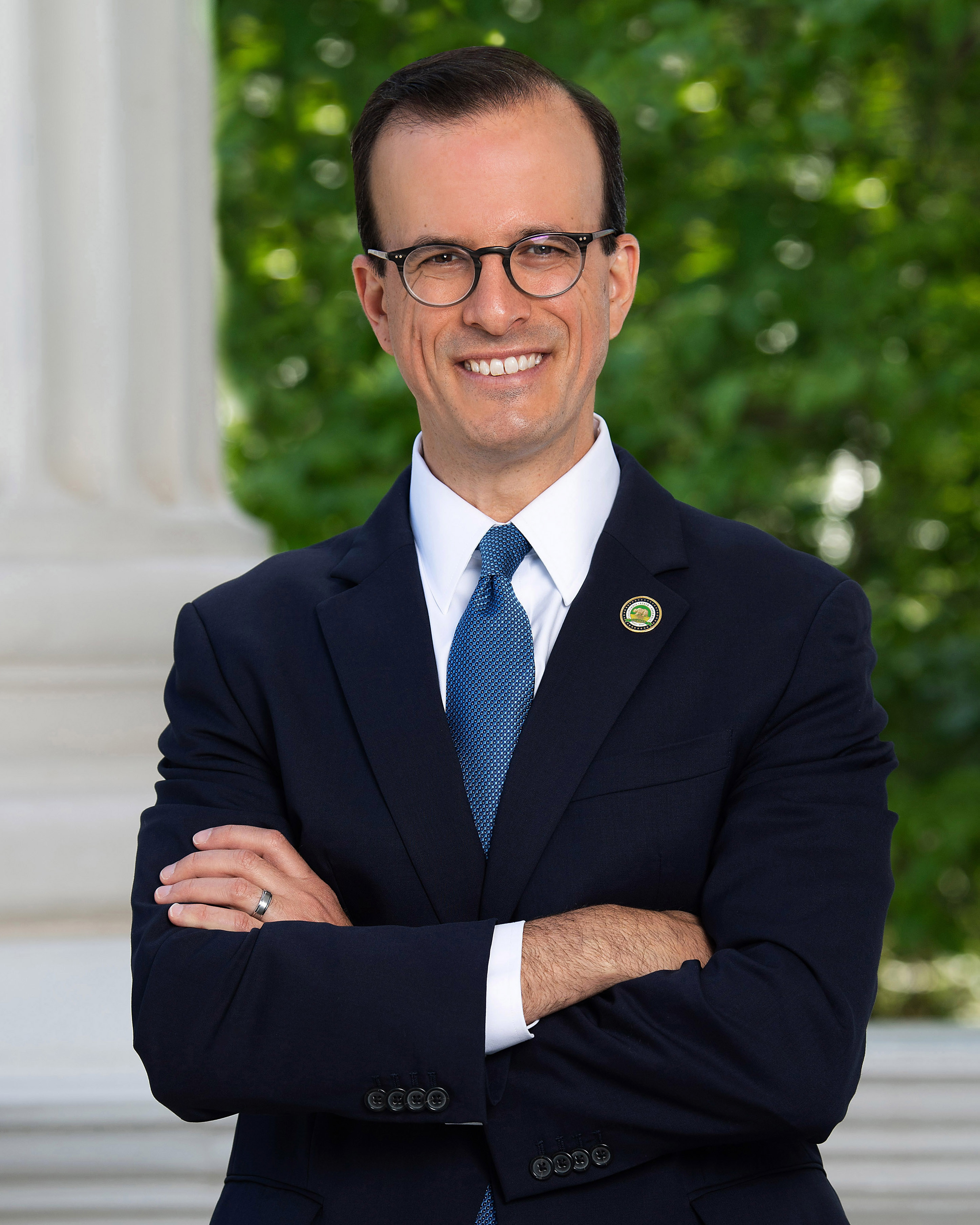
Asm. Marc Berman
Sponsored bills
The Planning and Zoning Law requires each county and city to adopt a comprehensive, long-term general plan for its physical development, and the development of certain lands outside its boundaries, that includes, among other mandatory elements, a housing element. That law allows a development proponent to submit an application for a development that is subject to a specified streamlined, ministerial approval process not subject to a conditional use permit, if the development satisfies certain objective planning standards. Existing law, the Zenovich-Moscone-Chacon Housing and Home Finance Act, establishes the California Tax Credit Allocation Committee within the Department of Housing and Community Development. Existing law requires the committee to allocate state low-income housing tax credits in conformity with state and federal law that establishes a maximum rent that may be charged to a tenant for a project unit constructed using low-income housing tax credits. This bill would require that a housing development project be a use by right upon the request of an applicant who submits an application for streamlined approval, on any land owned by an independent institution of higher education or religious institution on or before January 1, 2024, if the development satisfies specified criteria, including that the development is not adjoined to any site where more than one-third of the square footage on the site is dedicated to industrial use. The bill would define various terms for these purposes. Among other things, the bill would require that 100% of the units, exclusive of manager units, in a housing development project eligible for approval as a use by right under these provisions be affordable to lower income households, except that 20% of the units may be for moderate-income households, and 5% of the units may be for staff of the independent institution of higher education or the religious institution that owns the land, provided that the units affordable to lower income households are offered at affordable rent, as set in an amount consistent with the rent limits established by the California Tax Credit Allocation Committee, or affordable housing cost, as specified. The bill would authorize the development to include ancillary uses on the ground floor of the development, as specified. This bill would specify that a housing development project that is eligible for approval as a use by right under the bill is also eligible for a density bonus, incentives, or concessions, or waivers or reductions of development and parking standards, except as specified. The bill would require a development subject to these provisions to provide off-street parking of up to one space per unit, unless a state law or local ordinance provides for a lower standard of parking, in which case the law or ordinance applies. The bill would prohibit a local government from imposing any parking requirement on a development subject to these provisions if the development is located within one-half mile walking distance of public transit, either a high-quality transit corridor or a major transit stop, as those terms are defined, or it is within one block of a car share vehicle. This bill would require a local government that determines a proposed development is in conflict with any objective planning standards, as specified, to provide the developer with written documentation explaining those conflicts under a specified timeframe. The bill would provide that the development shall be deemed to satisfy the required objective planning standards if the local government fails to provide the requisite documentation explaining any conflicts. The bill would authorize a local government to conduct a design review, as described, only if the design review focuses on compliance with the requisite criteria of a streamlined, ministerial review process. The bill would prohibit a local government from using a design review, as specified, from inhibiting, chilling, or precluding a streamlined, ministerial approval. The bill would require a local government to issue a subsequent permit for developments approved under the provisions of this act. The bill would include findings that changes proposed by this bill address a matter of statewide concern rather than a municipal affair and, therefore, apply to all cities, including charter cities. The California Environmental Quality Act (CEQA) requires a lead agency, as defined, to prepare, or cause to be prepared, and certify the completion of, an environmental impact report on a project that it proposes to carry out or approve that may have a significant effect on the environment or to adopt a negative declaration if it finds that the project will not have that effect. CEQA does not apply to the ministerial approval of projects. This bill, by requiring approval of certain development projects as a use by right, would expand the exemption for ministerial approval of projects under CEQA. The bill would repeal its provisions as of January 1, 2036. By adding to the duties of local planning officials with respect to approving certain development projects, this bill would impose a state-mandated local program. The California Constitution requires the state to reimburse local agencies and school districts for certain costs mandated by the state. Statutory provisions establish procedures for making that reimbursement. This bill would provide that no reimbursement is required by this act for a specified reason.
Existing law, the California Fair Employment and Housing Act, makes it an unlawful employment practice for an employer to refuse to grant a request by any employee to take up to 5 days of bereavement leave upon the death of a family member. This bill would additionally make it an unlawful employment practice for an employer to refuse to grant a request by an eligible employee to take up to 5 days of reproductive loss leave following a reproductive loss event, as defined. The bill would require that leave be taken within 3 months of the event, except as described, and pursuant to any existing leave policy of the employer. The bill would provide that if an employee experiences more than one reproductive loss event within a 12-month period, the employer is not obligated to grant a total amount of reproductive loss leave time in excess of 20 days within a 12-month period. Under the bill, in the absence of an existing policy, the reproductive loss leave may be unpaid. However, the bill would authorize an employee to use certain other leave balances otherwise available to the employee, including accrued and available paid sick leave. The bill would make leave under these provisions a separate and distinct right from any right under the California Fair Employment and Housing Act. The bill would make it an unlawful employment practice for an employer to retaliate against an individual, as described, because of the individual's exercise of the right to reproductive loss leave or the individual's giving of information or testimony as to reproductive loss leave, as described. The bill would require the employer to maintain employee confidentiality relating to reproductive loss leave, as specified. Existing constitutional provisions require that a statute that limits the right of access to the meetings of public bodies or the writings of public officials and agencies be adopted with findings demonstrating the interest protected by the limitation and the need for protecting that interest. This bill would make legislative findings to that effect.
Existing law, the Acupuncture Licensure Act, provides for the licensure and regulation of the practice of acupuncture. The act defines various terms for those purposes, including "approved educational and training program," which references the Accreditation Commission for Acupuncture and Oriental Medicine. This bill would define additional terms under the act, including supervising acupuncturist, acupuncture assistant, and basic supportive acupuncture service. The bill would update the reference to the above-described commission, as specified, and would make conforming changes. Existing law requires the Acupuncture Board, consisting of 7 members, to enforce and administer the act, and repeals this provision on January 1, 2024. Under existing law, that repeal renders the board subject to review by the appropriate policy committees of the Legislature. Existing law makes the protection of the public the highest priority for the board in exercising its licensing, regulatory, and disciplinary functions. Existing law authorizes the board, by and with the approval of the Director of Consumer Affairs, to appoint an executive officer who is exempt from the State Civil Service Act, and repeals this provision on January 1, 2024. This bill would reorganize and make other nonsubstantive changes to these provisions. The bill would repeal these provisions on January 1, 2028. The bill would additionally authorize the board, or its designee, upon complaint, to inspect specified premises, places of practice, or clinics. The bill would require specified records to be open to inspection by the board, or its designee, during an investigation initiated in response to a complaint that a licensee has violated any law or regulation that constitutes grounds for disciplinary action or issuance of a citation and fine by the board. The bill would require a copy of the above-described records to be provided to the board immediately upon request. Existing law requires an acupuncturist to obtain and post a wall license at each place of practice. Existing law establishes that an acupuncturist is responsible for the acupuncture, Asian massage services, or any other specified practice rendered pursuant to the license of the acupuncturist in each place of practice maintained by the acupuncturist. This bill would delete the requirement that the acupuncturist be responsible for Asian massage services in the provision described above.
Existing law, the Professional Fiduciaries Act, until January 1, 2024, establishes the Professional Fiduciaries Bureau, under the supervision and control of the Director of Consumer Affairs, within the Department of Consumer Affairs, and requires the bureau to license and regulate professional fiduciaries, as defined. The act transfers the responsibilities and jurisdiction of the bureau to the Professional Fiduciaries Advisory Committee upon the repeal of the provisions establishing the bureau, and provides that the committee consists of 7 appointed members serving 4-year terms. The act authorizes a person to identify themself as a licensed professional fiduciary if they have been licensed by the bureau. This bill would extend the repeal date of the provisions establishing the bureau to January 1, 2028, and would delete the provision providing for the transfer of the responsibilities and jurisdiction of the bureau to the committee. The bill, commencing January 1, 2027, would reduce one term of certain appointed members to 2 or 3 years, and, after the reduced term, would resume the 4-year terms for those appointments, as specified. The bill would specify that only a person who holds a current and active license from the bureau is authorized to identify themself as a licensed professional fiduciary. The bill would make it an infraction for a person to hold themself out as a professional fiduciary or a licensed professional fiduciary without being licensed. By creating a new crime, the bill would impose a state-mandated local program. Existing law generally requires the bureau to maintain and keep confidential certain information in each licensee's file, but requires the bureau to make a specified subset of the information available to the public and published on the internet. That subset of information includes whether the licensee has ever been removed for cause or has resigned as a conservator, guardian, trustee, personal representative of a decedent's estate, agent under a durable power of attorney for health care, or agent under a durable power of attorney for finances. That subset of information that the bureau is required to make available to the public and published on the internet also includes the circumstances causing the removal or resignation and the case names, court locations, and case numbers associated with the removal or resignation. This bill would remove the circumstances causing the removal or resignation and the associated case names, court locations, and case numbers from the subset of information that the bureau is required to make available to the public and published on the internet. Existing law prohibits a license that is not renewed within 3 years following its expiration from being renewed, restored, or reinstated, and requires the license to be canceled immediately upon expiration of the 3-year period. Existing law also requires the bureau to deny an applicant's application to place a license in retired status if the license is punitively restricted by the bureau. This bill would authorize a canceled license to be reinstated if specified requirements are met, including fulfillment of all application requirements. The bill would authorize a person whose license has been revoked, surrendered, suspended, or otherwise disciplined to petition the bureau for reinstatement or reduction of penalty in accordance with specified requirements. The bill would require the director to rule on the petition and impose any terms and conditions the director reasonably deems appropriate. The bill would require the bureau to deny an application to place a license in retired status if the license is restricted by the bureau. Existing law requires a licensee to file with the bureau, 60 days before the expiration of a license, an annual statement containing specified information regarding the licensee. This bill would require a licensee to also notify the bureau in writing of their intent not to renew their license and submit a final annual statement demonstrating they are no longer subject to licensure, and would require the bureau to provide the licensee with any discrepancies between the final annual statement and the bureau's records. The bill would require a licensee to respond to any written inquiry relating to an investigation of a complaint against a licensee within 30 calendar days, and would make a license who does not provide true and accurate information subject to disciplinary action. The bill would specify that aiding or abetting an unlicensed person to evade the provisions of the act or taking other specified actions relating to unlicensed persons with intent to evade the provision of the act constitutes a cause for disciplinary action. The California Constitution requires the state to reimburse local agencies and school districts for certain costs mandated by the state. Statutory provisions establish procedures for making that reimbursement. This bill would provide that no reimbursement is required by this act for a specified reason.
Existing law requires a county elections official, upon receiving a vote by mail ballot, to compare the signature on the identification envelope with the voter's signature appearing on specified voter registration records. If the elections official determines that the signatures do not match, or if the identification envelope does not contain a signature, existing law requires the elections official to permit the voter to submit a signature verification statement or unsigned identification envelopment statement, respectively, that contains the voter's signature. Existing law requires instructions to be sent to the voter specifying that they may submit these statements by email, by facsimile transmission, or in person at a polling place within the county or a ballot dropoff box. This bill would additionally require the instructions sent to voters to state that they may submit a signature verification statement or unsigned identification envelope statement by other electronic means made available by the local elections official. This bill would require a local elections official who offers other electronic means for submission to establish appropriate privacy and security protocols so that the information transmitted is received by the elections official and is only used to verify the signature on the voter's ballot. By imposing duties on local elections officials, this bill would create a state-mandated local program. This bill would incorporate additional changes to Section 3019 of the Elections Code proposed by SB 77 to be operative only if this bill and SB 77 are enacted and this bill is enacted last. The California Constitution requires the state to reimburse local agencies and school districts for certain costs mandated by the state. Statutory provisions establish procedures for making that reimbursement. This bill would provide that, if the Commission on State Mandates determines that the bill contains costs mandated by the state, reimbursement for those costs shall be made pursuant to the statutory provisions noted above.
Existing law, the Dental Practice Act, provides for the licensure and regulation of dental hygienists by the Dental Hygiene Board of California. Existing law requires the board to consist of 9 members, and requires 7 members to be appointed by the Governor, one to be appointed by the Senate Committee on Rules, and one to be appointed by the Speaker of the Assembly. Existing law authorizes the Governor to remove any member of the board, as specified. Existing law repeals those provisions on January 1, 2024, at which time the board is subject to review by the appropriate policy committees of the Legislature. This bill would instead authorize an appointing authority to remove a member of the board appointed by that appointing authority, as specified. This bill would also extend the repeal date of the board and related appointment provisions to January 1, 2028. Existing law requires the board to license as a registered dental hygienist a person who satisfies specified requirements, including completion of a prescribed education program, satisfactory completion of an examination in California law and ethics, and satisfactory performance, within the preceding 3 years, of the dental hygiene examination given by the Western Regional Examining Board or any other clinical or dental hygiene examination approved by the board. Under this bill, graduation from a California accredited dental hygiene college approved by the board within the preceding 3 years satisfies the requirement for satisfactory performance of the dental hygiene examination given by the Western Regional Examining Board or any other clinical or dental hygiene examination approved by the board. This bill would additionally require an applicant for licensure as a registered dental hygienist to maintain a current, valid certification in basic life support, as prescribed. Under existing law, the board, as a condition of license renewal, shall require a licensee to successfully complete a portion of the required continuing education hours in specific areas adopted in regulations by the board. Under existing law, the mandatory coursework prescribed by the board shall not exceed 7 12 hours per renewal period. This bill would authorize the board to increase the prescribed mandatory coursework to 10 hours per renewal period. Existing law requires the State Department of Public Health to license and regulate health facilities. Existing law requires the board to license and regulate registered dental hygienists, registered dental hygienists in extended functions, and registered dental hygienists in alternative practice, who have varying levels of education and training requirements and varying privileges within the scope of their respective practice. Existing law authorizes a person licensed as a registered dental hygienist in alternative practice to provide oral health inservice training to staff in a long-term health care facility. This bill would instead authorize a person licensed as a registered dental hygienist to provide the above-described training.
(1) Existing law imposes ballot layout specifications, including specific requirements relating to the placement of certain contests, the size and font of text, and the instructions provided to voters. This bill would revise and recast these provisions. The bill would specify the font and location of certain text and would revise the ballot instructions provided to voters. The bill would require those instructions to communicate to voters, in plain language, how to cast a vote in a contest, how to write in a candidate, and what to do if a mistake is made. (2) Existing law requires a ballot for a recall election for a state officer to include the names of the candidates nominated to succeed the officer sought to be recalled and a space to enter the name of a write-in candidate. This bill would additionally require a ballot for a recall election for a state officer to include instructions explaining that the recall election includes two contests, one for whether to recall the officer and the other for the officer's successor if the recall is successful, and that voters may cast a vote in either or both of those contests. (3) Existing law prohibits casting or counting in any election ballots not printed in accordance with the ballot layout specifications prescribed in state law. This bill would instead prohibit casting or counting ballots not printed in substantial compliance with the ballot layout specifications. (4) To the extent the bill would impose additional duties on county elections officials relating to the preparation of ballots, this bill would create a state-mandated local program. The California Constitution requires the state to reimburse local agencies and school districts for certain costs mandated by the state. Statutory provisions establish procedures for making that reimbursement. This bill would provide that, if the Commission on State Mandates determines that the bill contains costs mandated by the state, reimbursement for those costs shall be made pursuant to the statutory provisions noted above.
(1) Existing law, the Automotive Repair Act, provides for the registration and regulation of automotive repair dealers by the Bureau of Automotive Repair in the Department of Consumer Affairs. A violation of these provisions is a misdemeanor unless otherwise specified. Existing law authorizes the Director of Consumer Affairs to adopt and enforce those rules and regulations that the director determines are reasonably necessary to carry out the purposes of the act and declare the policy of the bureau. Existing law subjects the bureau to review by the appropriate policy committees of the Legislature, as specified, and requires that review to be performed as if the act were scheduled to be repealed on January 1, 2024. This bill would extend the above-described date to January 1, 2028. (2) Existing law defines "automotive repair dealer" for purposes of the Automotive Repair Act to mean a person who, for compensation, engages in the business of repairing or diagnosing malfunctions of motor vehicles. This bill would amend that definition to additionally include a person who engages in the business of collecting compensation for automotive repair services that are referred or sublet to someone other than the dealer or their employees. (3) Existing law prohibits a person required to have a valid registration under the Automotive Repair Act from having the benefit of a lien for labor or materials or the right to sue on a contract for motor vehicle repairs unless the person possesses a valid registration. This bill would authorize the Bureau of Automotive Repair to adopt regulations to carry out that prohibition as necessary. (4) Existing law requires the Director of Consumer Affairs to adopt regulations that prescribe the equipment and other qualifications as a condition to licensing a station as an official station for adjusting lamps or brakes and to prescribe the qualifications of adjusters employed in those stations. Existing law requires a licensed adjuster in a licensed station to issue a certificate of adjustment when requested by the owner or driver of the vehicle if the adjuster determines that the lamps or the brakes of the vehicle conform with the applicable requirements of law. Under existing law, a violation of the provisions regulating lamp and brake adjusting stations is an infraction. Existing law requires the Director of Consumer Affairs to issue vehicle safety systems inspection licenses to stations and technicians to conduct inspections of, and repairs to, safety systems of vehicles. Existing law requires the director to develop inspection criteria and standards for specific safety systems and components of the vehicle in order to promote the safe and uniform installation, maintenance, and servicing of vehicle safety systems and components. Existing law requires the director to adopt regulations by January 1, 2024, including, but not limited to, the application fee and process for applicants and the certification process for vehicles, as specified. Existing law provides that the vehicle safety systems inspection license replaces licenses issued pursuant to the existing provisions governing the licensure of lamp and brake adjusting stations and adjusters and repeals those provisions on the effective date of the new regulations. Existing law provides that licenses and certificates issued pursuant to those repealed provisions remain valid for 6 months after the adoption of those regulations. This bill would instead repeal those provisions 6 months after the effective date of the new regulations and would also provide that licenses and certificates issued pursuant to those repealed provisions remain valid for 6 months after the effective date of the new regulations. The bill would make conforming changes. By extending the operation of those provisions regulating lamp and brake adjusting stations, the violation of which is an infraction, this bill would impose a state-mandated local program. (5) Existing law requires the Bureau of Automotive Repair and other state licensing entities to disclose on the internet certain information related to enforcement actions the state licensing entity has taken against its licensees, including auto repair dealers, smog stations, lamp and brake stations, smog check technicians, and smog inspection certification stations. This bill would change the list of licensees within the bureau for this purpose to instead include automotive repair dealers, smog check stations, smog check inspectors and repair technicians, and vehicle safety systems inspection stations and technicians. (6) Existing law establishes a motor vehicle inspection and maintenance (smog check) program, developed, implemented, and administered by the Department of Consumer Affairs. The smog check program provides for the inspection of all motor vehicles, except those specifically exempted from the program, upon registration, biennially upon renewal of registration, upon transfer of ownership, and in certain other circumstances. Existing law requires the department to implement a program to test a portion of the state vehicle fleet registered in an enhanced program area, as specified, at test-only facilities and authorizes the department to implement the program through privately operated test-only facilities pursuant to contracts to be awarded pursuant to specified requirements. This bill would revise and recast this program by, among other things, deleting provisions relating to the contracting of test-only facilities. The bill would also require certain vehicles included for testing in the program to be tested by referee facilities or a similar contracted inspection network established by the department. The bill would authorize a referee to charge a fee sufficient to cover the cost of performing inspections of those vehicles. The bill would make other conforming changes for these purposes. (7) Existing law authorizes smog tests to include certain test methods and requires the department to implement testing using onboard diagnostic systems, in lieu of loaded mode dynamometer or 2-speed idle testing, only on model year 2000 and newer vehicles, beginning no earlier than January 1, 2013, and otherwise authorizes the Department of Consumer Affairs, in consultation with the State Air Resources Board, to determine the appropriate test procedures, as specified. This bill would, beginning no earlier than January 1, 2025, also require the department to implement testing using onboard diagnostic systems, in lieu of the above-described test methods, only on model year 1996–1999 vehicles. (8) Existing law requires the Department of Consumer Affairs to provide for smog check technicians to be qualified for different categories of motor vehicle inspection based on vehicle classification and model-year. This bill would provide that, for purposes of the provisions of relating to the smog check program, the term "qualified smog check technician" refers to both smog check technicians and smog check inspectors. (9) Existing law requires the Department of Consumer Affairs to develop a program for the voluntary certification of licensed smog check stations, or to accept a smog check station certification program proposed by accredited industry representatives, for the purpose of providing consumers, whose vehicles fail an emissions test at a test-only facility, an option of services at a single location for vehicle certification, as specified. Existing law requires smog check stations that seek voluntary certification under this program to enter into an agreement with the department to provide certain repair services. This bill would delete the stated purpose of the program. The bill would authorize, rather than require, a smog check station that seeks voluntary certification under the program to enter into the above-described agreement. The bill would also require certain vehicles required by the department to obtain a certificate of compliance each year in enhanced program areas or in basic program areas to receive their certificate from smog check stations certified under this program rather than from a test-only facility. (10) Existing law requires the Department of Consumer Affairs to compile and maintain statistical and emissions profiles and data from motor vehicles that are subject to the motor vehicle inspection program and, in cooperation with the State Air Resources Board, to perform analyses of that data and report the results to the public on an annual basis. This bill would instead require the department, in cooperation with the state board, to report the results of those analyses on a biennial basis. (11) Existing law requires the Department of Consumer Affairs to revoke the license of any smog check technician or station licensee who fraudulently certifies vehicles or participates in the fraudulent inspection of vehicles. Under existing law, a fraudulent inspection includes clean piping, as defined by the department. This bill would provide that a fraudulent inspection, for purposes of this provision, includes clean plugging, clean glassing, clean tanking, or any other fraudulent inspection practice, as defined by the department. (12) Existing law authorizes a fleet owner, as defined, to operate a facility, licensed by the Commissioner of the California Highway Patrol, to inspect and maintain fleet vehicles. Existing law prohibits such a licensed facility from certifying the adjustment of lamps or brakes or the installation, inspection, repair, or servicing of motor vehicle pollution control devices or systems, except for vehicles in the licensee's own fleet. This bill would instead prohibit a licensed fleet inspection and maintenance facility from certifying vehicle safety systems or the installation, inspection, repair, or servicing of motor vehicle pollution control devices or systems, except for vehicles in the licensee's own fleet. (13) Existing law prohibits the subsequent registration of a vehicle that has been reported as a total loss salvage vehicle or dismantled vehicle until certain documentation, including an official lamp and brake adjustment certificate, has been submitted to the Department of Motor Vehicles. This bill would, instead of an official lamp and brake adjustment certificate, require the submission of a vehicle safety systems certificate of compliance to the department before the subsequent registration of a total loss salvage vehicle or dismantled vehicle, as specified. (14) Existing law prohibits a person from violating a written promise to correct or willfully failing to deliver proof of correction of a correctable motor vehicle equipment violation. Existing law provides that proof or correction can be certified by a peace officer, the Department of Motor Vehicles, a court clerk, a licensed lamp and brake adjusting station, or a licensed smog inspection station, as specified. This bill would, instead of certification by a licensed lamp and brake adjusting station, authorize proof of correction for certain violations to be provided by a station licensed or contracted to certify vehicle safety systems, as specified. (15) Existing law prohibits a dealer or person holding a retail seller's permit from selling a new or used vehicle that is not in compliance with specified statutes and regulations, unless the vehicle is sold to another dealer, for the purpose of being legally wrecked or dismantled, or for off-highway use exclusively. This bill would require a salvage vehicle rebuilder, when selling a total loss salvage vehicle, to provide the purchaser with a valid vehicle safety systems certificate of compliance, as specified, prior to, or at the time of, delivery for sale, unless the vehicle is sold to a dealer or for the purpose of being legally wrecked or dismantled. The bill would make findings and declarations of the Legislature. (16) The California Constitution requires the state to reimburse local agencies and school districts for certain costs mandated by the state. Statutory provisions establish procedures for making that reimbursement. This bill would provide that no reimbursement is required by this act for a specified reason. (17) This bill would incorporate additional changes to Section 27 of the Business and Professions Code proposed by SB 373 to be operative only if this bill and SB 373 are enacted and this bill is enacted last.
Existing law permits a person to vote at any election held within the territory within which the person resides and the election is held if the person is qualified and registered to vote. If a person is entitled to vote at an election, existing law makes voting more than once, or attempting to vote more than once, a crime. This bill would make it a misdemeanor for any person to vote or to attempt to vote both in an election held in this state and in an election held in another state on the same date. The bill would not prohibit a voter from voting in an election held in this state and in another state if one of the elections is an election held in a landowner voting district or any other district for which an elector is not required to be a resident of the district. By creating a new crime, this bill would impose a state-mandated local program. The California Constitution requires the state to reimburse local agencies and school districts for certain costs mandated by the state. Statutory provisions establish procedures for making that reimbursement. This bill would provide that no reimbursement is required by this act for a specified reason.