

Existing law establishes the California Community Colleges, under the administration of the Board of Governors of the California Community Colleges, as one of the segments of public postsecondary education in this state. Existing law requires community college districts to charge students an enrollment fee of $46 per unit per semester. Existing law authorizes the San Mateo County Community College District, among other things, to adopt a policy that uses local unrestricted general funds to provide fee waivers to students with the greatest financial need when other fee waivers are not provided to those students, and to provide assistance to students for the total cost of attendance. This bill would authorize the governing board of a community college district to adopt a policy that uses local unrestricted general funds to provide fee waivers to students with the greatest financial need when other fee waivers are not provided to those students if the community college district complies with certain requirements, including that 100% of its students complete a Free Application for Federal Student Aid or California Dream Act application, that the community college district has established a fully staffed Basic Needs Center, and that the community college district prepares a fiscal impact statement, including a 3-year projection of the fiscal impact of the fee waiver on the community college district, as specified. The bill would require, on or before October 10, 2024, and annually thereafter, a community college district to certify to the office of the Chancellor of the California Community Colleges that it has complied with all of those requirements, and would require, on or before December 31, 2024, and annually thereafter, the chancellor's office to verify the information submitted and authorize the governing board of that community college district to adopt a policy that uses local unrestricted general funds to provide fee waivers to students with the greatest financial need. The bill would authorize the governing board of a community college district that receives authorization to use local unrestricted general funds to provide assistance to students for the total cost of attendance, as defined.
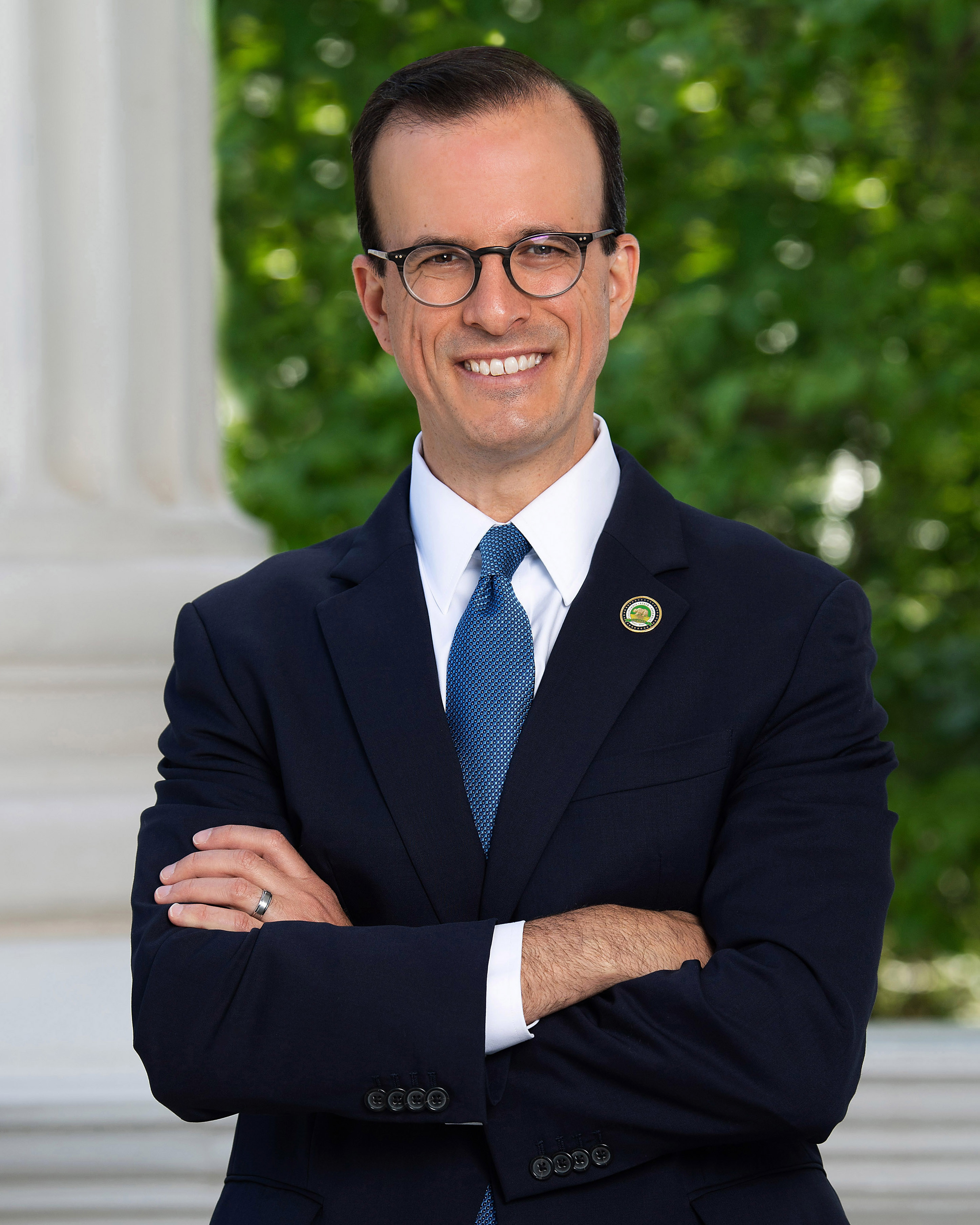
Asm. Marc Berman
Sponsored bills
The California Constitution provides that a proposed constitutional amendment and a statewide initiative measure each take effect only if approved by a majority of the votes cast on the amendment or measure. This measure would further provide that an initiative measure that includes one or more provisions that would amend the Constitution to increase the voter approval requirement to adopt any state or local measure would be approved by the voters only if the proportion of votes cast in favor of the initiative measure is equal to or greater than the highest voter approval requirement that the initiative measure would impose. The measure would specify that this voter approval requirement would apply to statewide initiative measures that appear on the ballot on or after January 1, 2024. The California Constitution also permits initiative and referendum powers to be exercised by the voters of each city or county under procedures provided by the Legislature. This measure would expressly authorize a local governing body to hold an advisory vote concerning any issue of governance for the purpose of allowing voters within the jurisdiction to voice their opinions on the issue. The measure would specify that an advisory question is approved only if a majority of the votes cast on the question are in favor. This measure would further declare that its provisions are severable and that if any provision is held invalid, the other provisions of the act remain valid, as specified.
Existing law establishes the Instructional Quality Commission and requires the commission to, among other things, recommend curriculum frameworks to the State Board of Education. Existing law also requires the state board to adopt standards, rules, and regulations for school library services. Existing law requires the adopted course of study for grades 1 to 6, inclusive, and for grades 7 to 12, inclusive, to offer instruction or courses in specified areas of study. Existing law requires the State Department of Education to make available to school districts on its internet website a list of resources and instructional materials on media literacy, as defined, including media literacy professional development programs for teachers. This bill would require the Instructional Quality Commission to consider incorporating the Model Library Standards into the next revision of the English Language Arts/English Language Development (ELA/ELD) curriculum framework after January 1, 2024, and to also consider incorporating media literacy content at each grade level. The bill would require the commission to consider incorporating media literacy content into the mathematics, science, and history-social science curriculum frameworks when those frameworks are next revised after January 1, 2024.
Existing law prohibits a local authority from enacting or enforcing an ordinance on matters covered by the Vehicle Code unless expressly authorized by the Vehicle Code. Existing law authorizes local authorities to adopt rules and regulations by ordinance or resolution regarding specified matters, including, among others, crossing guards, the operation of bicycles, the removal of illegally parked vehicles, and cruising, as defined. This bill would remove the authorization for a local authority to adopt rules and regulations by ordinance or regulation regarding cruising. Existing law makes it unlawful to operate a passenger vehicle, or commercial vehicle under 6,000 pounds, that has been modified from its original design so that any portion of the vehicle, other than the wheels, has less clearance from the surface of a level roadway than the clearance between the roadway and the lowermost portion of any rim of any wheel in contact with the roadway. This bill would repeal that prohibition. This bill would incorporate additional changes to Section 21100 of the Vehicle Code proposed by AB 825 and SB 50 to be operative only if this bill and AB 825, this bill and SB 50, or this bill, AB 825, and SB 50 are enacted and this bill is enacted last.
Existing law, the Knox-Keene Health Care Service Plan Act of 1975, provides for the licensure and regulation of health care service plans by the Department of Managed Health Care and makes a willful violation of the act a crime. Existing law also provides for the regulation of health insurers by the Department of Insurance. Existing law prohibits the copayment, coinsurance, or any other form of cost sharing for a covered outpatient prescription drug for an individual prescription from exceeding $250 for a supply of up to 30 days, except as specified. Existing law requires a health care service plan contract or health insurance policy for a nongrandfathered individual or small group product that maintains a drug formulary grouped into tiers, and that includes a 4th tier, to define each tier of the drug formulary, as specified. Existing law defines Tier 4 to include, among others, drugs that are biologics. Existing law repeals these provisions on January 1, 2024. This bill would delete drugs that are biologics from the definition of Tier 4. The bill would require a health care service plan or a health insurer, if there is a generic equivalent to a brand name drug, to ensure that an enrollee or insured is subject to the lowest cost sharing that would be applied, whether or not both the generic equivalent and the brand name drug are on the formulary. The bill also would delete the January 1, 2024, repeal date of the above provisions, thus making them operative indefinitely. Because extension of the bill's requirements relative to health care service plans would extend the existence of a crime, the bill would impose a state-mandated local program. The California Constitution requires the state to reimburse local agencies and school districts for certain costs mandated by the state. Statutory provisions establish procedures for making that reimbursement. This bill would provide that no reimbursement is required by this act for a specified reason.
Existing law makes it unlawful for any owner or operator of a motel, motor court, or like establishment to post or maintain outdoor advertising signs relating to room rates that has any untrue, misleading, false, or fraudulent representations, and specified other requirements on outdoor signs for those establishments. Existing law also prohibits an owner or operator of a hotel or motel from increasing the hotel or motel's rates upon the proclamation of a state of emergency by the President of the United States or the Governor or upon the declaration of a local emergency, as specified. This bill would prohibit a place of short-term lodging, as defined, from advertising or offering a room rate that does not include all fees or charges required to stay at the short-term lodging except taxes and fees imposed by a government on the stay, as specified. The bill would also require a place of short-term lodging to include in the total price to be paid, before the consumer reserves a stay, all taxes and fees imposed by a government on the stay. The bill would make a violation of those provisions subject to a specified civil penalty not to exceed $10,000 and would authorize an action to enforce those provisions to be brought by a city attorney, district attorney, county counsel, or the Attorney General. The bill would make the bill's provisions operative on July 1, 2024.
Existing law establishes a basic speed law that prohibits a person from driving a vehicle upon a highway at a speed greater than is reasonable or prudent given the weather, visibility, traffic, and highway conditions and in no event at a speed that endangers the safety of persons or property. This bill would authorize, until January 1, 2032, the Cities of Los Angeles, San Jose, Oakland, Glendale, and Long Beach, and the City and County of San Francisco to establish a Speed Safety System Pilot Program if the system meets specified requirements. The bill would require a participating city or city and county to adopt a Speed Safety System Use Policy and a Speed Safety System Impact Report before implementing the program, and would require the participating city or city and county to engage in a public information campaign at least 30 days before implementation of the program, including information relating to when the systems would begin detecting violations and where the systems would be utilized. The bill would require a participating city or city and county to issue warning notices rather than notices of violations for violations detected within the first 60 calendar days of the program. The bill would also require a participating city or city and county to develop uniform guidelines for, among other things, the processing and storage of confidential information. The bill would designate all photographic or administrative records, not including data about the number of violations issued or the speeds at which they were issued for, made by a system as confidential, and would only authorize public agencies to use and allow access to these records for specified purposes. This bill would specify that any violation of a speed law recorded by a speed safety system authorized by these provisions would be subject only to the provided civil penalties. The bill would, among other things, provide for the issuance of a notice of violation, an initial review, an administrative hearing, and an appeals process, as specified, for a violation under this program. The bill would require any program created pursuant to these provisions to offer a diversion program for indigent speed safety system violation recipients, as specified. The bill would require a city or city and county participating in the pilot program to submit a report to evaluate the speed safety system to determine the system's impact on street safety and economic impact on the communities where the system is utilized. Existing law establishes a $25 filing fee for specified appeals and petitions. This bill would require a $25 filing fee for an appeal challenging a notice of violation issued as a result of a speed safety system until January 1, 2032. Existing constitutional provisions require that a statute that limits the right of access to the meetings of public bodies or the writings of public officials and agencies be adopted with findings demonstrating the interest protected by the limitation and the need for protecting that interest. This bill would make legislative findings to that effect. This bill would make legislative findings and declarations as to the necessity of a special statute for the Cities of Los Angeles, San Jose, Oakland, Glendale, and Long Beach, and the City and County of San Francisco.