

Existing law provides that the Department of Transportation has full possession and control of state highways and associated property. Existing law provides for the department to dispose of property that is no longer needed for highway purposes on terms, standards, and conditions established by the California Transportation Commission. Section 10 of Article XIX of the California Constitution authorizes the Legislature, by statute, with respect to surplus state property located in the coastal zone and acquired with revenues restricted by Article XIX to transportation purposes, to authorize the transfer of that property to the Department of Parks and Recreation, the Department of Fish and Wildlife, the Wildlife Conservation Board, or the State Coastal Conservancy for specified purposes for a consideration at least equal to the property's purchase price. This bill would require the department to sell and transfer certain surplus state property it owns in the City of Pacifica to the Department of Parks and Recreation for state park purposes. The bill would make various findings and declarations in that regard. This bill would make legislative findings and declarations as to the necessity of a special statute for the surplus state property in the City of Pacifica.
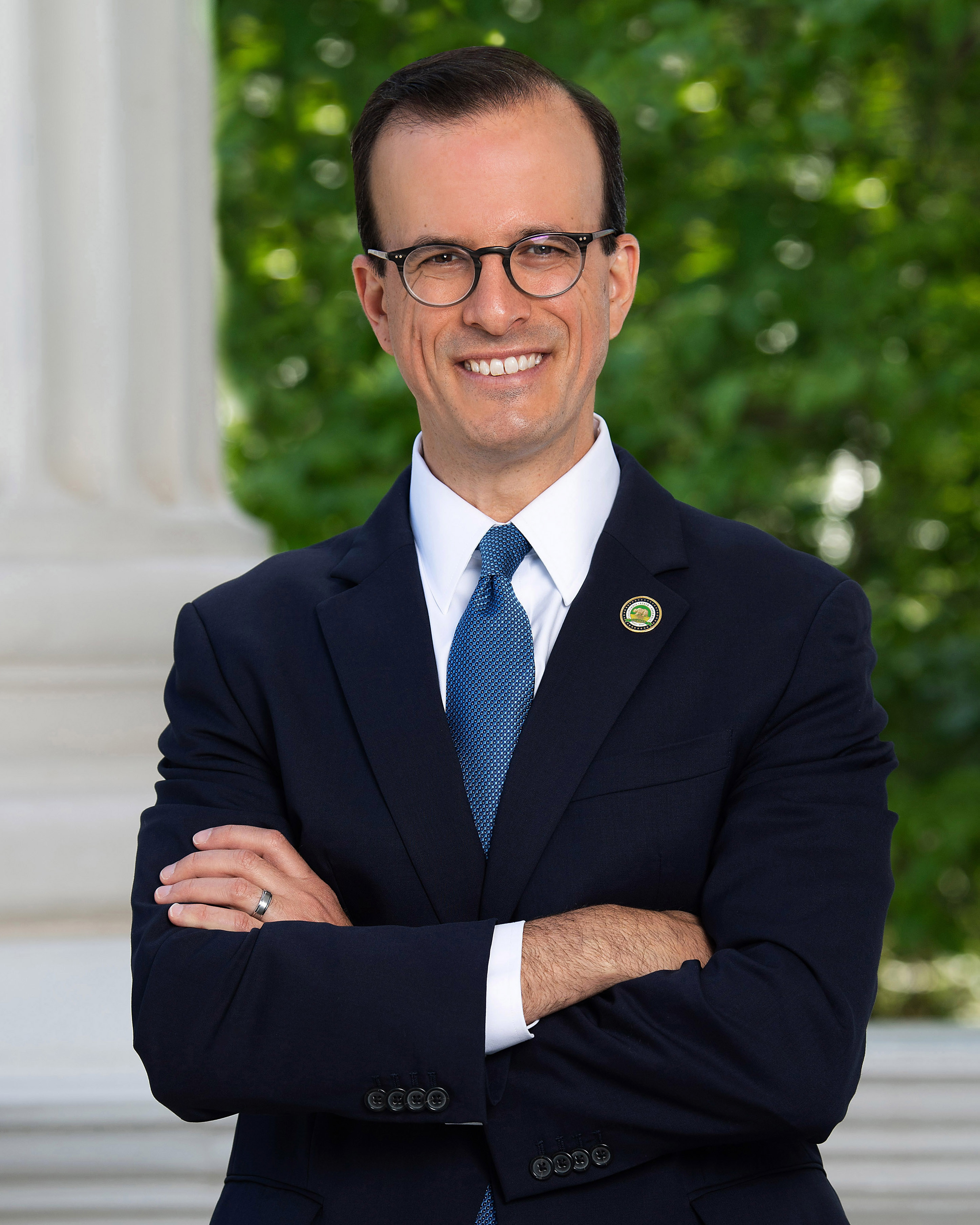
Asm. Marc Berman
Sponsored bills
Existing law requires the Department of Parks and Recreation to gather, digest, and summarize, in its annual reports to the Governor, certain information concerning the state park system. This bill would additionally require the department to include that information in its annual reports to the Legislature.
The Planning and Zoning Law, among other things, requires the legislative body of each county and city to adopt a comprehensive, long-term general plan for the physical development of the county or city and of any land outside its boundaries that relates to its planning, and provides for the adoption and administration of zoning laws, ordinances, rules, and regulations by counties and cities. This bill would make nonsubstantive changes to those provisions.
(1) Existing law, the California Workforce Innovation and Opportunity Act, requires the California Workforce Development Board to assist the Governor in the development of a high road economy that offers an educated and skilled workforce with fair compensation and treatment in the workplace. In this regard, existing law requires the board to assist in the administration, promotion, and expansion of, as well as field assistance for, high road training partnerships, as defined. This bill would establish the High Road Utility Careers (HRUC) program, to be administered by the board, to connect existing resources with individuals interested in careers in the utility sector and ensure a continued reliable workforce for California utilities. The bill would require the board to administer the HRUC program through partnerships with statewide water, wastewater, and energy utility associations and to coordinate the program with existing and future programs and initiatives administered by the board, including high road training partnerships, in order to align interested individuals with available resources. The bill would require the HRUC program, upon appropriation by the Legislature, to dedicate funding and resources toward accomplishing specified goals, including connecting workers to high-quality jobs or entry-level work with defined routes to advancement and increasing skills and opportunities while expanding pipelines for low-income populations. (2) Existing law requires the State Department of Education to develop a career guidance model for science and technology for use in school district counseling programs in order to provide information to pupils in grades 7 through 12, regarding the potential for employment, educational requirements, and other matters pertaining to careers in the fields of science and technology. This bill would require the department, by January 1, 2025, to partner with regional and statewide trade associations, among other groups, to develop and distribute informational materials for career guidance to pupils in grades 9 through 12, regarding the potential for employment, educational requirements, and other matters pertaining to careers in these utilities.
Existing sales and use tax laws impose a tax on retailers measured by the gross receipts from the sale of tangible personal property sold at retail in this state, or on the storage, use, or other consumption in this state of tangible personal property purchased from a retailer for storage, use, or other consumption in this state. Those laws provide various exemptions from those taxes. This bill, beginning January 1, 2024, and until January 1, 2029, would exempt from those taxes the gross receipts from the sale in this state of, and the storage, use, or other consumption in this state of, zero-emission public transportation ferries, as defined, sold to a public agency, as specified. Existing law requires a bill that would authorize a new tax expenditure under the Sales and Use Tax Law to identify specific goals, purposes, and objectives that the tax expenditure will achieve, and detailed performance indicators and data collection requirements for determining whether the tax expenditure achieves these goals, purposes, and objectives. The bill would provide findings and declarations relating to the goals of the exemption for zero-emission public transportation ferries. Existing law imposes or dedicates certain state sales and use tax rates for local funding, including through the Local Revenue Fund 2011. This bill would specify that this exemption does not apply to those state sales and use tax rates imposed or dedicated for local government funding, including those rates for which revenues are deposited into the Local Revenue Fund 2011. The Bradley-Burns Uniform Local Sales and Use Tax Law authorizes counties and cities to impose local sales and use taxes in conformity with the Sales and Use Tax Law, and existing laws authorize districts, as specified, to impose transactions and use taxes in accordance with the Transactions and Use Tax Law, which generally conforms to the Sales and Use Tax Law. Amendments to the Sales and Use Tax Law are automatically incorporated into the local tax laws. This bill would specify that this exemption does not apply to local sales and use taxes or transactions and use taxes. This bill would take effect immediately as a tax levy.
Existing law vests the Public Utilities Commission with regulatory authority over public utilities, including electrical corporations. The commission's Electric Rule 21 establishes a tariff that describes the interconnection, operating, and metering requirements of generation facilities to be connected to an electrical corporation's distribution system. This bill would require the commission, on or before March 31, 2024, to commence the consideration of adopting mechanisms, as provided, for distributed renewable generation interconnections to enforce timelines, reduce administrative burden, and provide transparency and certainty to customers. The bill would require the commission, in considering the adoption of mechanisms, to create process improvements to, and potential timelines for, Electric Rule 21 to address certain types of delays. Under existing law, a violation of the Public Utilities Act or any order, decision, rule, direction, demand, or requirement of the commission is a crime. Because a violation of a commission action implementing its requirements would be a crime, this bill would impose a state-mandated local program. The California Constitution requires the state to reimburse local agencies and school districts for certain costs mandated by the state. Statutory provisions establish procedures for making that reimbursement. This bill would provide that no reimbursement is required by this act for a specified reason.
Existing law requires the Department of Motor Vehicles to establish the California Legacy License Plate Program, and to create and issue a series of specialized license plates, consisting of one or more of 3 specified designs that replicate license plates from the state's past. Existing law requires the department to collect and hold paid applications for the plates, as specified, and prohibits the department from issuing a specialized license plate until it has received not less than 7,500 paid applications for any one of the particular plates on or before January 1, 2015. This bill would extend the deadline for receipt of the required number of paid applications to January 1, 2025, for plate designs that did not receive the required number of applications by January 1, 2015.
Existing law makes possession of a firearm by certain classes of persons, including a convicted felon, a person convicted of specified misdemeanors, a person has been found mentally incompetent to stand trial, a person has been found not guilty of specified crimes by reason of insanity, or a person has been placed under conservatorship, a crime. Existing law additionally makes it a crime to sell or give possession of a firearm to these classes of persons prohibited from owning a firearm. Existing law requires the Department of Justice, upon submission of firearm purchaser information by a licensed firearm dealer, to examine its records to determine whether a potential firearm purchaser is prohibited by state of federal law from possessing, receiving, owning, or purchasing a firearm. Existing law requires the department to participate in the National Instant Criminal Background Check System. This bill would require the Department of Justice to develop and launch a secure Internet-based platform to allow a person who resides in California to voluntarily add their own name to the California Do Not Sell List. The bill would require the department to ensure that information on the list is uploaded and reflected in the National Instant Criminal Background Check System. The bill would make it a crime, punishable as a misdemeanor, to transfer a firearm to a person who is validly registered on the California Do Not Sell List. By creating a new crime, this bill would impose a state-mandated local program. This bill would allow a person, after a specified period of time, to request removal from the list. The bill would require the State Department of Public Health to create and distribute informational materials about the California Do Not Sell List to general acute care hospitals and acute psychiatric hospitals. The bill would specify that a person presenting in a general acute care hospital or acute psychiatric hospital who is at a substantially elevated risk of suicide should be presented with these informational materials. The bill would specify that any suicide hotline maintained or operated by an entity funded in whole or in part by the state should generally inform callers on how to access the California Do Not Sell List Internet-based platform. The bill would provide that its provisions are severable. The California Constitution requires the state to reimburse local agencies and school districts for certain costs mandated by the state. Statutory provisions establish procedures for making that reimbursement. This bill would provide that no reimbursement is required by this act for a specified reason.
(1) Existing law prohibits a person subject to a protective order, as defined, from owning, possessing, purchasing, or receiving a firearm or ammunition while that protective order is in effect. Existing law makes a violation of that prohibition with regard to purchasing or receiving a firearm or ammunition punishable by imprisonment in the county jail for up to one year, by imprisonment in the state prison for 16 months or 2 or 3 years, or by a fine not exceeding $1,000, or by both that imprisonment and fine. Existing law makes a violation of that prohibition with regard to owning or possessing a firearm or ammunition punishable by imprisonment in the county jail for up to one year, or by a fine not exceeding $1,000, or by both that imprisonment and fine. After notice and hearing, this bill would, for protective orders, as specified, issued on or after July 1, 2024, prohibit a person subject to the protective order from owning, possessing, purchasing, or receiving a firearm or ammunition within 3 years after the expiration of the order and make a violation of these provision a crime. The bill would require a court, if they find that the person willfully violated that prohibition within 3 years after the expiration of the order, to impose the maximum fine allowed under existing law. (2) Existing law allows a search warrant to be issued upon various grounds, including when the property or things to be seized include a firearm, if the prohibited firearm is possessed, owned, in the custody of, or controlled by a person against whom a specified protective order has been issued, and the person is served with the order and fails to relinquish the firearm as required by law. This bill would expand the grounds for the search warrant to include a person who is subject to any civil or criminal protective order that includes a prohibition on owning, possessing, or having custody or control of a firearm. (3) Existing law requires the Judicial Council to provide notice on all protective orders issued within the state and requires a restraining order requiring a person to relinquish a firearm or ammunition to state on its face that the respondent is prohibited from owning, possessing, purchasing, or receiving a firearm or ammunition while the protective order is in effect. This bill would require the Judicial Council to also include a statement in the notice that the firearm and ammunition prohibition extends for 3 years after the expiration of the protective order that is issued on or after July 1, 2024. The bill would require a restraining order to include a similar statement. By creating new crimes, this bill would create a state-mandated local program. The California Constitution requires the state to reimburse local agencies and school districts for certain costs mandated by the state. Statutory provisions establish procedures for making that reimbursement. This bill would provide that no reimbursement is required by this act for a specified reason.
Existing law generally requires county boards of supervisors, city councils, and the governing boards of school districts, community college districts, and other special districts, if those bodies are elected using district-based elections, to adopt new boundaries for the districts following each federal decennial census. Notwithstanding that requirement, existing law authorizes a local jurisdiction other than a charter city to establish an independent redistricting commission to adopt new boundaries for the local jurisdiction's districts. This bill would require a county, general law city, charter city, or charter city and county that contains over 300,000 residents, and a school district or community college district that contains over 500,000 residents, to establish an independent redistricting commission to adopt district boundaries after each federal decennial census. The bill would require a county, general law city, charter city, or charter city or county with over 300,000 residents, and a school district or community college district with over 500,000 residents, that does not enact an ordinance, resolution, or charter amendment establishing an independent redistricting commission by January 1, 2030, and January 1 of every subsequent year ending in 0, to establish a 14-member independent redistricting commission according to specified procedures, including procedures for the random selection of the members of the commission from among applicants meeting certain qualifications. By requiring certain local jurisdictions to establish independent redistricting commissions to adopt district boundaries, the bill would impose a state-mandated local program. The bill would prohibit a member of an independent redistricting commission from communicating with any individual or organization regarding redistricting matters, except as provided. The bill would require the State Auditor to provide the contact information of any applicant to serve on the Citizens Redistricting Commission, which is responsible for adjusting the boundary lines of the congressional, legislative, and State Board of Equalization districts, to any city or county that has established an independent or hybrid redistricting commission, provided that the applicant has consented to share this information and the city or county has requested to receive this information, and to inform those applicants of opportunities to serve on an independent or hybrid redistricting commission. The bill would require the State Auditor to establish a database and create and advertise a process for this exchange of information. Under existing law, independent redistricting commissions have been established for the Counties of Los Angeles, San Diego, Riverside, Fresno, and Kern. The bill would exempt the Counties of Los Angeles, San Diego, Riverside, Fresno, and Kern from the bill's provisions requiring a county with over 300,000 residents to establish an independent redistricting commission, unless the existing law provisions establishing independent redistricting commissions for those counties are repealed or invalidated. The bill also would exempt a charter city with a population of at least 2,500,000 people from the bill's provisions if specified conditions are met, including if both this bill and Senate Bill 52 are enacted and if the city complies with certain provisions in Senate Bill 52 that require such cities to establish independent redistricting commissions. This bill would incorporate additional changes to Section 23003 of the Elections Code proposed by Assembly Bill 764 to be operative only if this bill and Assembly Bill 764 are enacted and this bill is enacted last. The bill would include findings that changes proposed by this bill address a matter of statewide concern rather than a municipal affair and, therefore, apply to all cities, including charter cities. The California Constitution requires the state to reimburse local agencies and school districts for certain costs mandated by the state. Statutory provisions establish procedures for making that reimbursement. This bill would provide that, if the Commission on State Mandates determines that the bill contains costs mandated by the state, reimbursement for those costs shall be made pursuant to the statutory provisions noted above.