

Existing law establishes the California Community Colleges, the California State University, and the University of California as the 3 public segments of postsecondary education in the state. The missions and functions of these segments are set forth in the Donahoe Higher Education Act. Existing law requires each campus of the California State University and the California Community Colleges, and requests each campus of the University of California, to host on its internet website a student parent internet web page that contains information that clearly lists all on- and off-campus student parent services and resources, as specified, including, among other student parent services and resources, information on the California Earned Income Tax Credit and the Young Child Tax Credit. This bill would require the information on student parent internet web pages to include additional information on student parent services and resources, including several other federal and state tax credits, state and federal financial aid applications and programs, and the California Work Opportunity and Responsibility to Kids program. The bill would require each campus of the California Community Colleges and the California State University, and would request each campus of the University of California to, on or before the start of the 2026–27 academic year, (1) implement a policy developed by the respective systemwide chancellor or president for estimating and adjusting cost of attendance information for student parents, as specified, (2) enter student parent data for specified uses into the respective systemwide data management information system, as revised to accommodate this data by the systemwide chancellor or president pursuant to the bill, and (3) update its campus net price calculator to include a baseline student parent cost estimate, as specified. By imposing new duties on community college districts, the bill would impose a state-mandated local program. The California Constitution requires the state to reimburse local agencies and school districts for certain costs mandated by the state. Statutory provisions establish procedures for making that reimbursement. This bill would provide that, if the Commission on State Mandates determines that the bill contains costs mandated by the state, reimbursement for those costs shall be made pursuant to the statutory provisions noted above.
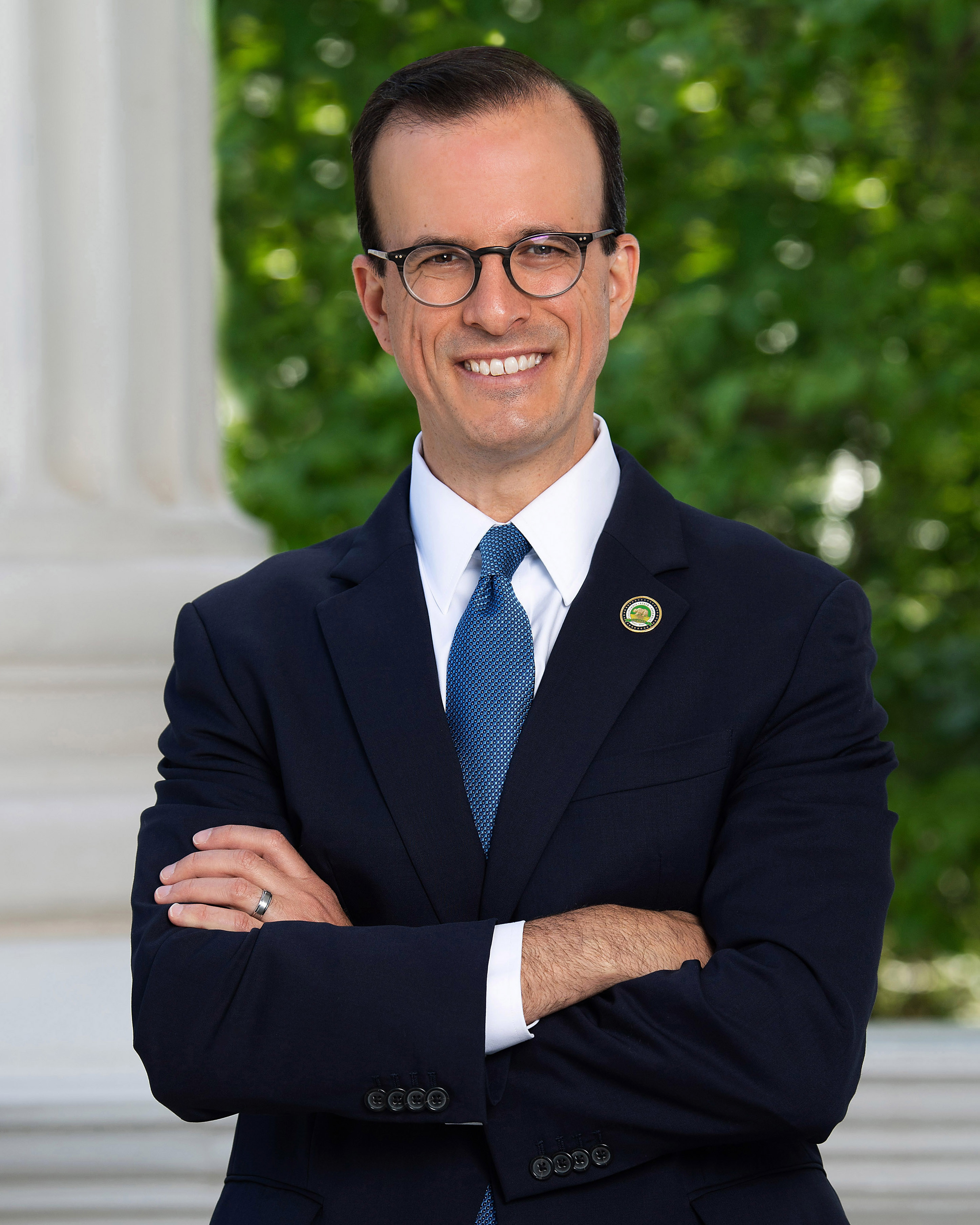
Asm. Marc Berman
Sponsored bills
Existing law, the Knox-Keene Health Care Service Plan Act of 1975, provides for the licensure and regulation of health care service plans by the Department of Managed Health Care, and makes a willful violation of the act a crime. Existing law provides for the regulation of health insurers by the Department of Insurance. Existing law generally regulates contractual provisions between health care service plans and health insurers and their contracting health care providers. This bill would require a contract between a health care service plan or health insurer and a health care provider issued, amended, or renewed on or after January 1, 2025, to authorize a provider to separately bill for devices, implants, or professional services, or a combination thereof, associated with immediate postpartum contraception if the birth takes place in a general acute care hospital or licensed birth center. The bill would prohibit that provider contract from considering those devices, implants, or services to be part of a payment for a general obstetric procedure. Because a violation of the bill's requirements by a health care service plan would be a crime, the bill would impose a state-mandated local program. The California Constitution requires the state to reimburse local agencies and school districts for certain costs mandated by the state. Statutory provisions establish procedures for making that reimbursement. This bill would provide that no reimbursement is required by this act for a specified reason.
Existing law establishes the Instructional Quality Commission and requires the commission to, among other things, recommend curriculum frameworks and the adoption of instructional materials to the State Board of Education. Existing law requires the commission to consider incorporating the Model Library Standards into the next revision of the English language arts/English language development (ELA/ELD) curriculum framework after January 1, 2024, and to also consider incorporating media literacy content at each grade level. Existing law also requires the commission to consider incorporating media literacy content into the mathematics, science, and history-social science curriculum frameworks when those frameworks are next revised after January 1, 2024. Existing law defines media literacy, for that purpose, as the ability to access, analyze, evaluate, and use media and information and encompasses the foundational skills that lead to digital citizenship. This bill would require the commission to consider including the Model Library Standards, including media literacy content, in its criteria for evaluating instructional materials when the state board next adopts ELA/ELD instructional materials, as provided. The bill would require the commission to consider including media literacy content in its criteria for evaluating instructional materials when the state board next adopts mathematics, science, and history-social science instructional materials, as provided. The bill would also require the commission to consider incorporating Artificial Intelligence (AI) literacy content into the mathematics, science, and history-social science curriculum frameworks when those frameworks are next revised after January 1, 2025, and would require the commission to consider including AI literacy in its criteria for evaluating instructional materials when the state board next adopts mathematics, science, and history-social science instructional materials, as provided. The bill would define "AI literacy" for these purposes as the knowledge, skills, and attitudes associated with how artificial intelligence works, including its principles, concepts, and applications, as well as how to use artificial intelligence, including its limitations, implications, and ethical considerations.
Existing law, the Medical Practice Act, establishes the Medical Board of California within the Department of Consumer Affairs and sets forth its powers and duties relating to the licensure and regulation of physicians and surgeons. Existing law requires medical school graduates to obtain a physician's and surgeon's postgraduate training license, and, for purposes of obtaining that license, to submit an application form and required primary source documents to the board. Existing law requires applicants for a physician's and surgeon's certificate to include specified information in their application, including other information concerning the professional instruction and preliminary education of the applicant as the board may require. This bill would prohibit the board from requiring an applicant for a physician's and surgeon's license or a physician's and surgeon's postgraduate training license to disclose specified information, including a condition or disorder that does not impair the applicant's ability to practice medicine safely. The bill would provide that its provisions do not prohibit the board from requiring an applicant to disclose participation in a mental health or substance use disorder treatment program, as specified. If an applicant discloses that they currently have a condition or disorder that impairs their ability to practice medicine safely, the bill would require the board to provide the applicant with information on the availability of a probationary or limited practice license. Existing law authorizes the board to prepare and provide electronically or mail to every licensed physician at the time of license renewal a questionnaire containing any questions as are necessary to establish that the physician currently has no disorder that would impair the physician's ability to practice medicine safely. Existing law requires each licensed physician to complete, sign, and return the questionnaire to the board as a condition of renewing their license. This bill would require each licensed physician to complete, sign, and return the questionnaire either electronically or by mail. The bill would prohibit the questionnaire from requiring the disclosure of any prohibited information, as described above.
Existing unemployment compensation disability law requires workers to pay contribution rates based on, among other things, wages received in employment and benefit disbursement, for payment into the Unemployment Compensation Disability Fund, for purposes of compensating in part for the wage loss sustained by any individual who is unable to work due to the employee's own sickness or injury, among other reasons. Existing law sets forth standards for eligibility to receive unemployment compensation disability benefits. Existing law establishes, within the above state disability insurance program, a family temporary disability insurance program, also known as the paid family leave program, for the provision of wage replacement benefits for up to 8 weeks to workers who take time off work for prescribed purposes, including to care for a seriously ill family member. Existing law requires, for purposes of unemployment compensation disability benefits, the Employment Development Department to issue the initial payment for unemployment compensation disability benefits to a monetarily eligible claimant who is otherwise determined eligible by the department within 14 days of receipt of the claimant's properly completed first disability claim. Existing law provides for purposes of the paid family leave program that eligible workers shall receive benefits generally in accordance with unemployment and disability compensation law. This bill would instead require, for purposes of unemployment compensation disability benefits, the issuance of the initial payment for those benefits within 14 days of receipt of the claimant's properly completed first disability claim or as soon as eligibility begins, whichever is later. The bill would apply the same initial payment issuance schedule applicable to unemployment compensation disability benefits to the paid family leave program and repeal the requirement that eligible workers receive benefits generally in accordance with unemployment and disability compensation law. The bill would make these changes operative when these changes are incorporated in the Employment Development Department's integrated claims management system as part of the EDDNext project. Under the state disability insurance and paid family leave programs, a first claim is required to be filed not later than the 41st consecutive day following the first compensable day with respect to which the claim is made for benefits, as specified. This bill would authorize an individual to initiate the claims process up to 30 days in advance of the anticipated first compensable day. The bill would make these changes operative when the changes are incorporated in the Employment Development Department's integrated claims management system as part of the EDDNext project.
The Planning and Zoning Law, among other things, authorizes a development proponent to submit an application for a housing development that is subject to a specified streamlined, ministerial approval process not subject to a conditional use permit, if the development satisfies certain objective planning standards. The California Environmental Quality Act (CEQA) requires a lead agency, as defined, to prepare, or cause to be prepared, and certify the completion of, an environmental impact report on a project that it proposes to carry out or approve that may have a significant effect on the environment or to adopt a negative declaration if it finds that the project will not have that effect. CEQA does not apply to the approval of ministerial projects. This bill would make a development that meets specified objective planning standards, including that, among other things, it is on a parcel that is within a zone where office, retail, health care, or parking are a principally permitted use, a permitted use and would require a local agency to review an application for that development on an administrative, nondiscretionary basis. The bill would require a local agency, within 60 calendar days of receiving an application pursuant to these provisions, to approve or deny the application subject to specified requirements, including that, among other things, if the local agency determines that the development is in conflict with any of the above-described standards, the local agency is required to provide the development proponent written documentation of which standard or standards the development conflicts with, as specified. The bill would provide that a development eligible for approval pursuant to this process is not a "project" for purposes of CEQA, thereby expanding the exemption for ministerial approval of projects under CEQA. By increasing duties on local governments in reviewing and approving these developments, the bill would impose a state-mandated local program. The bill would authorize a development proponent to bring an action to enforce the bill's provisions, as specified, and would make its provisions enforceable by the Attorney General and provide the Attorney General an unconditional right to intervene to enforce the bill's provisions. The bill would define various terms for these purposes. The California Constitution requires the state to reimburse local agencies and school districts for certain costs mandated by the state. Statutory provisions establish procedures for making that reimbursement. This bill would provide that no reimbursement is required by this act for a specified reason. The bill would include findings that changes proposed by this bill address a matter of statewide concern rather than a municipal affair and, therefore, apply to all cities, including charter cities.
Existing law requires the State Department of Education to incorporate age-appropriate materials relating to, among other things, genocide and the Holocaust into publications that provide examples of curriculum resources for teacher use, consistent with the subject frameworks on history and social science. Under existing law, the Legislature encourages the incorporation of survivor, rescuer, liberator, and witness oral testimony into the teaching of genocide and the Holocaust. This bill would establish the California Teachers Collaborative for Holocaust and Genocide Education, to be responsible for establishing a statewide teacher professional development program on genocide, including the Holocaust, for school district, county office of education, and charter school teachers. The bill would require the collaborative to consist of leading genocide and Holocaust education organizations and institutions, genocide survivors, educators, and community leaders. The bill would provide that the collaborative's mission is to ensure that genocide, including Holocaust, education is taught consistent with, among other things, the content standards, curriculum frameworks, and instructional materials adopted by the State Board of Education, in ways that are interdisciplinary and age-appropriate to pupils of different grade levels. The bill would prescribe the duties of the collaborative, including, among others, developing and providing curriculum resources on genocide and Holocaust education. The bill would authorize other duties of the collaborative, subject to available funding, including, among others, providing, as determined by the department, annual verbal or written reports to the department and the Legislature on the collaborative's achievement of its mission. The bill would make the implementation of these provisions contingent upon an appropriation.
The Donahoe Higher Education Act sets forth, among other things, the missions and functions of California's public and independent segments of higher education and their respective institutions of higher education. A provision of the act applies to the University of California only to the extent that the Regents of the University of California, by appropriate resolution, act to make the provision applicable. A portion of the Donahoe Higher Education Act, known as the Equity in Higher Education Act, provides, among other things, that all students have the right to participate fully in the educational process, free from discrimination and harassment, and that California's postsecondary educational institutions have an affirmative obligation to combat racism, sexism, and other forms of bias, and a responsibility to provide equal educational opportunity. For purposes of the Equity in Higher Education Act, existing law defines "nationality" to include citizenship, country of origin, and national origin and defines "religion" to include all aspects of religious belief, observance, and practice, as provided. This bill would instead provide that California's postsecondary educational institutions have an affirmative obligation to combat discrimination on the basis of disability, gender, gender identity, gender expression, nationality or national identity, race or ethnicity, religion, sexual orientation, and other specified characteristics, and a responsibility to provide equal educational opportunity. For purposes of the Equity in Higher Education Act, the bill would instead define "nationality" or "national identity" to include a person's actual or perceived shared ancestry or ethnic characteristics, citizenship, or residency in a country with a dominant religion or distinct religious identity, as provided. For purposes of the Equity in Higher Education Act, the bill would define "discrimination on the basis of religion" to include, but not be limited to, anti-Semitism and Islamophobia. The bill would also state that it is the intent of the Legislature that each postsecondary educational institution undertake supportive measures to help students who have encountered discriminatory incidents, regardless of the location of the discriminatory incident, if the student feels the incident impairs their access to equal educational opportunities. This bill would require the California Community Colleges, the California State University, and independent institutions of higher education and private postsecondary educational institutions that receive state financial assistance, and would request the University of California, to include training to address discrimination against the 5 most targeted groups in the state, as provided, as part of any general antidiscrimination training or diversity, equity, and inclusion training that is offered by the institution, except as specified. By imposing new requirements on community college districts, the bill would impose a state-mandated local program. The California Constitution requires the state to reimburse local agencies and school districts for certain costs mandated by the state. Statutory provisions establish procedures for making that reimbursement. This bill would provide that, if the Commission on State Mandates determines that the bill contains costs mandated by the state, reimbursement for those costs shall be made pursuant to the statutory provisions noted above.
The Donahoe Higher Education Act sets forth, among other things, the missions and functions of California's public and independent segments of higher education and their respective institutions of higher education. A provision of the act applies to the University of California only to the extent that the Regents of the University of California, by appropriate resolution, act to make the provision applicable. A portion of the Donahoe Higher Education Act, known as the Equity in Higher Education Act, provides, among other things, that all students have the right to participate fully in the educational process, free from discrimination and harassment, and that California's postsecondary educational institutions have an affirmative obligation to combat racism, sexism, and other forms of bias, and a responsibility to provide equal educational opportunity. This bill would state that the Trustees of the California State University and the Regents of the University of California have the primary responsibility to prevent and address conduct that either creates a hostile environment for students on campus or results in differential treatment of students on campus, as specified. The bill would require the trustees to, among other things, adopt rules and procedures, as specified, to prohibit violent, harassing, intimidating, or discriminatory conduct that creates a hostile environment on campus, to prohibit conduct that limits or denies a person's ability to participate in or benefit from the free exchange of ideas or the educational mission of the California State University, and to establish, and require each campus to publish on campus internet websites, reasonable content-neutral time, place, and manner restrictions and, if applicable, any advance permitting requirements for protests on campus. The bill would require the trustees to develop mandatory training programs to educate students on what constitutes violent, harassing, intimidating, or discriminatory conduct that creates a hostile environment on campus, the procedures for investigating violations of the student code of conduct, when and where protests and gatherings may be held, as specified, and on how to exchange views in an atmosphere of mutual respect and civility. The bill would require the trustees to submit a report, on or before January 2, 2025, and annually thereafter, to the Legislature on the implementation and administration of the bill. The bill would request the University of California to comply with these provisions. The bill would make its provisions severable.
Existing law establishes the Medi-Cal program, which is administered by the State Department of Health Care Services, under which qualified low-income individuals receive health care services. The Medi-Cal program is, in part, governed and funded by federal Medicaid program provisions. Existing law establishes, under the Medi-Cal program, the Family Planning, Access, Care, and Treatment (Family PACT) Program, administered by the Office of Family Planning within the department. Under Family PACT, comprehensive clinical family planning services are provided to a person who has a family income at or below 200% of the federal poverty level and who meets other eligibility criteria to receive those services. Existing law makes the Family PACT Program inoperative if the program is determined to no longer be cost effective, as specified. If the program becomes inoperative, existing law requires all persons who have received, or are eligible to receive, comprehensive clinical family planning services pursuant to Family PACT to receive family planning services under other specified provisions of the Medi-Cal program or under the State-Only Family Planning Program, which is also established within the department. Existing law requires enrolled providers in the Family PACT Program or the State-Only Family Planning Program to attend a specific orientation approved by the department and requires providers who conduct certain services to have prior training in those services. This bill would, for the Family PACT Program, require a site certifier of a primary care clinic or affiliate primary care clinic, as those terms are defined, to be a clinician who oversees the provision of Family PACT services and would authorize certain clinic corporations to enroll multiple, but no more than 10, service addresses under one site certifier. The bill would require any orientation or training that the department requires of a site certifier to comply with specified requirements, including, among others, being offered through a virtual platform and being offered at least once every other month. For purposes of both of the above-described programs, existing law requires the program to disenroll as a program provider any individual who, or any entity that, has a license, certificate, or other approval to provide health care that is revoked or suspended by a federal, California, or other state's licensing, certification, or other approval authority, that is otherwise lost, or that is surrendered while a disciplinary hearing is pending, as specified. This bill would authorize the department to elect to not disenroll an individual or entity as a program provider if the revocation, suspension, loss, or disciplinary hearing in another state is based solely on conduct that is not deemed to be unprofessional conduct under California law. Under existing law, a provider is subject to disenrollment if the provider submits claims for payment for the services, goods, supplies, or merchandise provided to a program beneficiary, by an individual or entity that has been previously suspended, excluded, or otherwise made ineligible to receive reimbursement from one of the above-described programs or from the Medi-Cal program and the individual has previously been on one of certain lists, as specified. Under this bill, a provider would not be subject to disenrollment under that provision if the sole basis for an individual's listing is conduct that is not deemed to be unprofessional conduct under California law. The bill would condition implementation of the disenrollment exceptions described in the 2 provisions above on receipt of any necessary federal approvals and the availability of federal financial participation.