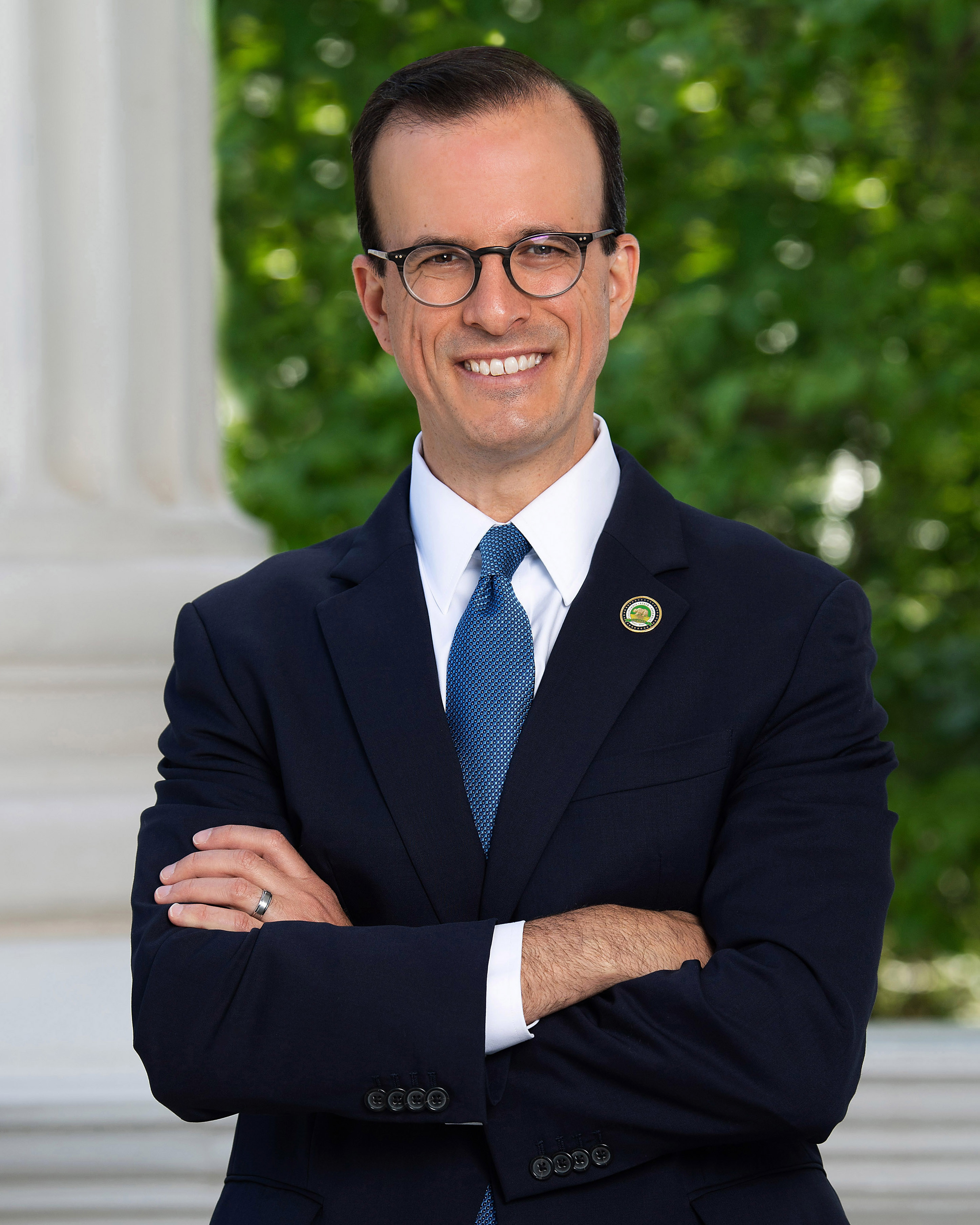
Photo of Marc Berman
D California Assembly · District 23 On the 2026 ballot

Asm. Marc Berman

Compare
Total votes
21,430
all sessions
Attendance
95%
1,013 missed
Near the chamber average
With party
99%
of cast votes
Near the chamber average
Bipartisan score
0%
crosses aisle rarely
Near the chamber average
Sponsored
2,112
bills & resolutions
Near the chamber average
Committees
8
assignments
2,112 bills and resolutions

Sponsored bills

Total
2,112
Primary
229
Co-sponsor
1,883
This page
2,112
matching current filters
Co-sponsor ACR 9
Signed into law · California Assembly · Co-sponsor
Relative to National Human Trafficking Awareness Month.

Maddy summaryACR 9 is a symbolic resolution recognizing January 2025 as National Human Trafficking Awareness Month in California. It does not create new laws or policies but formally acknowledges this observance through a legislative resolution. The resolution cites statistics about trafficking vulnerabilities (including racial disparities, LGBTQ+ youth, and immigrant populations) to highlight the issue's significance. As a procedural resolution, it has no direct impact on affected individuals or enforcement mechanisms.

Signed into law Feb 13, 2025 1 co-sponsor
Co-sponsor HR 10
Passed · California Assembly · Co-sponsor
Relative to World Wetlands Day.

Maddy summaryThis House Resolution (HR 10) symbolically recognizes February 2, 2025, as World Wetlands Day in California. It acknowledges the global importance of wetlands - highlighting their role in climate mitigation, biodiversity, and achieving UN Sustainable Development Goals - without creating new laws or affecting any individuals or entities. The resolution cites the UN's designation of February 2 as World Wetlands Day and references the Ramsar Convention, but it only serves to raise public awareness through official recognition. As a commemorative resolution, it has no regulatory or financial impact.

Passed Feb 6, 2025 1 co-sponsor
Co-sponsor ACR 8
Signed into law · California Assembly · Co-sponsor
Relative to World Desert Day.

This measure would recognize the 2nd Saturday of January each year as World Desert Day in California, and would encourage local jurisdictions to partner with organizations, agencies, or community groups to host educational programs and community celebrations highlighting desert conservation.

Signed into law Feb 4, 2025 1 co-sponsor
Co-sponsor ACR 10
Signed into law · California Assembly · Co-sponsor
Relative to Korean American Day.

Maddy summaryACR 10 designates January 13, 2025, as Korean American Day in California. The resolution commemorates the arrival of the first Korean immigrants to the U.S. on January 13, 1903, and recognizes Korean Americans' historical contributions to California and the nation. It does not create new laws or policies, but serves as a ceremonial acknowledgment of this community's heritage and impact.

Signed into law Feb 4, 2025 1 co-sponsor
Co-sponsor HR 6
Passed · California Assembly · Co-sponsor
Relative to school governance.

Maddy summaryThis bill is a House Resolution that formally recognizes the work of school board members across California by designating January 2025 as School Board Recognition Month. It directly affects local school districts and county offices of education by honoring the nearly 5,000 elected school board members who serve in these roles. The resolution expresses appreciation for their dedication to public education and encourages community members to support these local officials in their efforts to serve students. This is a commemorative measure rather than a policy change, as it does not alter laws or regulations but instead highlights the importance of school governance.

Passed Jan 30, 2025 1 co-sponsor
Co-sponsor SB 729
Signed into law · California Senate · Co-sponsor
Health care coverage: treatment for infertility and fertility services.

Existing law, the Knox-Keene Health Care Service Plan Act of 1975, provides for the licensure and regulation of health care service plans by the Department of Managed Health Care and makes a willful violation of the act a crime. Existing law provides for the regulation of disability insurers by the Department of Insurance. Existing law imposes various requirements and restrictions on health care service plans and disability insurers, including, among other things, a requirement that every group health care service plan contract or disability insurance policy that is issued, amended, or renewed on or after January 1, 1990, offer coverage for the treatment of infertility, except in vitro fertilization. This bill would require large and small group health care service plan contracts and disability insurance policies issued, amended, or renewed on or after July 1, 2025, to provide coverage for the diagnosis and treatment of infertility and fertility services. With respect to large group health care service plan contracts and disability insurance policies, the bill would require coverage for a maximum of 3 completed oocyte retrievals, as specified. The bill would revise the definition of infertility, and would remove the exclusion of in vitro fertilization from coverage. The bill would also delete a requirement that a health care service plan contract and disability insurance policy provide infertility treatment under agreed-upon terms that are communicated to all group contractholders and policyholders. The bill would prohibit a health care service plan or disability insurer from placing different conditions or coverage limitations on fertility medications or services, or the diagnosis and treatment of infertility and fertility services, than would apply to other conditions, as specified. The bill would make these requirements inapplicable to a religious employer, as defined, and specified contracts and policies. Because the violation of these provisions by a health care service plan would be a crime, the bill would impose a state-mandated local program. The California Constitution requires the state to reimburse local agencies and school districts for certain costs mandated by the state. Statutory provisions establish procedures for making that reimbursement. This bill would provide that no reimbursement is required by this act for a specified reason.


Signed into law Sep 29, 2024 1 co-sponsor
Co-sponsor AB 1895
Vetoed · California Assembly · Co-sponsor
Public health: maternity ward closures.

Existing law establishes the licensure and regulation of health facilities by the State Department of Public Health, including, among others, general acute care hospitals. A violation of these provisions is a crime. Under existing law, a general acute care hospital is required to provide certain basic services, including medical, nursing, surgical, anesthesia, laboratory, radiology, pharmacy, and dietary services. Existing law authorizes a general acute care hospital to provide various special or supplemental services if certain conditions are met. Existing regulations define a supplemental service as an organized inpatient or outpatient service that is not required to be provided by law or regulation. Existing law requires a health facility to provide 90 days of public notice, with specified requirements, of the proposed closure or elimination of a supplemental service, such as maternity services. This bill would require an acute care hospital that operates a perinatal unit and expects challenges in the next 6 months that may result in a reduction or loss of perinatal services, to report specified information to the Department of Health Care Access and Information, including, but not limited to, the number of medical staff and employees working in the perinatal unit and the hospital's prior performance on financial metrics. The bill would require the Department of Health Care Access and Information to forward the provided information to the State Department of Health Care Services and the State Department of Public Health. The bill would require this information to be kept confidential to the extent permitted by law. The bill would require, within 3 months of receiving this notice from the hospital, the Department of Health Care Access and Information, in conjunction with the State Department of Public Health and the State Department of Health Care Services, to conduct a community impact assessment to identify the 3 closest hospitals operating a perinatal unit, their distance from the challenged facility, and whether those hospitals have any restrictions on their reproductive health services. The bill would require the Department of Health Care Access and Information to provide the community impact assessment to specified entities and would require these entities to keep the community impact assessment confidential. If the hospital plans to close its perinatal unit, the bill would require the hospital to provide public notice of the proposed closure, including the results of the community impact assessment, and other specified information on the hospital's internet website 90 days in advance of the closure. The bill would require the public to be permitted to comment on the closure for 60 days after the notice is given, and would require one noticed public hearing be conducted by the hospital. The bill would also require the hospital to accept written public comment. By creating a new crime, this bill would impose a state-mandated local program. Existing constitutional provisions require that a statute that limits the right of access to the meetings of public bodies or the writings of public officials and agencies be adopted with findings demonstrating the interest protected by the limitation and the need for protecting that interest. This bill would make legislative findings to that effect. The California Constitution requires the state to reimburse local agencies and school districts for certain costs mandated by the state. Statutory provisions establish procedures for making that reimbursement. This bill would provide that no reimbursement is required by this act for a specified reason.
Vetoed Sep 29, 2024 1 co-sponsor
Co-sponsor SB 1381
Signed into law · California Senate · Co-sponsor
Crimes: child pornography.

Existing law prohibits the production, development, duplication, distribution, or possession, as specified, of matter, in specified formats, that depicts a person under 18 years of age engaging in or simulating sexual conduct, as defined. Existing law separately prohibits this conduct where it is done for consideration or where such matter is shared with a minor. Existing law also prohibits the employment or use of a minor, or the permitting by a parent or guardian of the employment or use of a minor for the production of such matter. Existing law authorizes the forfeiture and destruction of such matter regardless of whether a conviction is sought or obtained. This bill would expand the scope of certain of these provisions to include matter that is digitally altered or generated by the use of artificial intelligence, as such matter is defined. By expanding the scope of an existing crime, this bill would impose a state-mandated local program. The California Constitution requires the state to reimburse local agencies and school districts for certain costs mandated by the state. Statutory provisions establish procedures for making that reimbursement. This bill would provide that no reimbursement is required by this act for a specified reason. This bill would become operative only if AB 1831 of the 2023–24 Regular Session is enacted and takes effect on or before January 1, 2025.

Signed into law Sep 29, 2024 1 co-sponsor
Primary AB 1831
Signed into law · California Assembly · Lead sponsor
Crimes: child pornography.

Existing law prohibits the production, development, duplication, distribution, or possession, as specified, of matter, in specified formats, that depicts a person under 18 years of age engaging in or simulating sexual conduct, as defined. Existing law separately prohibits this conduct where it is done for consideration or where such matter is shared with a minor. Existing law provides an enhanced punishment when these offenses are committed using government property. This bill would expand the scope of certain of these provisions to include matter that is digitally altered or generated by the use of artificial intelligence, as such matter is defined. By expanding the scope of an existing crime, this bill would impose a state-mandated local program. The California Constitution requires the state to reimburse local agencies and school districts for certain costs mandated by the state. Statutory provisions establish procedures for making that reimbursement. This bill would provide that no reimbursement is required by this act for a specified reason. This bill would become operative only if SB 1381 of the 2023–24 Regular Session is enacted and takes effect on or before January 1, 2025.

Signed into law Sep 29, 2024 0 co-sponsors
Co-sponsor SB 782
Vetoed · California Senate · Co-sponsor
Gubernatorial appointments: report.

Existing law requires the Governor to appoint every officer whose mode of appointment is not prescribed by law. Existing law also prescribes the manner of the Governor's appointment of those officers. This bill would require the office of the Governor, commencing January 1, 2026, to maintain on its internet website a list of every state board and commission that includes, for each state board or commission, the membership list, stated purpose, duties, meeting frequency, internet website, and vacancies in the membership. The bill would require the office of the Governor, on or before January 1, 2027, and annually thereafter, to create and publish on its internet website a report containing aggregate demographic information of appointments made by the office during the prior calendar year, as specified.

Vetoed Sep 29, 2024 1 co-sponsor
Showing 391 to 400 of 2,112 bills
Previous 1 … 39 40 41 … 212 Next