

The federal Reception and Placement Program (RPP) under the United States Department of State is established to serve refugees during their first 3 months after arrival in the United States, through contracts with local resettlement agencies to provide various services using federal funds. Existing state law requires the State Department of Social Services, after setting aside the necessary state administrative funds, to allocate federal funds appropriated for refugee social services programs to each eligible county or service provider, as defined, based on the number of refugees receiving aid, or who reside, in the eligible county. If an eligible county or service provider that receives funds declines all or part of those funds, or returns unexpended funds, existing law authorizes the department to exercise its discretion to reallocate the declined or returned funds among eligible counties and service providers. Existing law conditions the applicability of the requirements under these provisions on the availability of federal funds. This bill would make those requirements also applicable if state funds are available subject to an appropriation. Under the bill, if a refugee recipient of refugee social services under RPP completes 90 days of those services and exhausts the federal funds allocated for that recipient, the recipient would be eligible for a 90-day extension of those services using state funds within the first 12 months of arrival in the United States. The bill would require that services covered pursuant to these provisions include (1) English language and employment training and (2) case management services, as specified. The bill would authorize a qualified nonprofit organization, an eligible county, or any office or affiliate of the agencies authorized under RPP to provide these services. The bill would also make conforming changes to related provisions.
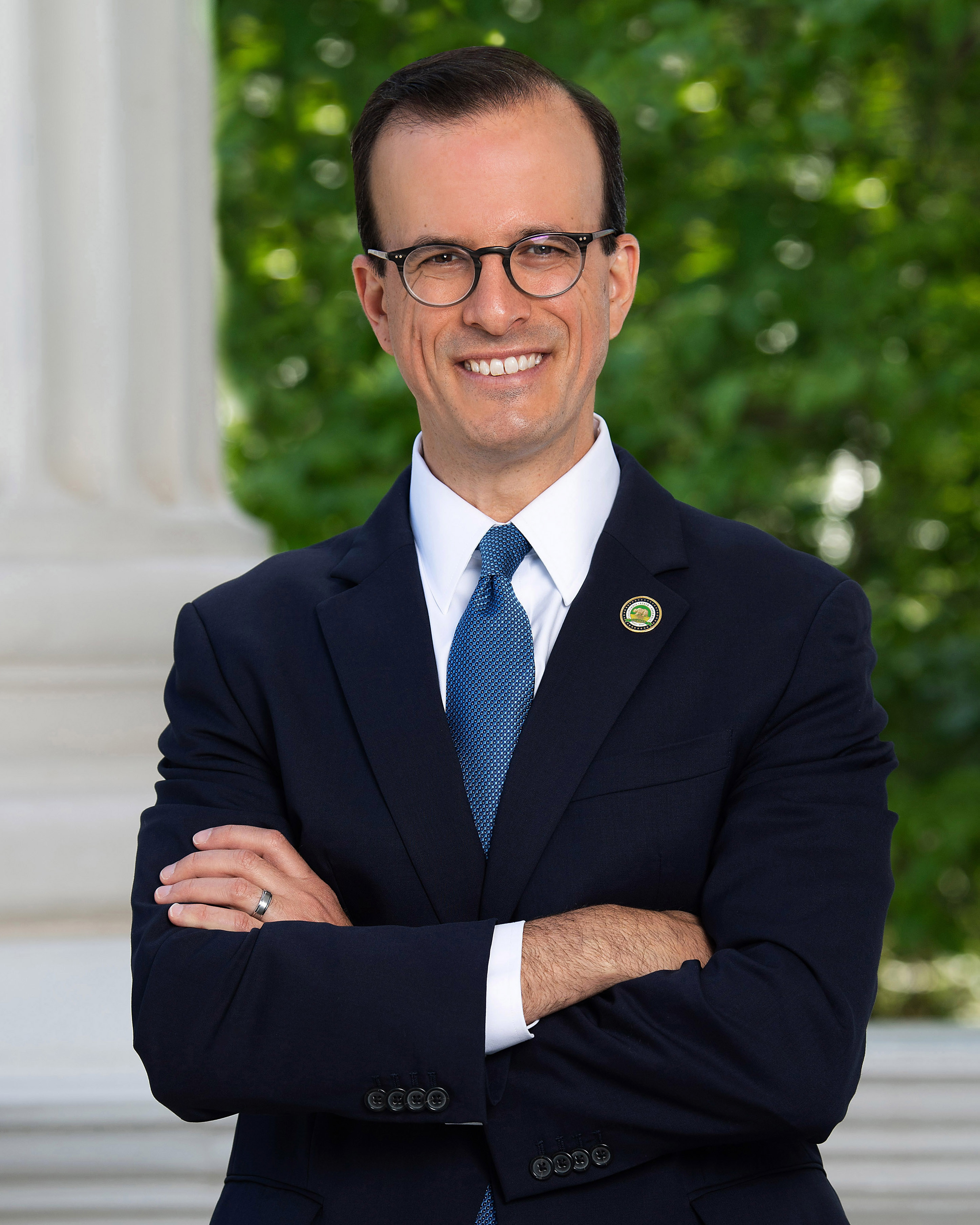
Asm. Marc Berman
Sponsored bills
Existing law prohibits a person from selling or otherwise furnishing tobacco products, as defined, to a person under 21 years of age. Existing law, the Stop Tobacco Access to Kids Enforcement (STAKE) Act, provides for enforcement of that prohibition by the Attorney General. Existing law prohibits a tobacco retailer, as defined, from offering for sale any flavored tobacco product or tobacco product flavor enhancer, as specified. This bill would require the Attorney General to, by no later than December 31, 2025, establish and maintain on the Attorney General's internet website a list of tobacco product brand styles that lack a characterizing flavor, as defined. This bill would require each manufacturer or importer of tobacco products to submit to the Attorney General a list of all brand styles, as defined, of tobacco products that they manufacture or import for sale or distribution in or into California. The bill would require a manufacturer or importer that submits a product pursuant to these provisions to, under penalty of perjury, describe each brand style, brand, and product category, as specified, describe, for each brand style, if a formal authorization, approval, or order from the United States Food and Drug Administration has been sought and its status, if applicable, and certify that each brand style lacks a characterizing flavor. By expanding the scope of the crime of perjury, this bill would create a state-mandated local program. The bill would require a fee for each submission and renewal of a brand style for the costs incurred by the Attorney General for processing the submissions, and operating the list, as specified. The bill would create the California Unflavored Tobacco List Fund for the collection of these fees, and would continuously appropriate these fees to the Attorney General for the purposes above, thereby making an appropriation. The bill would require the Attorney General to determine whether each brand style has a characterizing flavor, as specified. The bill would require any manufacturer or importer that submits a brand style in this way to, among other things, consent to the jurisdiction of the California courts for the purpose of enforcing these provisions and to appoint an agent for service of process, as specified. The bill would authorize the Attorney General to seek injunctive relief and a civil penalty up to $50,000 against any manufacturer or importer who falsely certifies that brand style determined to have a characteristic flavor, lacks a characteristic flavor. This bill would refine the definitions of characteristic flavor and tobacco product for purposes of the prohibition and these provisions. This bill would prohibit a distributor or wholesaler from selling any tobacco product not listed on the Unflavored Tobacco List or any tobacco product flavor enhancer to any person, as specified, for sale in the state and would prohibit a delivery seller from selling a tobacco product not listed on the Unflavored Tobacco List or a tobacco product flavor enhancer to a consumer in California. The bill would authorize the Attorney General to assess civil penalties, as specified, for violations of these prohibitions. This bill would authorize the Attorney General to recover reasonable attorney's fees, investigative costs, and other related costs, against a nonprevailing party in a civil action brought pursuant to these provisions. The bill would require moneys recovered by the Attorney General in an action pursuant to these provisions to be deposited in the Public Rights Law Enforcement Special Fund, as specified. This bill would also ban the retail sale of any tobacco product not on the Unflavored Tobacco List, as specified. The bill would authorize the California Tax and Fee Administration or a law enforcement agency that discovers that a retailer possesses, stores, owns, or has made a retail sale of flavored tobacco products or tobacco product flavor enhancers to seize those products, as specified. Under the bill, seized products would be delivered to the department within 30 days and deemed forfeited to the state. The bill would require the department to issue a civil penalty against the retailer equal to $50 per individual package of flavored tobacco product or tobacco product flavor enhancer seized or delivered to the department, with increasing penalties for subsequent seizures. If a wholesaler possesses, stores, or owns, or has made a sale of, a tobacco product not on the Unflavored Tobacco List or a tobacco product flavor enhancer, the bill would authorize the department to seize the tobacco product or tobacco product flavor enhancer and would require the department to impose a civil penalty if the property is seized, as specified. If a distributor or other person has made a sale of a tobacco product not on the Unflavored Tobacco List or a tobacco product flavor enhancer, or a wholesaler has made a sale of a tobacco product not on the Unflavored Tobacco List or a tobacco product flavor enhancer and the department or a local law enforcement agency has not seized the product, the bill would require the department to issue a warning for a first offense, suspend their license for a second offense, and revoke their license for a third offense. Existing law, the Cigarette and Tobacco Products Tax Law, generally prohibits the retail sale of cigarettes in California unless the sale is a vendor-assisted, face-to-face sale. Existing law authorizes the delivery sale of cigarettes or tobacco products if specified conditions are met. This bill would refine the definition of cigarette for the purpose of these provisions, and would expand that prohibition to include the sale of tobacco products. The bill would require a delivery seller of cigarettes or tobacco products to comply with any applicable state law or local ordinance that imposes restrictions on the retail sale of cigarettes or tobacco products directly to the public from a retail location as if the delivery sale occurred entirely within the state and place. Existing constitutional provisions require that a statute that limits the right of access to the meetings of public bodies or the writings of public officials and agencies be adopted with findings demonstrating the interest protected by the limitation and the need for protecting that interest. This bill would make legislative findings to that effect. This bill would incorporate additional changes to Section 104559.5 of the Health and Safety Code proposed by SB 1230 to be operative only if this bill and SB 1230 are enacted and this bill is enacted last. The California Constitution requires the state to reimburse local agencies and school districts for certain costs mandated by the state. Statutory provisions establish procedures for making that reimbursement. This bill would provide that no reimbursement is required by this act for a specified reason.
Existing law requires the Superintendent of Public Instruction to establish procedures within the State Department of Education to, among other things, annually identify the critical needs for which effective educational programs and practices are to be identified, developed, and disseminated to public schools. This bill would require the Superintendent to convene a working group, composed as provided, for specific purposes related to artificial intelligence in public schools, as specified. The bill would require, among other things, the working group to develop, on or before January 1, 2026, guidance for school districts, county offices of education, and charter schools on the safe use of artificial intelligence in education, and to, on or before July 1, 2026, develop a model policy for those local educational agencies regarding the safe and effective use of artificial intelligence in ways that benefit, and do not negatively impact, pupils and educators, as provided. The bill would require the working group to, on or before January 1, 2027, report its findings and recommendations to the appropriate policy and fiscal committees of the Legislature, as provided. The bill would dissolve the working group upon submission of that report, and would repeal these provisions as of January 1, 2031.
Existing law, the Knox-Keene Health Care Service Plan Act of 1975, provides for the licensure and regulation of health care service plans by the Department of Managed Health Care, and makes a willful violation of the act a crime. Existing law provides for the regulation of health insurers by the Department of Insurance. Existing law requires a group or individual nongrandfathered health care service plan contract or health insurance policy to provide coverage for, and prohibits a contract or policy from imposing cost-sharing requirements for, specified preventive care services and screenings. This bill would prohibit a group or individual nongrandfathered health care service plan contract or health insurance policy issued, amended, or renewed on or after January 1, 2025, from imposing a cost-sharing requirement for items or services that are integral to the provision of the above-described preventive care services and screenings. The bill would require those contracts and policies to cover items and services for those preventive care services and screenings, including home test kits for sexually transmitted diseases and specified cancer screenings. Because a willful violation of these provisions by a health care service plan would be a crime, the bill would impose a state-mandated local program. The bill would authorize the Insurance Commissioner to impose a civil penalty of not more than $5,000 against an insurer for each violation of these provisions, or not more than $10,000 per violation if the violation was willful. The California Constitution requires the state to reimburse local agencies and school districts for certain costs mandated by the state. Statutory provisions establish procedures for making that reimbursement. This bill would provide that no reimbursement is required by this act for a specified reason.
(1) Existing federal law, the Victims of Crime Act of 1984, creates the Crime Victims Fund and authorizes federal financial assistance to states for the purpose of supporting eligible crime victim assistance programs. Existing law creates various programs under the Office of Emergency Services related to crime prevention and education, including, among other things, programs concerning family violence prevention and domestic violence prevention. This bill, the California Victims of Crime Act, would establish the California Crime Victims Fund in the State Treasury and would require that moneys deposited in the fund be continuously appropriated to the Office of Emergency Services to support crime victims services. The bill would require the Office of Emergency Services to seek advisement from the Victims of Crime Act Steering Committee on priorities for utilizing the funds and would require the Treasurer to provide an annual report to the Legislature on the amounts deposited into the fund. By continuously appropriating moneys to the Office of Emergency Services for the support of crime victim services, the bill would make an appropriation. (2) Existing law establishes the aggravated white-collar crime enhancement which imposes enhanced penalties against a person who commits 2 or more related felonies, a material element of which is fraud or embezzlement, that involve a pattern of related felony conduct, and the pattern of related felony conduct involves the taking or loss of more than $100,000, as specified. This bill would authorize a court to impose an additional fine, known as the corporate white collar criminal enhancement, against a corporation that is convicted of a misdemeanor or felony. The bill would authorize the court to determine the amount of the fine, but would set specified limits. The bill would require the court to consider certain factors when determining the amount of the fine, including, among other things, the nature and seriousness of the offense and the corporation's assets, liabilities, and net worth, as specified. The bill would require that any moneys collected under this provision be deposited into the California Crime Victims Fund. (3) The California Constitution entitles the victim of a crime to restitution. Existing law requires the court in each criminal case to order a convicted defendant to pay full restitution to the victim and a separate restitution fine, as specified. This bill would, if a corporation is convicted of a misdemeanor or felony offense, require the court to impose a separate and additional restitution fine, as specified. The bill would authorize the court to determine the amount of the restitution fine, but would impose specified maximums. The bill would require any moneys collected under this provision to be distributed to the California Crime Victims Fund and the prosecuting agency that brought the criminal prosecution, as specified.
Existing law establishes the California Community Colleges, under the administration of the Board of Governors of the California Community Colleges, as one of the segments of postsecondary education in this state. The California Community Colleges system provides instruction to students at 116 campuses operated by community college districts throughout the state and, among other things, provides its students with a transfer pathway, facilitated by mechanisms such as the associate degree for transfer (ADT) , allowing students to apply academic credit earned at a community college toward receipt of a baccalaureate degree at a 4-year postsecondary educational institution. The Donahoe Higher Education Act requires a student who earns an ADT to be deemed eligible for transfer into a California State University baccalaureate program when the student meets certain requirements. Existing law establishes, until July 1, 2025, the Associate Degree for Transfer Intersegmental Implementation Committee for specified purposes, including to serve as the primary entity charged with the oversight of the ADT and to achieve specified objectives relating to the ADT and transfer model curricula (TMCs) on or before December 31, 2024. Existing law requires the committee, on or before December 31, 2023, to provide the Legislature with recommendations on certain issues impeding the scaling of the ADT and streamlining transfer across segments for students. This bill, among other things, would extend the operation of the committee for two years. The bill would state the intent of the Legislature to enact legislation based on recommendations from the committee. This bill, among other things, would require TMC drafts to be submitted to the office of the Chancellor of the California Community Colleges for the high-unit science, technology, engineering, and mathematics pathways of biology, chemistry, computer science, engineering, environmental science, mathematics, and physics for purposes of meeting admissions eligibility to the California State University and University of California segments, and other four-year institutions participating in the ADT, as provided. Within 18 months of the creation of California Community Colleges Chancellor's Office templates for a new TMC, or the approval of revisions to an existing TMC, the bill would require community colleges to create an ADT for each adopted TMC, as specified. To the extent that the bill would impose new duties on community college districts, it would impose a state-mandated local program. For a student who earns an ADT created under the parameters of an adopted TMC, the bill would require a determination of similarity to ensure that students who earn the ADT are guaranteed admission in that similar major at one of the California State University campuses offering that major, as specified. The California Constitution requires the state to reimburse local agencies and school districts for certain costs mandated by the state. Statutory provisions establish procedures for making that reimbursement. This bill would provide that, if the Commission on State Mandates determines that the bill contains costs mandated by the state, reimbursement for those costs shall be made pursuant to the statutory provisions noted above.
Under existing law, a person who, as a result of a mental health disorder, is a danger to self or others or is gravely disabled, may, upon probable cause, be taken into custody and placed in a facility designated by the county and approved by the State Department of Health Care Services for up to 72 hours for evaluation and treatment. Existing law provides that each person who is involuntarily detained for evaluation or treatment, as specified, or admitted as a voluntary patient for psychiatric evaluation or treatment to a health facility, as specified, and each person who is committed to a state hospital, has certain rights, including the right to receive a copy of the State Department of Health Care Services prepared patients' rights handbook. This bill would require a facility to which a person is brought for involuntary detention to offer and provide a copy of the State Department of Health Care Services' prepared patients' rights handbook to a family member of the detained person, as specified. The bill would require a facility where a person is involuntarily detained for assessment to offer and provide the person with a copy of the handbook if the handbook has been provided to a family member. The bill would define "family member" for these purposes to include, among others, the spouse or domestic partner of the person and the parent or legal guardian of the person.
Existing law establishes the state flag and the state's emblems, including, among other things, the poppy as the official state flower, the California redwood as the official state tree, and the California gray whale as the official state marine mammal. This bill would establish the banana slug (Ariolimax) as the official state slug.
Existing law grants a person sentenced to imprisonment the right to purchase, receive, and read any and all newspapers, periodicals, and books, as specified, subject to restrictions reasonably related to legitimate penological interests. Existing law authorizes the Department of Corrections and Rehabilitation to prescribe and amend rules and regulations for the administration of state prisons, including determining which materials are a threat to legitimate penological interests. Existing law creates the Office of the Inspector General and grants the Inspector General responsibility for oversight of the department, as specified. This bill would require the Office of the Inspector General to post the Centralized List of Disapproved Publications maintained by the department on the office's internet website and would require the department to notify the office each time a change is made to that list. The bill would authorize the office, upon request, to review publications on the list to determine if it concurs with the department's determination that the publication violates department regulations. The bill would require the office to notify the department if it does not concur with the department's determination. The bill would also require the office to include information relating to those notifications in an annual report the Inspector General provides to the Governor and Legislature.
Existing law requires the State Department of Public Health to maintain a program of maternal and child health, which may include, among other things, facilitating services directed toward reducing infant mortality and improving the health of mothers and children. Existing law requires the Office of Health Equity within the department to serve as a resource for ensuring that programs collect and keep data and information regarding ethnic and racial health statistics, and strategies and programs that address multicultural health issues, including, but not limited to, infant and maternal mortality. Existing law makes legislative findings relating to implicit bias and racial disparities in maternal mortality rates. Existing law requires a hospital that provides perinatal care, and an alternative birth center or a primary clinic that provides services as an alternative birth center, to implement an evidence-based implicit bias program, as specified, for all health care providers involved in perinatal care of patients within those facilities. Existing law requires the health care provider to complete initial basic training through the program and a refresher course every 2 years thereafter, or on a more frequent basis if deemed necessary by the facility. Existing law requires the facility to provide a certificate of training completion upon request, to accept certificates of completion from other facilities, and to offer training to physicians not directly employed by the facility. Existing law requires the department to track and publish data on pregnancy-related death and severe maternal morbidity, as specified. This bill would make a legislative finding that the Legislature recognizes all birthing people, including nonbinary persons and persons of transgender experience. The bill would extend the evidence-based implicit bias training requirements to specified health care providers at hospitals that provide perinatal care, alternative birth centers, or primary care clinics, as specified. The bill would require an implicit bias program to include recognition of intersecting identities and the potential associated biases. The bill would require initial basic training for the implicit bias program to be completed by June 1, 2025, for current health care providers, and within 6 months of their start date for new health care providers, unless exempted. The bill would require specified facilities to, by February 1 of each year, commencing in 2026, provide the Attorney General with proof of compliance with these provisions, as specified. The bill would authorize the Attorney General to pursue civil penalties for violations of these provisions, as specified. The bill would require that Attorney General be awarded all attorney's fees and costs in any civil action in which a court imposes any of those civil penalties. The bill would authorize the Attorney General to post on its internet website a list of facilities that did not timely submit proof of compliance or were assessed penalties under these provisions, as specified. The bill would authorize the Attorney General to post any other compliance data they deem necessary and would authorize the Attorney General to biennially publish a report outlining compliance data related to these provisions. The bill would make the provisions of the act severable.