

Existing law, until January 1, 2025, establishes the Court Reporters Board of California within the Department of Consumer Affairs and charges the board with the executive functions necessary for effectuating the licensure and regulation of shorthand reporters. Existing law, on and after July 1, 2022, and until January 1, 2025, authorizes an entity that is not a shorthand reporting corporation to engage in specified acts if the entity is approved for registration by the board, as specified. This bill would extend the operation of the above provisions to January 1, 2029. The bill would require a certified shorthand reporter, whether appearing in person or through the use of remote technology, to state on the record their full name and license number, as provided, at the beginning of a proceeding, as specified. The bill would require an applicant or renewing certificate holder who has a valid email address to provide that email address to the board at the time of application or renewal and to notify the board within 30 days of any change to their email address on file. The bill would require the board to take reasonable actions to encourage applicants and certificate holders to maintain a valid email address, as provided. Existing law entitles a person to obtain a certificate as a certified shorthand reporter if certain requirements are met, including passing a specified exam. Existing law requires a person to present specified evidence of qualifications for admission to the examination, including evidence that the applicant has obtained a certificate from a recognized court reporting school, as specified. This bill would require the California state licensing examination to consist of three divisible parts, including English, Professional Practice, and Dictation/Transcription (Machine/Skill) and would set forth requirements for the passing grades for these parts. The bill would require the board to notify each examinee electronically or in writing of their examination results, as specified. The bill would require an applicant to take and pass all three parts of the examination within 3 consecutive years, as specified, to have passed the examination. The bill would authorize an applicant to repeat any part of the examination, as specified. The bill would require an applicant who passes a part of the examination to receive conditional credit for passing that part and authorize an applicant to retake the remaining parts. Existing law, until January 1, 2025, requires funds generated by fees received by the board, pursuant to specified provisions, in excess of funds needed to support the board's operating budget for the fiscal year, to be transferred from the Court Reporters' Fund and used by the board for the purpose of establishing and maintaining a Transcript Reimbursement Fund, which is continuously appropriated, to provide shorthand reporting services to low-income litigants in civil cases who are unable to otherwise afford those services. Under existing law, documentation accompanying an invoice is sufficient to establish entitlement for reimbursement from the Transcript Reimbursement Fund if it is filed with the executive officer on an application form prescribed by the board, as specified. This bill would continue the operation of provisions that provide for funds to be transferred into the Transcript Reimbursement Fund until January 1, 2029, and make other conforming changes. By continuing the transfer of funds into a continuously appropriated fund, the bill would make an appropriation. Existing law states that a natural person holding a valid certificate as a shorthand reporter is known as a "certified shorthand reporter." Existing law prohibits any other person, firm, or corporation from assuming or using the title "certified shorthand reporter" or use any words or symbols indicating or tending to indicate that the person, firm, or corporation is certified under these provisions. Existing law specifies that the use of the words "stenographer," "reporter," or the phrases "court reporter" or "deposition reporter" in combination with words or phrases related to the practice of shorthand reporting indicates or tends to indicate certification. Existing law makes a violation of the provisions of law governing shorthand reporters a misdemeanor. This bill would add the phrase "voice writer" to the above-described list of words and phrases. By expanding the scope of the above-described prohibition, the violation of which is a crime, the bill would impose a state-mandated local program. The California Constitution requires the state to reimburse local agencies and school districts for certain costs mandated by the state. Statutory provisions establish procedures for making that reimbursement. This bill would provide that no reimbursement is required by this act for a specified reason.
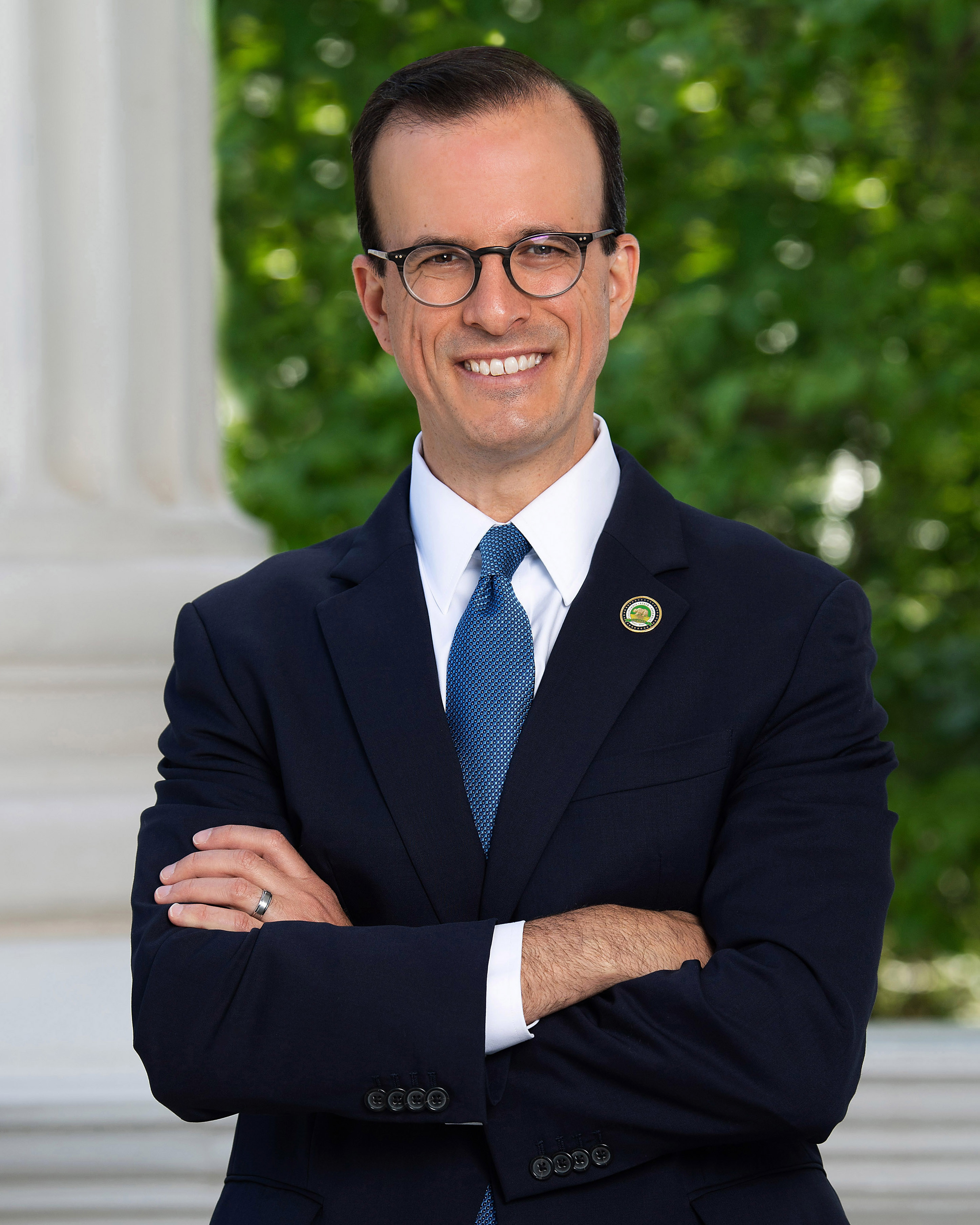
Asm. Marc Berman
Sponsored bills
(1) Existing law establishes the Board for Professional Engineers, Land Surveyors, and Geologists (board) , which is within the Department of Consumer Affairs, to license and regulate engineers under the Professional Engineers Act, to license and regulate land surveyors under the Professional Land Surveyors' Act, and to license and regulate geologists and geophysicists under the Geologist and Geophysicist Act. Existing law requires the board to appoint an executive officer. Existing law repeals the provisions establishing the board, requiring the board to appoint an executive officer, and vesting the board with the power to administer these provisions on January 1, 2025. This bill would extend these repeal dates to January 1, 2029. (2) Under existing law, the board consists of 15 members. Existing law requires the term of office of any member of specified agencies, including the board, to be for a term of 4 years expiring on June 1. Existing law also requires each member to be at least 30 years of age. This bill would remove the term and age requirements for members of the board. (3) Existing law authorizes the Governor to remove any member of the board for misconduct, incompetency, or neglect of duty. This bill would delete that provision, and would instead authorize each appointing authority to remove from office at any time any member of the board appointed by that appointing authority for continued neglect of duties required by law, or for incompetence, or unprofessional or dishonorable conduct. (4) Existing law regulates the examination for applicants for licensure as a professional engineer, including by requiring the exam duration and composition to be designed to conform to a specified general principle, consisting of two divisions. Existing law authorizes the board, by rule, to provide for a waiver of the second division of the examination for certain eminently qualified persons. Existing law requires the board to administer questions to test the applicant's knowledge of seismic principles and engineering surveying principles as a separate part of the second division of the examination for registration as a civil engineer. This bill would authorize the board, by rule, to provide for a waiver of any part of the second division of the examination for certain eminently qualified persons. The bill would instead require the board to administer questions to test the applicant's knowledge of seismic principles and engineering surveying principles as separate parts of the second division of the examination for registration as a civil engineer. (5) Existing law authorizes the board to refund to applicants for licensure as a professional engineer, for certification as an engineer-in-training, for authorization to use the title "structural engineer" or "soil engineer," for license as a land surveyor, or for certification as a land surveyor-in-training who the board finds lack the qualifications for such license, certification, or authorization, one-half of the amount of their application fee. This bill would, instead, authorize the board to refund to the above-described applicants their examination fee. (6) The Professional Engineers Act makes it a misdemeanor for a person to present or attempt to file as the person's own the certificate of licensure of a licensed professional engineer unless they are the person named on the certificate of licensure, to give false evidence of any kind to the board, or to any board member, in obtaining a certificate of licensure, to impersonate or use the seal, signature, or license number of a licensed professional engineer or use a false license number, or to use an expired, suspended, surrendered, or revoked license. This bill would expand these misdemeanors to include persons who present or attempt to file as the person's own certificate of an engineer-in-training, give false evidence of any kind to the board, or to any board member, in obtaining a certificate as an engineer-in-training, impersonate or use the certificate number of an engineer-in-training or uses a false certificate, or use an expired, suspended, surrendered, or revoked certificate. By expanding the scope of a crime under the act, this bill would impose a state-mandated local program. (7) The Geologist and Geophysicist Act makes certain acts a misdemeanor, punishable by a fine of not more than one thousand dollars ($1,000) or by imprisonment not to exceed three months, or by both fine and imprisonment, including to present or attempt to file as their own the certificate of registration of another person, to give false evidence of any kind to the board, or to any board member, in obtaining a certificate of registration, to impersonate or use the seal, signature, or license number of any professional geologist, certified specialty geologist, professional geophysicist, or certified specialty geophysicist or use a false license number, or use an expired, suspended, surrendered, or revoked license. This bill would remove the above-described provisions relating to fines and imprisonment and, instead, make it a misdemeanor to present or attempt to file as their own the certificate of a geologist-in-training or the license of a professional geologist, certified specialty geologist, a professional geophysicist, or a certified specialty geophysicist unless they are the person named on the certificate or the license. The bill would also make it a misdemeanor to give false evidence of any kind to the board, or to any board member, in obtaining a certificate or a license, to impersonate or use the certificate number of a geologist-in-training or use a false certificate, or use an expired, suspended, surrendered or revoked certificate. By expanding the scope of a crime under the act, the bill would impose a state-mandated local program. (8) The Professional Land Surveyors' Act makes it a misdemeanor to presents as their own the license of a professional land surveyor unless they are the person named on the license, give false evidence of any kind to the board, or to any board member, in obtaining a license, impersonate or use the seal, signature, or license number of a professional land surveyor or use a false license number, or use an expired, suspended, surrendered, or revoked license. This bill would expand these misdemeanors to include persons who present as their own the certificate of a land surveyor-in-training unless they are the person named on the certificate, give false evidence of any kind to the board, or to any board member, in obtaining a certificate, impersonate or use the certificate number of a land surveyor-in-training or uses a false certificate, or use an expired, suspended, surrendered, or revoked certificate. By expanding the scope of a crime under the act, the bill would impose a state-mandated local program. (9) Existing law requires professional engineers, professional geologists or professional geophysicists, and licensed land surveyors or licensed civil engineers authorized to practice land surveying to use a written contract when contracting to provide their respective services to a client. Existing law requires those contracts to include specified information, including, among other things, a description of the services to be provided to the client. This bill would additionally require those contracts to include disclosure of any existence of a current professional liability insurance policy covering the professional engineer, professional geologist or professional geophysicist, or licensed land surveyor or licensed civil engineer in responsible charge of the services. (10) Existing law authorizes one or more civil, electrical, or mechanical engineers to practice or offer to practice, within the scope of their license, civil, electrical, or mechanical engineering as a business, as defined, if certain requirements are met, including that the engineer currently licensed is an owner, partner, or officer in charge of the engineering practice of the business, and that all civil, electrical, or mechanical engineering services are performed by, or under the responsible charge of, a professional engineer licensed in the appropriate branch of professional engineering. Existing law also requires all businesses engaged in rendering civil, electrical, or mechanical engineering services to file a current organization record form with the board. This bill would require those businesses to file, in addition to the above-described form, documentary evidence that demonstrates compliance with the above-described requirements. (11) Existing law authorizes one or more licensed land surveyors or civil engineers licensed before 1982 to practice or offer to practice, within the scope of their licensure, land surveying as a business, as defined, if certain conditions are satisfied, including that the land surveyor or civil engineer currently licensed is an owner, partner, or officer in charge of the land surveying practice of the business, and that all land surveying services are performed by or under the responsible charge of a land surveyor or civil engineer. Existing law also requires all businesses engaged in rendering professional land surveying services to file a current organization record form with the board. This bill would require those businesses to file, in addition to the above-described form, documentary evidence that demonstrates compliance with the above-described requirements. (12) Existing law requires any person practicing, or offering to practice, land surveying in the state to submit evidence that they are qualified to practice and to be licensed under these provisions. Existing law requires a land surveyor, when filing a corner record with the county surveyor or engineer of the county where the corner is situated, to ensure a corner accessory or monument is reconstructed or rehabilitated so that it remains permanently fixed, as specified. This bill would make a nonsubstantive change to those provisions, and would, until January 1, 2029, require a land surveyor or registered civil engineer using any monument as a control, to similarly reconstruct or rehabilitate that monument. (13) Existing law makes any violation of the Professional Land Surveyors' Act a misdemeanor. By expanding the scope of practices subject to the Professional Land Surveyors' Act, the bill would impose a state-mandated local program. The California Constitution requires the state to reimburse local agencies and school districts for certain costs mandated by the state. Statutory provisions establish procedures for making that reimbursement. This bill would provide that no reimbursement is required by this act for a specified reason. (14) This bill would incorporate additional changes to Sections 6738 and 8729 of the Business and Professions Code proposed by AB 1862 to be operative only if this bill and AB 1862 are enacted and this bill is enacted last.
Existing law establishes the California Board of Accountancy, which is within the Department of Consumer Affairs, and requires the board to license and regulate accountants in this state. Existing law authorizes the board to appoint an executive officer, as specified. Existing law repeals these provisions on January 1, 2025. This bill would extend the repeal date for the above-described provisions until January 1, 2029. Existing law requires an application to meet specified education, examination, and experience requirements to be qualified for licensure as a certified public accountant, including, except as specified, completion of a baccalaureate or higher degree conferred by a degree-granting university, college, or other institution of learning accredited by a regional or national accrediting agency included in a list of these agencies published by the United States Secretary of Education under specified federal law. This bill would instead require the university, college, or other institution of learning be accredited by an accrediting agency included in a list of these agencies published by the United States Secretary of Education under specified federal law. Existing law authorizes an applicant for licensure as a certified public accountant to demonstrate compliance with the above-described educational requirement if the applicant's institution mails the applicant's official transcript or its equivalent together or separately with a signed letter, as specified. This bill would instead authorize compliance to be demonstrated if the applicant's institution sends electronically or provides the applicant's official transcript or its equivalent together or separately with a signed letter, as specified. Existing law authorizes the board to prescribe, amend, or repeal rules of professional conduct by regulation, as specified. Existing law requires the board to mail a copy of the rules to every licensee at least 30 days before public hearing on the rules. This bill would instead require the board to provide a copy of the rules to every licensee at least 30 days before public hearing on the rules. Existing law requires a firm, in order to renew its registration in an active status or convert to an active status, to have a peer review report of its accounting and auditing practice accepted by a board-recognized peer review program, as specified. This bill would require a board-recognized peer review program to utilize a secure web-based application to provide the board with objective information and data relating to the progress, participation, and results of a peer review and would require a firm to participate in the secure web-based application, as specified. Existing law authorizes the board to establish a system for the placement of a license into a retired status, as specified. Existing law requires the board to deny an application to place a license in a retired status if the permit is subject to an outstanding order of the board, is suspended, revoked, or otherwise punitively restricted by the board, or is subject to disciplinary action. This bill would instead require the board to deny an application if the permit is subject to an outstanding order of the board, is suspended, revoked, or is subject to disciplinary action. The bill would specify that a permanent restricted practice order is not an outstanding order of the board for purposes of this requirement if the licensee has completed probation as part of any original disciplinary order. The bill would require a permanent restricted practice order to be reinstated if the license is restored from retired status to an active status, as specified. Existing law requires a licensee to complete a minimum of 500 hours of experience in attest services to be authorized to sign reports on attest engagements. This bill would specify that, for purposes of an enforcement action taken by the board, the licensee owners of an accounting firm are held to the same level of responsibility as a licensee that performs an attest engagement if an accounting firm provides attestation services and the licensee owners of the firm are not authorized to sign reports on attest engagements. The bill would also require an accounting firm to make all working papers available to a licensee who signed a report on an attest engagement if the licensee is no longer employed by the accounting firm, as specified. Existing law generally prohibits the practice of public accountancy in the state unless the person holds a valid permit to practice public accountancy issued by the board or holds a practice privilege, except as specified. Existing law, until January 1, 2011, specifies that these provisions do not prohibit a certified public accountant, a public accountant, or a public accounting firm lawfully practicing in another state from temporarily practicing in this state incident to practice in another state, subject to certain conditions and limitations. This bill would delete the above-described obsolete provisions and would make conforming changes. Existing law, on or before July 1, 2014, requires the board to convene a stakeholder group to consider whether existing law on the regulation of accountancy in this state is consistent with the board's duty to protect the public, as specified. This bill would delete the above-described obsolete provision.
Existing law establishes the Board of Vocational Nursing and Psychiatric Technicians of the State of California within the Department of Consumer Affairs and, until January 1, 2025, tasks the board with various licensing, regulatory, and disciplinary functions related to vocational nurses and psychiatric technicians under the Vocational Nursing Practice Act and the Psychiatric Technicians Law, respectively. Existing law, until January 1, 2025, requires the board to select an executive officer to perform duties as are delegated by the board, as specified. Existing law makes a violation of either the Vocational Nursing Practice Act or the Psychiatric Technicians Law a misdemeanor. This bill would extend the operation of the above provisions to January 1, 2029. By extending the operation of an existing crime, the bill would impose a state-mandated local program. Existing law requires the board to annually elect from its members a president, vice president, and other officers as it may deem necessary. This bill would instead require the board to biennially elect those officers from its members. Existing law, until January 1, 2025, sets forth an approval process for a vocational nursing school or program or a school or program for psychiatric technicians to be consistent with specified timelines. Under that timeline, existing law requires the board, upon receipt of a letter of intent to submit an application for approval as a school or program of licensed vocational nursing or a school or program for psychiatric technicians, to notify the proposed school or program of the steps in the approval process and provide an estimated wait time until active assignment to a nursing education consultant. Existing law requires a school or program seeking board approval to respond to the board within 2 weeks of each inquiry or request during all phases. Existing law designates a school or program as inactive if it does not respond within 2 weeks or fails to pay the required fees. This bill would extend the operation of those provisions setting forth the approval process to January 1, 2029. The bill would clarify the above-described board notification requirement is contingent on the board receiving a letter of intent that is complete. If a vocational nursing school or program or a school or program for psychiatric technicians fails to submit a complete letter of intent, as specified, the bill would require the school or program to be taken out of consideration and would prohibit it from reapplying for 6 months. The bill would also clarify that the requirement that the school or program seeking board approval respond, within 2 weeks, to the board's inquiries or requests is applicable during all phases of the application process after the school or program has submitted an initial application for approval, as specified. The bill would expand the grounds on which a school or program is designated as inactive to include failing to submit documentation required by the board in time. Existing law requires the board to inspect or review all schools of vocational nursing and psychiatric technician schools in this state, as specified, and to approve schools that meet the requirements provided by the board. If the board determines that any approved school is not maintaining the standard required by the board, existing law requires the board to immediately give notice in writing specifying the defect. Existing law authorizes the removal of the school from the approved list if the school does not correct the defect within a reasonable time. This bill would authorize the board, after establishing regulations for this purpose, to issue a citation and assess a fine, as specified, if a vocational nursing school or program or a school or program for psychiatric technicians is not maintaining the required standard. If a school or program does not remit the assessed fine within 30 days, the bill would authorize the board to place it on provisional approval for up to 6 months or remove it from the approved school or program list, as specified. The bill would prohibit a school or program that is removed from the approved list from applying for approval for 12 months. The bill would clarify that these provisions apply to any vocational nursing school or program. Existing law prescribes various fees in connection with the issuance of licenses under the Vocational Nursing Practice Act and Psychiatric Technicians Law. Existing law makes a license under the Vocational Nursing Practice Act expire after 2 years if not renewed, and makes a license under the Psychiatric Technicians Law expire each year on the date prescribed by the board if not renewed. Existing law under both the Vocational Nursing Practice Act and Psychiatric Technicians Law authorizes an expired license to be renewed at any time within 4 years after its expiration upon filing of an application for renewal and payment of certain fees, as specified. This bill would, upon application and payment of a prescribed fee, require the board to issue a retired license to a licensee under either the Vocational Nursing Practice Act or the Psychiatric Technicians Law if the licensee holds an unrestricted license on the date of application. The bill would exempt a retired licensee from continuing education requirements and would prohibit a retired licensee from being entitled to practice vocational nursing or to practice as a psychiatric technician. The bill would authorize the board to reinstate a retired license to active status if the retired licensee fulfills certain requirements for renewal of a license, including furnishing fingerprints, paying renewal fees, and providing evidence of certain qualifications. The California Constitution requires the state to reimburse local agencies and school districts for certain costs mandated by the state. Statutory provisions establish procedures for making that reimbursement. This bill would provide that no reimbursement is required by this act for a specified reason.
Existing law, the Cemetery and Funeral Act, establishes the Cemetery and Funeral Bureau within the Department of Consumer Affairs and sets forth its powers and duties relating to the licensure and regulation of cemeteries, crematories, funeral establishments, and their personnel. Existing law specifies that the powers and duties of the bureau shall be subject to review by the appropriate policy committees of the Legislature as if the chapter is scheduled to repealed on January 1, 2025. This bill would instead provide that the powers and duties of the bureau are subject to review as if the chapter is scheduled to be repealed on January 1, 2029. Existing law authorizes a cemetery authority that maintains a cemetery to place its cemetery under endowment care and establish, maintain, and operate an endowment care fund. Existing law requires the bureau to conduct a study to obtain information to determine if the endowment care fund levels of each licensee's cemetery are sufficient to cover the cost of future maintenance, as provided, and to report its findings and recommendations to the appropriate policy committees of the Legislature by January 1, 2029. This bill would require each licensed cemetery authority to provide prescribed information to the bureau for purposes of the above-described report on or before January 1, 2028. The bill would repeal the provisions relating to the above-described study on January 1, 2033, and would require the bureau to submit the report pursuant to a specified law. The bill would require the bureau, on or before July 1, 2027, to convene a workgroup to discuss options for ensuring continued care, maintenance, and embellishment of abandoned cemeteries, and would require the bureau to submit a report to the Legislature, no later than January 1, 2028, summarizing discussions of the workgroup and any recommendations. The bill would repeal those provisions on January 1, 2029. Existing law makes it a misdemeanor for any cemetery corporation to make any interments without a certificate of authority, and specifies requirements for an application for a certificate of authority. Existing law, under certain conditions, authorizes the bureau to take possession of the endowment care funds and the books, records, and accounts of a cemetery authority. This bill would require the bureau, 90 days following the cancellation, surrender, or revocation of a certificate of authority, to take title of any endowment care funds of the cemetery authority, take possession of books, records, property, and assets, and act as conservator of the management of the endowment care funds in a prescribed manner, except as specified. The bill would require the bureau to appoint a bank or trust company, as specified, as sole trustee of the endowment care fund and would authorize the sum paid to the bank or trust company to exceed 5% of the net income derived from the endowment care fund, special care fund, or both. By prescribing various requirements related to the management of endowment care funds, the violation of which is a misdemeanor, this bill would impose a state-mandated local program. This bill would make a technical change to a provision excluding specified entities from the act. The California Constitution requires the state to reimburse local agencies and school districts for certain costs mandated by the state. Statutory provisions establish procedures for making that reimbursement. This bill would provide that no reimbursement is required by this act for a specified reason.
Existing law, commencing July 1, 2024, prohibits a place of short-term lodging, an internet website, application, or other similar centralized platform, or any other person from advertising, displaying, or offering a room rate that does not include all fees or charges required to stay at the short-term lodging, and requires that they include in the total price to be paid, all taxes and fees imposed by a government on the stay before the consumer reserves the stay. Existing law makes a violation of these provisions subject to a specified civil penalty not to exceed $10,000 and authorizes an action to enforce these provisions to be brought by a city attorney, district attorney, county counsel, or the Attorney General. This bill would require a place of short-term lodging, an internet website, application, or other similar centralized platform, or any other person to also disclose any additional fees or charges that will be added to the total price to be paid, or other penalty that will be imposed, if the consumer fails to perform certain cleaning tasks at the end of the stay, as specified. The bill would also require a place of short-term lodging or any other person that advertises or lists a place of short-term lodging as available to rent on an internet website, application, or other similar centralized platform to include in their short-term lodging listing on the internet website, application, or platform the information that the bill requires to be disclosed to the consumer. The bill would also make a person who knew or should have known that it has advertised, displayed, or offered a place of short-term lodging in violation of these provisions subject to civil penalty and enforcement provisions as described above. The bill would make its provisions operative on July 1, 2025.
Existing law generally regulates the possession of firearms, including imposing storage requirements to prevent children from gaining access to firearms. This bill would, beginning on January 1, 2026, require a person who possesses a firearm in a residence to keep the firearm securely stored when the firearm is not being carried or readily controlled by the person or another lawful authorized user. For purposes of these provisions, a firearm is securely stored if the firearm is maintained within, locked by, or disabled using a certified firearm safety device or secure gun safe that meets specified standards. The bill would make a first and 2nd violation of this offense punishable as an infraction, and a 3rd or subsequent violation punishable as a misdemeanor. The bill would exempt unloaded antique firearms, as defined, or firearms that are permanently inoperable from these provisions. The bill would require the Department of Justice to seek to inform residents about these standards for storage of firearms. By creating a new crime, this bill would impose a state-mandated local program. Existing law makes it a misdemeanor or a felony if a person keeps a firearm within any premises that are under the person's custody or control and the person knows or reasonably should know that a child is likely to gain access to the firearm without the permission of the child's parent or legal guardian, and the child obtains access to the firearm and causes injury, other than great bodily injury, or death or great bodily injury to the child or any other person, or carries that firearm off-premises, as defined, to a public place or a school. Existing law exempts a person from the above provisions if the person has no reasonable expectation, based on objective facts and circumstances, that a child is likely to be present on the premises. This bill would remove these exemptions. The California Constitution requires the state to reimburse local agencies and school districts for certain costs mandated by the state. Statutory provisions establish procedures for making that reimbursement. This bill would provide that no reimbursement is required by this act for a specified reason.
Existing law makes it a crime to intimidate a voter or to interfere with the conduct of an election, as specified. Existing law makes it a crime for a person in possession of a firearm or a uniformed peace officer, private guard, or security personnel to be stationed in the immediate vicinity of, or posted at, a polling place without written authorization of the appropriate elections official, except as specified. Existing law also makes it a crime to hire a person to conduct these prohibited acts. This bill would prohibit a person from intimidating, threatening, or coercing, or attempting to intimidate, threaten, or coerce, any other person for engaging in specified election-related activities. The bill would authorize an aggrieved person, an officer holding an election or conducting a canvass, or the Attorney General to file a civil action to enforce this prohibition. The bill would create a presumption that a person who openly carries a firearm or imitation firearm while interacting with or observing the specified election-related activities would be presumed to have engaged in prohibited intimidation, in the absence of an affirmative showing to the contrary by a preponderance of the evidence. The bill would provide that an aggrieved person who prevails in such an action will recover reasonable attorney's fees, reasonable expert fees, and reasonable litigation expenses, as specified. This bill would declare that it is to take effect immediately as an urgency statute.
Existing law requires the Secretary of State and the Department of Motor Vehicles to establish the California New Motor Voter Program for the purpose of increasing opportunities for voter registration. Pursuant to this program, existing law requires every driver's license application to include a voter registration application that consists of, among other things, an attestation that the applicant meets voter eligibility requirements. Under existing law, a person who attests to their eligibility to vote on the voter registration application will be registered to vote unless the voter affirmatively declines to register to vote. Existing law, until January 1, 2025, requires the Secretary of State to establish a taskforce of specified members that, among other tasks, must convene for meetings at least quarterly and advise the Secretary of State and the department on effective implementation of the California New Motor Voter Program. This bill would extend the operation of the taskforce until January 1, 2030.
Existing law vests the Department of Transportation with full possession and control of state highways and associated property. Existing law authorizes the department to dispose of property that is no longer needed for highway purposes on terms, standards, and conditions established by the California Transportation Commission. The California Constitution authorizes the Legislature, by statute, with respect to surplus state property located in the coastal zone and acquired with certain vehicle- and fuel-related revenues, to authorize the transfer of that property to the Department of Parks and Recreation, the Department of Fish and Wildlife, the Wildlife Conservation Board, or the State Coastal Conservancy for specified purposes for a consideration at least equal to the property's purchase price. This bill would require the Department of Transportation to transfer certain surplus state property it owns in the City of Pacifica to the Department of Parks and Recreation for state park purposes. The bill would, for purposes of this transfer, require the value of the property to be the price paid by the Department of Transportation for the original acquisition of the property, not adjusted for inflation. The bill would make various findings and declarations in that regard. This bill would make legislative findings and declarations as to the necessity of a special statute for the surplus state property in the City of Pacifica.