

(1) Existing law establishes the Bureau of Security and Investigative Services (bureau) within the Department of Consumer Affairs (department) for purposes of regulating locksmiths, repossessors, private investigators, proprietary security services, private security services, and alarm company operators and alarm agents, under various acts. Under existing law, the powers and duties of the bureau under each of those acts are subject to review by the appropriate policy committees of the Legislature. Existing law requires the review to be performed as if the act were scheduled to be repealed on January 1, 2025. This bill would extend that date to January 1, 2029. (2) Existing law, the Collateral Recovery Act, imposes duties related to the licensure and regulation of repossession agencies on the bureau under the supervision and control of the Director of Consumer Affairs (director) . A violation of the Collateral Recovery Act is a crime. Existing law requires a licensee under the Collateral Recovery Act to serve a debtor with a specified notice of seizure after the licensee recovers collateral. Existing law provides the repossession agency with the option of giving the notice by personal service or by regular mail addressed to the last known address of the debtor. This bill would revise the option to mail the notice by requiring the mail to be addressed, instead, to the current address of the debtor, and would make that option contingent on the current address being known. By imposing new requirements on repossession agencies under the Collateral Recovery Act, the violation of which is a crime, the bill would impose a state-mandated local program. Existing law authorizes various boards under the department to establish a system to issue citations that may include an order of abatement or to pay an administrative fine if a licensee is in violation of the applicable licensing act, as specified. Existing law provides an exception to this authority with respect to persons regulated under the Collateral Recovery Act. This bill would delete that exception, thereby authorizing the bureau to establish a system to issue citations to licensees under the Collateral Recovery Act for violations of that act. (3) Existing law, the Private Investigator Act (PIA) , requires the director to administer and enforce its provisions relating to the licensure and regulation of private investigators, and imposes certain duties on the bureau in this regard. Existing law makes a violation of the PIA, as specified, a crime. This bill, beginning July 1, 2025, would require an agreement for the provision of a service regulated by the PIA to be in writing and to contain specified information, including a description of the scope of the investigation or services to be provided. The bill would prohibit the performance of those services and the accrual of charges before written authorization to proceed is obtained from the client. The bill would require a licensee to maintain a legible copy of the signed agreement and investigative findings for a minimum of 2 years and to make those records available for inspection by the bureau upon demand. By imposing new requirements under the PIA, the violation of which is a crime, this bill would impose a state-mandated local program. The PIA authorizes the bureau to issue a private investigator license to a limited liability company and imposes various requirements on a limited liability company as a condition for licensure, including maintaining liability insurance, as specified. Existing law repeals these provisions on January 1, 2025. This bill would extend that date to January 1, 2030. (4) Existing law, the Proprietary Security Services Act, prohibits a person from engaging in the business of a proprietary private security officer or a proprietary private security employer unless registered with the department under that act. The Proprietary Security Services Act makes a violation of the prohibition on engaging in unregistered business as a private security officer an infraction, as specified. Existing law, the Private Security Services Act (PSSA) , prohibits a person from engaging in the business of private security services, as specified, unless the person is licensed under the PSSA by the bureau. The PSSA makes a violation of that prohibition an infraction, as specified. Other existing law lists specified provisions relating to the registration, licensure, certification, or authorization required to engage in certain businesses and professions, and makes a violation of any of those listed provisions punishable as infractions, as specified. This bill would revise that other existing law by adding to that list the above-described provisions of the Proprietary Security Services Act and the PSSA prohibiting unlicensed or unregistered activity. By making the unregistered engagement in the business of a proprietary private security employer a crime, this bill would impose a state-mandated local program. (5) The Proprietary Security Services Act and the PSSA except from their provisions certain entities, including a charitable philanthropic society or association and a person engaged solely in the business of securing information about persons or property from public records, as specified. This bill would delete several of those entities included in those exceptions, including those specified above. The bill would additionally except from the Proprietary Security Services Act a federally recognized tribe, as defined, that has one or more employees who provide unarmed security services only for the federally recognized tribe, as specified. (6) The PSSA requires an application for licensure to be verified and prescribes additional requirements if the applicant is, among others, an individual, a qualified manager, a partner of a partnership, or an officer of a corporation as specified. Existing law limits the investigations of a person licensed as a private patrol operator to those that are incidental to what they have been hired or engaged to protect, guard, or watch, as provided. Under existing law, the failure of a person licensed to do business as a corporation in this state to be registered and in good standing with the Secretary of State and the Franchise Tax Board after notice from the bureau, as specified, results in the automatic suspension of the licensee. This bill would require the bureau to license a federally recognized tribe that applies for licensure under the PSSA, as specified. The bill would prescribe additional requirements for licensure for the tribe, including that the application state the names and business addresses of those individuals authorized to submit the application on behalf of the tribe, as specified. The bill would make the above-described limitation on private patrol operator investigations not applicable to any federally recognized tribe performing investigative functions, as specified, consistent with federal or tribal law. This bill would also exempt a tribe or a tribe's business that is chartered under tribal or federal law from the above-described requirement to be registered and in good standing with the Secretary of State and the Franchise Tax Board. The PSSA requires an institution, firm, or individual to complete an application for certification, as specified, to receive approval from the bureau to offer certain training courses in the carrying and usage of firearms or batons. This bill would apply that requirement to a federally recognized tribe. The PSSA requires the bureau to issue a firearm permit or a baton permit when certain conditions are satisfied. Among the conditions for the firearm permit is that a bureau-certified firearms training instructor has certified that the applicant has successfully completed a written examination prepared by the bureau and training course in the carrying and use of firearms approved by the bureau. Among the conditions for the baton permit is that the applicant has completed a specified course of training in the carrying and use of a baton. This bill would require the above-specified conditions to be met within 6 months before submitting the application to the bureau. The PSSA requires a licensee, qualified manager of a licensee, or security guard, before carrying a firearm, to complete a course of training in the carrying and use of firearms and to receive a firearms qualification card or be otherwise qualified to carry a firearm, as specified. The PSSA exempts a peace officer or federal qualified law enforcement officer, as those terms are defined, from the course of training requirement if the officer has completed a course of study in the use of firearms. The PSSA requires an applicant for a renewed firearms qualification card to, among other things, requalify on the range and pass a specified written examination. Under the PSSA, a peace officer or federal qualified law enforcement officer is exempt from the above-specified requalification requirements if the officer is authorized to carry a firearm in the course of the officer's duties and has completed requalification training. This bill would limit the exemption from the course of study in the use of firearms requirement by requiring the officer to have completed the course within the 24 months preceding the date of application. The bill would also limit the exemption from the requalification training requirement by requiring the officer to have completed the training within the 12 months preceding the month of the permit's expiration. (7) Existing law, the Alarm Company Act, imposes additional requirements for an alarm company operator license if the applicant is a limited liability company, including requiring the application to be subscribed, verified, and signed by a duly authorized member of the applicant under penalty of perjury. Existing law repeals those provisions on January 1, 2025. This bill would extend the operation of those provisions until January 1, 2030. Under the Alarm Company Act, the director is required to issue a firearms permit when certain conditions exist. Existing law requires a firearm permit to be automatically revoked if the Department of Justice notifies the bureau that the holder of the permit is prohibited from possessing, receiving, or purchasing a firearm, as specified. Existing law requires the bureau to seek an emergency order, as prescribed, against the holder of the firearms permit if the bureau determines that the holder presents an undue hazard to public safety, as specified. This bill would, instead, authorize the bureau to automatically revoke a firearms permit or seek an emergency order, as described above. (8) This bill would incorporate additional changes to Section 146 of the Business and Professions Code proposed by AB 2148 to be operative only if this bill and AB 2148 are enacted and this bill is enacted last. (9) The California Constitution requires the state to reimburse local agencies and school districts for certain costs mandated by the state. Statutory provisions establish procedures for making that reimbursement. This bill would provide that no reimbursement is required by this act for a specified reason.
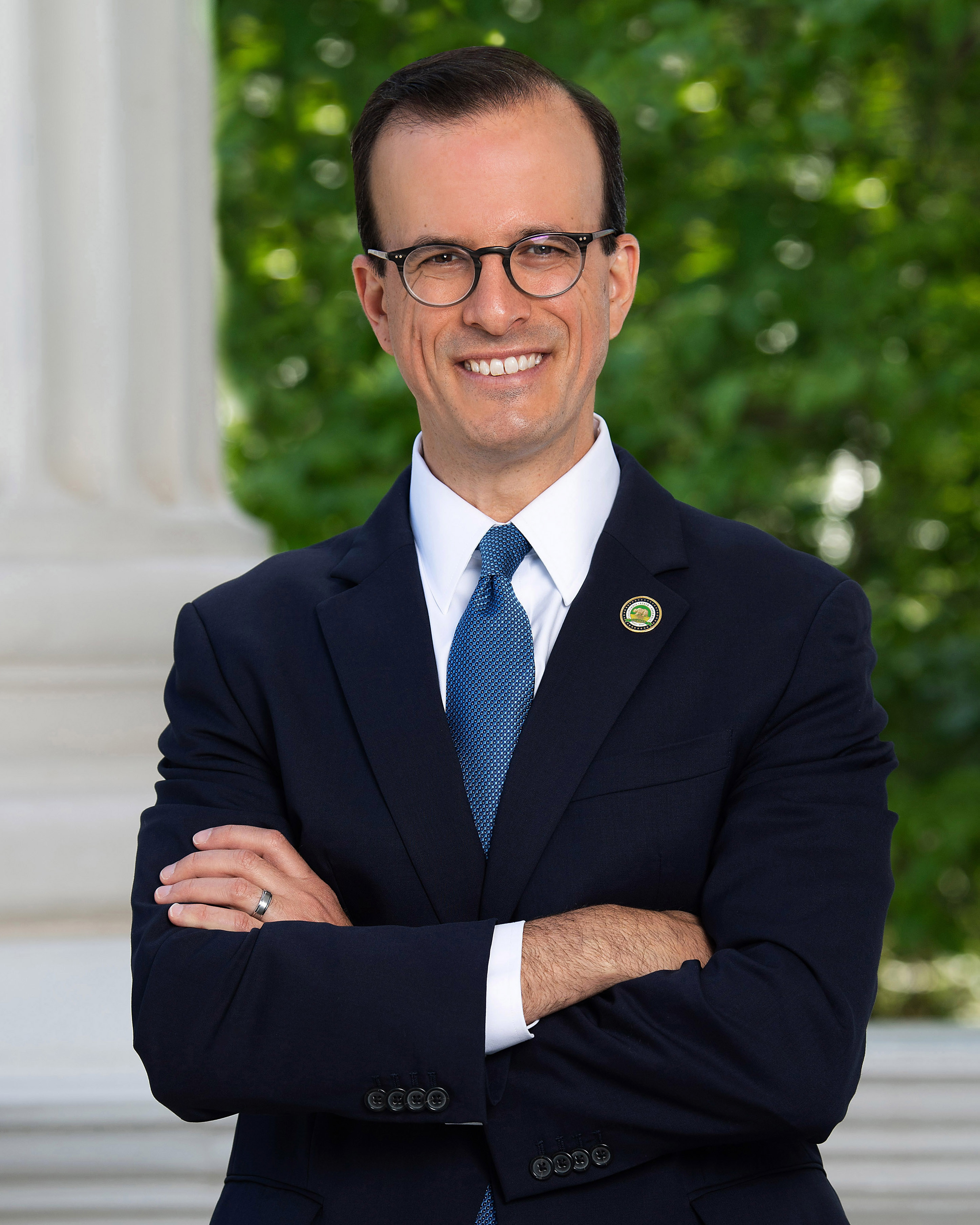
Asm. Marc Berman
Sponsored bills
Existing law, the Dental Practice Act, establishes the Dental Board of California to license and regulate the practice of dentistry, and establishes requirements for meetings of the board, admission to, and practice of, dentistry, licensure and regulation of dental auxiliaries, the use of anesthesia and sedation, and the use of fictitious business names by dental corporations. Existing law requires that the board consist of 8 practicing dentists, a registered dental hygienist, a registered dental assistant, and 5 public members. Existing law also makes certain violations of the act a crime, including engaging in the practice of dentistry without causing to be displayed in a conspicuous place in their office the name of each person employed there in the practice of dentistry. This bill, among other changes to the act, would remove the requirement that the board include a registered dental hygienist and, instead, require the inclusion of 2 registered dental assistants. The bill would delete a provision requiring the board to meet regularly once each year in the San Francisco Bay Area and once each year in southern California. The bill would revise application, examination, and continuing education requirements and requirements for the application and issuance of an elective facial cosmetic surgery permit. Existing law governs the use of deep sedation, general anesthesia, moderate sedation, oral conscious sedation for adults, and pediatric minimal sedation. This bill would revise and recast the requirements for obtaining authorization for, and the administration of, general anesthesia and sedation, including requirements relating to the physical presence of a dentist administering or ordering general anesthesia or deep sedation. The bill would make certain patient records submitted to the board confidential and not subject to disclosure pursuant to the California Public Records Act. The bill would provide for the expiration of a pediatric endorsement, and would revise requirements for the administration of general anesthesia by a physician and surgeon. This bill would make it a crime, punishable as a misdemeanor, for a person to engage in the practice of dentistry without causing to be displayed in an area that is likely to be seen by all patients who use the facility, the original or copy of the current license, permit, or registration of each person employed at the facility to practice dentistry. The bill would authorize the board to post an administrative citation issued for a violation of certain provisions on the board's internet website. The bill would also revise requirements and conditions for obtaining a permit for, and practicing under, a fictitious name. The bill would revise provisions affecting the cancellation of expired licenses, and would establish a fee for a pediatric endorsement for a general anesthesia permit or moderate sedation permit of up to $1,000, and a renewal fee for a pediatric endorsement not to exceed $600, which would be deposited into the State Dentistry Fund. Existing law provides for the licensure and regulation of dental auxiliaries, including registered dental assistants, registered dental assistants in extended functions, orthodontist assistants, and dental sedation assistants, and sets forth duties and functions that those dental auxiliaries are authorized to perform. This bill would, among other changes, revise requirements and conditions of supervision of dental assistants by employers and licensed dentists, training and education requirements for dental assistants, and the functions and duties a dental assistant is authorized to perform. The bill would establish requirements for courses in radiation safety and infection control for certain unlicensed dental assistants. Existing law establishes requirements for obtaining an orthodontist assistant permit or a dental sedation assistant permit from the board, including licensure as a registered dental assistant, and sets forth the duties and functions that a person holding an orthodontic assistant permit or a dental sedation assistant permit may perform. The bill would revise and recast the requirements to obtain an orthodontic assistant permit or a dental sedation assistant permit, and would revise the duties and functions that a person holding an orthodontic assistant permit or dental sedation assistant permit is authorized to perform. The bill would revise requirements for licensure and practice as a registered dental assistant and a registered dental assistant in extended functions, and would revise specified requirements for applying for and receiving a license as a registered dental hygienist, registered dental hygienist in alternative practice, or registered dental hygienist in extended functions. The bill would revise the requirements on a provider of specified educational programs or courses that require board approval, and would authorize the board to issue an administrative citation if the board has probable cause to believe that a person, company, or association is advertising with respect to offering or provision of an educational program or course that requires board approval without being properly approved by the board. The bill would make other related and conforming changes. By expanding the scope of a crime under the act, the bill would impose a state-mandated local program. Existing constitutional provisions require that a statute that limits the right of access to the meetings of public bodies or the writings of public officials and agencies be adopted with findings demonstrating the interest protected by the limitation and the need for protecting that interest. This bill would make legislative findings to that effect. The California Constitution requires the state to reimburse local agencies and school districts for certain costs mandated by the state. Statutory provisions establish procedures for making that reimbursement. This bill would provide that no reimbursement is required by this act for a specified reason.
Existing law defines specified behavior as disorderly conduct and prohibits that behavior. Under existing law, disorderly conduct includes, among other things, soliciting prostitution, prowling, peeping, surreptitious photographing or filming of an identifiable person, and the distribution of certain images of another person taken under circumstances in which the person understands that the image shall remain private, the distribution of which causes serious emotional distress. This bill would add to the definition of disorderly conduct the distribution of those images recorded, captured, or otherwise obtained by the person distributing the image without the authorization of the person depicted, as specified, or by the person distributing the image exceeding authorized access from the property, accounts, messages, files, or resources of the person depicted. Because the bill would expand the scope of a crime, it would establish a state-mandated local program. The California Constitution requires the state to reimburse local agencies and school districts for certain costs mandated by the state. Statutory provisions establish procedures for making that reimbursement. This bill would provide that no reimbursement is required by this act for a specified reason. This bill would incorporate additional changes to Section 647 of the Penal Code proposed by AB 1874, SB 926, and SB 1414, to be operative only if this bill and some or all of those other bills are enacted and this bill is enacted last.
The California Beverage Container Recycling and Litter Reduction Act, which is administered by the Department of Resources Recycling and Recovery, is established to promote beverage container recycling. The act authorizes the department, subject to the availability of funds, to pay a market development payment to a reclaimer for empty plastic beverage containers that have been collected for recycling in the state, and that the reclaimer washes and processes into flake, pellet, sheet, or any other form that is then usable as input for the manufacture of new plastic products by product manufacturers in the state. The act also authorizes the department, subject to the availability of funds, to pay a market development payment to a product manufacturer for plastic flake, pellet, sheet, or any other form of plastic purchased from a reclaimer and used by that product manufacturer to manufacture a plastic product in the state. The act makes this market development payment program inoperative on July 1, 2025. The act continuously appropriates redemption payments by distributors and other revenues received into the California Beverage Container Recycling Fund for market development program payments, among other purposes. This bill would extend the inoperative date of the market development payment program to July 1, 2027, subject to the availability of funds, and would repeal the program as of January 1, 2028. By authorizing the expenditure of continuously appropriated moneys for these purposes beyond July 1, 2025, the bill would make an appropriation.
Existing law prohibits driving a vehicle upon a highway at a speed greater than is reasonable or prudent. Existing law also prohibits driving a vehicle in excess of an established speed limit. Existing law requires that specified convictions, violations, and traffic-related incidents count as points against a driver's record for purposes of suspension or revocation of the privilege to drive. This bill, the Negligent Operator Treatment (NOT) in California Act, would, commencing on January 1, 2027, prohibit excessively speeding, defined as driving a vehicle at a speed that exceeds the posted speed limit by 26 miles per hour or more on a highway with a posted speed limit for passenger vehicles of 55 miles per hour or less. The bill would provide that a conviction for excessively speeding is punishable as an infraction and one point shall be assessed against a driver's record for a first violation and 2 points for any subsequent violation that occurs within 3 years after a previous violation for which the driver was convicted. By creating a new infraction, this bill would impose a state-mandated local program. The California Constitution requires the state to reimburse local agencies and school districts for certain costs mandated by the state. Statutory provisions establish procedures for making that reimbursement. This bill would provide that no reimbursement is required by this act for a specified reason.
(1) Existing law, upon receiving a vote by mail ballot, requires the elections official to compare the signature on the identification envelope with either the signature appearing on the voter's affidavit or other signature appearing on a form that is part of the voter's registration record. Existing law, if it is determined that the signatures do not compare, requires the elections official to send by first-class mail notice to the voter of the opportunity to verify the voter's signature. Existing law prohibits the elections official from rejecting a vote by mail with signatures that do not compare if the voter delivers a signature verification statement and the signature on the verification statement compares with the signature on file in the voter's record. Existing law prohibits the elections official from rejecting a vote by mail ballot if the voter failed to sign the identification envelope, but the voter signs an unsigned identification envelope statement. Existing law requires an elections official to include the vote by mail ballot signature verification statement, unsigned identification envelope statement, and corresponding instructions on the elections official's internet website. This bill would instead require the elections official to include a single, combined vote by mail ballot signature verification statement and unsigned ballot identification envelope statement, along with the instructions for the completion of the statement, on the elections official's internet website. The bill would require the elections official to accept the combined statement for purposes of satisfying the above-described requirements for a signature verification statement or an unsigned identification envelope statement. By imposing new duties on local election officials, the bill would impose a state-mandated local program. (2) Existing law treats information regarding voters who did not sign a vote by mail ballot identification envelope or whose signature on the vote by mail ballot identification envelope did not compare with the voter's signature on file as confidential and prohibits disclosure, except as specified. This bill would require that information to be provided to any candidate for federal, state, or local office, to any committee for or against any initiative or referendum measure for which legal publication is made, and to any person for election, scholarly, journalistic, or political purposes, or for governmental purposes, as determined by the Secretary of State. (3) Existing law requires a local elections official to report to the Secretary of State, within 31 days of the election, the number of vote by mail ballots rejected, categorized according to the reason for the rejection. Existing law requires the Secretary of State, upon receipt of this information, to publish a report containing the information for every election, including local special elections, on the Secretary of State's internet website. This bill instead would require the Secretary of State to publish the report containing the information for every statewide election, including a recall election for a state constitutional officer, Member of the State Senate, or Member of the State Assembly, and every special election to fill a vacancy for the office of Member of the United States Senate, Member of the United States House of Representatives, Member of the State Senate, and Member of the State Assembly on the Secretary of State's internet website. (4) Existing law requires the canvass of an election to commence no later than the Thursday following the election and to be continued daily, not including Saturdays, Sundays, and holidays, for not less than 6 hours each day until completed. Existing law requires the elections official to prepare a certified statement of the results of the election and submit that certified statement to the governing body within 30 days of the election, except as specified. This bill would prohibit the elections official from certifying the results of the November 5, 2024, presidential general election prior to the 28th calendar day following the election, except under specified conditions. The bill would authorize the official canvass to be continued for fewer than 6 hours per day until completion, if the only ballots that the elections official has left to count are vote by mail ballots for which a voter has the opportunity either to verify their signature or to provide their signature, as specified, and the elections official does not need to continue the official canvass for at least 6 hours per day in order to complete the official canvass by the 28th calendar day following the election. The bill would repeal these provisions on January 1, 2025. (5) This bill would incorporate additional changes to Section 3019 of the Elections Code proposed by AB 884 to be operative only if this bill and AB 884 are enacted and this bill is enacted last. (6) The California Constitution requires the state to reimburse local agencies and school districts for certain costs mandated by the state. Statutory provisions establish procedures for making that reimbursement. This bill would provide that, if the Commission on State Mandates determines that the bill contains costs mandated by the state, reimbursement for those costs shall be made pursuant to the statutory provisions noted above. (7) This bill would declare that it is to take effect immediately as an urgency statute.
Existing law creates the Office of Youth and Community Restoration within the California Health and Human Services Agency to promote trauma-responsive, culturally informed services for youth involved in the juvenile justice system, as specified. Existing law grants the office the responsibility and authority to, among other things, report on youth outcomes, identify and disseminate best practices, and report annually on the work of the office. Existing law requires the office to have an ombudsperson and authorizes the ombudsperson to, among other things, investigate complaints from youth. Existing law requires the ombudsperson to publish and provide regular reports to the Legislature regarding data collected concerning, among other things, complaints received and investigations performed by the ombudsperson. Existing law requires county boards of education to provide for the administration and operation of public schools in juvenile halls, juvenile ranches, and juvenile camps, among others, known as juvenile court schools. This bill would also require the office to develop an annual report on chronic absenteeism rates in juvenile court schools. The bill would, subject to available funding, require the office to investigate the reasons for absenteeism at juvenile court schools with chronic absenteeism rates of 15% or more, and, if the office determines that insufficient staff, transportation, punitive policies, or any policies under the juvenile facility's control are contributing to chronic absenteeism rates, require the office to provide technical assistance to ameliorate the identified causes of the chronic absenteeism. The bill would also require the ombudsperson to include reports on chronic absenteeism in its reports to the Legislature.
Existing law establishes the California Community Colleges, under the administration of the Board of Governors of the California Community Colleges, as one of the segments of public postsecondary education in this state. Existing law requires community college districts to charge students an enrollment fee of $46 per unit per semester, except as provided. Existing law authorizes, until July 1, 2028, the governing board of the San Mateo County Community College District to, among other things, adopt a policy that uses local unrestricted general funds to provide fee waivers to students with the greatest financial need when other fee waivers are not provided to those students, and to provide assistance to students for the total cost of attendance. This bill would authorize the governing board of the West Valley-Mission Community College District to adopt a policy that uses local unrestricted general funds to provide fee waivers to students with the greatest financial need when other fee waivers are not provided to those students, and would require the policy to include a requirement to prepare a fiscal impact statement, including a 3-year projection of the fiscal impact of the fee waiver on the community college district, as specified. Existing law establishes the California College Promise, to be administered by the Chancellor of the California Community Colleges. Existing law requires the chancellor to distribute funding, upon appropriation by the Legislature, to community college districts to fund colleges that meet prescribed requirements. Existing law authorizes a community college that receives funding under the program to, among other things, waive some or all of the fees for up to 2 academic years for first-time students and returning students who are enrolled in 12 or more semester units or the equivalent at the college and complete and submit either a Free Application for Federal Student Aid or a California Dream Act application. This bill would authorize the West Valley-Mission Community College District to use local unrestricted general funds, in addition to funding received under the California College Promise, to provide assistance to students for the total cost of attendance, as defined. This bill would require the West Valley-Mission Community College District to use local unrestricted general funds for purposes of these provisions only for students who reside within the boundary of the community college district. This bill would require the governing board of the West Valley-Mission Community College District, on or before March 1, 2028, to submit a report to the office of the Chancellor of the California Community Colleges, the Department of Finance, and the appropriate committees of the Legislature on the implementation of these provisions, as specified. This bill would make these provisions inoperative on July 1, 2030, and would repeal them as of January 1, 2031. This bill would make legislative findings and declarations as to the necessity of a special statute for West Valley-Mission Community College District.
Existing law requires candidates for an office at a primary election to deliver their nomination documents to the county elections official no later than 5 p.m. on the 88th day before the primary election, or in specified cases, no later than 5 p.m. on the 83rd day before the primary election. Existing law prohibits a person who has delivered nomination documents to the county elections official from withdrawing their candidacy. Existing law further prohibits a person from filing nomination documents for a party nomination and an independent nomination for the same office, or for more than one office at the same election. This bill would permit a candidate for any office other than a statewide office, as defined, at a primary election to withdraw their nomination documents for that office during the applicable filing period. The bill would establish requirements for withdrawal, including that the candidate submit a statement under penalty of perjury that they are withdrawing their nomination documents and understand the withdrawal is irrevocable and that the filing fees are nonrefundable. The bill would permit a candidate who withdraws to file nomination documents for another office at that primary election during the applicable filing period. The bill would clarify that a candidate is prohibited from filing nomination documents for more than one office at the same primary election, except as specified. If an incumbent has delivered but then withdrawn their nomination documents before 5 p.m. on the 88th day before the primary election, the bill would authorize another candidate to deliver their nomination documents no later than 5 p.m. on the 83rd day before the primary election. By establishing a new crime based upon the requirement that a candidate submit a statement of withdrawal under penalty of perjury, and by establishing new duties for local elections officials, the bill would create a state-mandated local program. The California Constitution requires the state to reimburse local agencies and school districts for certain costs mandated by the state. Statutory provisions establish procedures for making that reimbursement. This bill would provide that with regard to certain mandates no reimbursement is required by this act for a specified reason. With regard to any other mandates, this bill would provide that, if the Commission on State Mandates determines that the bill contains costs so mandated by the state, reimbursement for those costs shall be made pursuant to the statutory provisions noted above.
Existing law establishes the Medi-Cal program, which is administered by the State Department of Health Care Services and under which qualified low-income individuals receive health care services. The Medi-Cal program is, in part, governed and funded by federal Medicaid program provisions. Under existing law, subject to federal approval, in-person, face-to-face contact is not required under Medi-Cal when covered health care services are provided by video synchronous interaction, asynchronous store and forward, audio-only synchronous interaction, remote patient monitoring, or other permissible virtual communication modalities, when those services and settings meet certain criteria. Existing law defines "asynchronous store and forward" as the transmission of a patient's medical information from an originating site to the health care provider at a distant site. This bill would expand that definition, for purposes of the above-described Medi-Cal provisions, to include asynchronous electronic transmission initiated directly by patients, including through mobile telephone applications. Existing law prohibits a health care provider from establishing a new patient relationship with a Medi-Cal beneficiary via asynchronous store and forward, telephonic (audio-only) synchronous interaction, remote patient monitoring, or other virtual communication modalities, except as specified. Among those exceptions, existing law authorizes a health care provider to establish a new patient relationship using an audio-only synchronous interaction when the visit is related to sensitive services, as defined, and when established in accordance with department-specific requirements and consistent with federal and state law, regulations, and guidance. This bill would expand that exception to include asynchronous store and forward when the visit is related to sensitive services, as specified. Existing law authorizes a health care provider to establish a new patient relationship using an audio-only synchronous interaction when the patient requests an audio-only modality or attests that they do not have access to video, as specified. This bill would remove, from that exception, the option of the patient attesting that they do not have access to video.